Moving to Belgium in 2026: Guide to Costs, Visas, and Taxes

Last verified 18 June 2026. Three things that decide whether Belgium makes sense for you (its citizenship timeline, its capital-gains tax, and how it stacks up against Germany and Portugal) all changed in 2026. Most guides working from older data, have not caught up. This one is checked against the primary sources, and we tell you where each number comes from. That is the point of a maintained human source over a generic answer: the law moved this year, and being six months stale is the difference between a good decision and an expensive one.
Most expat guides treat Belgium like a consolation prize for people who could not get into Portugal. That framing is wrong. So is the idea that Belgium works for everyone. It is an expensive, bureaucratic, gray-skied country with a top income-tax rate near 50% and no retirement visa. It is also one of the fastest legitimate paths to an EU passport in Western Europe, has healthcare that functions, and puts Paris, Amsterdam, and London within roughly two hours by train. Whether that trade makes sense depends entirely on your numbers and your situation. This guide does not sugarcoat either side.
A note on how we built it. Rewire Abroad exists to answer one question honestly: where can you actually afford to live, given your money and your situation? The cost figures below come from our own cost-of-living dataset, not recycled blog posts. Every legal and tax fact is checked against the primary source and dated. And the tools throughout run the math on your income, your target city, and your route, because the average answer is useless to a specific person. A chatbot gives you the average. We help you afford the actual move. One heads-up: the tax section is written through a US lens, because the US is the complicated case (it taxes citizens wherever they live). Canadians and Australians have it simpler in one big way, and we flag exactly where your picture differs.
Who Belgium Is Actually For
Belgium rewards people already oriented toward Western European professional or institutional life. EU-institution employees, NATO-adjacent workers, international finance professionals, and corporate transferees find a country built around the life they are already living. For those people it is excellent and underrated. Retirees with roughly $4,000 or more a month who want a serious European city without London prices also do well here.

The honest cut: if you are chasing low cost of living, you are in the wrong country. The floor for a single person living modestly in central Brussels is around $2,100 a month, roughly $990 in rent plus about $1,100 in living expenses, drawn from our cost-of-living data. Anyone telling you Belgium is "affordable compared to the US" is quietly comparing it to Manhattan and hoping you do not notice.
If your monthly budget is under $3,000 and you want to live well, look at Ghent before Brussels, and look at Portugal before Belgium.
Do not take our word for the comparison. Pull both countries up on your own budget and see where the line falls for you.
The Visa Situation, Plainly Stated
Most guides bury this. We are putting it high because it changes everything else in the article.
Belgium has no retirement visa and no passive-income visa, and nothing like the off-the-shelf digital-nomad visas Spain or Portugal hand out. What it does have:
If you have a job offer: the single permit. Your employer applies through the relevant regional authority, and which region matters. Flanders, Wallonia, and Brussels-Capital each run their own process with different timelines and salary thresholds. Budget three to six months from offer to card in hand.
If you are self-employed or work remotely: the professional card. This is the route freelancers, business owners, and most location-independent earners actually use. We catalog it as the Belgium Digital Nomad Visa, and in practice it runs through the self-employed professional card. Expect to show a viable business plan and proof your activity serves a Belgian economic interest. It is more paperwork than a true nomad visa, but it is the door that exists.
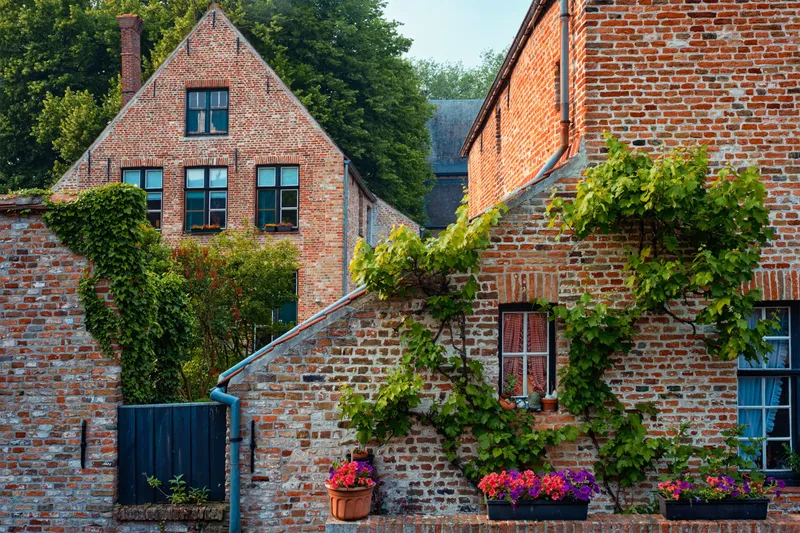
If you are retired or self-sufficient: the long-stay route. This one is not standardized, and your commune's interpretation of "sufficient income" varies more than anyone wants to admit. Expect to carry private health insurance (roughly $200 to $400 a month) until you enter the social-security system, to secure an address before you can register, and to have a local official physically visit your home to verify you actually live there before your registration goes through. That step is not optional, and it does not move fast.
If your spouse is an EU citizen: take this path. It is the cleanest one available. If you were hoping for a simple answer here, Belgium is not the country for it.
The right route depends on your employment, income source, and family status. Answer ten questions instead of guessing.
Find Your Ideal Belgium Visa
10 quick questions to match you with the right visa.
Where do you hold a passport?
Determines which visas are open to you. If you hold multiple passports, pick the one you would apply with.
The Tax Math Nobody Does for You, Updated for 2026
Start with the number that stops people cold: a top marginal rate around 50%, plus communal tax of 0 to 9%, pushing the combined ceiling toward the high 50s. That number ends a lot of Belgium conversations. It should not, because it is not the full picture, and the picture changed this year.
The two worked scenarios below assume a US filer, since the US is the awkward case: it taxes citizens on worldwide income no matter where they live. If you are Canadian or Australian, skip to the note after Scenario B, where your situation (which is different, and in one way simpler) is laid out.
Scenario A: remote worker or employee earning $90,000.
On the US side, the Foreign Earned Income Exclusion shelters up to $132,900 of earned income for 2026 (IRS, Rev. Proc. 2025-32), so $90k of salary is fully excludable and your US liability on it lands near zero once you qualify. The catch most people miss: the FEIE only touches your US bill. As a Belgian tax resident, Belgium taxes your worldwide income regardless, so the real question is the Belgian rate on that $90k, not the US one.
Good news for 2026: Belgium's inbound taxpayer regime got more generous. Qualifying new arrivals can now have up to 35% of salary reimbursed tax-free (up from 30%), and the minimum-salary threshold dropped to €70,000 (IBFD, December 2025). If you qualify, your effective Belgian rate on a $90k package can land well below the headline. If you do not, expect something in the 35 to 40% effective range after deductions. Painful but manageable, especially if an employer is absorbing part of the relocation cost. Model your specific package, because this is exactly where a generic estimate misleads.
Scenario B: retiree drawing $60,000 from investments. This is the one that changed.
The FEIE does not apply to investment income, and Belgium taxes residents on worldwide income. Here is the 2026 reality, and it is more nuanced than the old "30 to 40%" everyone repeats:
- Dividends and interest: the flat Belgian movable-income tax of 30% still applies.
- Capital gains: for the first time, Belgium introduced a 10% capital-gains tax on financial assets, effective 1 January 2026 (approved by the Chamber on 3 April 2026). The first €10,000 of gains per year is exempt (indexed, roughly €20k for a couple), and gains accrued before 2026 are protected via a 31 December 2025 valuation snapshot. Before this reform, private capital gains were largely untaxed, so this is new, and older guides do not reflect it.
- The exit tax nobody warns you about: if you later move your tax residence out of Belgium, unrealized gains accrued since 1 January 2026 can be deemed realized and taxed, with automatic deferral for moves to the EU, EEA, or treaty countries. Plan the exit before the entrance.
So the honest answer for a retiree is that it depends entirely on how your $60k is structured. Dividend-heavy income gets hit around 30%. Capital-gains-heavy income now lands closer to 10% above the exemption, low, but no longer zero. The US-Belgium treaty and foreign tax credits prevent genuine double taxation, but you still pay the Belgian rate. This is the scenario most retirees never model before they move, and it is the one that causes the most regret.
If you are Canadian or Australian, the story flips. Both countries tax by residence, not citizenship, so once you properly cut tax residency, your home country generally stops taxing your worldwide income. That makes your ongoing life simpler than the American version above, since you are not filing at home every year for the rest of your life. The bite comes on the way out, not the way in. Canada charges a departure tax: a deemed disposition of most of your worldwide assets at market value the day you leave (Income Tax Act s.128.1), though RRSPs, TFSAs, and Canadian real estate are excluded. Australia triggers CGT Event I1, a deemed disposal of your non-Australian assets, with the option to defer it, and superannuation left untouched but locked until preservation age. Both can be planned around, both can interact with Belgium's own new exit tax, and the order in which you leave one country and land in another genuinely changes the bill. Model it before you move, with an advisor who handles your specific country.
A chatbot cannot tell you whether you are a "dividend retiree" or a "capital-gains retiree," but that distinction can swing your effective rate from about 10% to about 30%. Put your actual income mix in and see your number.
Tax Snapshot: Belgium
Preview of your taxes in Belgium
50% + Communal (0%-9%)
Estimated tax (floor)
$24,000
Ballpark effective rate
~30%
This is a floor. Your real rate depends on whether your income is salary, dividends, capital gains, or pension — Belgium taxes each one differently.
Top income
50.0%
CGT
10.0%
Dividends
30.0%
CGT type
Flat
Ballpark estimate using a simplified effective-rate multiplier. Your actual rate depends on income composition, deductions, the FEIE, expat tax regimes, and any new CGT or dividend taxes. Not tax advice.
General information, not tax advice. Belgium's 2026 capital-gains rules are new and detail-heavy. Confirm your situation with a cross-border tax professional, and see our Retire Abroad Tax Guide for US Expats for the full IRS side.
Where to Actually Live
Skip the tourism copy. Here is the real breakdown, city by city.
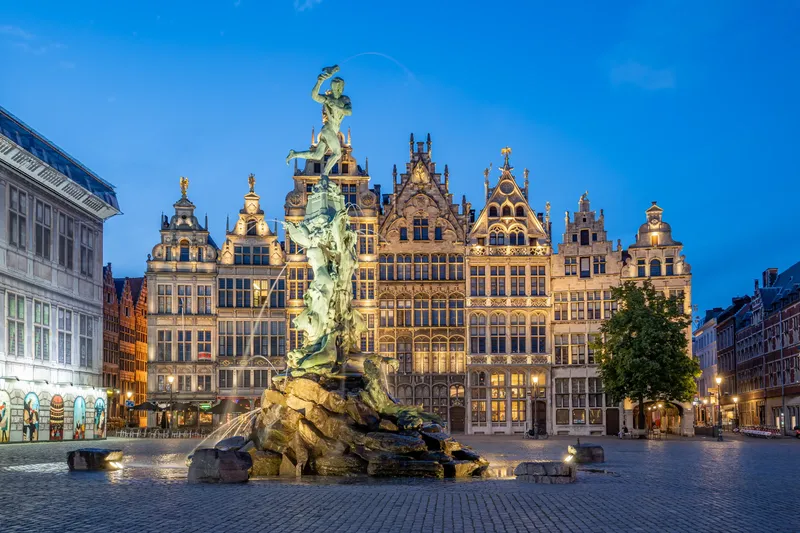
Brussels is the default. Take it if your work or income is tied to it. Do not take it as a first choice if you have flexibility. The bureaucracy is the most layered, costs are highest, and it is the easiest place in the country to spend years inside an expat bubble without ever learning French or Dutch. Saint-Gilles and Ixelles are where most English-speaking expats land. Budget $3,500 to $5,000 a month for a couple living comfortably.
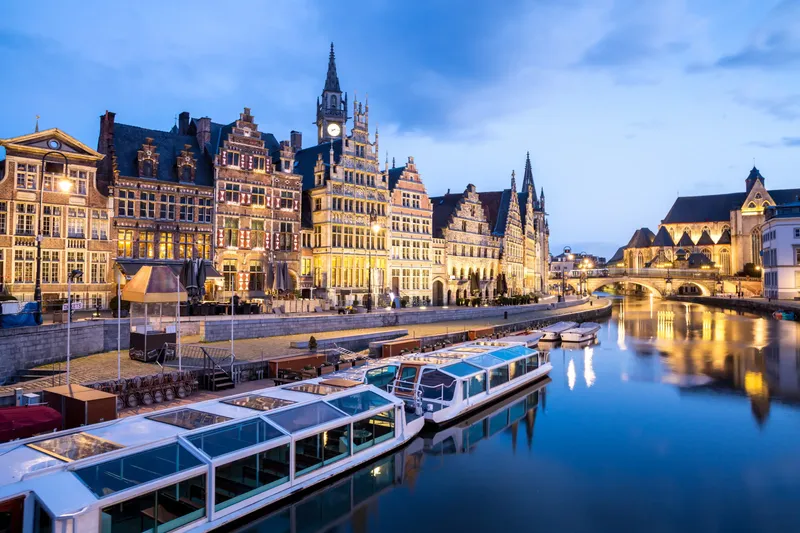
Ghent is the right answer for most people with flexibility. It runs 20 to 25% cheaper than Brussels, is beautiful, carries strong university energy, and has a real food scene. It scores 73/100 overall on Rewire Abroad, with a standout 89/100 for retirees. Its FIRE sub-score is a more honest 60, because Belgian taxes and costs cap how fast you actually save, which is the whole point of this article. A one-bedroom in the center runs about $920, and a mid-range single budget lands near $2,650 a month. The friction: it is Dutch-speaking, and that matters more here than in Brussels. Learn some Dutch or accept that admin will be harder.
I rented in Ghent for a stretch, and it stays the Belgian city I would point a hesitant American toward first. Mornings I would ride along the Leie past the guild houses on Graslei, the medieval facades doubled in the water, and the whole thing felt staged until I remembered people live behind those windows. The center is largely car-free, which I underestimated until I tried to take a furniture delivery and learned the driver could not get within two blocks of my door. You bike, you walk, or you wait. After a week I bought a secondhand omafiets like everyone else and stopped fighting it.
The friction is real, and it is linguistic. My French got me nowhere. This is Flanders, and the admin happens in Dutch. At the gemeente I lucked into an officer who switched to English without sighing, but the forms, the letters, and the utility contracts all arrived in Dutch, and Google Translate became a daily tool. The cobblestones in Patershol are gorgeous and will end your ankle in the wrong shoes. The drizzle is not a stereotype. I kept a rain jacket on a hook by the door from October to March and used it most days.
What kept me there was the texture. Friday market on the Vrijdagmarkt, jenever in a bar the size of a closet, students filling the squares the second the sun appeared, a mustard shop grinding the same recipe since the 1790s. It is a working university town, not a film set, and that is exactly why it holds up for a long stay. If center prices spook you, look at Sint-Amandsberg or Ledeberg, both a short ride out, both noticeably cheaper, both still Ghent.
Antwerp brings high style and a higher cost. The right call if your industry is based there. It approaches Brussels pricing with a stronger local identity.
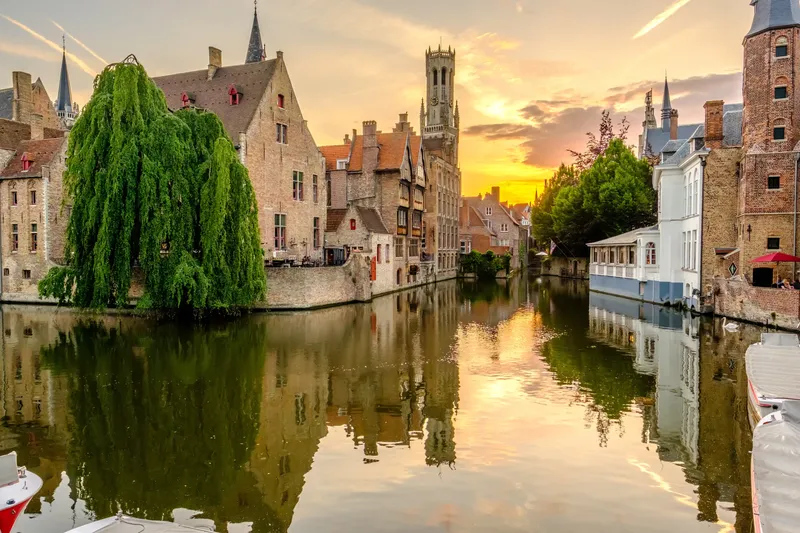
Bruges is a place you visit for a weekend, not a place you live. The tourism volume and small scale make it a rough fit for daily life. It is a beautiful trap.
Liège and Charleroi are the honest budget options: francophone, cheaper, thinner on expat infrastructure. Charleroi especially gets dismissed, but in our data it sits in Belgium's lowest-cost tier, the closest the country gets to a real geoarbitrage play.
City averages hide huge ranges. Set your own rent and lifestyle and compare Ghent, Brussels, and Charleroi on your terms.
The One Reason Belgium Is Underrated, and Why Most Sources Get It Wrong
Here is the contrarian case: five years of legal residence can get you a Belgian passport. That is an EU passport, with the right to live and work across 27 countries, freedom of movement in the Schengen Area, and visa-free or visa-on-arrival access to most of the world (Belgium, justice.belgium.be).
But you have to be precise about who Belgium actually beats, because the landscape shifted hard in 2026 and a lot of advice is now simply wrong:
- Versus Portugal, Belgium now wins decisively. Portugal's new Nationality Law took effect on 19 May 2026, raising naturalization from 5 to 10 years for most applicants (7 for EU and CPLP nationals), with the residency clock now starting at permit issuance. Factoring in AIMA's processing delays, lawyers estimate a real-world path of 12 to 15 years. The destination most Americans default to just became one of the slowest.
- Versus Germany, it is now a tie, and this is where stale guides lie to you. Since Germany's 27 June 2024 reform, naturalization is 5 years, with dual citizenship allowed. The three-year fast-track was repealed in October 2025. If a guide or a chatbot tells you "Germany is 8 years and bans dual citizenship," it is working from pre-2024 data. Belgium no longer beats Germany on the timeline. They are even. (For the broader Germany picture, see our France vs Germany comparison.)
- Versus the Netherlands, Belgium wins on dual citizenship. The Netherlands is also around 5 years but, as a rule, still requires you to renounce your original nationality, with limited exceptions. Belgium does not.
The honest synthesis: Belgium is not uniquely fast anymore, since Germany matches it. But it sits firmly in the fastest tier of serious Western European destinations at five years, it lets you keep your current passport (the US, Canada, and Australia all allow dual citizenship, so you are adding an EU passport, not trading yours away), and it is now dramatically faster than Portugal. For anyone thinking ten years ahead about European optionality, that is a strong, underrated position.
If you have European ancestry, naturalization may be the slow road anyway. A descent claim can be far faster and skips the residency requirement entirely. See Polish citizenship by descent for one of the most accessible ancestry routes to an EU passport.

One time-sensitive caveat: the window is narrowing. The current language bar is A2 in one of the three national languages (French, Dutch, or German), plus proof of social and economic integration. The De Wever government has announced a tightening: a mandatory nationality exam, the language requirement raised to B1 and tested in the language of your region, and an end to the shortcut of qualifying via five years of employment. Not all of it is in force yet. But if the current rules suit you, the calculus favors starting sooner rather than later.
That argument almost never shows up in expat content, because most people search for the cheapest destination, not the most strategically valuable one, and because keeping up with 2026's law changes takes actual maintenance.
What Moving There Actually Costs
Shipping a half-household by sea from the US to Belgium runs $3,000 to $8,000. A full household runs $12,000 to $18,000. Air freight is for suitcases only. Do not try to ship furniture that way.
The practical move: sell large furniture, ship only what is irreplaceable, buy new once you are in Belgium. IKEA exists. The duty exemption for incoming residents is real, but it requires documentation your moving company's customs broker should be handling for you. For the friction points the aggregators leave out, our Moving Abroad Reality Check covers the rest.
"$3,000 to $18,000" is a useless range to plan against. Enter your origin city and household size for a figure you can actually budget around.
Estimate your move cost to Belgium
Get a free moving cost estimate for moving to Belgium. Takes 10 seconds.
How much are you shipping?
When are you moving?
Powered by Sirelo. Free quotes from verified international movers.
The Actual Verdict
Belgium is not the expat dream destination. It is the expat career destination. The people who move there and stay are the ones who either had a reason to be there (a job, a partner, an institution) or who thought ten years ahead and decided an EU passport was worth the cost and the gray winters.
If you want low cost of living, go elsewhere. If you want warm weather, go elsewhere. If you want a simple visa process, go elsewhere.
If you want serious Western European city life, fast train access to the rest of the continent, healthcare that functions, and one of the fastest legitimate paths to an EU passport available to Americans right now, Belgium is a better answer than almost anyone gives it credit for.
Run your own numbers before you decide. That is what the tools above are for, and it is the difference between moving on the average American's math and moving on yours.
Frequently Asked Questions ❓
Click any question to expand the answer.

Adonis Villanueva
Adonis Villanueva covers the practical side of moving abroad for Rewire Abroad: visas, taxes, cost of living, and reaching financial independence by living where your money stretches further. He reports from the ground, across 56 countries, rather than recycling other guides, and holds every piece to verified, current figures and the tradeoffs most relocation content skips.
Rewire Abroad
Best Places to Live in Spain for Expats in 2026: Costs, Cities & Hidden Gems Ranked
Valencia from €1,400/mo, Málaga for nomads, Alicante for retirees — ranked breakdown of Spain's best expat cities with real 2026 costs.

How to Move to Slovenia in 2026: Costs, Visas & What No One Tells You
Slovenia costs 40-50% less than Austria or Italy next door. Here's the actual route Americans use, what it costs, and where to live. Updated 2026.

Guide to Living and Retirement: Costs, Visas, and Essentials in Croatia
Everything you need to know about retiring in Croatia—visas (90-day, retirement, digital nomad) to living costs, healthcare, and retirement locales.

Living in Georgia (Country) in 2026: The Complete Expat Guide
Live in Georgia (the country) from $600/mo: 365-day visa-free stay, 1% income tax, and expat life in Tbilisi. Complete 2026 guide.