Polish Citizenship by Descent: How to Claim Your EU Passport Through Ancestry

If you have Polish ancestors, you might already be a Polish citizen without knowing it. Poland's citizenship by descent laws are among the most generous in Europe, potentially granting you an EU passport that opens doors to retirement opportunities across 27 European countries. Whether you're planning to retire in Portugal for its golden beaches or considering the rolling countryside of France, Polish citizenship could be your ticket to European retirement freedom.
Why Polish Citizenship Matters for Your Retirement Abroad
Polish citizenship isn't just about heritage – it's about unlocking unprecedented retirement flexibility. As a Polish citizen, you automatically become an EU citizen with the right to:
- Live and retire anywhere in the EU without visa restrictions 🌍
- Access European healthcare systems in your retirement destination
- Work freely across 27 EU countries if you choose part-time retirement income
- Pass citizenship to your children and grandchildren
- Enjoy diplomatic protection from Polish embassies worldwide
- Travel visa-free to 188 countries on a Polish passport
For Americans planning to retire abroad, this eliminates the biggest hurdle: visa requirements. Instead of navigating complex retirement visa applications, you simply move to your chosen European destination as a citizen.
Understanding Polish Citizenship Laws: The Basics
Poland follows the principle of jus sanguinis (right of blood), meaning citizenship passes through bloodlines rather than birthplace. Here's what makes Polish citizenship law unique:
Key Principles
- No generational limits: Unlike many countries, Poland doesn't cap how far back ancestry can go
- Gender equality: Both maternal and paternal lines count (though historical restrictions applied before 1951)
- Continuous citizenship: Your ancestor must have maintained Polish citizenship through the relevant period
- No residency requirement: You don't need to live in Poland to claim citizenship
Critical Historical Context
Understanding Poland's complex history is crucial for your claim:
- 1918-1939: Poland regained independence; clear citizenship laws
- 1939-1945: WWII occupation; citizenship laws suspended
- 1945-1989: Communist era; emigration restrictions
- 1951: Gender equality introduced (mothers could pass citizenship)
- 1989-present: Modern citizenship laws established
Eligibility Requirements: Do You Qualify?
Primary Eligibility Scenarios
Scenario | Requirement | Likelihood |
|---|---|---|
Parent born in Poland | Parent was Polish citizen when you were born | Very High |
Grandparent emigrated pre-1918 | More complex due to partition-era records | Moderate |
Grandparent emigrated 1918-1939 | Good documentation typically available | High |
Great-grandparent connection | Requires proving continuous citizenship line | Moderate |
Female ancestor pre-1951 | Special rules apply for maternal lines | Variable |
The "Unbroken Chain" Requirement
Your ancestor must have maintained Polish citizenship continuously from the time they left Poland until:
- Their death, OR
- Your birth (if claiming through a living ancestor)
Common citizenship breaks:
- Naturalization in another country (varies by era)
- Military service in foreign armies
- Formal renunciation of Polish citizenship
- Certain administrative acts during communist era
Special Considerations for Different Eras
Pre-1918 Ancestors (Austrian/German/Russian Partitions):
- Must prove they would have been Polish citizens when Poland regained independence
- Often requires extensive genealogical research
- Success rates vary significantly
1918-1939 Emigrants:
- Generally straightforward if you have proper documentation
- Poland encouraged maintaining citizenship during this period
- High success rates with complete records
Post-WWII Emigrants:
- Communist-era emigrants may face additional scrutiny
- Political refugees often maintained citizenship
- Economic emigrants' status varies
Special Ancestry Situations
Jewish Polish Ancestry
Polish-Jewish ancestry doesn't disqualify your citizenship claim - many Polish Jews maintained their citizenship even after emigrating due to persecution. However, Holocaust-era documentation presents unique challenges:
- Destroyed records: Many Jewish community records were destroyed during WWII
- Name changes: Jewish families often changed names during immigration or persecution
- Alternative documentation: Consider immigration records, ship manifests, and survivor testimony
- Specialized resources: Organizations like JewishGen and Holocaust memorial institutions maintain extensive genealogical databases
Pre-1918 Partition-Era Ancestors
If your ancestor was born in Polish territories under Austrian, German, or Russian rule before 1918, eligibility becomes more complex:
Austrian Partition (Galicia):
- Generally favorable for citizenship claims
- Good record-keeping tradition
- Many residents became Polish citizens automatically in 1918
German Partition (Poznań, Pomerania):
- More restrictive policies
- German citizenship laws may have affected Polish identity
- Requires case-by-case analysis
Russian Partition (Congress Poland):
- Complex citizenship laws
- Many Poles maintained distinct identity despite Russian rule
- Documentation often scarce due to poor record-keeping
Required Documentation: Building Your Case
Essential Documents You'll Need
For Your Ancestor:
- Polish birth certificate (akt urodzenia)
- Marriage certificate (akt małżeństwa) - if applicable
- Death certificate (akt zgonu) - if deceased
- Passport or travel documents showing departure from Poland
- Military records (if applicable)
- Proof of no naturalization in other countries
For Connecting Generations:
- Birth certificates for each generation
- Marriage certificates for name changes
- Death certificates for deceased family members
- Divorce decrees (if applicable for name changes)
For Yourself:
- Your birth certificate
- Current passport
- Marriage certificate (if name differs from birth certificate)
- Divorce decrees (if applicable)
Document Requirements and Standards
Document Type | Polish Requirements | US/Foreign Equivalent |
|---|---|---|
Birth Certificates | Official with parents' names | Certified copy from vital records |
Marriage Certificates | Church or civil records | State-issued certified copy |
Death Certificates | Official government record | State-issued certified copy |
Translations | Certified by Polish court translator | Must be done by Polish-certified translator |
Apostille | Required for foreign documents | From Secretary of State office |
Where to Find Polish Records
Polish State Archives (Archiwum Państwowe):
- Civil records from 1918 onward
- Some earlier church records
- Online search available at szukajwarchiwach.pl
Mormon Family History Library:
- Extensive Polish genealogical records
- Many records digitized and searchable
- Local family history centers provide access
JewishGen (for Jewish ancestry):
- Specialized Polish-Jewish genealogical resources
- Holocaust-era documentation
- Community records and databases
Alternative Documentation Strategies
When Official Records Are Missing
Not all successful applications rely on complete official documentation:
Church Records:
- Baptismal certificates often survived when civil records didn't
- Marriage and death records from parishes
- Many Polish church records are now digitized
Immigration Documentation:
- Ellis Island records showing place of birth
- Ship manifests with passenger details
- US census records indicating "alien" status
- Naturalization petition files (even if naturalization wasn't completed)
Family and Community Evidence:
- Letters in Polish language
- Polish organization membership records
- Photos with Polish writing or locations
- Family testimony (supporting documentation, not primary evidence)
Research Resources:
- Mormon Family History Library extensive Polish collections
- Polish Genealogical Society databases
- Regional Polish-American historical societies
Proving Negative Evidence
Some applications require proving something DIDN'T happen (like naturalization):
"No Naturalization" Documentation:
- USCIS genealogy program searches
- County courthouse naturalization indexes
- Immigration and naturalization service records
- State historical society naturalization databases
Why This Matters:
- Naturalization would break the citizenship chain
- Timing of naturalization relative to children's birth dates is crucial
- Some ancestors filed "first papers" (declaration of intent) but never completed naturalization
Understanding Confirmation vs. Grant
Two Types of Polish Citizenship Applications
Citizenship Confirmation (Stwierdzenie posiadania obywatelstwa polskiego):
- You're proving you already ARE Polish
- Based on descent/birth right
- Cannot be revoked once confirmed
- Most ancestry cases fall into this category
- Retroactive to your birth date
Citizenship Grant (Nadanie obywatelstwa polskiego):
- You're requesting to BECOME Polish
- Based on naturalization requirements
- Can be revoked under certain circumstances
- Requires residency, language tests, and integration proof
- Not applicable to ancestry cases
Understanding this distinction is crucial because it affects your legal status and the evidence required for your application.
When Applications Get Complicated
Adoption and Citizenship Claims
Adoption adds complexity to ancestry-based citizenship claims:
Adopted by Polish Citizens:
- May qualify through adoptive parents if adoption occurred while they held Polish citizenship
- Requires adoption documentation and proof of adoptive parents' citizenship status
Seeking Citizenship Through Biological Parents:
- Must prove biological connection despite adoption
- Original birth certificates and court records often necessary
- Consider privacy laws that may restrict access to sealed adoption records
Political Refugees and Defectors
Communist-era emigrants often maintained citizenship despite leaving Poland:
Political Refugees (1945-1989):
- Usually retained Polish citizenship
- Polish government encouraged maintaining ties
- Documentation may exist in Polish emigrant organization records
Economic Emigrants:
- Status varied by individual circumstances
- Some formally renounced citizenship for employment abroad
- Others maintained citizenship throughout communist period
Territorial Changes and Complex Histories
Polish borders changed dramatically throughout the 20th century, affecting citizenship claims:
Former Polish Cities (now outside Poland):
- Lwów (now Lviv, Ukraine)
- Wilno (now Vilnius, Lithuania)
- Wrocław (formerly German Breslau)
Documentation Challenges:
- Records may be in multiple countries
- Different legal systems applied at different times
- Language barriers in accessing foreign archives
The Application Process: Step-by-Step Guide
Phase 1: Document Collection (3-12 months)
- Start with what you have: Family documents, photos, immigration records
- Contact Polish archives: Request official copies of Polish records
- Gather connecting documents: Birth/marriage/death certificates for each generation
- Obtain apostilles: For all non-Polish documents
- Arrange certified translations: All foreign documents must be translated by Polish court translator
Phase 2: Legal Consultation (Recommended)
While not required, most applicants benefit from legal assistance due to the complexity of Polish law. Consider consultation if:
- Your case involves pre-1918 ancestry
- There are questions about citizenship breaks
- Documents are missing or incomplete
- You're dealing with name changes or adoption
Phase 3: Application Submission
Option 1: Polish Consulate in Your Country
- Faster processing (3-6 months typically)
- More expensive consular fees
- Limited appointment availability
Option 2: Directly to Polish Authorities
- Submit to Polish Voivode (provincial governor)
- Slower processing (6-18 months)
- Lower fees but requires Polish address for correspondence
Phase 4: The Waiting Game
Processing times vary significantly:
- Simple cases: 3-6 months
- Complex cases: 12-24 months
- Appeals: Additional 6-12 months
Costs and Timeline Breakdown
Financial Investment
Expense Category | Estimated Cost | Notes |
|---|---|---|
Document Collection | $300-800 | Archives, vital records, shipping |
Translations | $500-1,500 | Varies by document volume |
Apostilles | $100-300 | $15-25 per document in most states |
Legal Consultation | $2,000-5,000 | Optional but often valuable |
Application Fees | $200-400 | Government processing fees |
Travel | $0-2,000 | If consulate visit required |
Total Estimate | $3,100-10,000 | Most cases fall in $4,000-6,000 range |
Realistic Timeline Expectations
Phase 1 - Document Collection: 3-12 months
- Polish records: 2-6 months
- US records: 1-3 months
- Translations: 1-2 months
Phase 2 - Application Processing: 3-18 months
- Consulate route: 3-6 months
- Direct to Poland: 6-18 months
Total Timeline: 6-30 months (average: 12-18 months)
Common Challenges and Solutions
Challenge 1: Missing Polish Records
Problem: Polish records destroyed in WWII or communist era Solutions:
- Check multiple archive locations
- Look for church records (often survived when civil records didn't)
- Consider alternative documentation (immigration records, family testimony)
- Hire Polish genealogist for deep research
Challenge 2: Name Variations and Spelling
Problem: Names changed over time or through immigration Solutions:
- Research common name variations and phonetic spellings
- Check both original Polish spelling and Americanized versions
- Document name evolution through generations
- Use wildcard searches in databases
Challenge 3: Proving No Naturalization
Problem: Need to prove ancestor never became US citizen Solutions:
- Check USCIS genealogy records
- Review naturalization indexes for your ancestor's area
- Obtain "no record found" letters from relevant agencies
- Document family oral history about citizenship status
Challenge 4: Pre-1951 Female Ancestry
Problem: Women couldn't always pass citizenship before 1951 Solutions:
- Determine exact dates and applicable laws
- Check for exceptions (unmarried women, widows)
- Consider alternative family lines
- Consult with Polish citizenship lawyer
Tools for Your International Retirement Journey
As you work toward Polish citizenship, start planning your European retirement strategy with these specialized tools:
Planning Your European Retirement
Once you secure Polish citizenship, you'll have access to incredible retirement destinations across Europe. Use our Country Search Tool to compare retirement costs, healthcare quality, and lifestyle factors across EU countries where you can now live freely.
Financial Planning for EU Retirement
Polish citizenship opens doors to EU retirement, but you still need financial planning. Our FIRE Calculator helps determine how much you need to retire comfortably in European destinations, while the Geographic Arbitrage Calculator shows potential savings from retiring in lower-cost EU countries like Portugal or Poland itself.
Maximizing Your Retirement Timeline
Don't let citizenship delays derail your retirement plans. The FIRE Procrastination Calculator shows how delays in starting your international retirement planning can impact your timeline and savings requirements.
EU Retirement Destination Research
Explore detailed retirement information for EU countries with our Country Directory, featuring comprehensive guides for popular Polish citizen retirement destinations.
After Approval: Next Steps
Receiving Your Citizenship Certificate
Once approved, you'll receive a Zaświadczenie o posiadaniu obywatelstwa polskiego (Certificate of Polish Citizenship). This document:
- Confirms your Polish citizenship
- Serves as proof for passport applications
- Cannot be revoked (unlike naturalized citizenship)
- Applies retroactively to your birth
Ready to Rewire your Life?
Sign up to receive updates and insights.
By submitting your email address, you will receive a free subscription to RA Postcards and special offers from Rewire Abroad and our affiliates. You can unsubscribe at any time, and we encourage you to read more about our Privacy Policy.
Obtaining Your Polish Passport
With your citizenship certificate:
- Apply at Polish consulate in your country
- Required documents: Citizenship certificate, photos, application form
- Processing time: 4-6 weeks typically
- Cost: Approximately $100-150
- Validity: 10 years for adults
Registering Your Address
While not required to maintain citizenship, registering a Polish address:
- Facilitates future document requests
- Enables voting in Polish elections
- Simplifies bureaucratic processes
EU Rights Activation
Your Polish passport immediately grants you:
- Right of residence in any EU country
- Work authorization throughout the EU
- Access to EU healthcare systems (with proper registration)
- Educational benefits including EU tuition rates
Tax Implications of Polish Citizenship
Understanding Your Obligations
Polish Tax Residency:
- Based on physical presence or center of life
- Polish citizens living abroad typically not tax residents
- No automatic tax obligation from citizenship alone
US Tax Implications:
- US citizens must file taxes regardless of residency
- Polish citizenship doesn't change US tax obligations
- Consider FEIE and tax treaty benefits for EU retirement
Dual Citizenship Compliance:
- Both countries generally allow dual citizenship
- Report foreign accounts per FBAR requirements
- Consider professional tax advice for complex situations
Connecting to Your Polish Heritage
Beyond Citizenship: Cultural Connection
Obtaining Polish citizenship often sparks deeper interest in Polish culture and heritage. Consider:
Learning Polish:
- Not required for citizenship but valuable for heritage
- Useful if considering retirement in Poland
- Many online resources and local Polish community classes
Visiting Poland:
- Research your ancestral regions
- Visit family sites and historical locations
- Consider Poland itself as a retirement destination
Polish Community Involvement:
- Connect with local Polish-American organizations
- Participate in cultural events and festivals
- Build relationships with other Polish citizens
Poland as a Retirement Destination
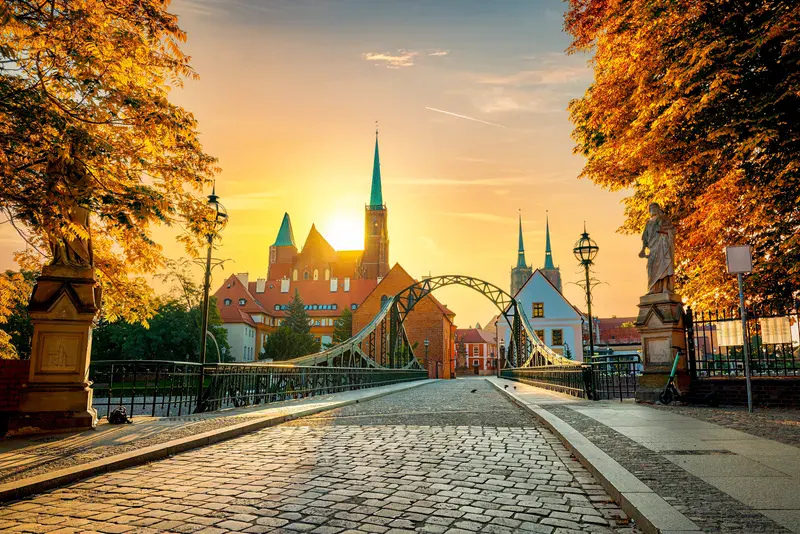
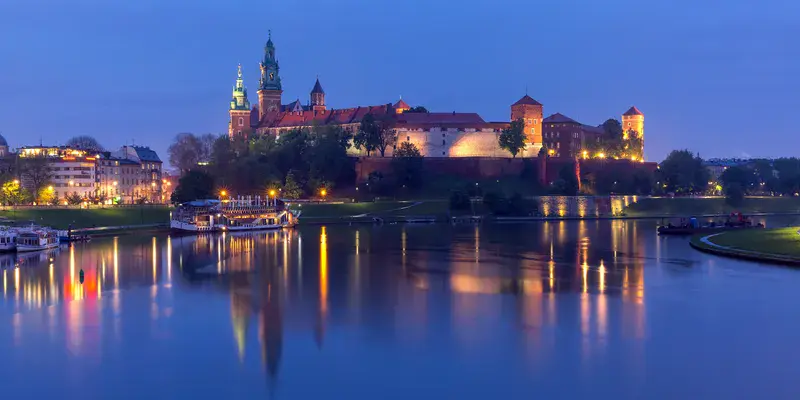
While securing Polish citizenship, don't overlook Poland itself as a retirement option. Our comprehensive guide to retiring in Poland covers everything from cost of living to healthcare, making it an increasingly popular choice for international retirees seeking European lifestyle at attractive prices.
Alternative Paths: When Descent Isn't Possible
Other EU Citizenship Options
If Polish citizenship by descent isn't viable, consider:
Italian Citizenship by Descent:
- Similar generous laws
- No generational limits
- Different documentation requirements
Irish Citizenship by Descent:
- Extends to grandchildren
- Simpler application process
- Strong passport for global travel
Investment-Based Residency:
- Portugal Golden Visa (being phased out)
- Spain investor programs
- Various EU residency by investment options
EU Retirement Without Citizenship
Even without EU citizenship, Americans can retire in Europe through:
- Retirement visas (Spain, Portugal offer specific programs)
- Non-lucrative visas for financially independent retirees
- Temporary residence permits renewable annually
Explore visa options with our Visa Pathways Tool to understand requirements for your target retirement destination.
Preparing for Your European Retirement Journey
Assess Your Readiness
Before diving into Polish citizenship applications, evaluate your overall readiness for international retirement with our Expat Readiness Quiz. This comprehensive assessment helps identify areas to focus on while your citizenship application processes.
Financial Protection Strategies
European retirement brings investment considerations, especially regarding currency exposure and dividend taxation. Our Dividend Portfolio Shield helps protect your retirement income from adverse tax treatment abroad, while the DRIP Comparison Calculator optimizes your investment strategy for international retirement.
Official Resources and Government Links
Polish Government Sources
Ministry of Interior and Administration
- Official citizenship information: gov.pl citizenship section
- Legal framework and current requirements
Polish Consulates in the US
Polish State Archives
- National Archives Search
- Regional archive contact information
US Government Resources
National Archives (NARA)
- Immigration records and naturalization documents
- catalog.archives.gov
USCIS Genealogy Program
- Historical immigration and naturalization records
- uscis.gov/genealogy
Frequently Asked Questions ❓
Click any question to expand the answer.
Conclusion: Your European Future Awaits
Polish citizenship by descent offers one of the most accessible paths to EU citizenship for Americans with Polish heritage. While the process requires patience, thorough documentation, and often professional assistance, the rewards are substantial: unrestricted access to live and retire across 27 European countries, enhanced global mobility, and a meaningful connection to your ancestral heritage.
The combination of Poland's generous citizenship laws and the EU's freedom of movement creates unprecedented retirement opportunities. Whether you dream of retiring on Portugal's sunny coast, in Italy's wine regions, or Poland's historic cities, Polish citizenship makes it possible without visa restrictions or bureaucratic hurdles.
Start your journey today by gathering family documents and researching your Polish ancestry. With proper preparation and realistic expectations, you could hold your Polish passport within 12-18 months, opening doors to the European retirement lifestyle you've always imagined.
Remember, this process is as much about honoring your heritage as it is about securing your retirement future. Your Polish ancestors' courage in leaving their homeland can now provide you with the freedom to choose where and how you spend your golden years – a fitting tribute to their legacy and your future.