Antwerpen/Antwerp, Belgium
Data updated Sep 3, 2026
📊 Scores
Best fit: Digital Nomad (score: 80)
Antwerp, Belgium: A Guide for Retirees, FIRE Seekers, and Digital Nomads
People move to Antwerp for the city's character, and Antwerp has more of it than anywhere else in Belgium. This is the country's second city, a working North Sea port that handles a large share of Europe's cargo, the historic center of the global diamond trade, and an outsized force in fashion and design for a place its size. It carries all of that with a particular swagger, the kind of civic pride that locals are happy to tell you about, which gives Antwerp a stronger and more distinct identity than Brussels and a more commercial, big-city energy than Ghent. The trade for that style is the price. Antwerp approaches Brussels-level cost without Brussels' international, English-speaking infrastructure, and like the rest of Flanders it runs in Dutch. It is the right call if your industry is here or if you want a culturally dense Flemish city with a real personality. If you want cheaper, look at Ghent; if you want international and English-friendly, look at Brussels.
What you're actually moving into
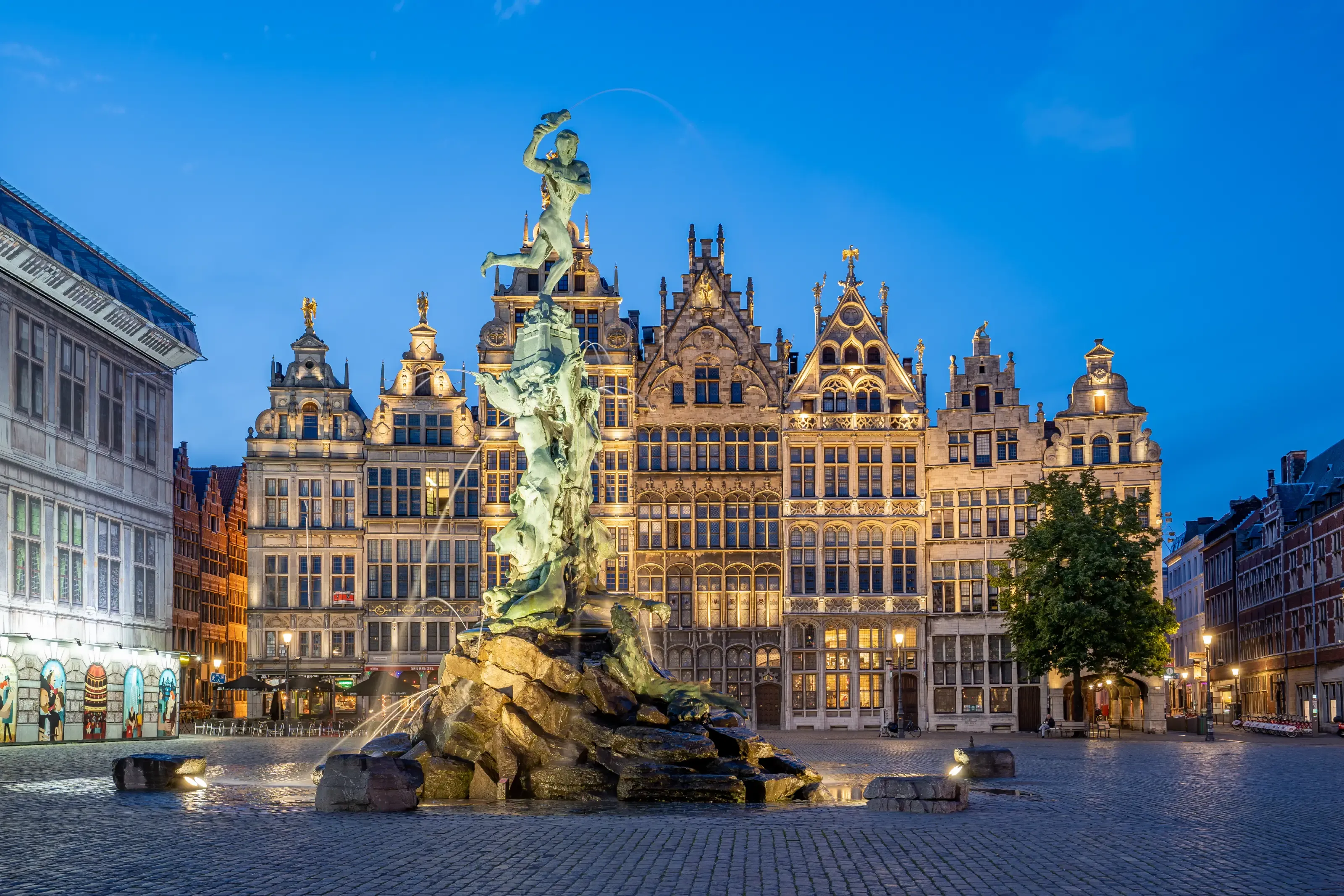
Antwerp is a real city, not a town, and it reads that way: a dense, walkable, stylish core wrapped around the cathedral and the Grote Markt, the grand shopping spine of the Meir, the diamond quarter and the cathedral-like Central Station, and a riverfront on the Scheldt that the city has spent two decades redeveloping. The Eilandje docklands, anchored by the MAS museum, turned old port land into one of the most desirable parts of town. Het Zuid, the southern district, is the arty quarter, galleries and restaurants around the reopened royal fine arts museum.
Where you live shapes the experience. Berchem, home to the Zurenborg art-nouveau streets and a major train station, is a favorite of professionals who want character and a fast commute. Borgerhout is diverse, energetic, and cheaper, popular with a younger and more international crowd. Deurne and Wilrijk are calmer residential districts where the rent eases. Out beyond the ring, Brasschaat is the leafy, affluent suburb for families who want green and space, and Mortsel offers a quieter base just south of the city.
The community here is more local than Brussels and, like Ghent, Flemish and Dutch-speaking, but Antwerp adds its own layers: a long-established Orthodox Jewish community around the diamond district, and diverse immigrant neighborhoods to the north and east. There is an expat presence tied to fashion, logistics, and the port, but it is smaller and less English-defaulting than Brussels. You will integrate more, and you will need more Dutch to do it.
The weather
Same gray, mild, maritime climate as the rest of central Belgium. No extremes, no air conditioning needed, no harsh winters, but a lot of overcast days, frequent drizzle, and short winter daylight that bottoms out around a half-past-four sunset in December. Comfortable year-round, gray most of it, and the adjustment that catches newcomers is the lack of sun, not the cold.
Cost of living
Antwerp is one of the most expensive places to live in Belgium, sitting near Brussels levels and clearly above Ghent. It is a fashion and design city, and that taste shows up in rents, restaurants, and the general cost of looking the part. You can soften the number by living in a district like Borgerhout or Deurne rather than the center or Het Zuid, but you are still paying second-city prices, not value prices.
The money reality is the same one that applies across Belgium and separates it from any geoarbitrage destination. The country uses the euro, so dollar earners carry currency risk on income and savings. And Belgium taxes residents on worldwide income, with a top marginal rate near 50 percent plus a communal surcharge, a flat 30 percent on dividends, and, new for 2026, a 10 percent tax on capital gains from financial assets above an annual exemption. Antwerp does not stretch your money. It charges a high European price for style, culture, and a strong local identity. The complete tax picture, and how it lands differently for an employee versus a retiree, is in our guide to moving to Belgium.
The two Antwerps
This is the section the tourism copy skips. Antwerp has a glossy surface, fashion houses, diamond money, riverfront lofts, and underneath it a working port that has become the main gateway for cocaine entering Europe. That trade has brought waves of drug-gang violence in recent years, including shootings and grenade incidents. The important context for anyone considering a move is that this violence is geographically concentrated and tied to the trade itself, clustered in specific districts and communities, and it does not reach the daily life of a typical resident or expat in the center, Berchem, or the leafy suburbs. You should know it is part of the city's recent story, not be scared off by it.
The friction that will actually shape your life is quieter. Antwerp asks near-Brussels money while running on Dutch like Ghent, and it has less of the international, English-speaking scaffolding that makes Brussels easy for newcomers. The registration wall is the same one you hit anywhere in Belgium: you need an address before you can register, a registration before you get a national number, and that number before you can finish a bank account, the health system, or most contracts, followed by a home visit from a local officer to confirm you live where you say. Plan for weeks, learn some Dutch, and budget for a city that expects you to pay for its style.
Getting around, healthcare, and connections
Antwerp is built for bikes and trams. The De Lijn network covers the city, the center is dense and walkable, and cycling is the default for a lot of residents, helped by a flat layout. You can live here without a car. Connections are strong: the Central Station, itself one of the most beautiful in the world, puts Brussels under an hour away and Amsterdam around an hour, and the city sits on the main north-south rail and road corridors. For someone who wants a cultured base with fast access to two capitals, it is well placed.
Healthcare is a Belgian strength, and Antwerp has the full range, from neighborhood clinics to the Antwerp University Hospital in the southern suburbs. The system is high-functioning and built on mandatory affiliation with a health fund, care is good, and once you are inside the system costs are a fraction of US prices. The catch is the same entry sequence everywhere in Belgium: register, join a fund, and carry private insurance in the gap before coverage begins.
Belgium's visa options
Belgium has no retirement visa, no passive-income visa, and nothing like the off-the-shelf digital nomad visas Spain or Portugal offer. The routes that exist favor people with a reason to be here, which in Antwerp often means fashion, design, logistics, the port, diamonds, or the creative industries.
If you have a job offer, you arrive on the single permit, applied for by your employer through the Flanders regional authority, the most common route into a city built around specific industries.
If you are self-employed or work remotely, the route is the self-employed professional card, which RewireAbroad also catalogs as the Belgium Digital Nomad Visa. It expects a viable business plan and proof your activity serves a Belgian economic interest, so it is heavier than a true nomad visa, but it is the door that exists for location-independent earners.
If your spouse is an EU citizen, that is the cleanest path available.
The long game is the reason the bureaucracy pays off. Five years of legal residence can lead to a Belgian passport, which is an EU passport, with dual citizenship allowed. The current language requirement is A2, with an announced tightening toward B1 and a nationality exam, so starting sooner is the safer bet. The full visa, tax, and citizenship math is in our guide to moving to Belgium.
Who Antwerp is for
Antwerp is built for the professional or creative whose work lives here. If you are in fashion, design, advertising, logistics, the diamond trade, or anything tied to the port, the city gives you a dense, stylish, culturally rich base with a personality no other Belgian city matches. For that person, the cost and the Dutch are the price of being where the industry is, and Antwerp earns it.
It is the wrong city for the FIRE or cheap-living seeker. It pairs Belgium's heavy taxes with near-Brussels costs, so a portfolio works harder almost anywhere else. If saving fast is the goal, look at the geoarbitrage tier, or at Ghent inside Belgium.
For the digital nomad, Antwerp is workable and genuinely pleasant, bikeable, cultured, and well connected, but it runs in Dutch, lacks the English-default international scene of Brussels, and offers no dedicated nomad visa. Go in wanting what Antwerp actually is, a proud, stylish, second city with a strong identity and a high price, rather than a budget base that happens to be beautiful.
Visa, tax, and cost figures verified June 2026. Belgium introduced a capital gains tax on financial assets in 2026 and has announced tighter citizenship language rules, and figures shift, so confirm current requirements with a licensed immigration or tax professional before you apply. Full detail in our guide to moving to Belgium.
🏚️ Cost of Living
💰 Budgets and Costs
Grocery Basket
Eating Out
Utilities & Lifestyle
Housing
A 1BR in the center runs about $1050/mo. If your income is in another currency, bank FX fees add up. A multi-currency account can cut that cost.
See low-fee transfersWe may earn a commission at no cost to you.
💰 Real Spend Reports
🛡️ Safety & Crime
(Higher is safer)
(Lower is safer)
Antwerpen is genuinely safe for expats, with low violent crime and a well-policed city center. Petty theft and pickpocketing occur in crowded areas like Central Station and the Diamond District—stay alert with valuables. Avoid the Schipperskwartier late at night, where drug-related activity concentrates. Scams are minimal compared to other European cities. The main practical concern is bicycle theft, extremely common here. Overall, this is a secure, walkable city where Americans can live comfortably with standard urban awareness.
🏥 Healthcare
🌤️ Climate
Best Months
Climate Notes
Oceanic climate with mild weather throughout the year.
💻 Digital Nomad
Community Notes
| Name | Price/mo | Notes |
|---|---|---|
| Fosbury & Sons - WATT Tower | $350 | Located in the trendy Green Quarter, Fosbury & Sons offers a design-focused workspace with a sophisticated atmosphere, perfect for those seeking a premium coworking experience. It's known for its community events and high-quality amenities. |
| Bar d'Office | $275 | Bar d'Office offers a more relaxed and social coworking environment in the heart of Antwerp. It's a great option for digital nomads looking to connect with other professionals in a casual setting, and is known for its flexible membership options. |
| Regus Antwerp Central Station | $290 | Conveniently located near Antwerp Central Station, Regus provides a professional and accessible workspace for remote workers. Its central location makes it easy to commute to and from, and it offers a range of office solutions. |
| Spaces Antwerp Franklin Rooseveltplaats | $310 | Situated near Franklin Rooseveltplaats, Spaces offers a vibrant and creative coworking environment. It's well-suited for digital nomads who appreciate a modern design and a collaborative atmosphere, with easy access to public transportation. |
Planning to live in Antwerpen/Antwerp long-term? Belgium Digital Nomad Visa lets remote workers live legally with a minimum income of $765/month.
View full requirements →Working remotely from Antwerpen/Antwerp? Nomad health insurance covers you across borders, month to month.
See nomad insuranceWe may earn a commission at no cost to you.
🧳 Expat Life
Expat Life Notes
A global diamond and fashion hub. It is cosmopolitan, creative, and very expat-friendly with high English proficiency.
Pros
- ✓ Vibrant fashion and art scene
- ✓ Excellent dining and bars
- ✓ Global connectivity
Cons
- ✗ High taxes
- ✗ Gloomy winter weather
- ✗ Traffic around the port can be intense
🛂 Visa Options for Belgium
Many long-stay visas require proof of health insurance. Compare international health plans before you apply.
Compare health insuranceWe may earn a commission at no cost to you.
Earning over $765/mo? You may qualify for a Belgium visa.
Answer 10 questions and get a personalized match in under 2 minutes.
Could living/working in Antwerpen/Antwerp cut years off your work life?
With a 1-bedroom in the center at $1050/mo, your FIRE number here might be much lower than you think.
Moving to Antwerpen/Antwerp? Estimate what an international move would cost and compare mover quotes.
Estimate my move costShare This Guide
Antwerpen/Antwerp won't stay this cheap forever.
Cost-of-living and visa updates for Antwerpen/Antwerp and the rest of Belgium. Free with RA Postcards.
By submitting your email address, you will receive a free subscription to RA Postcards and special offers from Rewire Abroad and our affiliates. You can unsubscribe at any time, and we encourage you to read more about our Privacy Policy.