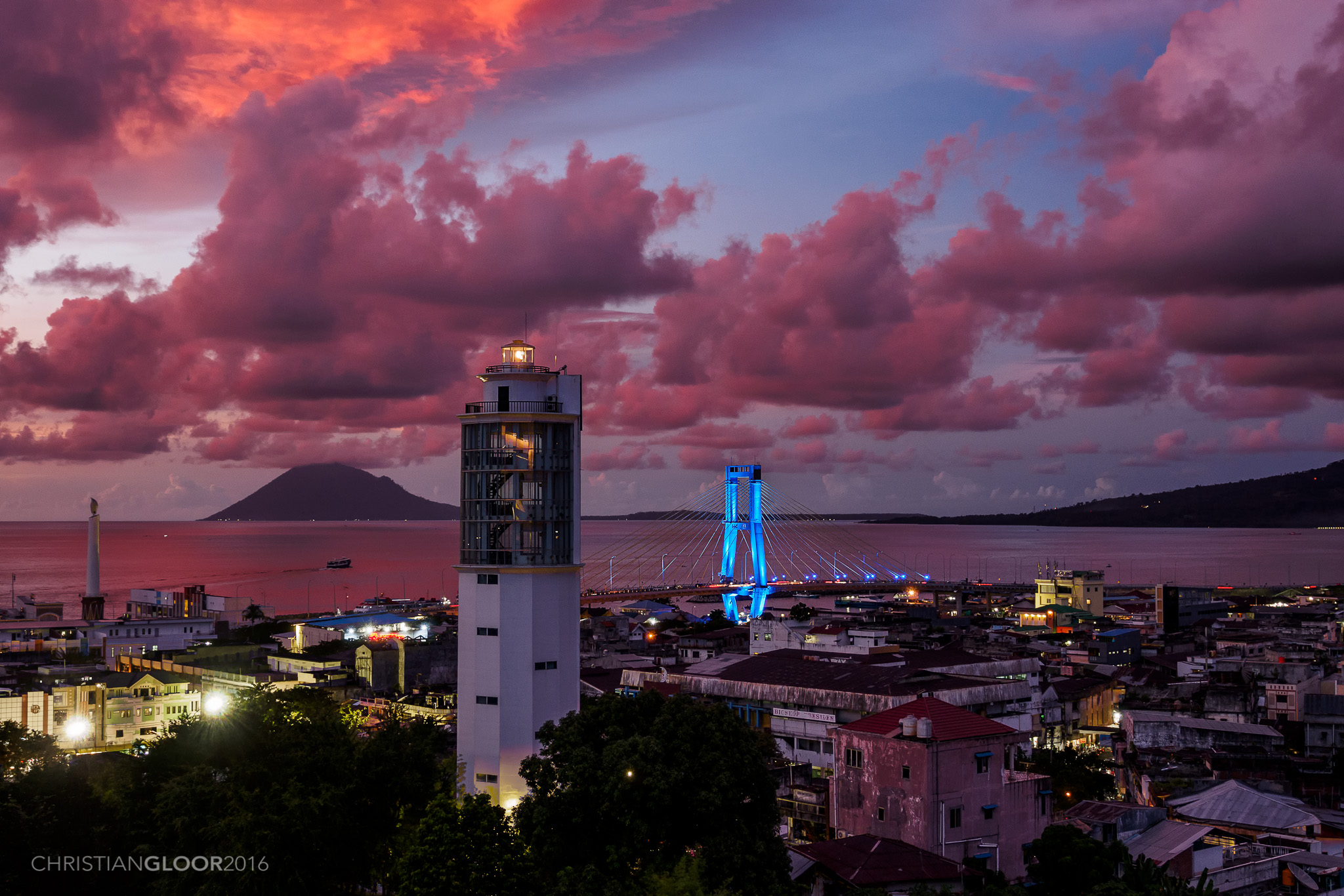
Manado sits at the northern tip of Sulawesi, a coastal city of 462 thousand people built just 18 m above sea level and set to Asia/Makassar time. The climate is tropical and warm all year, with high humidity and two clear seasons: a wet stretch from November through April that brings heavy rainfall, and a drier stretch from May through October with only occasional showers. Expats who settle here tend to cluster in Wenang, the neighborhood most often named as the popular choice, and the overall expat community is small, so newcomers should expect to build their social circle deliberately rather than step into an established crowd. Internet runs at an average of 25 Mbps, enough for most remote work, though the limited English proficiency across the city means a few words of Indonesian go a long way.
The cost of living is where Manado stands out, with a cost of living index of 33 against New York at 100. A one-bedroom apartment in the city center rents for $251/mo, while the same outside the center drops to $82/mo. Three-bedroom units run $298/mo in the center and $171/mo outside it. Utilities come to $54/mo, internet $14/mo, and a mobile phone plan just $4/mo, with a gym membership at $13/mo. Eating out is cheap: an inexpensive restaurant meal is $1 per person, a mid-range three-course meal for two is $17, and a cappuccino is $2. A single adult can live on a budget tier total of $214/mo with rent included, step up to a mid-range tier of $280/mo, or settle into a comfortable tier of $475/mo. Excluding rent, a single person spends around $420/mo and a family of four around $1,300/mo. Against that, the average monthly net salary locally is $214/mo, so the gap between local wages and expat budgets is wide and worth planning around.
Safety is a mixed but workable picture. The safety index sits at 60 out of 100 and the crime index at 38, where lower is safer, so day-to-day life is generally calm. Air quality is moderate, with an index of 45, better than many larger Asian cities but not pristine. Healthcare quality is rated fair, which means routine care is available but serious or specialized treatment may prompt a trip elsewhere. The small expat community in Wenang can help with practical referrals, and newcomers should budget time to identify a clinic or doctor they trust before they need one.
For stays, Indonesia offers the Retirement Visa (KITAS) and the Remote Worker Visa (E33G), both requiring a minimum monthly income of $2,000/mo. The nearest airport is MDC, 11 km away, which keeps arrivals and departures simple. Manado suits budget-conscious expats, early retirees chasing a low cost of living, and remote workers who value cheap rent and quiet over big-city energy. The overall expat score is 77/100 and the FIRE score 79/100, while the retiree score of 53/100 and digital nomad score of 56/100 reflect the trade-offs: limited English, a small community, and fair healthcare in exchange for some of the lowest living costs in the region.