Medicare vs. International Health Insurance: The $50,000 Decision

Retiring abroad? Here’s a reality check: Medicare doesn’t travel with you. That means a single emergency—say, a $50,000 hospital stay in Portugal—could wipe out years of savings.
For thousands of Americans living overseas, the decision to keep Medicare or switch to international coverage is one of the biggest financial calls they’ll make. This guide breaks down the true costs, coverage gaps, and strategies you need to avoid a retirement-ruining surprise.Retiring abroad? Here’s a reality check: Medicare doesn’t travel with you. That means a single emergency—say, a $50,000 hospital stay in Portugal—could wipe out years of savings.
For thousands of Americans living overseas, the decision to keep Medicare or switch to international coverage is one of the biggest financial calls they’ll make. This guide breaks down the true costs, coverage gaps, and strategies you need to avoid a retirement-ruining surprise.
Why Medicare Abroad Is a $50,000+ Gamble
The Medicare Reality Check 🚨
Here's what Medicare administrators don't advertise in their brochures: Medicare provides zero coverage for healthcare services outside the United States, with only three narrow exceptions that are practically useless for most expats:
- Emergency care while traveling through Canada to Alaska
- Emergency care on a cruise ship within 6 hours of a US port
- Emergency care in Canada or Mexico in very specific circumstances
That's it. Every other medical expense – from routine checkups in Thailand to emergency surgery in Spain – comes straight out of your pocket.
The True Cost of Going Without International Coverage
Zara, a 68-year-old retiree living in Lisbon, learned this lesson the hard way. A simple fall resulted in a broken hip requiring surgery. The total bill: €47,000 ($51,000). With no international insurance and Medicare refusing to pay, she faced a choice between depleting her entire emergency fund or flying back to the US for treatment – assuming she was stable enough to travel.
Meanwhile, her friend Kai, also 68 and living in the same neighborhood, had switched to international coverage two years earlier. His identical surgery cost €2,000 out of pocket after insurance coverage. The difference? €45,000 ($49,000) – almost exactly our $50,000 benchmark.

Medicare vs. International Insurance: The Complete Breakdown
What You're Actually Paying For
Coverage Aspect | Medicare + Supplement | International Health Insurance |
|---|---|---|
US Coverage | Comprehensive | Limited or None |
International Coverage | Virtually None | Comprehensive |
Annual Premium | $2,400-$4,800 | $2,000-$8,000 |
Prescription Coverage | Good in US only | Global coverage |
Emergency Evacuation | Not included | Usually included |
Routine Care Abroad | $0 coverage | Full coverage |
Pre-existing Conditions | Covered (after waiting periods) | Varies by insurer |
The Medicare Trap for Expats
The cruel irony of Medicare for expats is that you're paying for coverage you literally cannot use while living abroad, yet dropping it can be financially devastating if you ever return to the US.
Medicare Part B Premium Penalties: If you drop Medicare Part B while living abroad and later re-enroll, you'll face a permanent 10% penalty for each 12-month period you were eligible but didn't enroll. Live abroad for 10 years without Medicare Part B? You'll pay 100% more than the standard premium for the rest of your life.
The Medigap Maze: Supplemental insurance policies have their own enrollment restrictions. Miss your initial enrollment window, and you might never qualify for certain Medigap policies again, regardless of your health status.
International Health Insurance: Your Medicare Alternative
Coverage That Actually Works Abroad 🌍
International health insurance operates on a fundamentally different model than Medicare. Instead of being tied to your home country's healthcare system, these policies provide coverage wherever you are in the world (usually excluding your home country unless specifically included).
Key Advantages:
- True Portability: Coverage follows you regardless of where you live or travel
- Global Provider Networks: Access to quality healthcare worldwide
- Comprehensive Benefits: Often more extensive than Medicare, including dental, vision, and wellness programs
- Emergency Evacuation: Transportation to the nearest adequate medical facility or back to your home country
- Prescription Coverage: International pharmacy networks
Real-World Cost Comparisons
Let's examine three typical expat scenarios:
Scenario 1: Healthy 65-Year-Old Couple
- Medicare + Supplement (keeping for US return option): $6,000/year
- International Coverage: $4,500/year
- Savings: $1,500/year ($15,000 over 10 years)
Scenario 2: 70-Year-Old with Managed Conditions
- Medicare + Supplement: $7,200/year
- International Coverage: $8,500/year
- Additional Cost: $1,300/year, but gains global coverage and emergency evacuation
Scenario 3: Single 68-Year-Old Expat
- Keeping Medicare (unused): $3,600/year
- International Coverage: $3,200/year
- Savings: $400/year plus actual usable coverage

The Financial Impact by Expat Demographics
Digital Nomads (Under 65)
If you're not yet Medicare-eligible, your decision is straightforward: international health insurance is your primary option. The key considerations are:
- Coverage Area: Some policies exclude the US entirely, which could be problematic if you return frequently
- Deductible Levels: Higher deductibles can significantly reduce premiums for healthy individuals
- Telemedicine: Essential for nomads in remote locations
Early Retirees (55-64)
This demographic faces unique challenges. Too young for Medicare but old enough that health concerns are becoming real considerations.
Strategic Considerations:
- Bridge Coverage: International insurance can bridge the gap until Medicare eligibility
- Pre-existing Condition Planning: Establishing coverage before conditions develop
- Geographic Arbitrage: Lower healthcare costs abroad can stretch retirement savings significantly
Traditional Retirees (65+)
This group faces the most complex decision matrix, balancing Medicare's domestic advantages against international coverage needs.
Decision Framework:
- Permanence of Move: Truly permanent expats benefit most from dropping Medicare
- Health Status: Those with significant medical needs may prefer keeping both
- Financial Capacity: Can you afford both types of coverage?
- Return Plans: How likely is a return to the US?
Country-Specific Healthcare Considerations
European Destinations
Countries like Portugal, Spain, and Italy offer excellent healthcare systems, but access varies significantly based on your residency status and insurance coverage.
Portugal Example:
- Public healthcare available to residents, but queues can be long
- Private healthcare excellent but expensive without insurance
- International insurance provides immediate access to private facilities
- Estimated savings vs. US healthcare: 60-80%
United Kingdom Considerations: The UK NHS provides excellent coverage for residents, but temporary residents and visa holders face restrictions. International insurance fills these gaps while providing private healthcare access.
Asian Healthcare Hubs
Countries like Thailand, Malaysia, and Singapore have become medical tourism destinations due to high-quality, low-cost healthcare.
Thailand Healthcare Economics:
- World-class private hospitals at 70% lower costs than US
- International insurance provides access to premium facilities
- Many procedures cost less than US insurance deductibles
Latin American Options
Mexico, Costa Rica, and Panama offer proximity to the US with significantly lower healthcare costs.
Mexico Healthcare Reality:
- Border regions offer easy access to US healthcare if needed
- International insurance covers both private Mexican facilities and US emergency care
- Prescription costs can be 80% lower than US prices
Making the $50,000 Decision: Your Action Framework
Step 1: Calculate Your Personal Break-Even Point
The break-even analysis isn't just about premium costs – it's about total healthcare expenses over time.
Key Variables:
- Current health status and projected needs
- Length of time living abroad
- Countries you plan to live in
- Likelihood of returning to the US
- Risk tolerance for large medical expenses
Step 2: Evaluate Your Return Strategy
Permanent Expats: Those never planning to return can drop Medicare and rely entirely on international coverage.
Flexible Expats: Those who might return should consider keeping Medicare Part A (usually free) and carefully evaluate Part B decisions.
Frequent Travelers: Those spending significant time in both the US and abroad may benefit from maintaining both coverages.
Step 3: Health Status Assessment
Healthy Individuals: Can often benefit from higher-deductible international plans with significant premium savings.
Chronic Conditions: Need to carefully evaluate coverage for ongoing treatments and prescription access.
High-Risk Categories: May benefit from comprehensive coverage in both systems.
Tools & Resources for Your Healthcare Decision 🛠️
Making this crucial decision requires careful analysis of your personal situation. These tools can help you evaluate your options systematically:
Financial Planning Resources:
- FIRE Calculator: Factor healthcare costs into your retirement timeline and see how geographic arbitrage can accelerate your financial independence
- FIRE Procrastination Calculator: Understand the real cost of delaying your international move, including potential healthcare savings
- Geo-Arbitrage Savings Calculator: Compare total living costs, including healthcare, between your current location and potential expat destinations
Destination Research:
- Country Search Tool: Filter destinations based on healthcare quality, costs, and availability of international insurance networks
- Country Directory: Access detailed healthcare information for specific destinations, including insurance requirements and medical facility quality
Planning and Preparation:
- Visa Pathways: Many countries tie healthcare access to residency status – understand your visa options and their healthcare implications
- Expat Readiness Quiz: Assess whether you're prepared for the complexities of international healthcare, including insurance decisions
Additional Healthcare Resources:
- International insurance broker consultations
- Medicare.gov's official overseas coverage information
- Country-specific healthcare quality rankings from WHO
- Expat healthcare forums and community experiences
- Medical tourism cost comparison databases

Real Expat Experiences: Learning from Others' Decisions
The Medicare Keeper: River's Story
River, 72, maintains both Medicare and international insurance while living between Costa Rica and Florida. "I pay about $8,000 annually for both, but I sleep well knowing I'm covered everywhere. Last year, my international insurance covered a $15,000 procedure in San José that would have bankrupted me otherwise."
Total Cost: $8,000/year in premiums Major Benefit: $15,000 procedure covered internationally Net Benefit: $7,000 savings in year one, plus peace of mind
The Medicare Dropper: Phoenix's Choice
Phoenix, 69, dropped Medicare Part B after five years in Portugal. "I calculated that even with the future penalties, I'd save over $30,000 in the next decade. My international insurance costs $3,500 annually and covers everything I need here."
Annual Savings: $1,500 compared to keeping Medicare 10-Year Savings: $15,000 (even accounting for future penalties) Risk: Potential difficulty if returning to US healthcare system
The Strategic Planner: Sage's Approach
Sage, 66, kept Medicare Part A (free) but dropped Part B while living in Thailand. "I can always re-enroll in Part B if I return to the US. The penalties are cheaper than paying for coverage I can't use."
Current Situation: Paying only for international insurance ($2,800/year) US Safety Net: Can re-enroll in Medicare Part B when needed Strategy: Minimizing costs while maintaining future options
Making Your Decision: The Four-Question Framework
Question 1: How Permanent Is Your Move? 🏠
Permanent (90%+ confidence): Dropping Medicare makes financial sense Temporary (1-5 years): Keep Medicare, add international coverage Uncertain: Maintain Medicare Part A, carefully evaluate Part B
Question 2: What's Your Health Profile? 🏥
Excellent Health: Consider higher-deductible international plans Managed Conditions: Evaluate coverage for your specific needs Complex Medical Needs: May require maintaining both systems
Question 3: What's Your Risk Tolerance? 📊
High Risk Tolerance: Drop Medicare, rely on international coverage Moderate Risk Tolerance: Keep Medicare Part A, evaluate Part B Low Risk Tolerance: Maintain both coverages
Question 4: What's Your Financial Capacity? 💸
Limited Budget: Choose the single best option for your situation Comfortable Budget: Consider maintaining both for maximum flexibility Abundant Resources: Optimize for convenience rather than cost
The Hidden Costs and Benefits
Medicare Hidden Costs
- Premium increases over time
- Coverage gaps requiring supplemental insurance
- No coverage for the healthcare you actually need abroad
- Penalties for dropping and re-enrolling
International Insurance Hidden Benefits
- Often includes services Medicare doesn't (dental, vision, wellness)
- Emergency evacuation coverage can be life-saving
- Access to medical tourism opportunities
- Prescription drug savings in many countries
- Telemedicine services for remote locations
The Technology Factor 📱
Modern international insurance often includes digital health services that Medicare lacks:
- 24/7 telemedicine consultations in multiple languages
- Digital prescription management across countries
- Health record portability
- Real-time claim processing
- Mobile apps for provider location and appointment booking

Final Thoughts: Your Healthcare Freedom Decision
The choice between Medicare and international health insurance isn't just about money – though the $50,000+ potential difference makes it crucial to get right. It's about healthcare freedom: the freedom to live where you want without worrying about catastrophic medical bills, and the freedom to access quality healthcare when and where you need it.
The traditional model of retiring in the US with Medicare as your safety net is just one option. For many expats, international health insurance provides better coverage, lower costs, and the flexibility to truly embrace global living.
Key Takeaways:
- Medicare provides virtually no international coverage – you're paying for benefits you can't use abroad
- International insurance costs vary widely but often provide better value for expats
- The decision depends heavily on your return plans – permanent expats benefit most from switching
- Timing matters – Medicare enrollment rules create permanent penalties for some decisions
- Your health status and risk tolerance should drive your coverage level decisions
Your Next Steps:
- Use our planning tools to model different scenarios for your situation
- Research your target destinations thoroughly, including healthcare quality and costs
- Consult with international insurance brokers for personalized quotes and advice
- Talk to expats in your target location about their healthcare experiences
- Plan your transition carefully to avoid coverage gaps or unnecessary penalties
Ready to Rewire your Life?
Sign up to receive updates and insights.
By submitting your email address, you will receive a free subscription to RA Postcards and special offers from Rewire Abroad and our affiliates. You can unsubscribe at any time, and we encourage you to read more about our Privacy Policy.
The $50,000 decision ultimately comes down to this: Do you want to pay for healthcare coverage you can't use while living abroad, or invest in coverage that works wherever your international journey takes you? For most expats, the math is clear – but the peace of mind is priceless.
Ready to dive deeper into your international living plans? Explore our comprehensive country guides, use our financial planning tools, and take the first steps toward healthcare freedom in your new life abroad. Your future self – and your bank account – will thank you. 🌟
Related Resources
For those planning their expat journey, here are additional resources that complement your healthcare planning:
Financial Independence Strategies:
- Achieve FIRE Faster: 7 Steps to Financial Independence - Essential strategies for accelerating your path to financial freedom
- FIRE After 50: Accelerated Strategy - Tailored approaches for later-in-life financial independence
- The 4% Rule in 2025: Latest Research Updates - Current thinking on sustainable withdrawal rates
Healthcare and Medical Considerations:
- Healthcare Abroad vs US: Complete Guide - Comprehensive comparison of international healthcare systems
- Overseas Health Coverage: What You Need to Know - Detailed breakdown of international health insurance options
- US Doctor Visits While Living Abroad: Costs and Logistics - Planning for US medical care as an expat
Retirement Planning and Destinations:
- Americans Retire Overseas: The Complete Guide - Step-by-step planning for international retirement
- Retire Earlier: 5 Countries That Slash Your FIRE Age - Top destinations for early retirement
- Tax-Free Retirement Havens 2025 - Countries offering favorable tax treatment for retirees
Country-Specific Guides:
- Portugal vs Spain: Ultimate Comparison - Detailed analysis of two popular expat destinations
- Retire Early in Northern Cyprus: FIRE Guide - Exploring an affordable Mediterranean option
- Live in Argentina on $800-$1200 a Month - Budget-friendly South American living
Financial Management Abroad:
- Keep Your US Credit Score While Living Abroad - Maintaining financial ties to the US
- FIRE Tax Optimization Playbook - Advanced tax strategies for expats
These resources will help you build a comprehensive plan for your life abroad, ensuring you're prepared for all aspects of international living beyond just healthcare decisions.
Adonis Villanueva
Adonis Villanueva is the founder of RewireAbroad, where he combines technology, analytics, and global mobility research to help readers make smarter decisions about living abroad. His work centers on geoarbitrage, financial independence, visas, taxes, and long-term relocation planning.
Rewire Abroad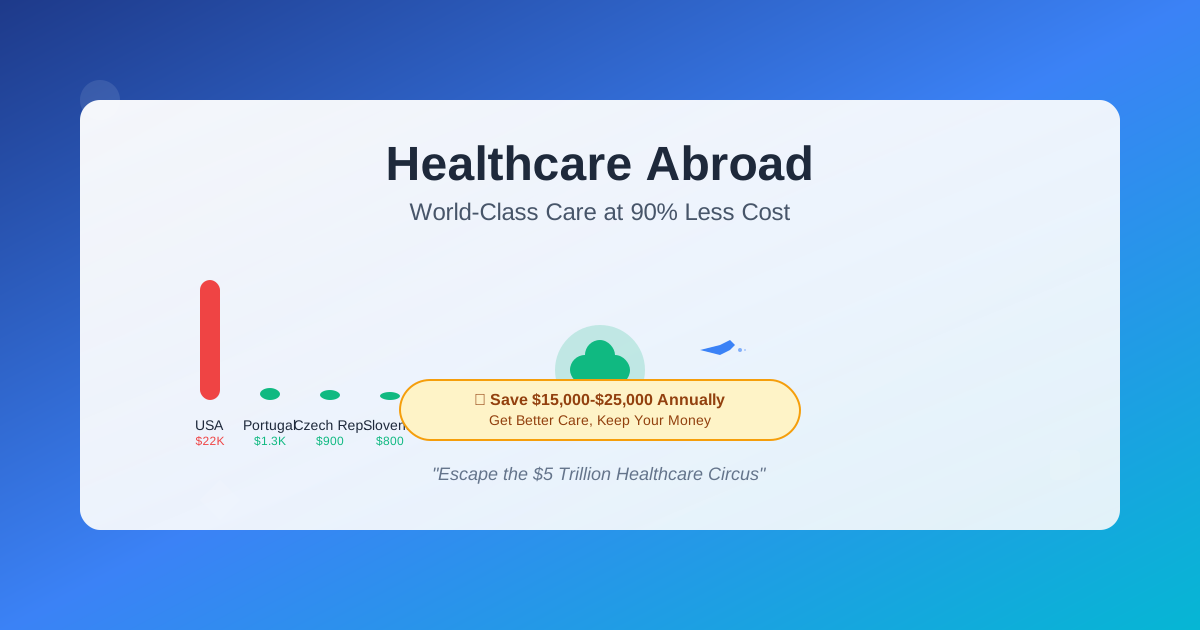
Healthcare Abroad: Your Escape Route from America's $5 Trillion Medical Circus
Worried about healthcare overseas? Discover countries with world-class, affordable healthcare—and why moving abroad is the smartest health decision.
Healthcare Independence: FIRE Without Employer Insurance
Mastering healthcare independence for FIRE with ACA marketplace strategies, HSA optimization, and alternative coverage options.

The Expat’s Health Insurance Handbook: Navigating Coverage Overseas
Master healthcare with this guide - compare insurance, get expert tips on choosing the right policy, and avoid common pitfalls on coverage abroad.

Retire in Slovenia 2026: Costs, Visa Reality & Healthcare for Americans
Retire in Slovenia on $1,800/month: retirement visa but has a path with the Type D long-stay. Healthcare, costs, and where to live. 2026 guide.