Fan Your FIRE: How to Live in Argentina on $800–$1,200 a Month (Yes, Really!)
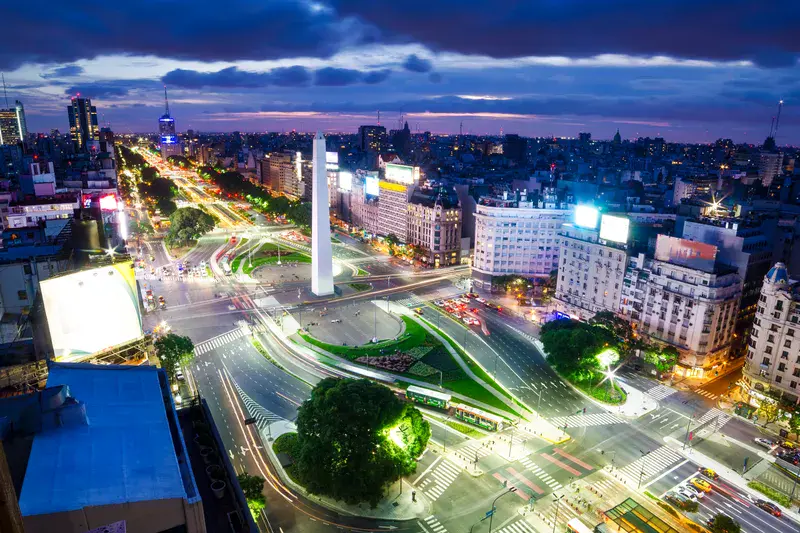
Argentina is one of the best-kept secrets in the FIRE community. It's got all the ingredients that make geoarbitrage work: a low cost of living, beautiful landscapes, vibrant culture, and favorable currency exchange rates. When you're holding U.S. dollars, Argentina can feel like a lifestyle upgrade at a deep discount.
From the European charm of Buenos Aires to the wine-soaked valleys of Mendoza, you can find your perfect balance of adventure and affordability. Inflation is a factor, but so is the strength of your foreign income. If you're earning in dollars and spending in pesos, you're in the driver's seat.
Argentina at a Glance
Picture this: You're sipping a rich Malbec on a sun-drenched terrace, the snow-capped Andes stretching endlessly before you. Your monthly expenses? Less than what most Americans spend on rent alone. Your stress level? Practically nonexistent. Your FIRE timeline? Just accelerated by years, maybe even decades.
Welcome to Argentina, where your U.S. dollars don't just stretch—they multiply. For FIRE enthusiasts tired of grinding away in high-cost American cities, Argentina offers something revolutionary: the chance to live extraordinarily well on $800 to $1,200 per month while fast-tracking your path to financial independence.
A quick note on inflation: Yes, Argentina has historically high inflation—often in the double or even triple digits annually. Prices can fluctuate rapidly, and locals frequently adjust prices to keep up. That said, if your income is in U.S. dollars, the exchange rate volatility often works in your favor. The key is to treat Argentina like a high-reward investment—manage your risk, stay flexible, and don't keep too much cash in pesos.
Why Argentina is a FIRE Hotspot
Argentina isn't just another cheap destination where you sacrifice quality of life for savings. It's a sophisticated country that happens to offer incredible value for Americans with dollar-denominated income or savings.
The country's complex economic history has created a unique opportunity for foreign residents. While local inflation affects peso-denominated goods, your U.S. dollars maintain remarkable purchasing power through favorable exchange rates. This isn't temporary arbitrage—it's a structural advantage that's persisted for years and shows little sign of changing.
Beyond the economics, Argentina delivers on lifestyle. From the cosmopolitan streets of Buenos Aires to the wine-soaked valleys of Mendoza, you'll find European sophistication at Latin American prices. The healthcare system ranks among the best in South America, the digital infrastructure supports remote work, and the culture embraces leisurely living in a way that naturally aligns with FIRE principles.
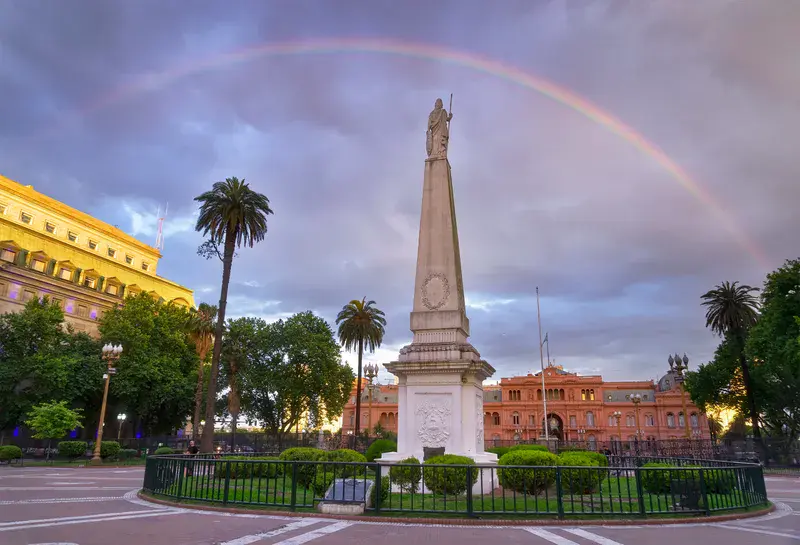
The climate diversity means you can find your perfect environment, whether you crave subtropical warmth in the north or temperate seasons in the central regions. For FIRE practitioners who've spent years optimizing every expense, Argentina offers the ultimate optimization: dramatically lower costs without sacrificing the good life.
The Cost Breakdown: How to Thrive on $800–$1,200/Month
Let's get specific about where your money goes—and how far it stretches.
Housing represents your biggest expense and biggest opportunity. In major cities like Buenos Aires, a comfortable one-bedroom apartment in a good neighborhood runs $400-600 monthly. Move to smaller cities like Salta or San Rafael, and that drops to $200-350. These aren't cramped studios—we're talking spacious apartments with modern amenities that would cost triple in any major U.S. city.
Food costs will shock you. A week's worth of groceries for one person averages $25-40, including fresh produce, quality meats, and local wines that would be considered premium in the States. Dining out remains incredibly affordable, with excellent restaurant meals ranging from $8-15. The Saturday morning farmer's market becomes entertainment, not just shopping.
Ready to Rewire your Life?
Sign up to receive updates and insights.
By submitting your email address, you will receive a free subscription to RA Postcards and special offers from Rewire Abroad and our affiliates. You can unsubscribe at any time, and we encourage you to read more about our Privacy Policy.
Transportation barely registers as an expense. Public transit in major cities costs under $0.50 per ride. Taxis and ride-shares cost a fraction of U.S. prices. Many FIRE relocators find themselves walking more simply because cities are designed for pedestrians, adding health benefits to financial ones.
Utilities and services round out the basics affordably. Internet, electricity, and phone service typically total $50-80 monthly. Private Health Insurance— comprehensive coverage that includes dental and vision—runs $30-60 per month for most expats.
Here's a realistic monthly budget for comfortable living:
Expense Category | Buenos Aires | Córdoba | Salta |
|---|---|---|---|
Rent (1BR, good area) | $500 | $400 | $300 |
Groceries | $160 | $140 | $120 |
Utilities & Internet | $80 | $70 | $60 |
Transportation | $40 | $30 | $25 |
Health Insurance | $50 | $50 | $50 |
Entertainment & Dining | $150 | $120 | $100 |
Miscellaneous | $100 | $80 | $70 |
Total | $1,080 | $890 | $725 |
These numbers assume a comfortable lifestyle, not bare-bones survival. You're talking about living well, not just getting by.
Top Major Cities for FIRE-Style Retirement
Buenos Aires
Buenos Aires offers the full urban experience without the urban price tag. This is South America's Paris—grand boulevards, world-class museums, legendary nightlife, and a café culture that makes every afternoon feel leisurely. For FIRE practitioners who worked in expensive cities like New York or San Francisco, Buenos Aires provides familiar urban amenities at dramatically reduced costs.
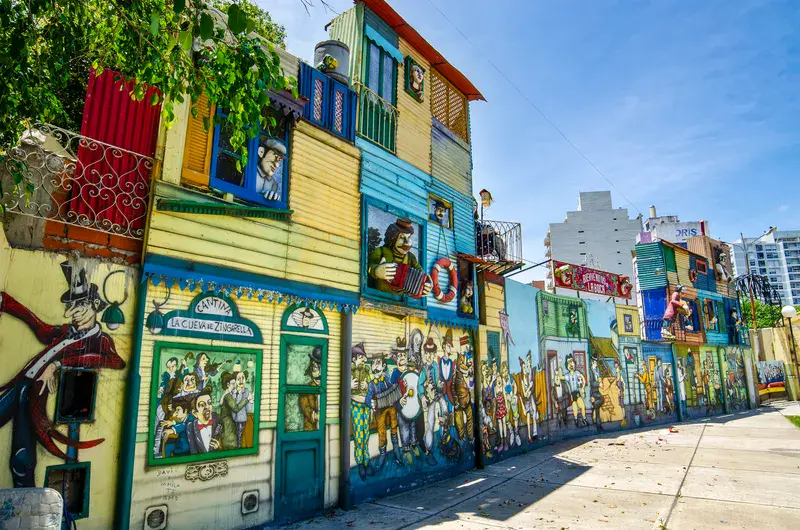
The city's extensive public transportation system means car ownership is optional. Neighborhoods like Palermo and Recoleta offer tree-lined streets, boutique shopping, and restaurant scenes that rival any major international city. Your $1,000-1,200 monthly budget here buys a lifestyle that would require $4,000-5,000 in most American cities.
Córdoba
Argentina's second-largest city punches above its weight for FIRE relocators. As a major university town, Córdoba maintains youthful energy while offering substantially lower costs than Buenos Aires. The city attracts remote workers and digital nomads, creating a community of like-minded expats focused on location independence.
Córdoba sits in the geographic heart of Argentina, making it easy to explore the entire country. The climate is temperate year-round, the cultural scene is vibrant, and your housing dollar stretches even further. Many FIRE families choose Córdoba for its blend of affordability, amenities, and educational opportunities.
Mendoza
Wine country living at its finest. Mendoza offers something unique: a resort-style lifestyle at everyday prices. Surrounded by vineyards and backdropped by the Andes, Mendoza attracts expats seeking outdoor adventure combined with sophisticated dining and wine culture.
The city is large enough to offer modern amenities but small enough to feel intimate. Cycling culture is strong, the restaurant scene focuses on incredible steaks and local wines, and weekend adventures in the mountains are practically mandatory. For active FIRE practitioners, Mendoza delivers an unbeatable quality of life.
Lesser-Known Cities Where FIRE Dollars Go Further
Salta
Hidden in Argentina's northwest, Salta offers colonial architecture, stunning mountain vistas, and prices that seem too good to be true. This UNESCO World Heritage city provides cultural richness and natural beauty while keeping your monthly expenses well under $800.

Salta's historic center features cobblestone streets, colonial churches, and cafés where $3 buys excellent coffee and pastries. The surrounding landscape includes dramatic canyons, traditional villages, and some of Argentina's highest-altitude vineyards. For FIRE practitioners seeking adventure and ultra-low costs, Salta represents exceptional value.
San Rafael
Mendoza gets the headlines, but San Rafael offers similar wine country charm with even lower prices and fewer tourists. This understated city sits in the heart of Argentina's wine region, surrounded by vineyards and outdoor recreation opportunities.
San Rafael's relaxed pace suits FIRE lifestyles perfectly. Housing costs drop significantly compared to major cities, local markets overflow with fresh produce, and the wine is world-class but priced for locals. Many expats describe San Rafael as Argentina's best-kept secret.
San Juan and La Rioja
For ultimate affordability and solitude, these provincial capitals offer authentic Argentine living with minimal expat presence. Monthly expenses can drop below $700 while maintaining comfortable standards.
These cities work best for FIRE practitioners who prioritize savings over urban amenities. You'll find basic services, reliable internet, and friendly locals, but entertainment options are limited. The trade-off is substantial: your FIRE timeline accelerates dramatically when monthly expenses drop this low.
Geoarbitrage in Action: U.S. vs Argentina
The numbers tell the story better than words:
Expense Category | Phoenix, AZ | Salta, Argentina | Monthly Savings |
|---|---|---|---|
Rent (1BR) | $1,400 | $300 | $1,100 |
Groceries | $350 | $120 | $230 |
Health Insurance | $550 | $50 | $500 |
Transportation | $200 | $25 | $175 |
Utilities | $150 | $60 | $90 |
Total | $2,650 | $555 | $2,095 |
That's over $25,000 in annual savings from a single decision to relocate. For someone following traditional FIRE advice to save 50% of income, this geographic change alone could replace a $50,000 salary in terms of FIRE progress.

Consider the compound effect: $25,000 saved annually, invested at 7% returns, becomes $350,000 over 10 years. That single relocation decision potentially cuts years off your FIRE timeline while improving your daily quality of life.
Get There Faster: FIRE Tenets + Argentina
Traditional FIRE advice focuses on earning more and spending less. Argentina flips the script by dramatically reducing your baseline expenses while potentially improving your lifestyle.
The lean FIRE approach—targeting $25,000-40,000 annual expenses—becomes incredibly achievable when your monthly costs drop to $800-1,200. Suddenly, a nest egg of $300,000-500,000 provides full financial independence. For many Americans, that's reachable in their 40s or even 30s instead of their 60s.
Barista FIRE becomes even more attractive. With ultra-low living costs, part-time income of $500-800 monthly covers your entire budget. Teaching English online, freelance writing, or consulting work provides enough income to maintain your lifestyle while your investments compound.
The psychological benefits match the financial ones. When basic living costs drop so dramatically, work becomes optional much sooner. The stress of needing specific income levels decreases, allowing for more career flexibility and risk-taking.
Tools to Map Your Move & Simulate Your Savings
Before making any major life change, run the numbers with precision. Several tools can help you model your specific situation:
The 📈GeoArbitrage Simulator lets you input your current expenses and compare them with costs in different Argentine cities. You can model tax implications, currency considerations, and timeline adjustments based on your specific circumstances.
The 🔥FIRE Calculator shows exactly how reduced expenses affect your FIRE timeline. Input your current savings rate and target number, then see how Argentine living costs accelerate your progress. The results often surprise people—many discover they could achieve financial independence years earlier than planned.
The 🌎Country Search Tool helps determine if Argentina aligns with your specific priorities. Input factors like climate preferences, cultural interests, and budget constraints to see how Argentina compares with other FIRE-friendly destinations.
These tools transform abstract concepts into concrete plans. Instead of wondering "what if," you can calculate exactly how a move to Argentina would affect your financial independence timeline.
FAQ: Living in Argentina on a FIRE Budget
Click any question to expand the answer.
Final Thoughts: Is Argentina Right for You?
Argentina isn't without challenges. The bureaucracy can be frustrating, inflation affects local goods, and currency volatility requires some financial sophistication. Political and economic instability creates uncertainty that some people find stressful.
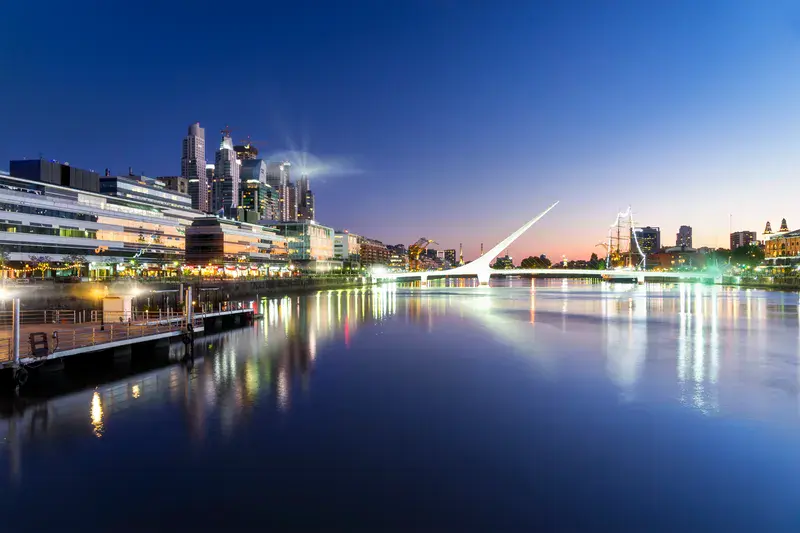
But for FIRE-minded individuals tired of the expensive American lifestyle treadmill, Argentina offers something transformative: the chance to live exceptionally well while dramatically accelerating your path to financial independence.
The lifestyle benefits extend beyond cost savings. You'll likely walk more, eat better, and stress less. The pace of life encourages the kind of present-moment awareness that many FIRE practitioners seek but struggle to find while grinding toward their number.
Your freedom doesn't start when you hit your FIRE target—it starts when you think differently about what life costs and what makes it meaningful. Sometimes that thinking starts in a café in Buenos Aires, or on a wine tour in Mendoza, or watching the sunset over the Andes from your $300-per-month apartment.
The path to financial independence doesn't have to mean decades of deprivation in expensive cities. Sometimes it means a plane ticket to Buenos Aires and the courage to discover that your American dollars can buy something priceless: time, freedom, and the chance to design a life that works for you.
Argentina might not be forever, but it could be the accelerator that makes your FIRE dreams achievable years sooner than you imagined. The only question left is: what are you waiting for?
"Your freedom doesn't start when you hit a number. It starts when you think differently. And sometimes, it starts in the Andes."
If you're ready to run the numbers and explore your options, start with the GeoArbitrage Simulator and fan your FIRE, Argentina-style.

Achieve FIRE Faster: 7 Proven Steps & Strategies to Early Financial Independence
Discover 7 actionable tips and strategies to accelerate your journey to financial independence, plus two bonus steps and proven resources.

Guide to Living and Retirement: Costs, Visas, and Essentials in Croatia
Everything you need to know about retiring in Croatia—visas (90-day, retirement, digital nomad) to living costs, healthcare, and retirement locales.

Why Americans Are Choosing to Retire Overseas
Discover why more Americans are retiring abroad and explore the best destinations, cost comparisons, and real-life expat stories.
How to Move to Slovenia in 2026: Costs, Visas & What No One Tells You
Slovenia costs 40-50% less than Austria or Italy next door. Here's the actual route Americans use, what it costs, and where to live. Updated 2026.