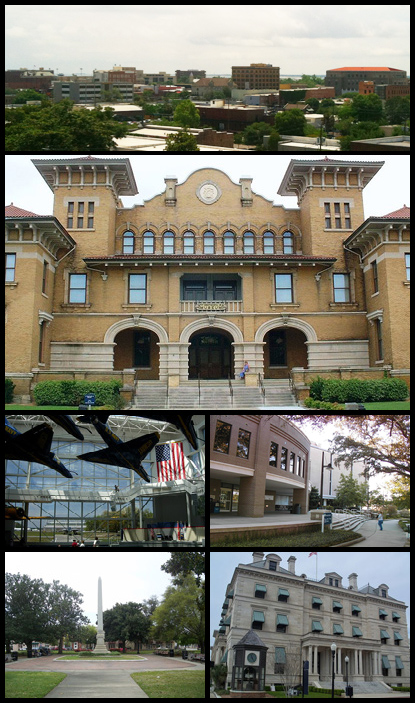
Pensacola sits in the far western panhandle of Florida, a small city of 54 thousand people where the Gulf Coast meets a deep sense of history. The climate is humid subtropical, with hot, wet summers from June through September and mild winters that make warm weather a year-round reality, broken only by the occasional freezing day. The city rests just 35 m above sea level and keeps time on America/Chicago, so afternoons arrive a little later than they do on the Atlantic side of the state. Expats tend to settle in East Hill and Cordova Park, two established residential areas known for tree-lined streets and a calm, neighborly pace. The expat community here is medium in size, and English is widely spoken, which keeps the practical side of daily life simple.
Living costs land well below what you would pay in a major coastal metro. A one-bedroom apartment in the city center runs $1,663/mo, while the same outside the center drops to $1,291/mo. Three-bedroom units follow the same pattern: $2,703/mo in the center and $2,143/mo farther out. Utilities average $305/mo, internet $71/mo, and a mobile phone plan $51/mo. A monthly public transport pass costs $43/mo and a gym membership $29/mo. Eating out is modest, with an inexpensive restaurant meal at $19 per person, a mid-range three-course dinner for two at $55, and a cappuccino at $6. A single adult can expect roughly $1,100/mo in costs excluding rent, while a family of four faces about $3,669/mo. The average local net salary is $3,689/mo, and the overall cost of living index sits at 71/100 against New York City as 100. Budget, mid-range, and comfortable tiers for a single adult, rent included, come to $1,456/mo, $2,179/mo, and $2,753/mo respectively.
Safety is a genuine strength. The safety index reaches 75/100 and the crime index, where lower is safer, is just 25/100, giving the city a settled, low-anxiety feel for residents. Healthcare quality is rated excellent, so routine care, specialists, and hospital access are not a concern. Air quality sits at 52 on the index, where lower is better, a reasonable figure for a Gulf Coast city of this size. Average internet speed reaches 140 Mbps, fast enough for remote work, streaming, and video calls without strain.
Arriving is straightforward through Pensacola International Airport, listed under the code PNS and located only 8 km from the city. Immigration pathways exist for those who qualify, and the practical steps are best handled with current official guidance rather than assumptions. The city scores 77/100 overall for expats and 77/100 for digital nomads, with a FIRE score of 64/100 and a retiree score of 66/100. That mix suits remote workers, early retirees, and anyone drawn to warm winters, low crime, and a cost of living that leaves room in the budget.