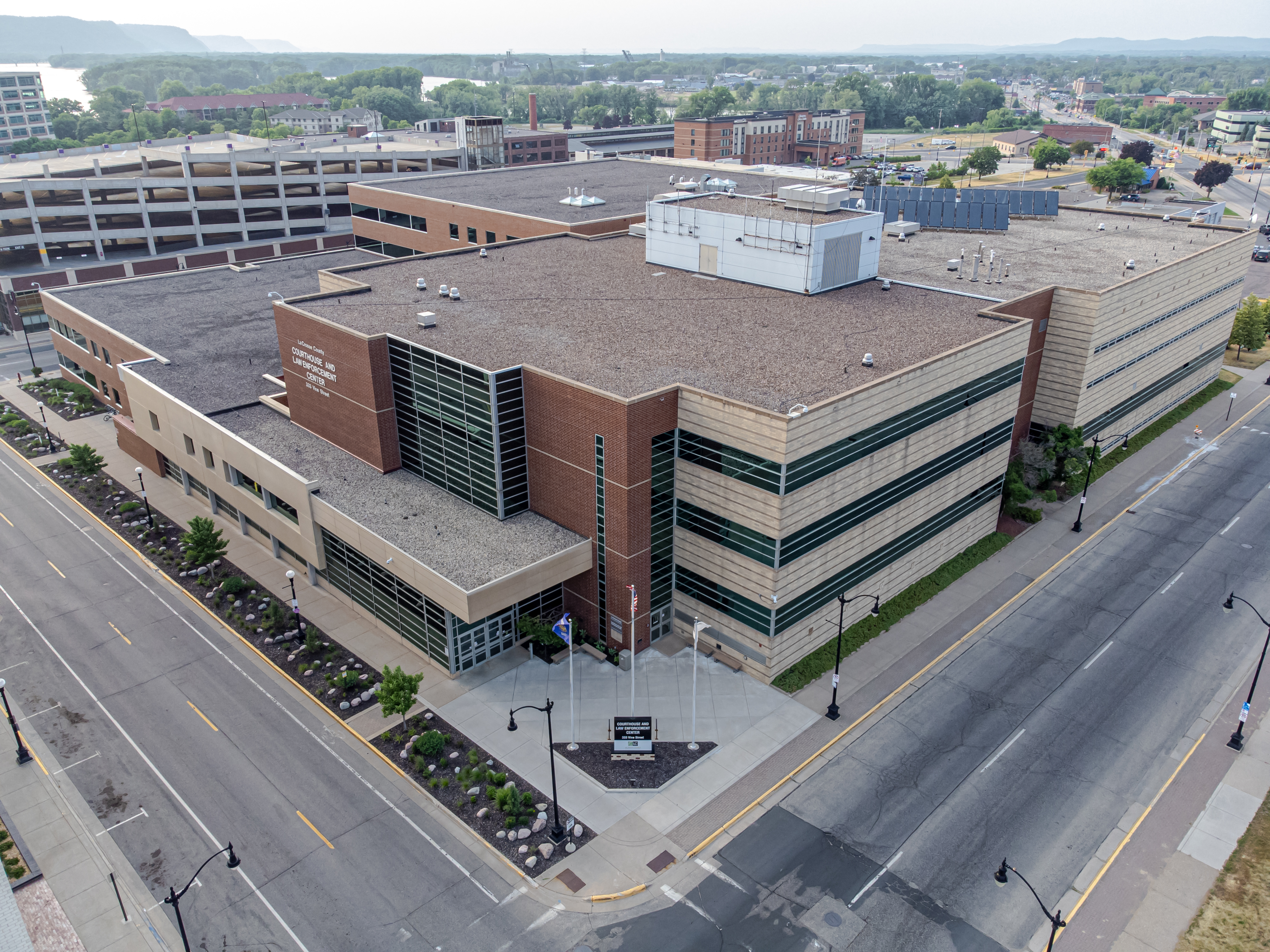
La Crosse sits in western Wisconsin along the Mississippi River, a city of 53 thousand at 202 m above sea level in the America/Chicago timezone. Its humid continental climate delivers warm summers from June through August and cold, snowy winters from December through February, a full four-season rhythm that appeals to anyone who wants real seasonal change rather than a single long mild stretch. Expats tend to settle in the Grandad Bluff area and the University district, where the bluff views and campus energy shape daily life. The nearest airport is LSE, 22 km away, which keeps regional connections within easy reach.
Housing costs here run lower than in most American metros, though the pattern is not the one newcomers expect. A one-bedroom in the city center rents for $775/mo, while the same unit outside the center runs $1,000/mo. Three-bedroom units flip the script: $2,200/mo in the center and $1,950/mo outside it. Utilities add $205/mo, internet $67/mo, and a mobile phone plan $54/mo. A monthly public transport pass costs $35/mo and a gym membership $40/mo. Everyday spending stays modest: an inexpensive restaurant meal is $15 per person, a mid-range three-course meal for two is $70, and a cappuccino is $6. Excluding rent, a single person spends about $1,050/mo and a family of four about $3,700/mo. Budget, mid-range, and comfortable tiers for a single adult, rent included, come to $1,157/mo, $1,752/mo, and $1,706/mo respectively. The average local net salary is $4,118/mo, and the cost of living index stands at 68/100 against New York City at 100.
Safety is a strong point. The safety index reads 82/100 and the crime index, where lower is safer, is just 18/100. Air quality is reasonable at an index of 45, where lower is better. Healthcare quality is rated Good, which matters in a city of this size where residents want dependable care without a long drive. The combination of low crime and solid medical services gives La Crosse a settled, low-stress feel that supports both working professionals and retirees.
Immigration pathways follow standard national rules, so prospective residents should plan around the usual categories rather than anything unique to the city. Arrival is straightforward through LSE, 22 km from the center. Once here, internet averages 60 Mbps, English is widely spoken, and the expat community is small, which means newcomers often build social circles through the university district or the bluff neighborhoods rather than an established international scene. Scores land at 68/100 overall, 68/100 for digital nomads, 64/100 for FIRE, and 61/100 for retirees. La Crosse suits remote workers, students, and outdoors-minded residents who want four distinct seasons, low rent, and a calm river city at a fraction of big-metro costs.