Retire in Spain: The Honest 2026 Guide (Costs, Visas & Best Cities)

Spain works for American retirees in a way that few other European countries do. The Non-Lucrative Visa is accessible if you have consistent passive income, the healthcare system is genuinely excellent once you're in it, and your money goes roughly 40% further than it does in most US cities. The honest version of the monthly budget is €1,800–€2,500 for a comfortable single-person retirement outside Madrid and Barcelona — not the €1,200 figures some guides throw around, which assume you never eat at restaurants, never travel, and rent the cheapest apartment in the cheapest city.
This guide covers what the NLV actually requires in 2026, which cities consistently deliver the best value for retirees (with real numbers, not ranges pulled from 2021), how healthcare works before and after you qualify for the public system, and the tax situation that catches most American retirees off guard.
If you're still deciding between Spain and other destinations, the best places to retire abroad guide gives you the comparison. If Spain is already the decision and you're figuring out where to live specifically, the best places to live in Spain for expats breaks that down city by city.

Why Spain Is Perfect for Your Retirement 🌅
Spain consistently ranks among the world's top retirement destinations, and the numbers speak for themselves. In InterNations' 2024 Expat City Ranking, Spanish cities captured the top three spots (Valencia, Malaga and Alicante) out of 53 cities, with Madrid also ranking seventh. This isn't just coincidence—Spain offers an unbeatable combination that makes it the perfect retirement haven.
Global Recognition and Rankings
Spain's dominance in international retirement rankings reflects its exceptional appeal to retirees worldwide. According to analysis by retirement experts, Malaga, Valencia, and Alicante are the most requested places Non-working Residency Visa - Consular Section - Embassy of Spain among international retirees, thanks to their perfect balance of affordability, healthcare access, and quality of life.
The Spanish Retirement Advantage
Unmatched Value for Money: Your retirement income stretches dramatically further in Spain. While maintaining a first-world lifestyle, you'll typically spend 40-60% less than equivalent living in major US cities. This means more money for travel, dining, hobbies, and the experiences that make retirement truly golden.
World-Class Healthcare at Fraction of US Costs: Spain's healthcare system consistently ranks in the global top 10, offering advanced medical care, preventive services, and specialist treatments at costs that will amaze American retirees. Private insurance starts at just €55 per month, while public healthcare access becomes available to residents.
Perfect Climate Year-Round: The Canary Islands have the best year-round climate with warm winters and temperate summers with temperatures between 20°C and 27°C, while mainland Spain offers over 300 days of sunshine annually in most regions. Say goodbye to harsh winters and hello to year-round outdoor living.
Rich Cultural Tapestry: From world-renowned museums and UNESCO World Heritage sites to vibrant festivals and culinary experiences, Spain offers cultural richness that keeps retirement intellectually stimulating and socially engaging.
Ready to Rewire your Life?
Sign up to receive updates and insights.
By submitting your email address, you will receive a free subscription to RA Postcards and special offers from Rewire Abroad and our affiliates. You can unsubscribe at any time, and we encourage you to read more about our Privacy Policy.
Established Expat Communities: The most popular areas for British retirees in Spain are the Costa Blanca, Costa Brava, and Costa del Sol, with thriving American communities throughout the country. You'll find established support networks, English-speaking services, and social groups that make the transition seamless.
Strategic European Location: Spain serves as your gateway to Europe, North Africa, and beyond. Weekend trips to Paris, Rome, or Morocco become affordable realities, transforming your retirement into a grand European adventure.
If you're weighing Spain against other international options, our comprehensive guide to the best places to retire abroad provides detailed comparisons. For those seeking the ultimate affordability, explore countries where you can retire on $1000 per month, though Spain's exceptional healthcare and infrastructure often justify the slightly higher costs for many retirees.
Key Benefits for Retirees:
- Affordable Living: Live comfortably on €1,500-€2,500 per month, significantly less than most US or Northern European cities
- World-Class Healthcare: Spain's healthcare system ranks among the world's best with universal coverage and affordable private options
- Year-Round Climate: 300+ days of sunshine annually in most regions, perfect for active retirement
- Rich Culture & History: From flamenco to world-renowned cuisine, endless exploration awaits
- Strategic Location: Easy access to the rest of Europe, North Africa, and beyond for retirement adventures
- Strong Expat Communities: Well-established support networks and English-speaking services in major retirement destinations
- Excellent Infrastructure: Reliable internet, modern transportation, and first-world amenities throughout the country
- Safety and Stability: Low crime rates and political stability provide peace of mind for your retirement years

Understanding Spain's Retirement Visa Options 📋
The Non-Lucrative Visa: Your Gateway to Spanish Retirement
For most American retirees, the Non-Lucrative Visa (also called the Spain Retirement Visa) is the ideal pathway. This visa allows you to reside in Spain without carrying out any gainful (work or professional) activity, provided that the applicant has sufficient and guaranteed means to live on.
2026 Financial Requirements (NLV)
The financial thresholds are straightforward but must be met precisely:
Requirement | Amount (2025) | USD Equivalent |
|---|---|---|
Primary Applicant | €28,800 annually | ~$31,100 |
Each Dependent | €7,200 annually | ~$7,780 |
Proof of Funds | €30,000 per person for first year | ~$32,300 |
Recommended to show | 25–50% above minimum | Approves faster |
The work prohibition is the detail most guides underemphasize. The NLV forbids any work in Spain — including remote work for a foreign employer. If you're 55 with a pension and investment income, this is fine. If you're 47 and planning to consult part-time while living there, you need the Digital Nomad Visa instead, not this one.
Required Documentation
To apply for your Spanish retirement visa, you'll need:
- Passport: Valid for at least one year
- Background Check: FBI criminal record check (apostilled)
- Health Certificate: Medical exam and health insurance
- Financial Proof: Bank statements, pension documentation, investment income
- Housing Documentation: Rental agreement or property purchase proof
- Application Forms: Completed visa application with photos
Official Government Resource: Visit the Spanish Ministry of Foreign Affairs for the most current visa requirements and application procedures.
Processing Timeline and Tips
The whole period from commencement to obtaining an official ticket to Spain is estimated to take up to six months. Plan accordingly and start your application well in advance of your intended move date.
Spain at a Glance
Cost of Living: Making Your Retirement Dollars Stretch 💰
One of Spain's biggest draws for retirees is the exceptional value your retirement income provides. Let's break down what you can expect to spend:
Monthly Budget Breakdown
Category | Budget Range | Comfortable Range | Luxury Range |
|---|---|---|---|
Housing | €600-900 | €900-1,400 | €1,400+ |
Food & Dining | €300-450 | €450-650 | €650+ |
Healthcare | €80-120 | €120-200 | €200+ |
Transportation | €50-100 | €100-200 | €200+ |
Utilities | €100-150 | €150-220 | €220+ |
Entertainment | €200-300 | €300-500 | €500+ |
Total Monthly | €1,330-2,020 | €2,020-3,170 | €3,170+ |
Regional Cost Variations
Most Affordable Regions:
- Andalusia: Retirees can live comfortably on €1,200–1,800 per month in Andalusia
- Castilla-La Mancha: Interior regions with excellent value
- Extremadura: Spain's hidden gem for budget-conscious retirees
Premium Locations:
- Madrid & Barcelona: Expect 30-50% higher costs
- Coastal Catalonia: Popular but pricier beach destinations
- Balearic Islands: Island premium applies
Housing Options for Retirees
Rental Market: In popular retirement destinations, such as Barcelona and Valencia, average rental prices for a furnished two-bedroom flat range from $1200 to $2,000+ per month. However, in smaller cities and southern regions, you can find excellent options for much less.
Property Purchase: Foreign retirees can freely purchase property in Spain. Consider:
- Coastal Properties: €150,000-500,000+ depending on location
- Inland Villages: €50,000-200,000 for traditional homes
- Urban Apartments: €100,000-400,000+ in major cities

Healthcare for Retirees in Spain 🏥
Spain's healthcare system is consistently rated among the world's best, making it a top consideration for retirees planning their international move.
Healthcare Options for Retirees
Private Healthcare (Required for Non-Lucrative Visa): Retirees on non-lucrative visa will need Spanish private healthcare. Monthly premiums typically range from €50-150 depending on age and coverage level.
Accessing Public Healthcare: After establishing residency and contributing to social security, retirees may access Spain's public healthcare system. Health care is free or low-cost if you are legally residing and registered with the Spanish social security system.
Healthcare Quality and Services
Spain's healthcare system offers:
- World-Class Hospitals: Modern facilities with English-speaking staff in major cities
- Preventive Care: Comprehensive health screenings and preventive services
- Prescription Medications: Significantly lower costs than US prices
- Specialist Care: Access to renowned specialists and treatment centers
Best places to retire in Spain in 2026
The region breakdowns most guides give you aren't that useful when you're actually trying to decide where to live. Here's the city-level reality for retirees, ranked by the combination of cost, healthcare access, expat infrastructure, and quality of life — not by which ones have the most attractive stock photos.
1. Valencia — best overall for retirees
Monthly budget (single, comfortable): €1,700–€2,200
Valencia topped the InterNations Expat City Ranking in 2024 and has held near the top for several years running. The case for it is straightforward: it's Spain's third-largest city, so you get proper hospital infrastructure and English-speaking specialists, but costs are 30–40% below Madrid and Barcelona. The beach is genuinely in the city. The expat community — predominantly British, American, and Northern European — is large enough that you won't feel isolated but hasn't yet overwhelmed the local Spanish character of the place. The rental market is tight (98% occupancy in 2025 was widely reported), so budget 60–90 days to find a good apartment before committing to the city. One-bedroom in Ruzafa or El Carmen: €900–€1,200/month.
Healthcare: Hospital La Fe and Hospital Clínico Universitario are both first-rate. English-speaking private GPs are easy to find. Private insurance for a healthy 60-year-old runs roughly €90–€130/month.
Visa logistics: Strong infrastructure for NLV applications — English-speaking gestores and lawyers are plentiful.
2. Alicante — best value on the coast
Monthly budget (single, comfortable): €1,500–€1,900
Alicante is the Costa Blanca's main city and consistently comes up when you ask long-term expats where they'd go if they had to do it again and wanted to keep costs down. It has an international airport with direct flights to most of Europe, a proper city center, good hospitals, and a beach. Costs are meaningfully lower than Valencia and dramatically lower than anywhere in Catalonia. The expat community is large and skews toward British and Northern European retirees. One-bedroom in the center: €650–€900/month.
The honest downside: Alicante is not as culturally interesting as Valencia or Seville. It's a functional, pleasant city that happens to be affordable and well-connected — which is exactly what most retirees actually need.
Healthcare: Hospital General Universitario de Alicante covers most specialist needs. English-speaking doctors in private practice are easy to locate.
3. Málaga — best for retirees who want city life with a beach
Monthly budget (single, comfortable): €1,700–€2,300
Málaga has gone from overlooked port city to one of Spain's most desirable expat destinations in about a decade. The Picasso Museum, a revamped waterfront, a growing tech sector, and direct flights from 60+ European airports have driven that shift. For retirees, the key assets are excellent weather (300+ days of sunshine, rarely cold), a large and established British expat community, and infrastructure that has scaled up to match demand. Rents have risen but are still below Barcelona. One-bedroom in the center: €900–€1,300/month.
Healthcare: Hospital Regional de Málaga is one of Andalusia's best. English-speaking private specialists are straightforward to find.
4. Seville — best for retirees who want authentic Spain cheaply
Monthly budget (single, comfortable): €1,400–€1,900
Seville is the most affordable of Spain's major cities and the most authentically Spanish. The tradeoff is the heat — July and August regularly exceed 40°C, which is not comfortable and not manageable without air conditioning running constantly (expect electricity bills to reflect this). The expat community is smaller than the coastal cities and less English-infrastructure-heavy, which suits retirees who want genuine immersion and are willing to invest in Spanish language skills. For those people, the combination of low costs, extraordinary architecture, food culture, and walkable city center is hard to beat anywhere in Europe. One-bedroom in the center: €700–€1,000/month.
Healthcare: Hospital Universitario Virgen del Rocío is one of Spain's top-ranked public hospitals. Less English availability in the public system than coastal tourist areas, so private insurance with an English-speaking network matters more here.
5. Salamanca — best for retirees who want small-city Europe without tourist crowds
Monthly budget (single, comfortable): €1,300–€1,700
Salamanca doesn't appear in most retire-in-Spain guides because it lacks coast and it lacks name recognition outside Spain. It scores 92/100 on our retiree ranking — the highest of any Spanish city in our database — based on healthcare density, safety, air quality, and cost. It's a university city with a beautiful Renaissance center, low crime, excellent regional hospital infrastructure, and costs that are among the lowest of any Spanish city with proper urban amenities. The expat community is small but growing. This suits retirees who want to live like a local, not like an expat, and who have enough Spanish to navigate daily life.
→ See how Spain's cities score for retirees →
6. Costa del Sol towns (Nerja, Fuengirola, Estepona)
Monthly budget (single, comfortable): €1,600–€2,400
If you want beach, English infrastructure, and a ready-made expat community without the hassle of a big city, the Costa del Sol towns deliver. Nerja is the most charming and least overdeveloped. Fuengirola is the most practical and family-friendly. Estepona has improved dramatically in the last decade with a revamped old town. All three have English-speaking doctors, lawyers, and estate agents, which makes the NLV bureaucracy significantly more manageable. The tradeoff versus Alicante or Valencia is you get less city, higher seasonal tourist density, and slightly higher costs per square meter of apartment.
7. Canary Islands (Las Palmas, Tenerife)
Monthly budget (single, comfortable): €1,500–€2,000
The Canaries deserve mention separately because the climate case is different from mainland Spain — genuinely year-round spring weather rather than the baking summers and mild winters of the south coast. Las Palmas de Gran Canaria in particular has built a digital nomad and early-retiree reputation over the last five years. Healthcare is solid. Costs are reasonable. The main practical consideration is that you're on an island — flights to mainland Spain or the rest of Europe are easy but add logistical friction if you plan to travel frequently.
Spain boasts well-established expat communities that make the transition to retirement abroad much smoExpat Communities and Social Life 👥other. Major expat hubs include:
Costa del Sol: Home to over 100,000 British expats and growing American communities
Valencia Region: Diverse international community with excellent support networks
Madrid & Barcelona: Urban expat communities with international amenities
Balearic Islands: Strong Northern European expat presence
Building Your Social Network
- Expat Organizations: Join local international clubs and societies
- Language Exchange: Spanish-English conversation groups
- Hobby Groups: Golf, hiking, cooking, and art groups
- Volunteer Opportunities: Give back while meeting like-minded people
Essential Planning Tools for Your Spanish Retirement 🛠️
Planning your retirement in Spain requires careful consideration of multiple factors. Our specialized tools can help you make informed decisions:
Financial Planning Resources
FIRE Calculator: Determine if your retirement savings support a Spanish lifestyle. Calculate how long your nest egg will last with Spain's cost of living.
FIRE Procrastination Calculator: See how delaying your Spain retirement impacts your financial security. Sometimes waiting a year or two can significantly improve your retirement comfort.
Geo-Arbitrage Savings Calculator: Compare your current living costs with Spanish expenses to see your potential savings. Many retirees are surprised by how much further their money stretches.
Dividend Portfolio Shield: Optimize your investment portfolio for international living. Understand tax implications and income generation strategies for Spanish residents.
Location and Visa Resources
Country Search Tool: Compare Spain with other retirement destinations based on your priorities like climate, healthcare, and cost of living.
Spain Country Directory: Access comprehensive information about living in Spain, from regional guides to practical tips.
Visa Pathways Explorer: Navigate Spain's visa requirements and determine the best pathway for your situation.
Readiness Assessment
Expat Readiness Quiz: Assess your preparedness for international retirement. Identify areas that need attention before your move.

Tax Considerations for American Retirees 💼
Understanding your tax obligations is crucial for a successful Spanish retirement.
Spanish Tax Obligations
Spain's tax rates for 2025 range from 19% to 47% for ordinary income and 19% to 30% for savings income. However, various deductions and the US-Spain tax treaty can significantly reduce your burden.
The Beckham Law does not apply to most American retirees. Spain's special expat tax regime (Régimen Especial de Trabajadores Desplazados, commonly called the Beckham Law) caps tax at 24% for the first six years — but it only applies to people relocating to Spain for employment or as self-employed professionals. Retirees on the NLV with pension and investment income are taxed as ordinary residents. At ordinary rates, your worldwide income is taxed at 19–47% once you exceed 183 days per year in Spain. The US-Spain tax treaty prevents double taxation but does not eliminate Spanish tax. Get international tax advice before you arrive, not after.
Key Tax Considerations:
- Tax Residency: Spending more than 183 days in Spain makes you a tax resident
- Double Taxation Treaty: US expats can avoid double taxation through the Foreign Tax Credit and treaty provisions
- Pension Income: Special treatment for US Social Security and private pensions
- Property Taxes: Annual property taxes (IBI) are generally much lower than US rates
Recommended Actions:
- Consult with a Spanish tax advisor before your move
- Understand your US filing obligations (continue indefinitely)
- Plan your arrival date to optimize tax residency timing
- Consider tax-efficient investment structures
Next Steps: Your Action Plan for Spanish Retirement 🎯
6-12 Months Before Moving
- Take the Expat Readiness Quiz to identify preparation areas
- Use our FIRE Calculator to confirm financial readiness
- Research regions using our Country Search Tool
- Begin visa application process - start early!
- Arrange healthcare coverage - research private insurance options
3-6 Months Before Moving
- Secure housing - either purchase or long-term rental
- Open Spanish bank account - some banks allow remote opening
- Plan your finances with the Geo-Arbitrage Calculator
- Begin learning Spanish - even basic conversational skills help
- Connect with expat communities online before arrival
1-3 Months Before Moving
- Finalize visa approval and travel arrangements
- Arrange international moving services
- Optimize your investment portfolio using our Dividend Shield Tool
- Set up mail forwarding and address changes
- Plan your first month's accommodation
Upon Arrival in Spain
- Apply for NIE number (foreigner identification number)
- Register with local authorities (empadronamiento)
- Set up utilities and services
- Find local healthcare providers
- Join expat groups and begin building your social network

Conclusion: Your Spanish Retirement Awaits 🌟
Spain offers an unbeatable combination of affordability, quality of life, and cultural richness that makes it one of the world's premier retirement destinations. With average monthly costs ranging from €1,500 to €2,500, excellent healthcare, and year-round sunshine, your retirement dreams can become reality.
The key to success lies in thorough planning and understanding the requirements. Use our comprehensive tools to assess your readiness, plan your finances, and navigate the visa process. Whether you're drawn to Andalusia's traditional charm, Valencia's perfect climate, or the Costa del Sol's expat-friendly communities, Spain has the perfect retirement destination waiting for you.
For broader insights about relocating to Spain, including work and family considerations, explore our comprehensive guide on how to move to Spain. Those considering Spain alongside other European options should review our detailed comparison of Portugal vs Spain to determine which Mediterranean paradise best fits your retirement dreams. And don't forget to explore other European retirement options like Portugal or the United Kingdom to ensure Spain is your perfect match.
If you're planning to retire before traditional age, our guide on retiring earlier in 5 countries that slash your FIRE age shows how international relocation can accelerate your financial independence timeline.
The people who make Spain work long-term are the ones who went in clear-eyed about the bureaucracy, sorted their NLV paperwork well in advance, chose a city based on their actual priorities rather than a list of the "top expat destinations," and got proper tax advice before they became Spanish tax residents. The ones who struggle are usually those who underestimated the rental market, assumed private insurance would be cheap regardless of age, or thought the work prohibition on the NLV was more flexible than it is.
If you're ready to move forward: the NLV guide has the step-by-step application process. The best places to live in Spain for expats breaks down every major city and coastal area with real cost numbers. And the FIRE calculator will tell you whether your current income and savings support the lifestyle you're planning.

Best Places to Live in Spain for Expats in 2026: Costs, Cities & Hidden Gems Ranked
Valencia from €1,400/mo, Málaga for nomads, Alicante for retirees — ranked breakdown of Spain's best expat cities with real 2026 costs.

Move to Spain: Complete Guide for Expats & Retirees 2026
Complete guide to moving to Spain. Visa options, cost of living, healthcare, and retirement planning. Start your Spanish adventure today.

Spain Golden Visa Has Ended: 7 Alternative Residency Options for 2026
Spain's Golden Visa program ended April 2026. Discover 7 proven alternative pathways to Spanish residency like Digital Nomad & Non-Lucrative visa.
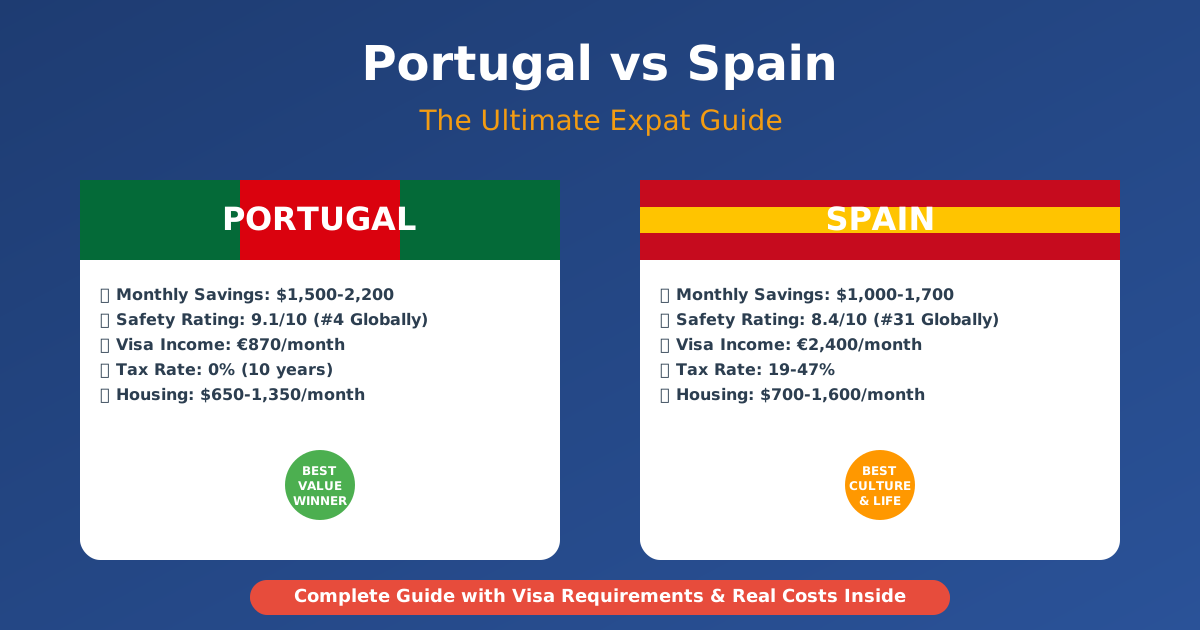
Portugal vs Spain: Which is Better for Expats & Remote Workers?
Choosing between Portugal and Spain? Complete 2026 comparison of costs, visas, lifestyle, and everything you need to make your international move.