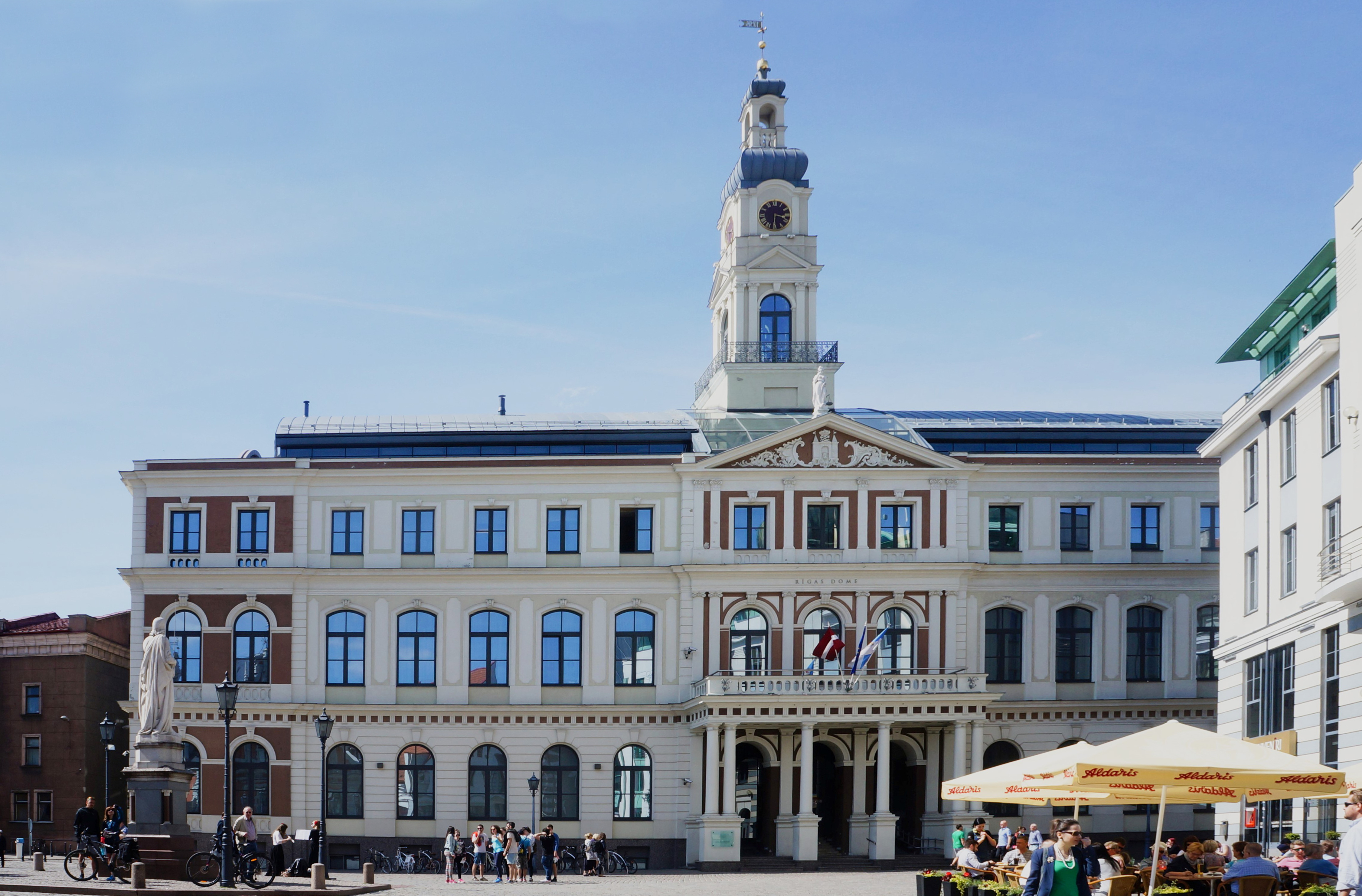
Riga sits on the Baltic coast at just 1 meter above sea level, a flat, walkable capital shaped by a continental climate that brings cold, snowy winters and mild, sun-drenched summers. The city's 595 thousand residents live across distinct districts, and expats tend to cluster in three neighborhoods: Centrs, the dense historic core with its Art Nouveau facades and nightlife; Mežaparks, a leafy, upscale area of grand villas and parkland; and Teika, a quieter, increasingly popular residential zone with a mix of old wooden houses and modern apartments. English is widely spoken, and the expat community is medium-sized, making it easy to find social circles without feeling overwhelmed by a foreigner bubble.
Living costs here are remarkably low compared to Western Europe, and local wages stretch further than you might expect. A one-bedroom apartment in the city center rents for $582/mo, while the same place outside the center costs $385/mo; a three-bedroom in the center runs $1,151/mo, dropping to $734/mo beyond the core. Utilities run $375/mo, internet is $20/mo, and a mobile plan is another $20/mo. A monthly public transport pass costs $34/mo, a gym membership $50/mo, and an inexpensive restaurant meal is $17, while a three-course dinner for two at a mid-range spot is $67 and a cappuccino is $4. The average monthly net salary is $1,511/mo, which comfortably covers the budget tier total of $847/mo, the mid-range tier of $1,219/mo, or even the comfortable tier at $1,606/mo, all for a single adult including rent. A single person's monthly costs excluding rent come to $981/mo, and a family of four spends $3,296/mo before housing, so the cost of living index of 54/100 (with New York City at 100) tells the real story.
Safety is a strong point, with a safety index of 78/100 and a crime index of just 22/100, meaning violent crime is rare and street-level incidents are uncommon. Healthcare quality is rated good, and while the public system is accessible, many expats supplement with private clinics for faster appointments and English-speaking doctors. The air quality index is 35, which is clean by most standards, and the city's compact layout means you can walk or bike most places, though the $34/mo transit pass makes buses and trams a no-brainer for longer trips.
For longer stays, Latvia runs the Latvia Digital Nomad Visa, which requires a minimum monthly income of $4,213/mo, a threshold that filters out lower earners but is attainable for many remote workers. Getting there is easy: the nearest airport is RIX, just 5 km from the center, with frequent flights across Europe. Riga suits digital nomads and early retirees who want a safe, affordable base with strong internet (150 Mbps average), a solid expat scene, and a FIRE score of 76/100. The overall expat score of 82/100 reflects the balance of cost, safety, and lifestyle, though the retiree score of 66/100 suggests it's less ideal for those seeking warm winters or a slower pace. If you can handle the cold and want your salary to go far, Riga delivers.