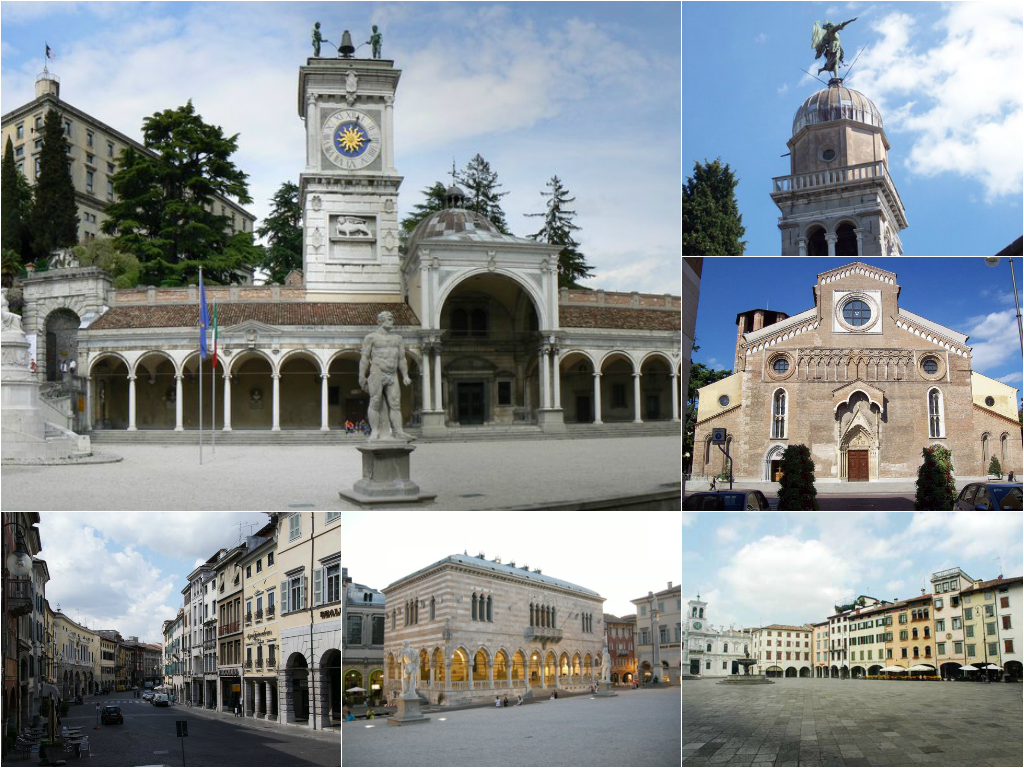
Udine sits in northeastern Italy, just 5 km from the Trieste Airport (TRS), at an elevation of 113 m above sea level. The city of 98 thousand people enjoys a humid continental climate, with warm summers from June through August and cold, occasionally snowy winters from December through February, while spring and autumn stay mild and pleasant. Expats tend to settle in the Centro Storico, the historic heart with its arcaded piazzas and cafes, or in Chiavris, a more residential area just north of the center that offers easier access to daily amenities. The timezone is Europe/Rome, and the pace of life here reflects that unhurried Italian rhythm, though the expat community remains very few, so newcomers should be ready to build their own social circles.
Living costs in Udine are remarkably manageable compared to much of Western Europe. A single adult can get by on a budget tier total of $885/mo including rent, while a mid-range tier comes to $1,330/mo and a comfortable tier runs $1,656/mo. Rent for a one-bedroom in the city center averages $705/mo, dropping to $571/mo outside the center, and a three-bedroom in the center costs $1,260/mo versus $934/mo further out. Excluding rent, a single person spends about $1,032/mo, while a family of four faces $3,737/mo. Utilities run $204/mo, internet is $32/mo, and a mobile plan costs just $9/mo. A monthly public transport pass is $45/mo, a gym membership is $44/mo, an inexpensive restaurant meal is $17, a three-course meal for two at a mid-range spot is $78, and a cappuccino is $2. The average monthly net salary is $1,911/mo, which means local wages cover the essentials comfortably, and the cost of living index sits at 61 out of 100 relative to New York City.
Safety is a strong point for Udine, with a safety index of 75/100 and a crime index of just 25/100, where lower is safer. It is a city where walking home late feels unremarkable, and the low crime rate contributes to a relaxed daily life. Healthcare quality is rated as good, and residents have access to Italy's public health system, which is known for solid primary care and hospital services. English proficiency is limited, so learning basic Italian will go a long way in daily interactions, from the pharmacy to the local market. The air quality index is 58, which is moderate, and the average internet speed is 50 Mbps, adequate for remote work though not blazing fast.
For those looking to stay long term, Italy offers two clear visa pathways. The Italy Elective Residence Visa requires a minimum monthly income of $2,895/mo, making it a fit for retirees or those with passive income who do not plan to work locally. The Italy Digital Nomad Visa, meanwhile, requires a minimum monthly income of $2,615/mo and suits remote workers with an employer or clients outside the country. The nearest airport is TRS, just 5 km away, which makes arriving straightforward. Udine earns an overall expat score of 68/100, with a FIRE score of 70/100, a retiree score of 57/100, and a digital nomad score of 59/100. It is best suited to those who prioritize affordability, safety, and a slower pace over a large international community or extensive English-speaking services, and who are willing to embrace local life on its own terms.