Italy 7% Flat Tax for Retirees (Southern Italy)
Italy · Europe
Data updated Sep 8, 2026
Difficulty
Moderate
Duration
120 months
Path to Citizenship
10 years
Overview
Qualification under Italy's 7% flat tax regime hinges on a geographic commitment most people underestimate when they first hear the headline rate. You are not simply moving to Italy, you are moving to a small town in Southern Italy, or to a designated seismic-area municipality in Lazio, Marche, or Umbria, and staying there long enough to be tax resident. The 7% rate on all your foreign-source income is real, and for a retiree pulling $5,000-$8,000 a month in pension and investment income, the savings over a decade are substantial. But the regime is structured so that the tax benefit and the place are inseparable. You cannot claim it from Rome, and you cannot claim it from a qualifying town while spending eight months a year somewhere else.
The profile that sails through this is a retired couple with a US pension or Social Security plus some investment income, no plans to work, comfortable in a slower-paced environment, and ideally some Italian or the appetite to learn it. They benefit immediately and the bureaucracy, while real, is manageable with a good commercialista. The profile that struggles is the person who wants to be based in Italy but retain flexibility, spending summers in the US, winters in Sicily, and calling it residency. That doesn't work here, and the tax authorities have the tools to find out. The profile that is in the wrong category entirely is anyone whose primary income is earned rather than passive, the regime covers foreign pensions and investment income at 7%, but if you are still consulting or working, that income gets taxed at Italian progressive rates, which are steep.
The thing most applicants don't fully reckon with before they apply is that the 7% is a substitute tax on foreign-source income only. Any income you earn from Italian sources, rent from an Italian property, any Italian freelance work, gets taxed at ordinary rates. More importantly, the regime does not change your US filing obligations at all. You are still filing a US return, still reporting foreign accounts via FBAR, and still working through the foreign tax credit calculation to avoid double taxation on the same income. The Italy-US tax treaty helps, but it does not simplify things to the point where you can skip the cross-border tax planning.
What this visa unlocks, practically, is the ability to live in some of the most beautiful and genuinely affordable parts of Europe at a tax rate that most countries reserve for the ultra-wealthy. The 7% applies regardless of how much foreign income you have, there is no cap, no phase-out, no income ceiling. A retiree with $120,000 a year in foreign pension and dividend income pays the same flat rate as someone with $45,000. For the right financial profile, that math is hard to replicate anywhere else in Europe with a comparable quality of life and a clear legal path to long-term residence.
Eligibility Requirements
Duration
120 months
Pension / Social Security · Passive / Investment Income · Business Income
Max 0% from local sources
Requirements Checklist
Valid passport with at least 6 months validity
Proof of sufficient income (bank statements, employment contract)
Health insurance covering the entire stay
Clean criminal background check
Completed application form with all required documents
Proof of accommodation in the country
Tax Information
Italy Taxes Worldwide Income - and You'll Be a Resident
Italy taxes residents on worldwide income. Not just what you earn in Italy, not just what you remit - everything. Foreign pensions, US brokerage dividends, capital gains on securities you've held for decades, rental income from a property back home in Ohio. All of it falls into scope once you become an Italian tax resident.
Residency triggers if, for more than 183 days in a tax year, you're registered in the municipal population register (the anagrafe), have your habitual abode in Italy, or have your center of vital interests there. Any one of those three conditions is enough. For retirees who actually move here and set up a life, you'll almost certainly meet at least one of them well before the year is out.
Outside any special regime, Italy's national income tax runs at 23% up to roughly EUR 28,000 (around USD 30,000), 35% from there to about EUR 50,000 (roughly USD 54,000), and 43% above that. Regional and municipal surcharges add another 1-3% on top. For a US retiree drawing a pension and some investment income, the standard brackets alone would make Italy an expensive choice. That's the baseline this visa program is explicitly designed to replace.
The 7% Flat Tax Regime - What Changed and What It Actually Covers
This is the regime. Under Article 24-ter of Italy's TUIR, qualifying foreign retirees who move to eligible small towns in Southern Italy - or certain municipalities in seismic-risk zones - can elect a flat 7% substitute tax on all qualifying foreign-source income for up to 10 years. Foreign pension income, foreign dividends, foreign capital gains, foreign rental income - all of it taxed at 7% regardless of amount, instead of running through the standard progressive brackets.
The structured data flags this regime's status as "changed," which means the rules as originally enacted have been modified since the program launched. The core structure still exists under Art. 24-ter, but eligibility conditions, qualifying municipalities, and procedural requirements may have shifted. Anyone relying on this regime needs to verify current eligibility with an Italian tax advisor before applying - not after arriving.
What the 7% does not cover: Italian-source income. If you buy a property in Calabria and rent it out, that rental income is taxed at ordinary Italian rates. Same for any Italian-source earnings. The flat rate applies to the foreign side of your financial life; the Italian side stays on the standard schedule.
The regime also has to be elected - it doesn't apply automatically. There's a first-year registration process, and missing that window can mean losing access entirely, not just delaying it.
Italy also offers two other special programs worth knowing exist: the non-dom EUR 100,000 per-year substitute tax under Art. 24-bis for high-net-worth individuals, and the impatriate workers' regime for employed or self-employed people relocating to Italy. You can only elect one at a time. For retirees under this program, the 7% regime is the relevant one, but if your situation is more complex - significant Italian employment income, for instance - the others may be worth examining with an advisor.
The US Layer - FEIE, FTC, and FBAR
The IRS does not stop taxing you because you moved to a Sicilian hillside town. US citizens and green card holders file US returns on worldwide income regardless of where they live, regardless of what Italy charges.
For most retirees under this regime, the Foreign Earned Income Exclusion is largely beside the point. FEIE covers earned income only - salary, freelance work, self-employment - performed outside the US. It does not cover pensions, Social Security, dividends, interest, capital gains, or rental income. If your income is primarily retirement income and investments, FEIE offers little to nothing here.
The Foreign Tax Credit is more useful. The 7% substitute tax you pay Italy on foreign-source income generates a creditable foreign tax, which can offset your US liability on the same income. The mechanics aren't clean: the US applies separate "baskets" for passive and general income, and Italy's substitute tax may not map neatly onto those categories. Whether the credit fully eliminates double taxation depends on your income mix, your US effective rate, and how the credit limitation rules interact with your specific situation. It usually helps. It rarely eliminates the US tax bill entirely.
Italy and the United States have both an income tax treaty and a totalization agreement. The treaty allocates taxing rights on pensions and investment income and can reduce double taxation - some private pensions, for instance, may be taxable only in the country of residence under specific treaty articles. But the US taxes its citizens on worldwide income regardless of treaty provisions, so the treaty works alongside the FTC rather than replacing it. The totalization agreement covers social security contributions and is generally less relevant for retirees whose benefits are already accrued.
Once you open an Italian bank account - which this visa process will require - you're in FBAR territory. FinCEN 114 is mandatory if your combined foreign accounts exceed $10,000 at any point during the year. Non-willful failure to file carries a $10,000 penalty per violation per year.
Getting Year One Right
The mistakes that cost people real money under this regime tend to cluster in the first year, and most of them are irreversible.
Missing the election window for the 7% regime is the obvious one. The application has to be filed with your first Italian tax return for the year you establish residency. If you miss it, you don't get a second chance to elect it retroactively for that year, and depending on how the rules have evolved, you may lose access to the full 10-year window. Given that the regime's status is flagged as changed, the current procedural requirements need to be confirmed before you arrive, not after.
Choosing the wrong FTC strategy in year one can create a mess that follows you for years. If you have any earned income alongside pension and investment income, the interaction between FEIE elections and FTC baskets gets complicated fast - and an FEIE election, once made, can be hard to revoke.
FBAR non-filing is the quiet one. The account you open to receive your pension wire or pay Italian utilities will almost certainly push you over the $10,000 threshold. It's not optional.
Combined advisory costs for a US expat CPA and an Italian tax advisor in year one typically run $1,500-$3,000. That covers correct regime election, treaty positioning, FTC structuring, and FBAR compliance from the start. Given that the 7% regime runs for up to 10 years, getting the foundation right in year one matters considerably more than the upfront cost suggests.
Living in Italy
COL Index vs NYC
51.0
Monthly Cost (excl. rent)
$1,017
1BR Rent (City Center)
$845
Safety Index
53.1
Healthcare Index
65.1
Quality of Life Index
151.0
Time Zone
UTC+01:00
Capital
Rome
Population
59.6M
Official Languages
Italian, Catalan
Avg Internet Speed
285 Mbps
Public Transit Quality
Good
With a budget covering rent and living costs, you'd need roughly $1,862/mo for a comfortable single-person lifestyle in Italy.See how far your money goes →
🏙️ Best Cities in Italy for Retirees
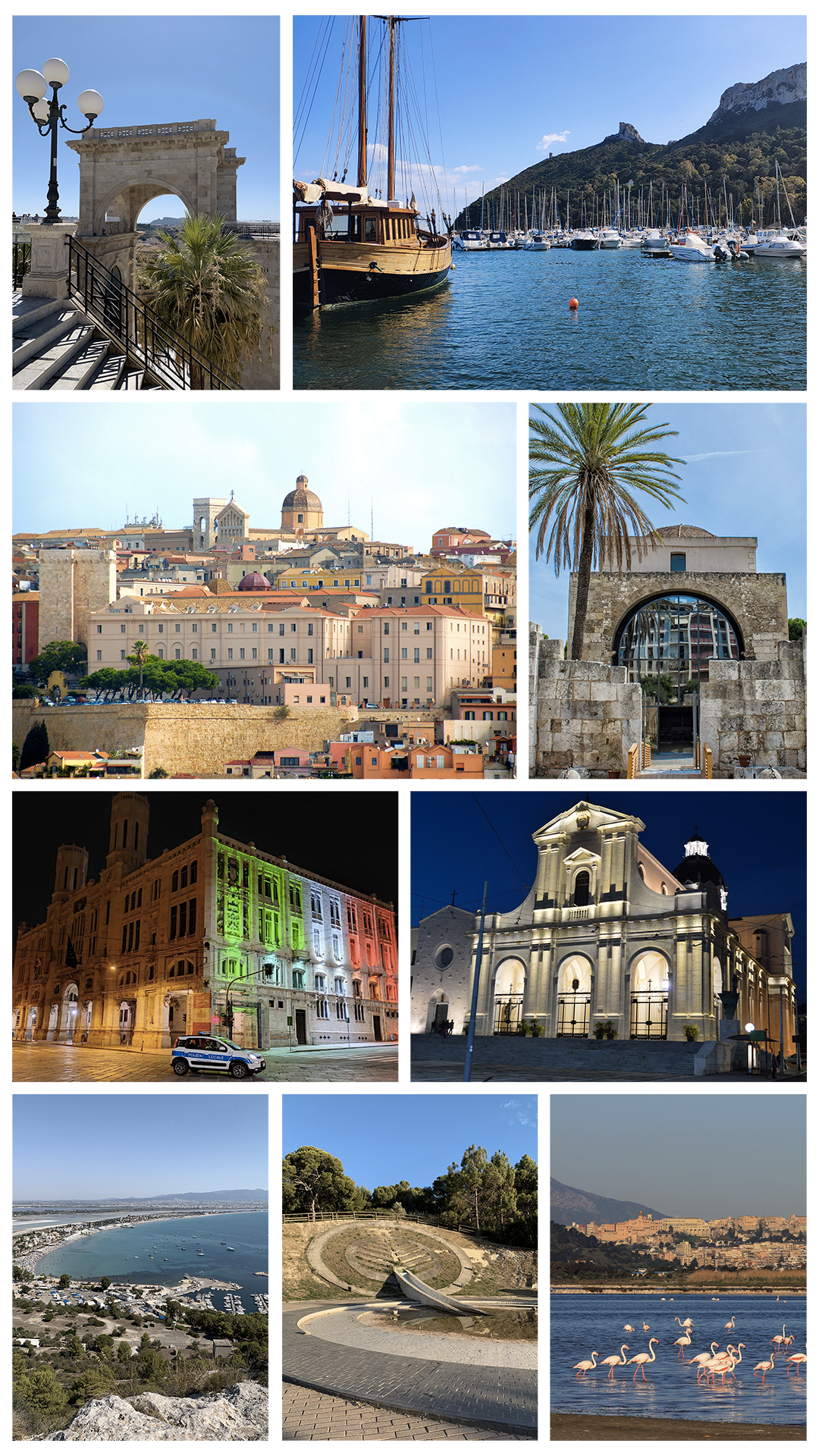 ✦ 76
✦ 76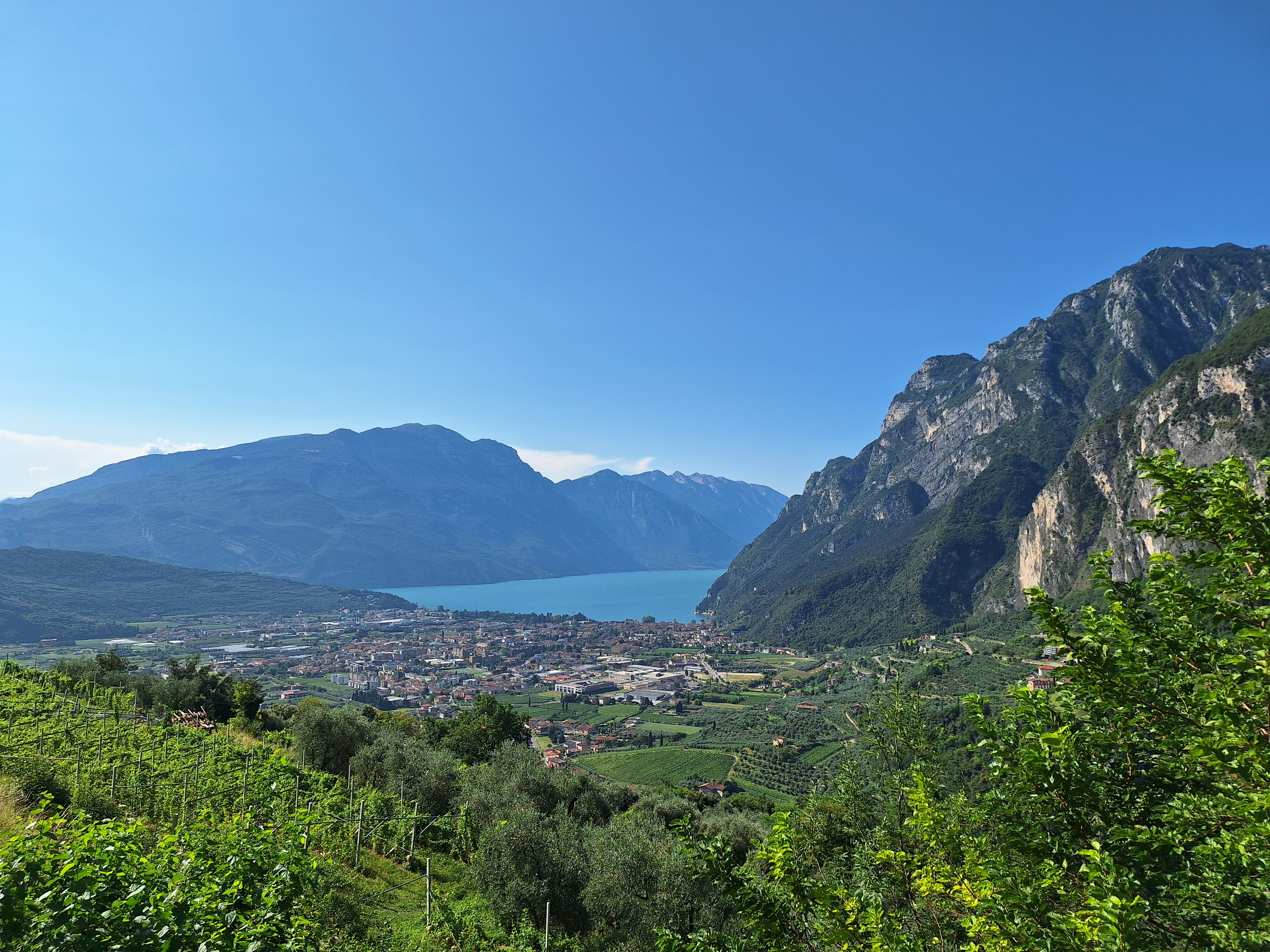 ✦ 75
✦ 75 ✦ 76
✦ 76Getting Your Income Documentation Story Straight
The 7% regime has no statutory minimum income requirement written into the tax law itself. What it does require is that you receive a qualifying foreign pension - ongoing, demonstrable, taxable in Italy - and that you can prove you were non-resident in Italy for the five tax years before you move. Both of those things need to be documented before you sit down with a commercialista to file your first Italian return, and both are more complicated to assemble than most people expect.
The pension documentation piece is usually straightforward for US retirees drawing from Social Security, a 401(k), or a private pension plan. What gets messier is investment income. If a meaningful portion of your income comes from brokerage accounts, you need to be able to show that income clearly and consistently - not just on a US tax return, but in a form that an Italian tax professional can work with. Italian tax authorities are not going to audit your Schwab statements in the same way the IRS would, but they need to understand what you're declaring and why it qualifies as foreign-source income under the regime.
The five-year non-residency requirement is the one that catches people who have Italian heritage or who spent time working in Italy earlier in their career. The clock runs on tax years, not calendar years, and Italy counts residency based on registration records, habitual abode, and center of vital interests - any one of which can establish you as a resident even if you didn't think of yourself that way. If you lived in Italy for a stretch in your 40s and registered at a comune, that history needs to be examined before you assume you qualify.
The Town You Choose Matters More Than People Think
Most of the content around this regime focuses on the tax mechanics. The town selection gets treated as a logistics problem - find one under the population cap, check it's in an eligible region, done. That framing misses how much the choice actually shapes your daily life for a decade.
As of April 2026, the population cap was raised from 20,000 to 30,000 residents, which meaningfully expands the options. Towns in that 20,000-30,000 range tend to have more services, better transport connections, and occasionally an international community - things that matter considerably if you don't speak Italian fluently or if you have any ongoing medical needs. A town of 4,000 in Basilicata and a town of 28,000 in Puglia are both technically qualifying, but they are not the same experience.
The practical question to ask before you commit to a town is whether you can actually build a functional life there - not whether it looks beautiful on a visit in May. Healthcare access is the most important variable. Italy's national health system is available to legal residents, but the quality and availability of specialists varies significantly by region and by how far you are from a provincial capital. Southern Italy has improved considerably, but if you have complex or ongoing medical needs, the distance from a major hospital is a real consideration, not a minor inconvenience.
What people rarely think about until they're already there is the language gap. In smaller southern towns, English is uncommon. That's part of the charm for some people and a real daily friction for others. Neither reaction is wrong, but it's worth being honest with yourself about which kind of person you are before you register at a comune in a town where the pharmacist doesn't speak English.
What Actually Happens After You Land
There is a gap between getting your visa and having a functioning Italian life, and it is longer and more effortful than the application process suggests. For non-EU nationals, the sequence after arrival involves applying for a permesso di soggiorno, registering your residence at the local comune, and then becoming an Italian tax resident - which generally means spending more than 183 days in Italy in a tax year and having your habitual abode there. These steps are sequential, and each one has its own timeline.
The comune registration is where things can slow down in ways that are hard to predict from abroad. Some municipalities are well-organized and process new residents quickly. Others are not. In smaller southern towns, the anagrafe office may have limited hours, staff who are not accustomed to processing foreign residents, and paperwork requirements that vary from what you read online. A local geometra or a relocation consultant who knows the specific comune can be worth the fee just for this stage.
The tax election itself - actually claiming the 7% regime in your first Italian return - needs to happen in the Modello Redditi PF for the year you become resident. Missing that window, or filing without clearly electing the regime, creates complications that take time and professional help to untangle. Most practitioners recommend attaching a written option statement and making sure the election is unambiguous. This is not a regime you want to discover you failed to claim correctly after the fact.
The Long-Term Path - What PR and Citizenship Actually Require
The 10-year duration of the regime and the timeline to Italian citizenship are not quite aligned, which is something worth thinking through before you commit. EU long-term residence status becomes available after five years of continuous legal stay, assuming you meet income and integration requirements. Italian citizenship by naturalization for non-EU nationals generally requires 10 years of legal residence - which maps almost exactly to the end of the tax regime.
What that means in practice is that if you arrive, establish residence, and run the full 10 years of the 7% regime, you are approaching citizenship eligibility at roughly the same time the flat tax expires. Whether that's a feature or a coincidence depends on your goals, but it's worth knowing that citizenship is not a quick process even once you're eligible. The application itself is document-heavy, requires B1-level Italian, and then sits in a queue that currently takes several additional years to resolve in many cases.
The income sufficiency requirement for the citizenship application is separate from the visa income threshold and from the tax regime. You will need to demonstrate ongoing financial self-sufficiency at each stage - for the initial visa, for permit renewals, and eventually for the naturalization application. None of these thresholds are particularly punishing for someone with a solid pension, but they do require that your income documentation stays organized and current throughout the decade.
The Elective Residence Visa Without the 7% - A Real Comparison
The most obvious alternative isn't a different country - it's the same country with a different tax situation. Italy's Elective Residence Visa lets you live anywhere in Italy on passive income, without the geographic restriction to small southern towns. The tradeoff is that your foreign income gets taxed at Italy's standard progressive rates: 23% on the first roughly EUR 28,000, rising to 35% and then 43% above EUR 50,000, plus regional and municipal surcharges. For someone with $80,000 a year in pension and investment income, the difference between 7% and the effective rate under the progressive system is not marginal.
Portugal's NHR successor regime comes up in almost every conversation about the Italian 7% regime, and it's worth addressing directly. The Portuguese option has historically attracted retirees for similar reasons - favorable tax treatment on foreign income, lower cost of living than Western Europe's major cities, English widely spoken. But the current Portuguese rules are generally less generous and more limited in scope than Italy's flat 7% on all qualifying foreign-source income, and Portugal doesn't offer the same geographic diversity of qualifying locations that Italy's expanded 30,000-person cap now does.
The honest comparison between the Elective Residence path and the 7% regime comes down to how much flexibility is worth to you in money terms. Living in Bologna or Florence on an Elective Residence Visa is a different life than living in a town of 25,000 in Calabria - not better or worse, but different in ways that matter day to day. The 7% regime is not a discount version of Italian life. It's a specific version of it, with specific trade-offs, and the people who thrive in it are the ones who wanted that version anyway.
Work Permissions
Application Steps
- 1
📋 Verify eligibility: pension income and location
1-2 weeks
- 2
📄 Obtain Italian visa if non-EU national
4-8 weeks
- 3
🏛️ Register residency in qualifying municipality
1-2 weeks
- 4
🏛️ Obtain Italian tax code (Codice Fiscale)
1 week
- 5
📬 File Italian tax return electing the 7% regime
1-2 months
This visa requires proof of health insurance. Compare international plans before you apply.
Compare health insuranceWe may earn a commission at no cost to you.
Frequently Asked Questions
Click any question to expand the answer.
Ready to Apply?
Work with trusted visa specialists who handle the paperwork so you can focus on your move.
Get help with this visa →* We may earn a commission if you apply through our link
At a Glance
Last verified: July 15, 2026