Italy Digital Nomad Visa
Italy · Europe
Data updated Sep 4, 2026
Min Monthly Income
$2,368
Application Fee
$132
Processing Time
13 wks–13 wks
Difficulty
Moderate
Duration
12 months
Path to Citizenship
10 years
Overview
The Italy Digital Nomad Visa is marketed as a way to live in Italy. What it actually is, is a commitment to become an Italian resident - one who spends more than half of every year on Italian soil, files worldwide income with the Italian tax authority, and is working toward Italian permanent residency whether they meant to or not. That's not a bad deal. But people who apply thinking they're getting a flexible base for Schengen wandering are going to have a rough first renewal conversation.

The profile that sails through: a US-based W-2 remote worker or 1099 contractor earning $5,000+ per month from a single foreign employer, with clean pay stubs, a straightforward employment letter, and no strong desire to leave Italy for more than two or three months a year. The profile that struggles: a freelancer with multiple income streams, inconsistent month-to-month deposits, and a CPA who has never touched an Italian filing. The profile that is in the wrong category entirely: anyone whose primary income comes from dividends, rental properties, a pension, or Social Security - that income doesn't count toward the threshold and won't help you get approved.
The thing most applicants don't sort out before they apply is the tax situation. Not the visa fee. Not the lease requirement. The taxes. Italy uses a worldwide resident regime, which means once you've crossed 183 days on Italian soil and registered your residence, the Italian state is interested in your US brokerage account, your rental income from the house you still own in Phoenix, and whatever consulting income you earned while working from a coffee shop in Milan. The US-Italy treaty situation adds complexity on top of that. None of this makes the visa untenable - plenty of people run the math and come out ahead - but you need to run it before your consulate appointment, not after you've signed a 12-month lease in Bologna.
What this visa actually unlocks is a credible 10-year path to an EU passport, anchored in a country where the cost of living is roughly half of New York and the quality of daily life is, for many people, genuinely better. Five years gets you permanent residency. Ten years gets you Italian citizenship - which means EU freedom of movement, the ability to live and work anywhere in the bloc, and a passport that opens doors that a US one increasingly doesn't. That's a decade-long project, not a lifestyle experiment, and for the right income profile it's one of the more realistic citizenship pathways available to Americans right now.
Eligibility Requirements
Citizens of EU countries do not need this digital nomad visa to live and work in Italy because they already have free movement and residence rights under EU law. Everyone outside the EU/EEA bloc—such as US, Canadian, Australian, New Zealand, UK, and other third‑country nationals—falls into the non‑EU category and is therefore in scope for the Italy Digital Nomad Visa, subject to meeting the income and other requirements.
Applicants from EEA states (Norway, Iceland, Liechtenstein) and Switzerland often wonder where they fit; for Italian immigration purposes they are treated similarly to EU citizens and generally rely on free movement rules rather than this visa. Post‑Brexit UK nationals are now definitively non‑EU third‑country nationals, so they do need a visa like this for long‑term stays beyond 90 days in 180.
If you hold dual citizenship and one of your passports is from an EU country, you should use that EU passport to exercise free movement rights instead of applying under the Italy Digital Nomad Visa framework. That route is faster, cheaper, and avoids income‑based eligibility hurdles that apply to non‑EU nationals.
Min Income
$2,368
Min Savings
$32,460
Application Fee
$132
Min Age
18 yrs
Duration
12 months
Physical Presence
183 days/yr
Min Lease
12 months
1099 Contractor · Self-Employed
Max 0% from local sources
+35.36% per adult · +17.68% per child
Requirements Checklist
• Identity: National visa application form (D visa) or Schengen visa application form (if stay ≤90 days); valid passport (at least 3 months beyond intended stay and with blank pages); recent passport‑size color photograph (ICAO/Schengen format).
• Employment: Employment contract with non‑Italian employer confirming remote work; freelance or client contracts with non‑Italian clients (if self‑employed); employer letter confirming ability to work fully remotely and role details; proof of professional qualifications (degrees, licenses, or certificates, if requested).
• Financial: Recent bank statements showing stable income; pay slips and/or tax returns demonstrating minimum required annual income (around €28,000 or higher, per latest rules); any additional proof of regular remote income (invoices, accountant’s letter, if requested).
• Health: Private health insurance policy valid in Italy covering the entire planned stay.
• Background: Police clearance certificate/criminal record extract from country of residence (and other countries of long‑term residence, if requested); employer declaration of no criminal record (if requested by consulate).
• Accommodation: Proof of accommodation in Italy (rental contract, property deed, or hotel/temporary booking; or invitation/host letter with address if staying with a private host).
• Other: Proof of sufficient experience or “highly skilled” status if required by consulate (CV, portfolio); appointment confirmation/visa fee payment receipt (if issued in advance by consulate).
• Translation: Certified translations into Italian of foreign‑language documents as required by the consulate; apostille or legalization on police clearance and other civil documents if required.
Apostille required on official documents
Tax Information
Local tax regime and what it means for you

Italy applies a standard residence‑based (worldwide) tax regime to residents, and this visa is explicitly structured around residence: if you meet the 183‑day presence requirement you become an Italian tax resident. Under a resident regime, Italy taxes worldwide income—your remote salary, consulting income, self‑employment profits, rental income from property in the US or elsewhere, foreign pensions, and dividends and interest from ETFs and brokerages abroad. The visa does not ring‑fence foreign income; it just controls immigration status.
For a digital nomad earning $2,525+ per month as a contractor, that active income is subject to Italian income tax and social contributions according to the standard brackets and sector rules once resident. Rental income from a US property, ETF dividends in a US brokerage account, and bond interest are also within scope and taxed in Italy, with potential relief via foreign tax credits if there is an applicable treaty and if foreign tax was actually paid. Pension and Social Security income are likewise taxable in Italy for residents unless an applicable treaty article changes the outcome.
Capital gains on foreign investments—such as selling index funds or ETFs in a US brokerage account—fall within Italy’s tax net for residents and are generally taxed as financial income at flat rates rather than exempted. There is no territorial or remittance‑based exclusion documented for this visa; gains realized while you are a tax resident are treated as taxable regardless of whether funds are remitted to Italy.

Tax residency is driven primarily by time and registration. Spending 183 days or more in Italy in a calendar year and registering your residence (iscrizione anagrafica) generally triggers full tax residency. The visa itself does not automatically make you a tax resident on day one if you arrive late in the tax year and stay less than 183 days, but the physical presence pattern required for renewal makes ongoing residency the default.
Italy operates several special regimes (such as the lump‑sum “flat tax” for high‑net‑worth individuals and the impatriati regime), but the structured data for this visa classifies it under the standard resident regime without any named preferential program attached. There is no disclosed tax status election deadline specific to this visa.
New residents normally need to obtain a tax identification number (codice fiscale), register with the Italian tax agency (Agenzia delle Entrate), and file annual income tax returns declaring worldwide income. Deadlines and prepayments can be complex, so planning your first filing cycle well before the first June/November payment dates is important even though the exact “tax status deadline” for this visa is not publicly specified.
The presence or absence of an income tax treaty with the US is listed as unknown in the structured data, so you cannot assume double taxation relief on specific income types without checking the current bilateral treaty text for Italy and your home country. “Unknown” in this context means you need to verify whether Social Security, dividends, and pensions are covered for your situation rather than assuming they are exempt.
For US Citizens and Green Card Holders
US persons on this visa have to layer Italian residency rules on top of US worldwide taxation. Italy taxes residents on worldwide income under a standard resident regime, so once you cross 183 days of presence you are dealing with two full worldwide tax systems at once.
Foreign Earned Income Exclusion (FEIE) via Form 2555 can shield up to $126,500 of earned income for 2024 (limit adjusts annually), but only for active income: remote salary, self‑employment, and consulting. It does not cover dividends, capital gains, rental income, pensions, or Social Security. Because this visa expects you to reside in Italy 183+ days per year, the Physical Presence Test (330 full days abroad in any 12‑month period) is usually the more straightforward qualification path for FEIE than the Bona Fide Residence Test in year one, though over time you may also qualify as a bona fide resident of Italy.
Recommended Tax Partner
Need help with your US expat taxes?
Navigating FEIE, FTC, and FBAR reporting on your own can be risky. Greenback Expat Tax Services connects you with expert CPAs who specialize exclusively in Americans living abroad, ensuring you stay compliant and avoid costly penalties.
We may earn a commission if you purchase services through this link, at no extra cost to you. Affiliate Disclosure
Foreign Tax Credit (FTC) via Form 1116 becomes central once you are paying Italian tax on your remote work income and investment income. Since Italy uses standard worldwide taxation, your effective Italian rate on salary and business income can be substantial; those Italian income taxes can usually be credited against your US liability on the same income stream. For income that Italy does not tax or taxes at a very low rate, FTC will not eliminate US tax—FEIE or direct US taxation will govern. The FTC only provides value to the extent foreign tax exceeds or meaningfully offsets US tax for each income basket.
FBAR (FinCEN 114) is triggered once the aggregate value of your non‑US financial accounts—including any Italian bank accounts or investment accounts—exceeds $10,000 at any point during the year. This filing is separate from your tax return. FATCA reporting on Form 8938 may also apply once foreign financial assets exceed thresholds (e.g., $200,000 for single filers living abroad at year‑end), and Italian accounts opened for day‑to‑day living or investing will count toward these limits even though a local bank account is not formally required for the visa.
In practice, you should expect to work with two professionals: a US CPA who specializes in expat taxation and understands FEIE, FTC, FBAR, and Form 8938 interactions, and an Italian tax advisor who can handle registration, local filings, and coordination of Italian and US rules. The $1,500–$3,000 you spend in year one on this guidance is often recovered via optimized FEIE/FTC use, correct treaty application where available, and avoiding five‑figure penalties for FBAR or misfiled returns.
Living in Italy
COL Index vs NYC
51.0
Monthly Cost (excl. rent)
$1,017
1BR Rent (City Center)
$845
Safety Index
53.1
Healthcare Index
65.1
Quality of Life Index
151.0
Time Zone
UTC+01:00
Capital
Rome
Population
59.6M
Official Languages
Italian, Catalan
Avg Internet Speed
285 Mbps
Public Transit Quality
Good
With a budget covering rent and living costs, you'd need roughly $1,862/mo for a comfortable single-person lifestyle in Italy.See how far your money goes →
🏙️ Best Cities in Italy for Digital Nomads
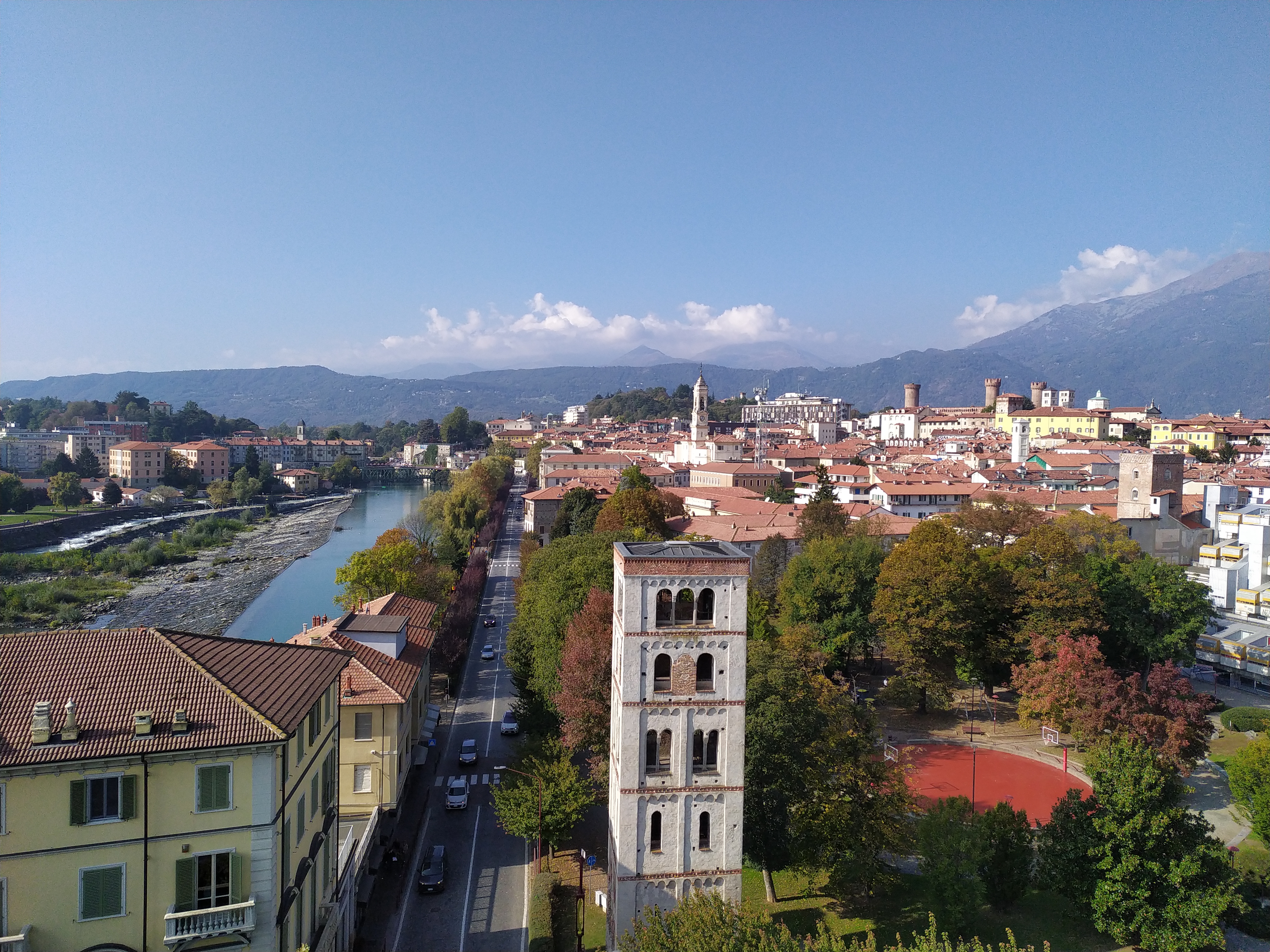 ✦ 76
✦ 76 ✦ 77
✦ 77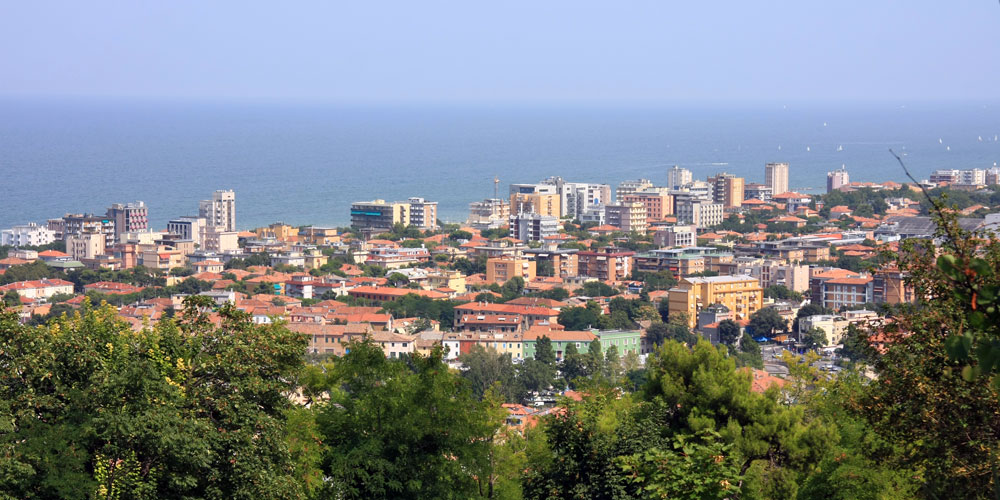 ✦ 82
✦ 82 ✦ 77
✦ 77 ✦ 76
✦ 76Getting Your Income Documentation Story Straight

The income threshold here is lower than most people expect, but the documentation requirement is stricter than most people prepare for. Consulates aren't just looking for a number - they're looking for a coherent story about where your income comes from, how stable it is, and whether it will continue. A contractor with $7,000/month in average deposits but three different client contracts, irregular invoice timing, and a gap month in August is going to have a harder time than a W-2 remote employee with a $4,500/month salary letter from a single US employer.
If you're self-employed, the strongest application usually combines at least two of the following: a long-term client contract (12+ months remaining), recent invoices showing consistent monthly billings, the last two years of tax returns, and a letter from an accountant confirming the income is ongoing. Bank statements alone - even impressive ones - tend to raise more questions than they answer at Italian consulates because there's no context about whether the income is project-based, seasonal, or genuinely recurring. The consulate officer is trying to assess whether you'll still be solvent in month 11, not just month one.
One thing worth knowing: some consulates ask for a motivational letter in addition to the financial documents. The quality of that letter matters more than people give it credit for. Not because Italian officials are literary critics, but because it's the only place in the application where you explain the coherence of your situation - why you're moving, how your work functions remotely, why Italy specifically. An application that reads like a form exercise gets more scrutiny than one that reads like a person who has actually thought this through.
The Accommodation Requirement and Where People Stall

You need proof of accommodation in Italy before the visa is approved. That means a signed 12-month rental contract, a property deed in your name, or a formal invitation letter from someone who owns property and is willing to host you. This is the step that stalls more applications than any other single requirement, and it stalls them in two specific ways.
The first: people try to apply without a lease in hand, assuming they'll find housing after approval. The visa timeline (4-12 weeks) makes this risky. You're trying to secure a lease for an apartment you haven't seen in a city you're not in yet, from landlords who often prefer tenants they've met. The workaround most people end up using is a short-term furnished rental - a month-to-month Airbnb-style contract or a serviced apartment - as a placeholder, combined with a letter from a property manager confirming a longer-term lease can begin upon arrival. Some consulates accept this; others want a signed 12-month contract. Call your specific consulate before you book anything.
The second problem is subtler: people sign a lease in a city they've never actually spent more than a week in, based on neighborhood research and Instagram. Then they arrive and hate the neighborhood, or find the apartment is nothing like the photos, or discover that the commute to the coworking space they'd planned on using takes 45 minutes each way. Spending a scouting trip in Italy before submitting your application - even two or three weeks in the specific city you're targeting - will change what you put your name on.
What Happens After You Land
The visa gets you into Italy. What it doesn't do is make you a legal resident. That part happens after arrival and involves a separate process - registering with the local municipality (comune) to obtain your permesso di soggiorno, the actual residence permit that proves you can stay. The consulate approval and the visa sticker are just the beginning.
In practice, the window between landing and having a functioning permit in your hand can be several weeks. During that time, you're living in Italy, your lease is running, but your formal status is technically "in process." Opening a bank account is harder without the permit. Some landlords get antsy. If anything goes wrong with the application at the comune level - a missing document, a translation issue, an appointment that got rescheduled - that window extends. None of this is a crisis, but it's also not the clean landing that people imagine when they picture moving to Italy.
The codice fiscale (tax identification number) is one thing you can get immediately upon arrival, and you should. It unlocks almost everything else - the bank account, utilities, the SIM card that doesn't rely on a tourist data plan. Most questure (the offices that handle residence permits) will want to see it anyway. Getting it within your first week in-country keeps the rest of the administrative sequence from backing up.
The PR and Citizenship Path in Practice

Five years of continuous residency gets you permanent residency on paper. What "continuous" means in practice is the part that surprises people. You can't leave Italy for more than six consecutive months without potentially breaking continuity, and the 183-day annual presence requirement for visa renewal is a floor, not a ceiling - if you're regularly spending three or four months a year outside Italy, you should be talking to an immigration lawyer about whether your residency clock is actually ticking.
The citizenship application at 10 years adds language requirements. You'll need to demonstrate B1-level Italian proficiency, which is conversational fluency - not tourist Italian. People who've lived in Italy for a decade and worked primarily in English, or who've spent significant time in international expat communities, sometimes discover at year nine that their Italian isn't actually at B1. Starting language study seriously in year one rather than year seven makes a real difference.
There's also an income continuity requirement that isn't always emphasized: you need to demonstrate stable income throughout your residency period, not just at the point of each renewal. The Italian system does look back, and gaps in income documentation can complicate both PR and citizenship applications even if each individual visa renewal was approved.
Italy vs. Portugal - the Real Comparison
Portugal's D8 visa is the most common alternative people consider, and the comparison usually gets reduced to income thresholds and cost of living. That misses the more meaningful differences. Portugal's digital nomad visa has historically been more operationally straightforward at the consulate level, with clearer documentation expectations and consulates that have processed more applications from Americans. Italy's visa is newer, less standardized, and - depending on which consulate you're applying through - more unpredictable in terms of what officers actually ask for.
The tax angle cuts differently depending on your profile. Portugal abolished the NHR regime as of 2024 for new applicants, replacing it with a narrower IFICI program that most remote workers won't qualify for. Italy's standard resident regime isn't generous either, but it's a known quantity, and for Americans running the FEIE/FTC stack, Italy and Portugal land in roughly the same place for active income. Where they diverge is on investment income - Portugal under NHR was genuinely preferential for dividends and capital gains in a way that Italy simply isn't.
The honest reason to choose Italy over Portugal is usually not financial. It's the specific country you want to live in, the citizenship you want to hold at the end, or the fact that you want to live in Milan or Rome or the Abruzzo hills rather than Lisbon. Those are legitimate reasons. The practical cost is a visa process that requires more patience and better pre-application preparation than its Portuguese equivalent.
Work Permissions
Application Steps
- 1
📋 Verify your eligibility and gather financial documents
1-2 weeks
- 2
📄 Obtain comprehensive international health insurance
1-3 days
- 3
📄 Secure accommodation in Italy for 12 months
2-4 weeks
- 4
📄 Compile and translate all required documents
1-2 weeks
- 5
📅 Schedule appointment at your nearest Italian consulate
1-4 weeks
- 6
📬 Attend consulate appointment and submit application
Same day
- 7
⏳ Wait for visa decision and approval
4-12 weeks
- 8
📋 Collect visa and travel to Italy
1-2 weeks
- 9
🏛️ Register with local municipality and obtain residence permit
1-2 weeks
- 10
🏛️ Register with Italian tax authority if applicable
1-2 weeks
Frequently Asked Questions
Click any question to expand the answer.
Ready to Apply?
Work with trusted visa specialists who handle the paperwork so you can focus on your move.
Get help with this visa →* We may earn a commission if you apply through our link
At a Glance
Last verified: July 15, 2026