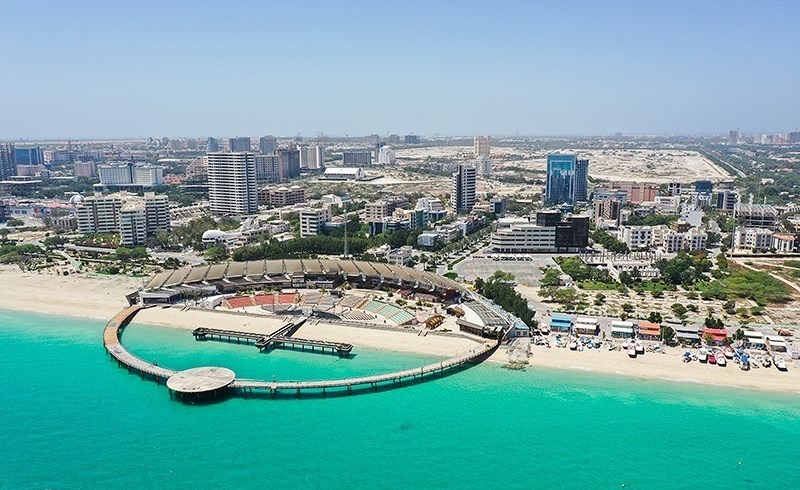
Kish sits on a low-lying island in the Persian Gulf, just 3 m above sea level, and keeps time on Asia/Tehran. The climate is hot and arid, with scorching summers from May through September that reach 35-40°C, mild winters from December through February around 15-20°C, minimal rainfall all year, and moderate coastal humidity. Among the roughly 40 thousand residents, the small expat community tends to cluster in the West Coast and the Marina area, where the sea breeze and the island's resort character shape daily life.
Living costs here run high against local wages. A one-bedroom apartment outside the center rents for about $821/mo, while a three-bedroom in the city center goes for $2,360/mo and a three-bedroom outside the center for $1,600/mo. Eating out is comparatively cheap: an inexpensive restaurant meal costs about $6 per person, and a mid-range three-course meal for two comes to roughly $16. The catch is income. The average monthly net salary locally is only $420/mo, so the gap between rents and earnings is wide, and most newcomers arrive with outside income or savings.
Safety is one of the island's stronger points, with a safety index of 72/100 and a crime index of 28/100, where a lower number means safer streets. Healthcare quality is rated fair, so routine care is available but complex or specialized treatment often means traveling to the mainland. Air quality sits at an index of 72, lower is better, and the coastal setting keeps conditions acceptable for most of the year, though summer heat and humidity can be draining.
Entry rules for foreign visitors are set by national policy, and long stays require arranging the appropriate permission before or during a visit. The nearest airport is KIH, which handles arrivals to the island. Internet runs at an average of 25 Mbps, English proficiency is limited, and the expat community is small. Scores reflect the mix: 33/100 overall for expats, 58/100 for retirees, and 50/100 for digital nomads. Kish suits retirees and remote workers who want a quiet, safe, warm-weather base and can tolerate limited services, high relative rents, and a low local salary scale.