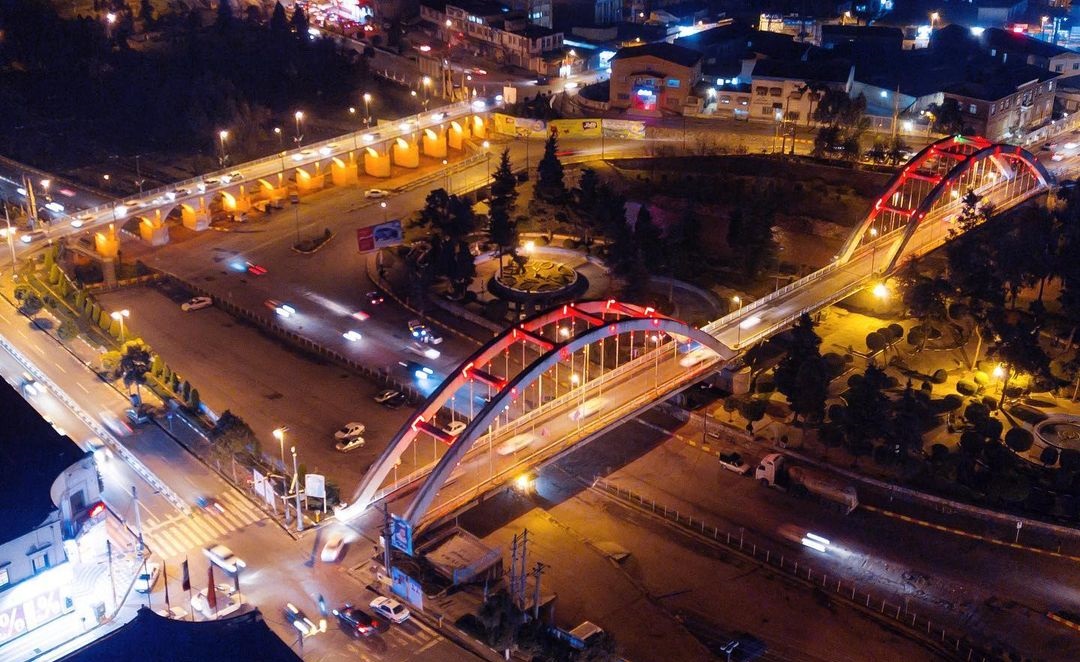
Amol sits in northern Iran at just 76 m above sea level, a low-lying city of 238 thousand people in the green belt south of the Caspian. The climate is humid subtropical, with warm, wet summers from June through September and mild winters, which makes this one of Iran's greenest regions but demands adaptation to high humidity and occasional flooding. The clock runs on Asia/Tehran time. Expats who settle here cluster in Haraz, the one neighborhood that shows up consistently as a popular choice, though the expat community overall is very few in number.
Rent anchors the budget. A one-bedroom in the city center runs $350/mo, while the same unit outside the center drops to $211/mo. Three-bedroom apartments go for $795/mo in the center and $356/mo outside it. Utilities come to $13/mo, internet $4/mo, and a mobile phone plan $2/mo. A monthly public transport pass costs $10/mo and a gym membership $16/mo. Eating out is cheap: $3 for an inexpensive restaurant meal per person, $18 for a mid-range three-course meal for two, and $1 for a cappuccino. Excluding rent, a single person spends about $340/mo and a family of four about $1,200/mo. Tier totals for a single adult land at $229/mo budget, $363/mo mid-range, and $538/mo comfortable. Against that, the average monthly net salary is $223/mo, and the cost of living index sits at 28/100 with New York City at 100.
Safety is a relative strength, with a safety index of 70/100 and a crime index of 30/100, where lower is safer. Healthcare quality is rated fair. Air quality is a weaker point: the air quality index is 65, and lower is better. Internet averages 25 Mbps, enough for routine work but not for heavy data demands. English proficiency is limited, so daily errands and bureaucracy reward some patience and preparation.
Visas follow the standard national channels, and the nearest airport is BSM, 21 km away. Once you arrive, the city scores 58/100 overall for expats, 83/100 on FIRE, 54/100 for retirees, and 56/100 for digital nomads. The low rents and tiny utility bills suit savers, early retirees chasing a high FIRE score, and remote workers who do not mind humidity, limited English, and a very small expat circle. Families and anyone needing robust healthcare or clean air should weigh those tradeoffs carefully.