Kalamaria
Coastal, residential, family-oriented

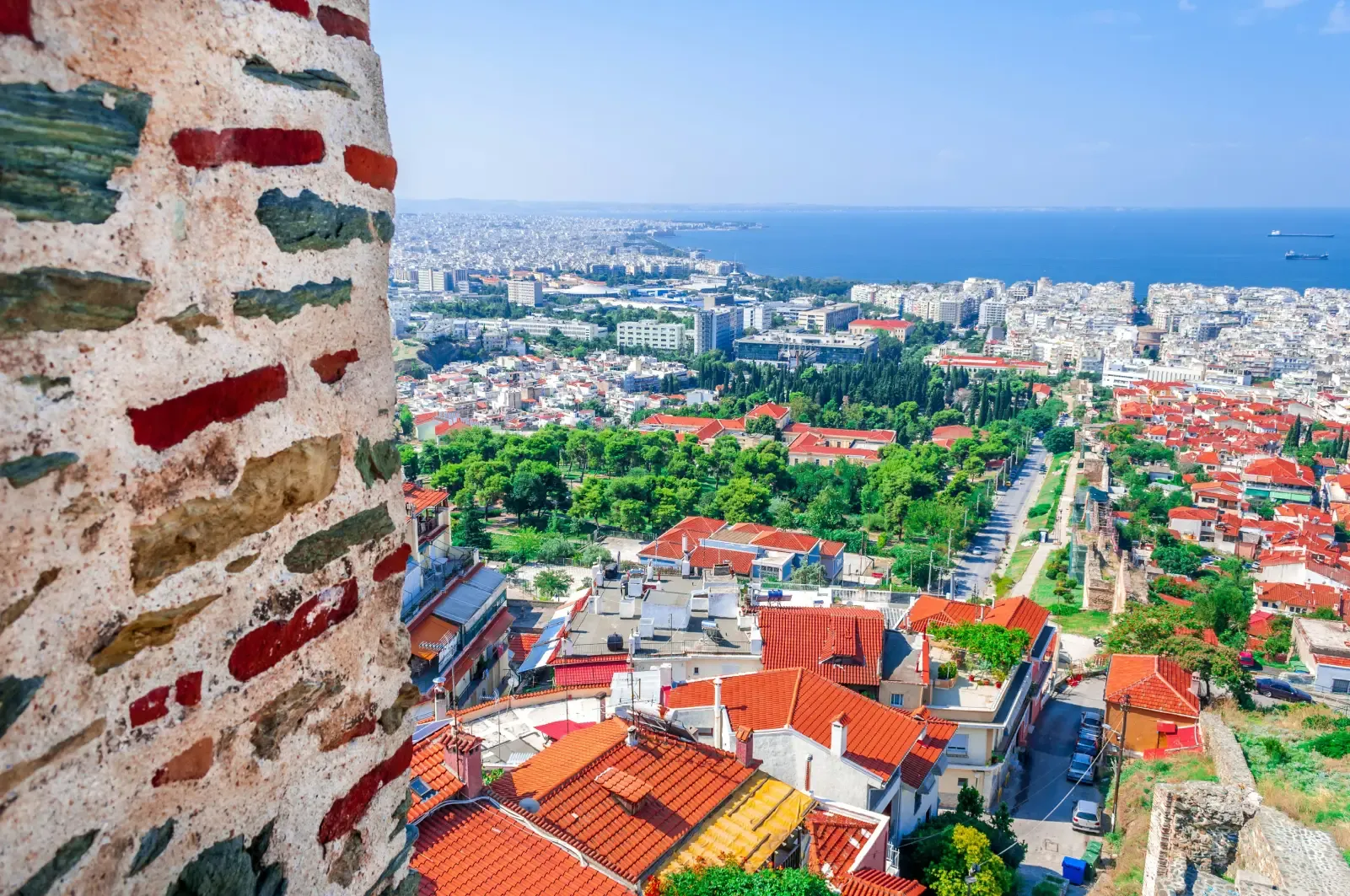
Best fit: Digital Nomad (score: 70)
Thessaloniki is Greece’s second largest city and the capital of Central Macedonia, set on the Thermaic Gulf in the north of the country. The municipality counted 319,045 residents in the 2021 census, while the metropolitan area holds about one million. It is a port and university city: the Port of Thessaloniki handles freight and passenger traffic, and Aristotle University is the largest university in Greece. The historic centre sits below the Byzantine walls, and metro construction uncovered Roman and Byzantine remains.
Daily life runs on a compact centre, a metro line and a dense bus network. The metro opened in November 2024, and an extension to Kalamaria opened on 27 August 2026, adding five stations and linking the centre with the eastern coastal suburbs. Makedonia Airport lies 14 km southeast of the centre, with bus routes X1 and N1 running to the railway station. The climate is Mediterranean, with hot, dry summers and cool, wetter winters.
Healthcare is a strength for a regional city: nine public hospitals and nine private clinics operate in Thessaloniki, and several of the main hospitals are linked to the Aristotle University medical school. English is widely spoken, especially among younger residents, and the foreign-resident community is smaller than Athens’s but established. The practical catch is environmental: summer heat is intense, and the annual average PM2.5 level of 17.5 µg/m³ is more than three times the World Health Organization guideline of 5 µg/m³.
Get a free moving cost estimate for moving to Thessaloniki, Greece. Takes 10 seconds.
How much are you shipping?
When are you moving?
Powered by Sirelo. Free quotes from international movers.
A category breakdown is not available for Thessaloniki yet. We publish a breakdown only when every category can be priced from local data, rather than showing figures we cannot stand behind.
Still needed for a full breakdown: grocery prices, restaurant prices and utility bills.
If your income is in another currency, bank FX fees add up every month. A multi-currency account can cut that cost.
See low-fee transfersWe may earn a commission at no cost to you.
See how Thessaloniki's cost of living compares with Vonitsa
Greece carries a Level 1 advisory (“exercise normal precautions”) from the US State Department, issued in October 2025. In Thessaloniki the main risk is petty theft, particularly in crowded places such as public transport, around transport hubs and in nightlife districts, so keep bags closed and phones out of sight. Demonstrations occasionally disrupt transport.
Nine public hospitals and nine private clinics operate in Thessaloniki, and several of the public hospitals are teaching hospitals linked to Aristotle University. AHEPA University Hospital and Papageorgiou General Hospital handle complex care, while Interbalkan Medical Center is a major private hospital with English-speaking staff. Public hospitals can be crowded.
See how Thessaloniki's healthcare compares with Vonitsa
The city has a Mediterranean climate classified Csa, with hot, dry summers and cool, wetter winters. July and August average daily highs near 32°C and lows near 19°C, January averages 2°C to 11°C, and annual rainfall is about 446 mm, falling mostly in the cooler months. The air-quality figure of 17.5 is annual average PM2.5 in µg/m³, above the WHO annual guideline of 5 µg/m³.
Remote workers are one part of the foreign-resident community rather than its core, but the compact centre, the metro and fixed broadband with a median download speed of about 126 Mbps (Ookla, August 2026) make the city workable without a car.
Planning to live in Thessaloniki long-term? Greece Digital Nomad Visa lets remote workers live legally with a minimum income of €3,500 (≈ $3,915.12)/month.
View full requirements →Working remotely from Thessaloniki? Nomad health insurance covers you across borders, month to month.
See nomad insuranceWe may earn a commission at no cost to you.
See how Thessaloniki's digital nomad life compares with Vonitsa
Thessaloniki’s foreign-resident community is smaller than Athens’s but established, with Balkan and Eastern European residents alongside remote workers and students. English is widely spoken among younger Greeks, and the university population gives the centre a young, busy feel.
Areas of Thessaloniki that expats often consider.
Conditions can change from one block to the next, and these descriptions are general guides, not safety assessments. Before choosing where to stay or live, check current travel advisories, talk to people who live there, and visit in person if you can.
Coastal, residential, family-oriented
Seafront, relaxed, walkable
Historic, hillside, quiet
Nightlife, restored warehouses, central
With a 1-bedroom in the center at $560/mo, your FIRE number here might be much lower than you think.
Many long-stay visas require proof of health insurance. Compare international health plans before you apply.
Compare health insuranceWe may earn a commission at no cost to you.
Earning over $3,915.12/mo? You may qualify for a Greece visa.
Answer 11 questions and get a personalized match in under 2 minutes.
Click any question to expand the answer.
Cost-of-living and visa updates for Thessaloniki and the rest of Greece. Free with RA Postcards.
By submitting your email address, you will receive a free subscription to RA Postcards and special offers from Rewire Abroad and our affiliates. You can unsubscribe at any time, and we encourage you to read more about our Privacy Policy.