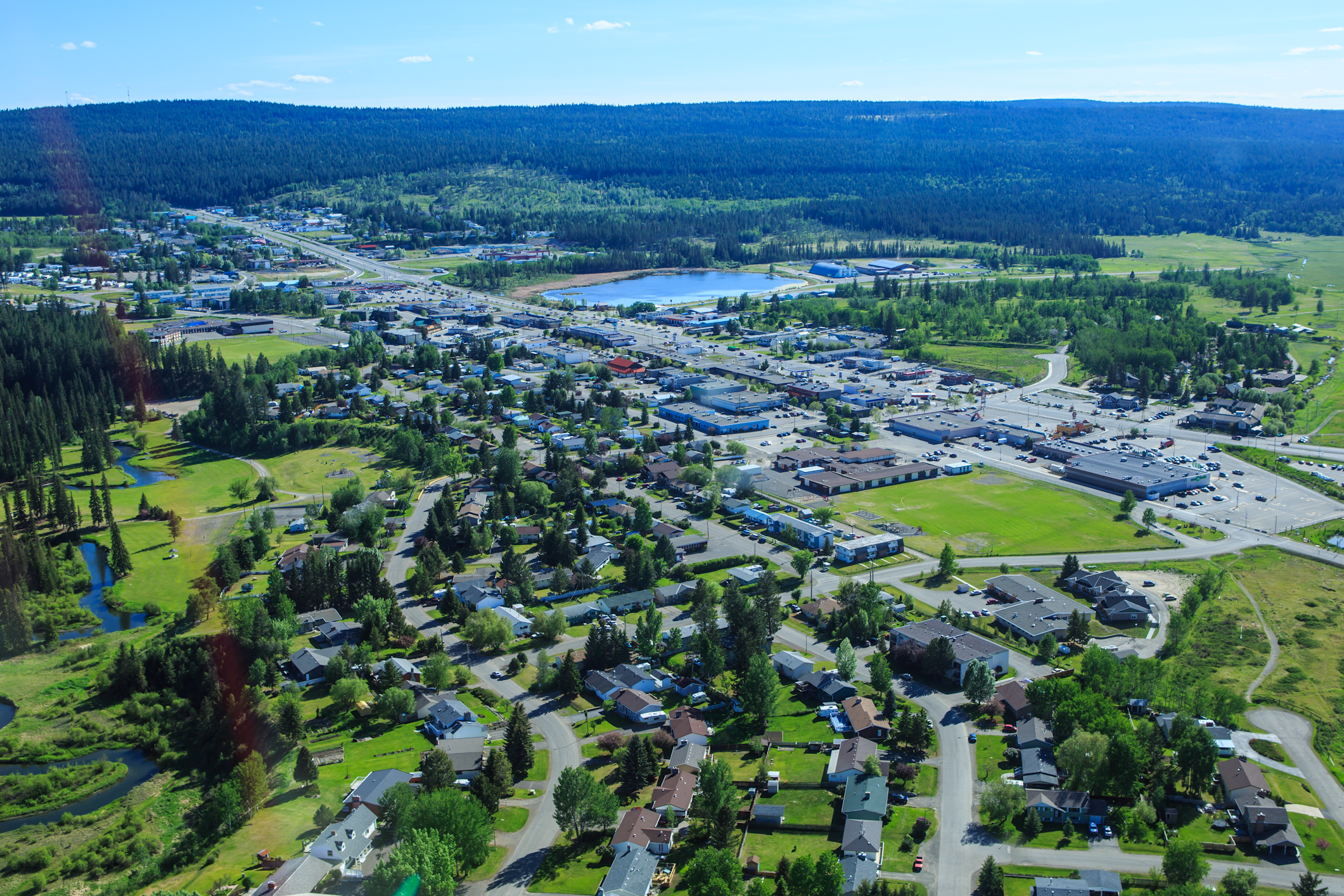
100 Mile House sits at 910 m above sea level in the Cariboo region of British Columbia, within the America/Vancouver timezone and home to about 2 thousand people. The climate is continental, with cold, long winters that drop to -29°C and warm, short summers that reach 32°C, plus moderate humidity at 68 percent. Distinct seasons make it a practical base for outdoor recreation all year. Newcomers tend to settle in the 100 Mile House Town Center or the Horse Lake area, the two most popular expat neighborhoods.
Rents are modest by Canadian standards. A 1-bedroom apartment runs $772/mo both in the city center and outside it, while a 3-bedroom costs $1,543/mo in the center and $1,403/mo outside. Monthly utilities average $84, internet $63, and a mobile phone plan $84. Excluding rent, a single person spends about $1,100/mo. Budget, mid-range, and comfortable tiers for a single adult, rent included, come to $926/mo, $1,405/mo, and $1,599/mo. Everyday costs stay low: an inexpensive restaurant meal is $18 per person, a three-course mid-range meal for two is $56, and a cappuccino is $4. The average monthly net salary locally is $2,686/mo, so wages and rents are closely matched.
Safety is a strong point, with a safety index of 85/100 and a crime index of 15/100, where lower is safer. Air quality sits at 45 on the index, where lower is better. Healthcare quality is rated Good. Internet averages 65 Mbps, enough for remote work and streaming. The overall expat score is 77/100, with a FIRE score of 77/100, a retiree score of 64/100, and a digital nomad score of 61/100. The expat community is very few in size, and English proficiency is limited, so social and language networks take deliberate effort to build.
For longer stays, the Canada Super Visa (Parents & Grandparents) supports family visits, and the Canada Digital Nomad Visa covers remote workers. The nearest airport is YKA, 120 km away. With its low costs, high safety, and four clear seasons, 100 Mile House suits budget-conscious retirees, remote workers, and outdoor-focused households that prefer a small, quiet town over a large city.