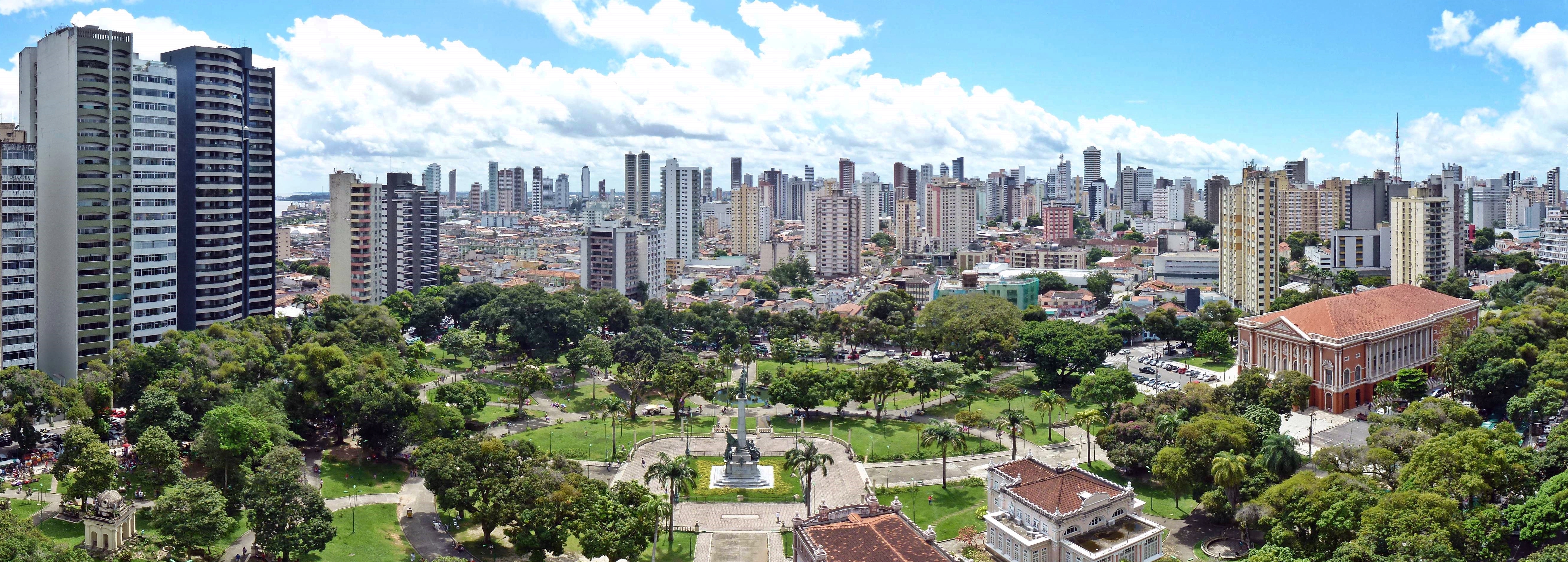
Xinguara sits in the state of Pará within the Amazon biome, a small city of 48 thousand people at 181 m above sea level, keeping time on America/Belem. The tropical climate delivers high temperatures all year, and the surrounding landscape of forest and farmland shapes the air, which carries a moderate influence from occasional biomass burning and agricultural activity. The air quality index of 72 reflects that mix. Expats looking for a base here will find the city compact and the airport close, but the guide does not name specific expat neighborhoods, so arrivals typically explore the centre and outer districts on their own to see where daily life feels right.
Monthly costs for a single person, excluding rent, come to $428/mo. Housing splits clearly by location: a 1-bedroom in the city centre rents for $335/mo, while the same outside the centre drops to $236/mo. That gap of roughly a hundred dollars makes the outer ring attractive for longer stays. Internet averages 22 Mbps, enough for messaging, browsing, and standard video calls, though heavy data work may feel the pinch. Local wages are not part of the picture here, so the practical takeaway is that remote income or savings will do the heavy lifting in this budget.
Safety is a real consideration. The safety index stands at 38/100, and the crime index is 62/100, where a lower number would be safer. Healthcare quality is rated poor, so expats and retirees should plan for private care or travel for serious treatment. The combination means daily life can be calm and affordable, but it rewards those who stay aware, keep valuables discreet, and arrange medical coverage before settling in.
For stays, Brazil offers the VITEM XIV retirement visa with a minimum monthly income of $2,000/mo, and the Brazil Digital Nomad Visa with a minimum monthly income of $1,500/mo. The nearest airport is XIG, just 3 km away, which keeps arrivals and departures simple. With an overall expat score of 39/100, a retiree score of 40/100, and a digital nomad score of 41/100, Xinguara suits budget-conscious remote workers, slow travellers, and retirees who want a low-cost Amazonian base and do not mind limited English proficiency or basic healthcare. It is not a fit for anyone needing polished infrastructure or a large international community.