Saudi Arabia Premium Residency
Saudi Arabia · Middle East
Data updated Sep 3, 2026
Application Fee
$170
Processing Time
4 wks–6 wks
Difficulty
Moderate
Duration
12 months
Overview
Saudi Arabia’s Premium Residency is a golden-style program aimed at investors, high‑net‑worth individuals, and mobile professionals who can show substantial assets rather than salary. The hard line is financial: you need at least $1,000,000 in savings or net worth, plus either the renewable option at roughly $26,700 per year as of 2026 (SAR 100,000, reflected as a Renewal Cost of $26,700/year) or the one‑time permanent route at about $213,000 (SAR 800,000 Investment Required). Social Security or foreign pension income is not recognized as qualifying in the official criteria.
Legally, Premium Residency is already a form of long‑term status: the visa leads to permanent residency from day one (Years to PR: 0 years). The basic product in your facts table is a 12‑month authorization (Duration: 12 months) that is renewable (Renewable: Yes) as long as you keep paying the fee and stay compliant. Those who pay the SAR 800,000 equivalent $213,000 can secure an unlimited‑duration permit under the same legal framework, avoiding the $26,700 annual Renewal Cost (as of 2026) entirely.
For mobility, the regime does cap your absence: Max Consecutive Absence is 365 days. That matters if you want to use Saudi Arabia as a base but spend long stretches elsewhere; being out for more than a continuous year risks your status. In practice, many Premium Residents come and go frequently, using the right to exit and re‑enter without a visa while keeping a foothold in the Gulf.
Procedurally, the friction is moderate: the Bureaucracy Score of 3.1875/5 reflects a multi‑step but digitized process through the Premium Residency Center. You must be at least 21 (both legal and practical minimum age), obtain qualifying health insurance in Saudi Arabia (Health Insurance Required: Yes), and prepare standard documentation like proof of financial solvency and clean criminal record. Notably, there is no requirement for an apostille, no FBI background check, no mandatory medical exam, no local bank account requirement, and no in‑person interview, and processing is relatively fast at 4–6 weeks from complete submission.
Workwise, Premium Residency is unusually flexible: local work is permitted (Local Work Permitted: Yes) and you can operate as self‑employed, a business owner, or a contractor (Employment Types Allowed: self_employed, owner, contractor) without a Saudi sponsor. This leaves room for both active business owners and FIRE retirees who simply want to reside and invest while drawing foreign dividends. Dependents are allowed, though incremental costs for adults or children should be checked case‑by‑case on the portal.
This setup makes sense if you can comfortably allocate $213,000 for a permanent residency fee or $26,700/year (as of 2026) from a $1,000,000+ portfolio while wanting the option to earn locally in a zero‑income‑tax environment. It is a poor fit if your movable wealth is under seven figures and your plan is to live solely off $2,500–$3,000/month in Social Security or pensions, because your assets and non‑recognized income streams will struggle to clear the financial sufficiency bar and ongoing renewal costs.
Eligibility Requirements
Any nationality can apply in principle for Saudi Arabia’s Premium Residency; the program is not restricted by passport category in the underlying law. In practice, applicants from sanctioned or diplomatically sensitive states such as Iran, Syria, North Korea, and in some cases Russia or Cuba can run into banking compliance blocks, enhanced due diligence, or outright refusals, even when the immigration rules themselves do not bar them. Before assembling a full document package or transferring $213,000 for a permanent permit, confirm your specific eligibility directly with the Premium Residency Center, which administers the scheme under the Premium Residency Permit Law, or via its official online portal.
Application Fee
$170
Renewal Cost
$26,700/yr
Min Age
21 yrs
Duration
12 months
Max Absence
365 days
Self-Employed · Business Owner · 1099 Contractor
Requirements Checklist
• Identity: Valid passport (main applicant, spouse, children, parents; at least 6 months validity); passport copies for all pages with personal data and previous visas; recent passport-sized photos (main applicant and dependents); national ID (if applicable).
• Background: Police clearance / criminal record certificate for adults from country of nationality and country of residence (if different); signed consent for security and background checks by Saudi authorities.
• Health: Recent medical report showing absence of communicable diseases (issued within last 6 months by licensed clinic or Saudi-authorized medical center); vaccination card or record (if required by health regulations); proof of health insurance (to be arranged after approval and before activation).
• Financial: Personal bank statements for the last 6–12 months showing sufficient funds and ability to pay premium residency fee; bank reference letter (if requested); documents evidencing source of funds (sale contracts, salary slips, inheritance documents, savings certificates or similar).
• Civil status: Marriage certificate for spouse; birth certificates for children; proof of guardianship or dependency for parents or adult dependents; custody documents for minor children where applicable.
• Employment: Employment contract or offer letter (if employed); recent salary certificates or payslips; professional CV; educational degrees and certificates; professional license or registration for regulated professions (if applicable).
• Accommodation/Address: Proof of current residential address (utility bill, lease agreement, or official address certificate); proof of lawful stay in Saudi Arabia if applying from inside the Kingdom (current iqama or entry visa).
• Other: Completed online premium residency application form; completed declarations and undertakings required in the portal; authorization letter for application submission (if required by the Premium Residency Center); copies of awards, research, patents or similar achievements (for talent tracks, if applicable).
• Translation: Certified Arabic translations of all non-Arabic documents; legalisation or Apostille of civil and criminal record documents where required by Saudi authorities.
Tax Information
Local tax regime and what it means for you
Saudi Arabia runs a territorial tax system for individuals. Under a territorial regime, non‑Saudi expatriates with Premium Residency are not subject to personal income tax on salary, self‑employment income, interest, pension distributions, or rental income, whether those income streams arise in Saudi Arabia or abroad, except that dividends paid by Saudi companies to non-resident individuals are subject to a 5% withholding tax. For a US or Canadian FIRE retiree living off ETF dividends and bond interest from a foreign brokerage account, the local income tax burden is effectively zero. Business profits allocated to you through a Saudi company can be caught at the corporate level, but that’s a different layer of tax.
For capital gains on foreign investments such as US‑listed index funds or ETFs, the position follows from the same territorial logic: gains realized in a foreign brokerage are exempt from Saudi personal income tax; there is no local tax on those capital gains for individuals. That includes selling $200,000 of Vanguard ETFs in a US account while resident in Riyadh. If you trade Saudi‑listed securities directly, you can trigger local transaction taxes or zakat at the entity level, but there is no personal capital gains tax regime equivalent to that in many OECD countries.
Tax residency in Saudi Arabia is driven by presence and ties rather than the mere grant of a Premium Residency permit. Local law often uses a 183‑day presence threshold in a 12‑month period to determine tax residency, but because there is no personal income tax on individuals, the practical consequence is muted: becoming a Saudi tax resident does not suddenly expose your foreign passive income to Saudi tax. Nonetheless, you may still need a tax ID for corporate, banking, or property transactions.
Local filing obligations for individual Premium Residents are minimal as long as you do not operate through a taxable entity. There is no annual personal income tax return comparable to a US Form 1040. If you form a company, you’ll interact with ZATCA (the tax authority) on corporate income tax and VAT, but that is outside the scope of this visa. The Tax Treaty with the US (Tax Treaty with US: no) does not apply to cross‑border business, dividends, or interest since no treaty exists; it does not change the fact that Saudi does not tax your personal foreign passive income. There is no separate US‑Saudi totalization agreement on Social Security, so US Social Security remains taxed by the US under its own rules, not Saudi’s.
For US Citizens and Green Card Holders
US citizens and green card holders under Premium Residency in Saudi Arabia remain fully taxed by the US on worldwide income. The territorial nature of Saudi tax means you get zero local personal income tax to offset against US obligations on your index fund dividends, interest, or capital gains.
The Foreign Earned Income Exclusion (FEIE) on Form 2555 can still help for earned income from remote work, self‑employment, or Saudi‑source consulting. For 2026, you can exclude up to $132,900 of earned income if you qualify under either the Physical Presence Test (330 full days in any rolling 12‑month period outside the US, including days in Saudi Arabia) or the Bona Fide Residence Test (generally, full‑year residence with stronger local ties). Given Premium Residency’s 365‑day maximum consecutive absence and the fact many holders base themselves in the Kingdom long‑term, the Bona Fide Residence Test is often the more natural route if you truly relocate; the Physical Presence Test remains useful for more itinerant nomads bouncing in and out of Saudi.
Because Saudi does not impose personal income tax on your salary or passive income, the Foreign Tax Credit (Form 1116) has limited relevance. With a 0% Saudi rate, there are no foreign income taxes to credit against US tax on your $80,000 of consulting income or $40,000 of ETF dividends; your effective US tax bill is driven almost entirely by US rates. The main Saudi‑US tax considerations apply to those earning through Saudi entities or receiving Saudi‑source dividends or interest, but that is a niche case.
The FBAR (FinCEN 114) and FATCA Form 8938 still apply. If your combined foreign financial accounts (Saudi bank, local brokerage, perhaps an offshore multi‑currency account) exceed $10,000 at any point in the year, you must file an FBAR; non‑willful penalties start around $16,700 per violation as of 2026. Form 8938 kicks in at higher thresholds depending on filing status and residence. Premium Residency does not require a local bank account (Local Bank Account Required: No), but in practice most residents open one for rent, utilities, or health insurance, which brings FBAR/FATCA into play.
In year one, the smartest approach is to engage two specialists: a US CPA who focuses on expat taxation and understands FEIE, FTC, FBAR, Form 8938, and your brokerage structures, and a local Saudi tax advisor who can confirm whether any of your activities cross into corporate or VAT territory. The $1,500–$3,000 spent on coordinated advice is usually recovered in optimized FEIE elections, correct treaty application, and avoided FBAR/FATCA penalties.
Living in Saudi Arabia
COL Index vs NYC
41.9
Monthly Cost (excl. rent)
$780
1BR Rent (City Center)
$602
Safety Index
76.1
Healthcare Index
61.8
Quality of Life Index
177.0
Time Zone
UTC+03:00
Capital
Riyadh
Population
34.8M
Official Languages
Arabic
Avg Internet Speed
196 Mbps
Public Transit Quality
Good
With a budget covering rent and living costs, you'd need roughly $1,382/mo for a comfortable single-person lifestyle in Saudi Arabia.See how far your money goes →
🏙️ Best Cities in Saudi Arabia for Golden Visa Holders
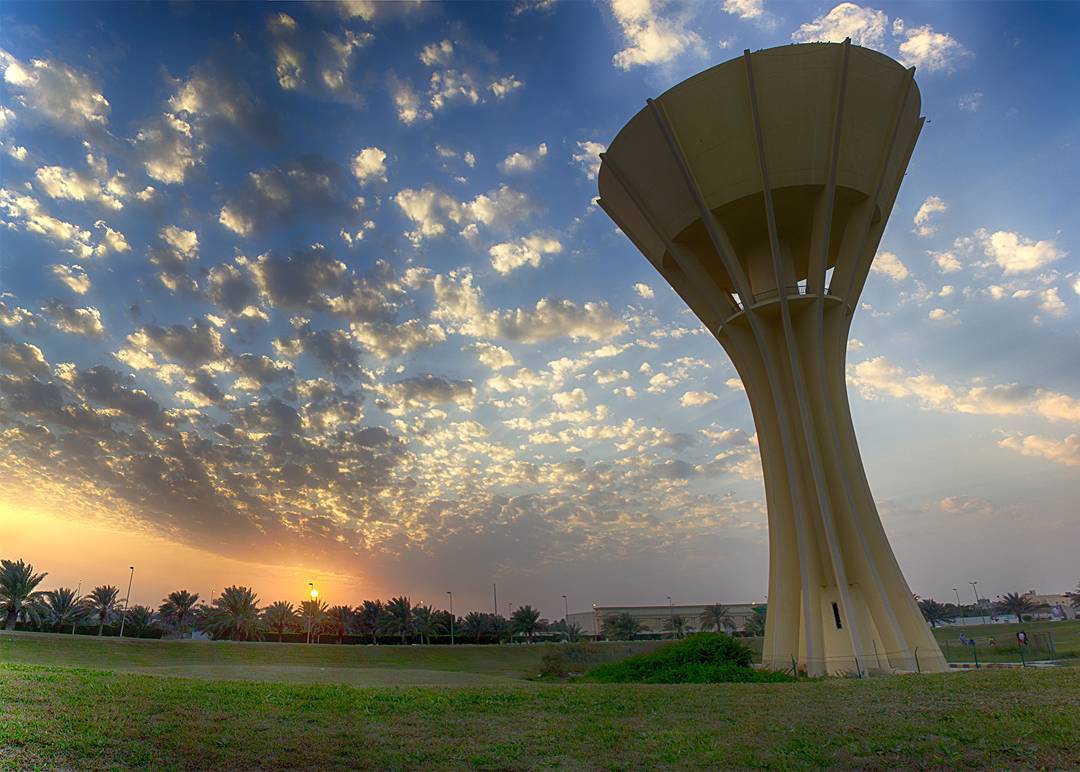 63
63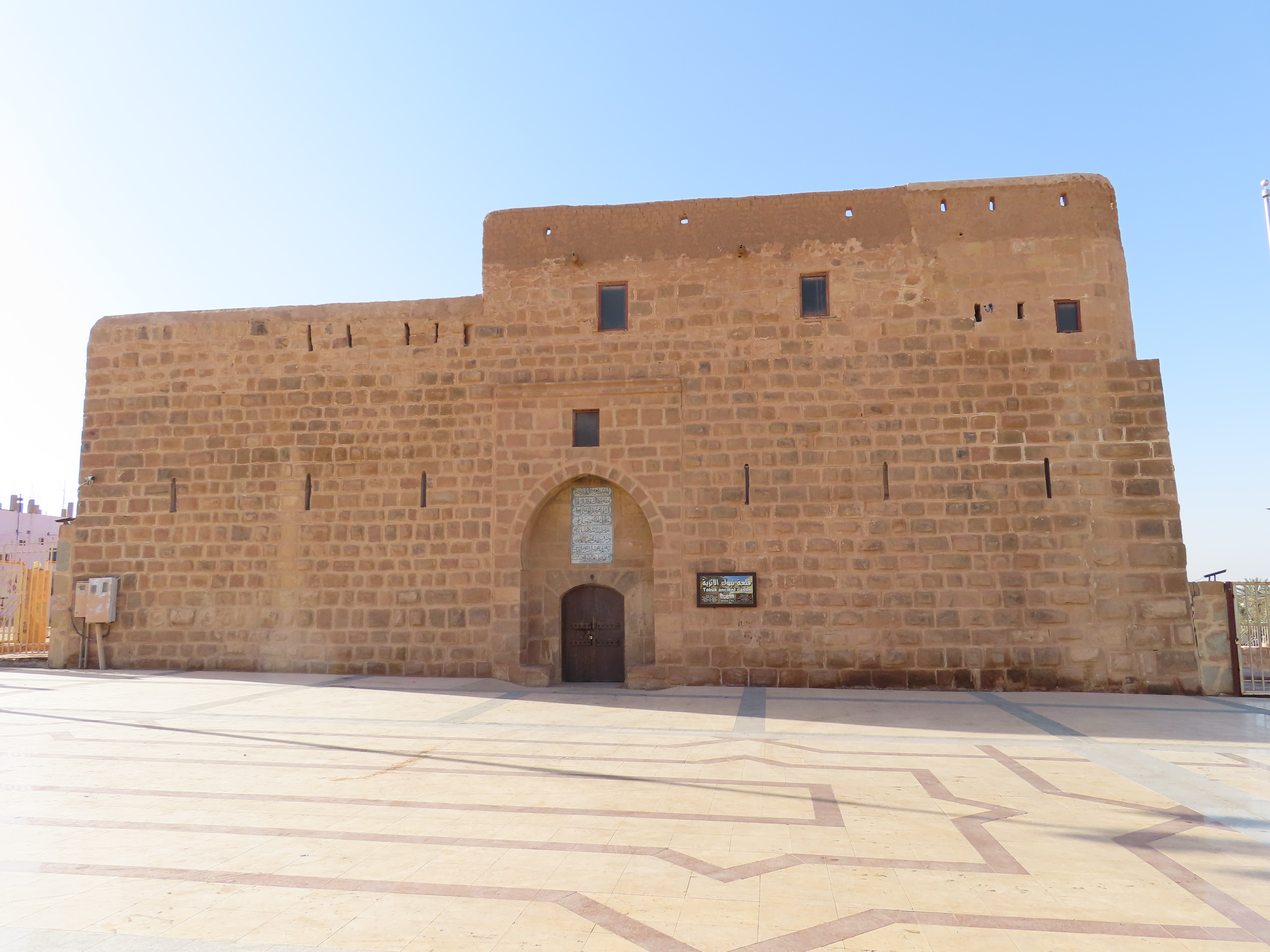 65
65 63
63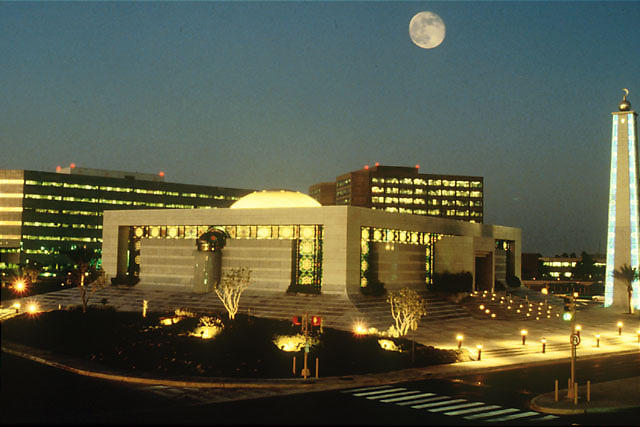 68
68The address and accommodation problem nobody explains well
On paper, the accommodation piece looks like the lightest part of the file: a lease, a utility bill, or an official address certificate. In practice it creates a sequencing problem that catches first-time applicants off guard. If you're applying from outside the Kingdom, you don't need a Saudi address at all, the whole thing runs through the online portal with no physical footprint required to submit. But if you're already inside Saudi Arabia when you apply, you need to already hold lawful residency status, meaning a valid iqama or entry visa, before the address proof even becomes relevant.
The mistake people make is assuming this is a chicken-and-egg problem they can solve by renting first and formalizing status second. Landlords in most Saudi cities want to see valid residency documentation before they'll sign a lease with a foreign national, which means the practical order is almost always: secure the approval and initial permit first, then handle housing once you're inside on legal footing, not the other way around. Trying to lock down a long-term lease before you have anything to show a landlord tends to waste weeks and sometimes money on a deposit for a property you can't actually move into on schedule.
There's also a quieter issue with proof of address for dependents. Spouses, children, and any parents or adult dependents included on the application need their own civil documentation tied cleanly to the main applicant's file, custody papers for minors, guardianship documents for dependent parents, and none of that is something you want to be assembling after the main financial file is already submitted. Build the dependent paperwork in parallel, not as an afterthought once the primary application clears.
What actually happens after approval lands in your inbox
Approval here doesn't look like a stamp in your passport or a trip to a consulate window. It arrives as a digital record through the Premium Residency Center's portal, and there's no interview and no in-person medical exam required to get to that point, just a medical report from a licensed clinic showing the absence of communicable disease. That makes the front end of this process unusually frictionless compared to other golden-visa programs that still route through embassy interviews.
The gap most people don't anticipate is what happens between that digital approval and actually being able to live and work under it. Health insurance isn't arranged during the application, it's arranged after approval and before activation, so there's a window where you're holding an approved status but aren't yet covered, and you shouldn't plan a move date that assumes same-week activation. The initial grant runs twelve months, and it is renewable, but renewal isn't passive: it has its own cost, and staying under the renewable structure means budgeting for that recurring payment as a real annual line item, not a one-time hurdle you clear and forget.
Nothing here requires opening a local bank account to get through the process, which simplifies the early logistics, but it also means you shouldn't assume banking, insurance, and address registration all happen automatically once you're approved. Each is its own errand, and the order you handle them in affects how fast you're actually functional once you're on the ground rather than just approved on paper.
The permanent residency question, answered more honestly than it's usually asked
The pitch for Premium Residency is that it functions as permanent residency from day one rather than something you earn after a waiting period, and that's structurally true. There's no multi-year clock ticking before you hold status equivalent to permanent residence, which sets this apart from almost every other program in this income bracket where PR is the reward for five or ten years of renewals and tax filings. That's a genuine structural difference, not a marketing gloss, and it changes the calculus for someone deciding whether to commit now versus wait and see.
What it doesn't do is make the day-to-day maintenance of that status effortless. The renewable route carries an annual cost near $26,700 (as of 2026), which is a real recurring commitment, not a rounding error, and missing it or letting the maximum consecutive absence period lapse can put your standing at risk even after years of holding it cleanly. Anyone treating this as a set-and-forget acquisition is going to be surprised later. Pension income isn't recognized as qualifying income for this track, which matters if you're a retiree hoping to lean on a fixed pension rather than savings or active earnings, since it simply doesn't count toward what the program is evaluating.
The honest framing is that this buys immediate, durable residency status rather than a path toward it, which is valuable, but it asks you to keep funding that status year over year in a way that a one-time citizenship-track program elsewhere wouldn't.
Weighing this against the obvious Gulf alternative
For a remote professional or freelancer comparing Gulf options, the UAE's golden visa is the program most people have already looked at before they land on this one, and the decision usually comes down to what kind of commitment you're willing to make. Saudi's Premium Residency asks for a much larger financial threshold up front and a real ongoing renewal cost if you choose the annual track rather than the one-time route, and dependents are explicitly accommodated in the file rather than handled as an afterthought, which matters if you're moving as a family rather than solo.
The territorial tax structure is the piece that tends to swing decisions for US earners, since it changes how local income sits relative to what you already owe at home, though the details of how that interacts with your specific US filing situation deserve individual attention rather than a general assumption either way. What should actually drive the choice isn't the headline residency status, it's whether your income profile and family situation better fit a program built around a large financial commitment with fast, interview-free approval, or one built around a lower entry bar with a longer runway to permanence. Someone earning $6,000 a month from two US clients, with savings well short of seven figures, is probably not the target profile here regardless of how appealing the no-interview process looks on its own.
Work Permissions
Application Steps
- 1
📋 Research eligibility criteria
1-2 days
- 2
📄 Gather required documents
1-2 weeks
- 3
📬 Submit online application
Same day
- 4
⏳ Await processing decision
4-6 weeks
- 5
📄 Pay fees and get insurance
1 week
- 6
🏛️ Receive Premium Residency card
1-2 weeks
- 7
🏛️ Sponsor family dependents
1-2 weeks
- 8
🏛️ Renew annually if limited
1 week
Frequently Asked Questions
Click any question to expand the answer.
Ready to Apply?
Work with trusted visa specialists who handle the paperwork so you can focus on your move.
Get help with this visa →* We may earn a commission if you apply through our link
At a Glance
Last verified: July 15, 2026