Peru Retirement Visa (Rentista)
Peru · Latin America
Data updated Sep 19, 2026
Min Monthly Income
$1,000
Application Fee
$36
Processing Time
4 wks–6 wks
Difficulty
Moderate
Path to Citizenship
3 years
Overview
Qualification for the Peru Rentista comes down to a single, non-negotiable premise: your money comes from somewhere else, permanently, and you do not work here. The $1,000 per month income floor is low enough that many applicants clear it easily, but the structure of what counts - passive, permanent, documented, and transferable into Peru through a banking institution - eliminates a lot of income that people assume will qualify. Freelance income doesn't count. Consulting retainers don't count. A brokerage account you draw from at will is a harder case than a fixed annuity. What Peru wants to see is a guaranteed, lifelong stream that doesn't depend on you doing anything, and the documentation has to prove that before you walk into Migraciones.
The profile that sails through this process is straightforward: someone with a US government pension, a private pension with a formal benefit letter, or a guaranteed annuity, who has already stopped working and isn't planning to pick up freelance work on the side. That person's paperwork tells a clean story. The profile that struggles is the early retiree who lives off a dividend portfolio or rental income - technically passive, but not "guaranteed permanent income" in the way Peruvian immigration reads it, and the documentation is harder to make convincing. The profile in the wrong category entirely is anyone who plans to keep working remotely for US clients. Peru does not have a digital nomad visa, and the Rentista explicitly prohibits remunerated activity. That's not a gray area.
The tax piece is where most applicants do the least thinking before they apply. Peru taxes residents on worldwide income once you've spent more than 183 days in any 12-month period in the country, and the pension exemption - which is real and valuable - covers pensions derived from personal work, not your full financial picture. Foreign dividends, rental income from properties abroad, and portfolio gains are still in scope at progressive rates. For US citizens, there's no income tax treaty with Peru to soften this, so double-taxation relief runs entirely through the Foreign Tax Credit. That math needs to be run before you commit, not after you've signed a lease in Miraflores.
What the Rentista actually unlocks is indefinite residence without a renewal cycle, a legal identity in Peru through the carné de extranjería, and a country where $1,000 to $2,000 a month covers a comfortable life in most cities. For someone whose income is already structured correctly, this is one of the more accessible indefinite residence paths in Latin America, and Peru's range - coast, highlands, Amazon, colonial cities, beach towns - gives you more optionality within one visa than most countries offer across several.
Eligibility Requirements
Min Income
$1,000
Application Fee
$36
Physical Presence
180 days/yr
Max Absence
183 days
Pension / Social Security · Passive / Investment Income
Max 0% from local sources
+50% per adult · +50% per child
Requirements Checklist
Valid passport with at least 6 months validity
Proof of sufficient income (bank statements, employment contract)
Health insurance covering the entire stay
Clean criminal background check
Completed application form with all required documents
Proof of accommodation in the country
Apostille required on official documents
Tax Information
Peru Taxes Residents on Worldwide Income
Peru triggers tax residency once you've been physically present in the country for more than 180 calendar days within any 12-month period. Cross that threshold and you're taxed on worldwide income - salary, freelance earnings, foreign dividends, interest, royalties, capital gains on securities, and rental income from property back home in the US. There is no territorial carve-out for foreign-source income the way some countries structure it.
The progressive rate structure runs from 8% on income above the exempt threshold up to roughly USD 23,000, then 14% to around USD 92,000, 17% to roughly USD 161,000, 20% to about USD 215,000, and 30% above that. These bands are denominated in Peruvian soles and indexed annually to the UIT (Unidad Impositiva Tributaria), so the USD equivalents shift with both the UIT adjustment and the exchange rate - the figures above are approximations and the current-year thresholds should be confirmed with SUNAT or a local advisor before filing.
One meaningful exception exists for rentista holders specifically: qualifying pension income derived from personal work - government and private pensions paid from abroad - is exempt from Peruvian income tax under Peruvian law. That exemption is real and it matters, but it is narrow. Foreign dividends, rental income, and portfolio investment gains don't fall inside it.
The Pension Exemption - What It Covers and What It Doesn't
Peru doesn't have a broad non-domiciled or territorial expat tax regime. There's no NHR equivalent, no flat-tax program for new arrivals, nothing that restructures your overall tax position the way some European programs do. What exists for rentista holders is specific: the pension exemption described above, tied to the rentista classification obtained through Migraciones.
If your income is primarily a foreign pension from prior employment - government or private - that exemption does meaningful work. Your core income stream sits outside Peruvian tax entirely. But if you're also drawing foreign dividends, running a brokerage account, or receiving rental income from US property, those streams are taxable in Peru at the progressive rates. There is no special reduced rate for rentista holders on investment income beyond the pension carve-out. Foreign dividends are taxed as foreign-source passive income at standard progressive rates. Capital gains on securities are similarly taxed at a flat 5% rate for individuals, rather than under the general progressive structure, with some specific rules for listed securities.
The exemption's status is currently active. However, Peruvian tax rules around the rentista classification are not widely codified in English-language sources, and the practical application - what SUNAT actually treats as qualifying pension income versus other passive income - is worth confirming with a Peruvian tax attorney before you file your first return.
The US Layer - FEIE, FTC, and FBAR
The IRS does not stop taxing you because you moved to Lima. US citizens and green card holders file US returns on worldwide income regardless of where they live, and the Peru-US tax relationship has no comprehensive income tax treaty to soften that. There is a tax information exchange agreement between the two countries and some sector-specific arrangements, but no treaty-based relief for ordinary pension, salary, or investment income. Double-taxation relief runs through the foreign tax credit mechanism, not treaty provisions.
FEIE applies only to earned income - remote salary, freelance, self-employment. It does not touch pensions, Social Security, dividends, interest, or capital gains. As of 2026, the exclusion limit is $132,900 before filing. For a typical rentista holder whose primary income is a foreign pension, FEIE often has limited practical use. The pension isn't earned income, so it can't be excluded. Any freelance work you do is also restricted under the rentista visa's immigration rules, so the earned income base may be small or nonexistent.
The Foreign Tax Credit tends to be more useful here. If Peru taxes income that the US also taxes - investment income, for example - FTC lets you credit Peruvian taxes paid against your US liability on the same income. The complication is the pension exemption: where Peru doesn't tax your pension at all, there's no Peruvian tax to credit against your US tax on that income. The pension remains fully taxable in the US, and the FTC doesn't help because Peru never touched it.
FBAR is not optional. Once you open a Peruvian bank account - which the visa process effectively requires - you must file FinCEN 114 if the combined balance across all foreign accounts exceeds $10,000 at any point during the calendar year. Non-willful failure to file carries a penalty of about $16,700 per violation as of 2026.
Getting Year One Right
The decisions that go wrong in the first year tend to be the ones that are hardest to unwind later. Missing the rentista pension exemption registration or failing to establish it correctly with SUNAT before filing your first Peruvian return can create complications that carry forward. If you have any earned income and are considering FEIE, the choice between the Bona Fide Residence Test and the Physical Presence Test has consequences that aren't symmetrical - and choosing the wrong one, or failing the presence test because of extended US visits, can result in the exclusion being disallowed retroactively. And FBAR non-filing for an account the visa itself requires you to open is one of the more avoidable penalties in this space.
Combined advisory costs for a US expat CPA and a Peruvian tax advisor in year one typically run $1,500-$3,000. What that buys is correct election of FEIE method if applicable, proper positioning of the FTC given the absence of a treaty, confirmation of which income streams fall inside the rentista pension exemption and which don't, and a clean FBAR filing from day one. Getting the first year structured correctly - both the US return and the Peruvian filing - creates a foundation that holds for however long the residency runs.
Living in Peru
COL Index vs NYC
29.4
Monthly Cost (excl. rent)
$522
1BR Rent (City Center)
$522
Safety Index
32.9
Healthcare Index
56.3
Quality of Life Index
86.0
Time Zone
UTC-05:00
Capital
Lima
Population
33.0M
Official Languages
Aymara, Quechua, Spanish
Avg Internet Speed
345 Mbps
Public Transit Quality
Good
With a budget covering rent and living costs, you'd need roughly $1,044/mo for a comfortable single-person lifestyle in Peru.See how far your money goes →
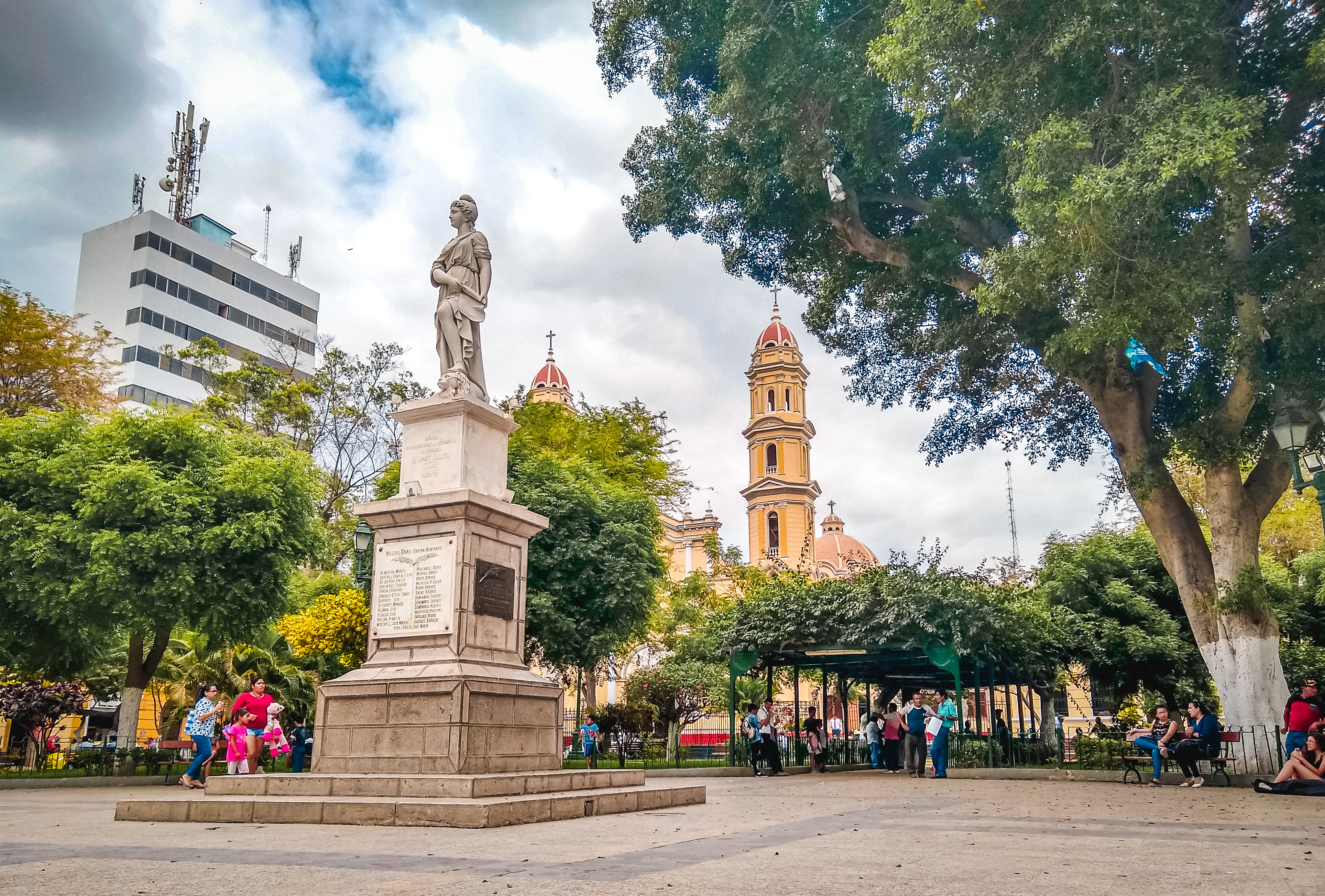
🏙️ Best Cities in Peru for Retirees
 43
43 46
46 52
52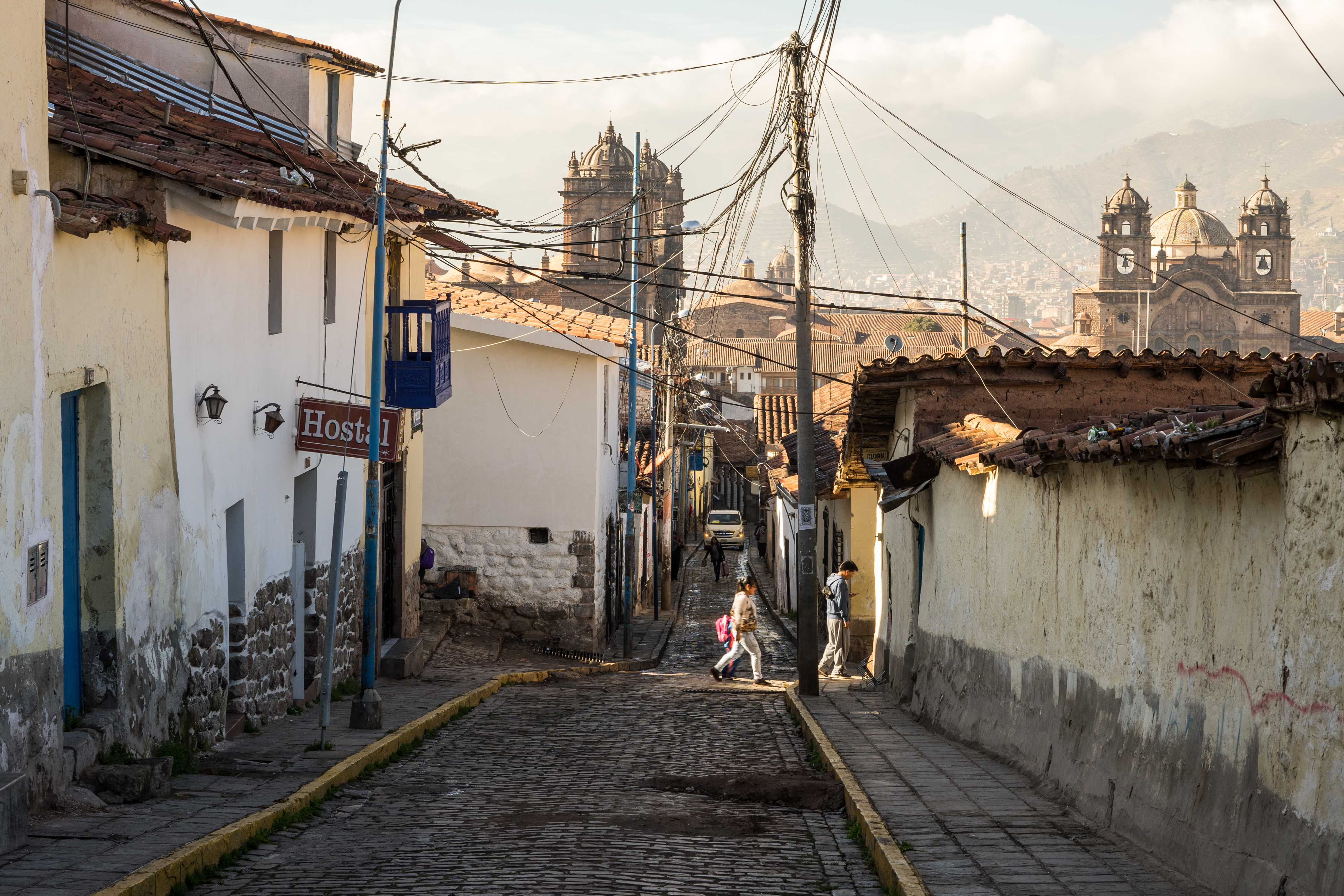 54
54 53
53 51
51Getting Your Income Documentation Story Straight
The income threshold here is low, but the documentation standard is high, and that gap is where most applications run into trouble. Migraciones isn't just looking for proof that money exists - they want evidence that it will keep arriving, permanently, without depending on your continued labor. A pension benefit letter from the Office of Personnel Management or a private pension administrator is the cleanest possible document. An annuity contract with guaranteed payment terms is close behind. What creates problems is income that is real and recurring but structurally discretionary: rental income from properties you manage, dividends from a brokerage account, or Social Security paired with investment withdrawals to hit the threshold.
Social Security income, for what it's worth, does not count toward the income threshold, despite having the permanence and official documentation that Migraciones is looking for. But if you're supplementing it with portfolio draws to reach $1,000 a month, the supplemental piece needs its own documentation, and that documentation needs to tell a convincing story about permanence. A bank statement showing deposits is not the same as a certificate guaranteeing future income.
The banking transfer requirement adds another layer. Peru expects that your qualifying income will be routed into Peru through a banking institution, not just demonstrated to exist offshore. This means you'll need a Peruvian bank account, which itself requires your residency documentation - a sequencing problem that practitioners solve in different ways, so it's worth talking to an immigration attorney in Lima before you start, not after you've apostilled everything.
One thing that catches people off guard: the income letters and certificates you gather at home have a shelf life. Most authorities want documents issued within three to six months, and the apostille, translation, and legalization process in Peru adds time on top of that. Start the document collection later than you think you need to, not earlier.
The Housing Requirement and How People Get It Wrong
Peru's Rentista application doesn't technically require you to own property, but you do need to demonstrate a fixed address in Peru, and how you establish that matters more than most guides explain. A short-term Airbnb address will not hold up. What Migraciones wants is evidence of an actual, stable residence - a lease agreement in your name is the standard approach, and it needs to be a formal rental contract, not an informal arrangement.
The practical problem is timing. You're arriving in Peru on a tourist entry, trying to sign a lease before you have residency, while also needing the lease to get residency. Landlords in Lima and Cusco who rent to foreigners are generally familiar with this situation, particularly in expat-heavy neighborhoods like Miraflores, Barranco, and San Isidro in Lima, but you may need to pay several months upfront to get a landlord comfortable signing a formal contract with someone who doesn't yet have a carné. Budget for that.
Some applicants try to solve this by staying with contacts or renting informally while they sort out the paperwork. That tends to create a documentation gap that's harder to explain later. The cleaner path is to arrive with enough runway - financially and on your tourist entry - to find a real apartment, sign a real lease, and use that address throughout the application.
What Actually Happens After You Land
Visa approval and having a functioning life in Peru as a legal resident are separated by a process that takes longer than most people expect. Once Migraciones approves your application - which practitioners in 2024-2025 describe as typically running four to six weeks, sometimes longer if they request additional documents - you then need to obtain your carné de extranjería, which is your actual residency ID and the document that makes everything else possible.
Until you have the carné, you're in a kind of administrative limbo. You can open a bank account at some institutions with your passport and expediente number, but others will want the physical ID. Getting a local SIM on a resident plan, signing up for services, accessing certain medical facilities - all of this is easier once the card is in hand. The card itself can take additional weeks after approval.
The Interpol check - the "Ficha de Canje Internacional" - is one step that surprises applicants who assumed their home-country background check would be sufficient. Peru requires its own Interpol verification, processed through Peruvian authorities, and it adds time and an in-person step that you can't complete before you arrive. Factor that into your timeline.
The six-month absence rule also starts mattering from the moment you receive status, not from some later date. If you're planning to go back to the US for an extended visit shortly after getting approved - to close out your apartment, see family, handle logistics - be careful. Six months accumulates faster than you think when you're splitting time between two countries in the first year.
The Long-Term Path to Citizenship - What It Actually Requires
The Rentista grants indefinite residence, which sounds like the end of the road but is actually the beginning of a different set of obligations if you ever want Peruvian citizenship. Naturalization is possible, and practitioners commonly cite around three years of legal residence as the threshold at which you can apply, but the statutory minimum and the practical reality are not the same thing.
What naturalization actually requires in practice: continuous residence that respects the absence limits, demonstrated Spanish language ability, evidence of integration into Peruvian society, a clean criminal record maintained throughout, and a bureaucratic process that can take considerably longer than the minimum waiting period suggests. "Integration" is evaluated with some discretion, which means the criteria aren't entirely predictable.
The absence rule that governs your Rentista status - no more than six months outside Peru in a calendar year - is the same constraint that governs your naturalization eligibility. If you've been treating Peru as a base while traveling extensively, that travel history will be visible in your immigration record and can affect your application. People who plan to naturalize typically become more deliberate about their physical presence in Peru two to three years out, not in the final months before they apply.
Peruvian citizenship does offer a meaningful benefit for some people: Peru is one of the few Latin American countries that allows dual citizenship without requiring you to renounce your original nationality, so for US citizens the calculus is less fraught than in countries that force a choice.
Peru vs. Panama's Pensionado - A Judgment Call, Not a Ranking
Panama's Pensionado visa comes up in almost every conversation about the Peru Rentista, and the comparison is worth taking seriously rather than dismissing. Panama requires a slightly higher pension income threshold, but it comes with a structured discount program - transportation, medical services, restaurants, entertainment - that has real monetary value for retirees who use those services regularly. The Pensionado is also a well-worn path with a large expat community and a legal and banking system that's more familiar to Americans in some respects.
What Panama doesn't offer is Peru's cost structure. Lima, Arequipa, and Cusco are meaningfully cheaper than Panama City for housing, food, and day-to-day expenses, and outside the major cities the gap widens further. If your income is close to the minimum threshold, that difference in cost of living may matter more than any visa benefit.
The other dimension is what kind of place you want to live in. Panama City is a modern, English-friendly city with strong connectivity and a fairly homogenous expat experience. Peru is more varied, more demanding, and more interesting to a certain kind of person - someone who wants to actually be somewhere, not just reside somewhere with a good tax situation. That's not a criticism of Panama. It's just a different proposition.
The Peru Rentista also has one structural advantage that doesn't get enough attention: it leads to indefinite residence immediately, without a temporary phase. Panama's Pensionado does the same, so that's not a differentiator. What is a differentiator is Peru's pension tax exemption, which for someone living primarily off a foreign pension means potentially paying no Peruvian income tax on their primary income source - an outcome that's harder to replicate under Panama's territorial tax system, which already excludes most foreign-source income anyway but handles it through different mechanics.
Work Permissions
Application Steps
- 1
📋 Confirm pension or passive income
1 week
- 2
📄 Prepare and apostille documents
2-3 weeks
- 3
📬 Apply at Migraciones office in Peru
1-2 days
- 4
⏳ Collect residency card
1-2 months
This visa requires proof of health insurance. Compare international plans before you apply.
Compare health insuranceWe may earn a commission at no cost to you.
Frequently Asked Questions
Click any question to expand the answer.
Ready to Apply?
Work with trusted visa specialists who handle the paperwork so you can focus on your move.
Get help with this visa →* We may earn a commission if you apply through our link
At a Glance
Last verified: July 15, 2026