Pakistan Digital Nomad Visa
Pakistan · Asia
Data updated Sep 3, 2026
Overview
Pakistan’s so‑called Digital Nomad Visa sits in an unusual spot: it is flagged as active, open to applicants of all nationalities, but core parameters like minimum monthly income, minimum savings, and visa duration are not publicly specified as of 2026. That means a FIRE retiree drawing $3,800/month from ETF dividends or US rental income cannot rely on a published threshold to self‑screen; you have to treat income requirements as consulate‑discretionary and verify directly with the mission that will process your file. Application fees, renewal costs, and whether pension or Social Security income is recognized as qualifying income are also not disclosed as of 2026.
Residency mechanics are equally opaque. No official figures are published for the required physical presence per year, maximum consecutive absence from Pakistan, or even the baseline duration of stay granted under this digital_nomad category. If you intend to split your year between, say, 5–6 months in Pakistan and the balance in another hub, there is no confirmed 183‑day or 270‑day rule to plan around from the program details alone as of 2026. You should assume that any long‑stay entry in Pakistan interacts with generic immigration and tax‑residency rules, not a dedicated, codified nomad framework.
Long‑term planners will notice that nothing in the available data confirms a path from this visa to permanent residency or citizenship. Whether it can be renewed indefinitely, whether renewals require fresh financial documentation, and whether years on this status count toward any PR clock are all not publicly specified as of 2026. If your horizon is 10+ years and you want a defined on‑ramp to a second passport, this uncertainty contrasts sharply with programs like Uruguay’s straightforward residency track or Mexico’s temporary–to–permanent residency ladder, where the years‑to‑PR and years‑to‑citizenship are explicitly published.
On the friction side, the requirements suggest relatively light formalities: no apostille, no FBI background check, no medical exam, and no interview are required. That aligns with a bureaucracy score of 1/5, implying fewer formal hurdles than high‑scrutiny schemes that insist on legalized documents or in‑person consular interviews. At the same time, the absence of published processing times as of 2026, though a documented list of required documents exists, means the “easy” part is the lack of formal legalizations, not necessarily predictability of outcome.
This arrangement makes the most sense if you already plan to spend serious time in Pakistan for business, family, or cost‑of‑living reasons and can tolerate unclear rules on duration, renewal, and income thresholds while living off at least $3,000–$4,000/month from remote work or investments. It is a poor fit if you need a clearly defined, multi‑year residency framework with known physical presence rules and a documented route to permanent residency or a second passport before relocating your life and portfolio.
Eligibility Requirements
Any nationality can apply in principle for the Pakistan Digital Nomad Visa, because the nationality_restrictions value is set to “all” rather than limiting it to specific regions or blocs. In practice, applicants from sanctioned or diplomatically sensitive countries such as Iran, Syria, North Korea, and in some cases Russia or Cuba, can face consular refusals, security‑clearance delays, or banking hurdles in Pakistan that make an approval or local account opening far less likely despite formal eligibility. Before assembling a full document package, confirm your specific nationality’s status and any informal consular policies directly with Pakistan’s Directorate General of Immigration & Passports or the Pakistani embassy/consulate that will process your application.
Requirements Checklist
• Identity: Valid passport with at least 6 months remaining validity and 2 blank pages; CNIC (National ID Card); all previous passports; recent passport-size color photograph with white background.
• Financial: Personal bank statement for at least 6 months; proof of sufficient funds to cover stay.
• Health: Valid international medical/health insurance covering the duration of stay.
• Employment: Proof of remote work or freelance activity (employment letter or client contracts); curriculum vitae (CV) listing qualifications and experience.
• Background: Police Clearance Certificate.
• Accommodation: Hotel booking or accommodation reservation in Pakistan.
• Other: Completed visa application form for Pakistan; proof of travel itinerary or flight booking.
Tax Information
Local tax picture and residency
Pakistan’s visa facts for this program do not disclose a specific tax regime type for digital_nomad holders, and there is no officially published special regime akin to Portugal’s NHR or Greece’s non‑dom focused on remote workers. The visa facts do not confirm whether foreign‑source income like ETF dividends, US pensions, or rent from properties abroad is taxed locally, or whether Pakistan treats this visa category under standard worldwide or territorial rules. For that reason, you cannot assume that your $5,000/month of foreign passive income is exempt or taxable based solely on the digital_nomad label. Dividends from Pakistani companies are subject to a standard 15% withholding tax as of 2026.
Capital gains treatment on foreign investments is also not specified. If you sell index funds or ETFs in a foreign brokerage while on this visa, there is no published confirmation that those gains are exempt under territorial rules or only taxed if remitted. For reference, capital gains on securities held under 1 year are taxed at 15% in Pakistan as of 2026. Anyone planning large portfolio reallocations while based in Pakistan needs advice anchored in Pakistan’s general income tax law as applied to their personal tax‑residency status, not in the marketing language around this visa.
Tax residency triggers are not disclosed for this visa either. There is no official confirmation in the visa facts that residency starts at 183 days, from the date of visa issuance, or upon separate registration. Likewise, there is no published requirement specific to this category to obtain a tax ID or file annual returns purely because you hold the visa. In practice, you should expect standard Pakistani tax‑residency thresholds and registration procedures to apply rather than a bespoke digital‑nomad carve‑out, and confirm details with a local tax advisor.
The visa facts do not reference a tax treaty with the US. No US-Pakistan tax treaty exists as of 2026. Without explicit confirmation of a comprehensive income‑tax treaty or a totalization agreement, US persons and other foreigners cannot assume relief on double taxation of pensions, dividends, or Social Security. Treaty status affects whether foreign tax paid in Pakistan can be credited back home and how cross‑border income streams are classified, so it is a key point to verify outside the visa marketing materials.
For US Citizens and Green Card Holders
For US persons using this visa, worldwide US tax obligations remain fully in force regardless of how Pakistan treats your income. Form 2555 – Foreign Earned Income Exclusion (FEIE) can shield up to $132,900 of earned income in 2026 (remote salary, consulting, or self‑employment tied to active work). It does nothing for dividends, capital gains, rental income, Social Security, or IRA/401(k) distributions. Whether you rely on the Physical Presence Test (330 full days abroad in any 12‑month period) or the Bona Fide Residence Test depends on how consistently you base yourself in Pakistan versus rotating through multiple countries; with this visa’s undefined presence rules, many US nomads default to the 330‑day test across several jurisdictions.
Form 1116 – Foreign Tax Credit (FTC) only helps to the extent Pakistan actually taxes your income and the effective local rate on a given stream meets or exceeds the US rate. If Pakistan’s treatment of your foreign portfolio is light or zero, FTCs will not offset US tax on that income, and you lean more heavily on FEIE for earned income and standard US rules for passive income. In contrast, if you become a full Pakistan tax resident under general law and pay meaningful tax on salary or business income there, Form 1116 becomes central to avoiding double taxation.
FBAR (FinCEN 114) kicks in for US persons once the aggregate value of all non‑US financial accounts (including any Pakistani bank or brokerage accounts) exceeds $10,000 at any point in the calendar year, as of 2026. This filing is separate from FATCA Form 8938, which has higher thresholds but often applies to FIRE‑level portfolios. Non‑willful FBAR penalties start around $16,700 per violation as of 2026, so anyone opening local accounts in Pakistan to manage living expenses on this visa has to integrate these into their annual US compliance.
Two sets of advisors matter here: a US CPA who specializes in expat taxation, FEIE, FTC, and FBAR/FATCA mechanics, and a Pakistani tax professional familiar with how foreign‑source income and long‑stay visas interact with local residency and filing rules. The $1,500 to $3,000 you spend in year one on coordinated advice between these two professionals generally repays itself through optimized use of FEIE vs. FTC, correct treaty positions where applicable, and avoidance of high‑impact US and local penalties.
Living in Pakistan
COL Index vs NYC
17.8
Monthly Cost (excl. rent)
$355
1BR Rent (City Center)
$136
Safety Index
56.3
Healthcare Index
59.3
Quality of Life Index
104.2
Time Zone
UTC+05:00
Capital
Islamabad
Population
220.9M
Official Languages
English, Urdu
Avg Internet Speed
15 Mbps
Public Transit Quality
Poor
With a budget covering rent and living costs, you'd need roughly $491/mo for a comfortable single-person lifestyle in Pakistan.See how far your money goes →
🏙️ Best Cities in Pakistan for Digital Nomads
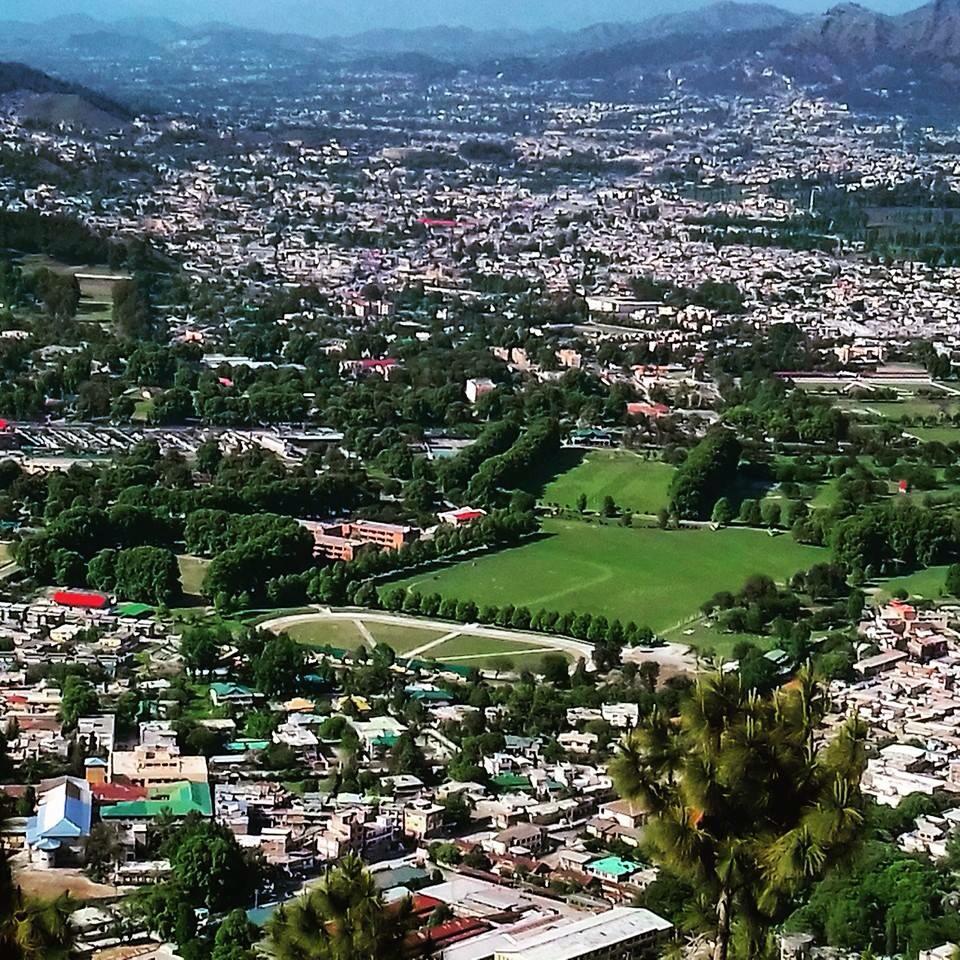 54
54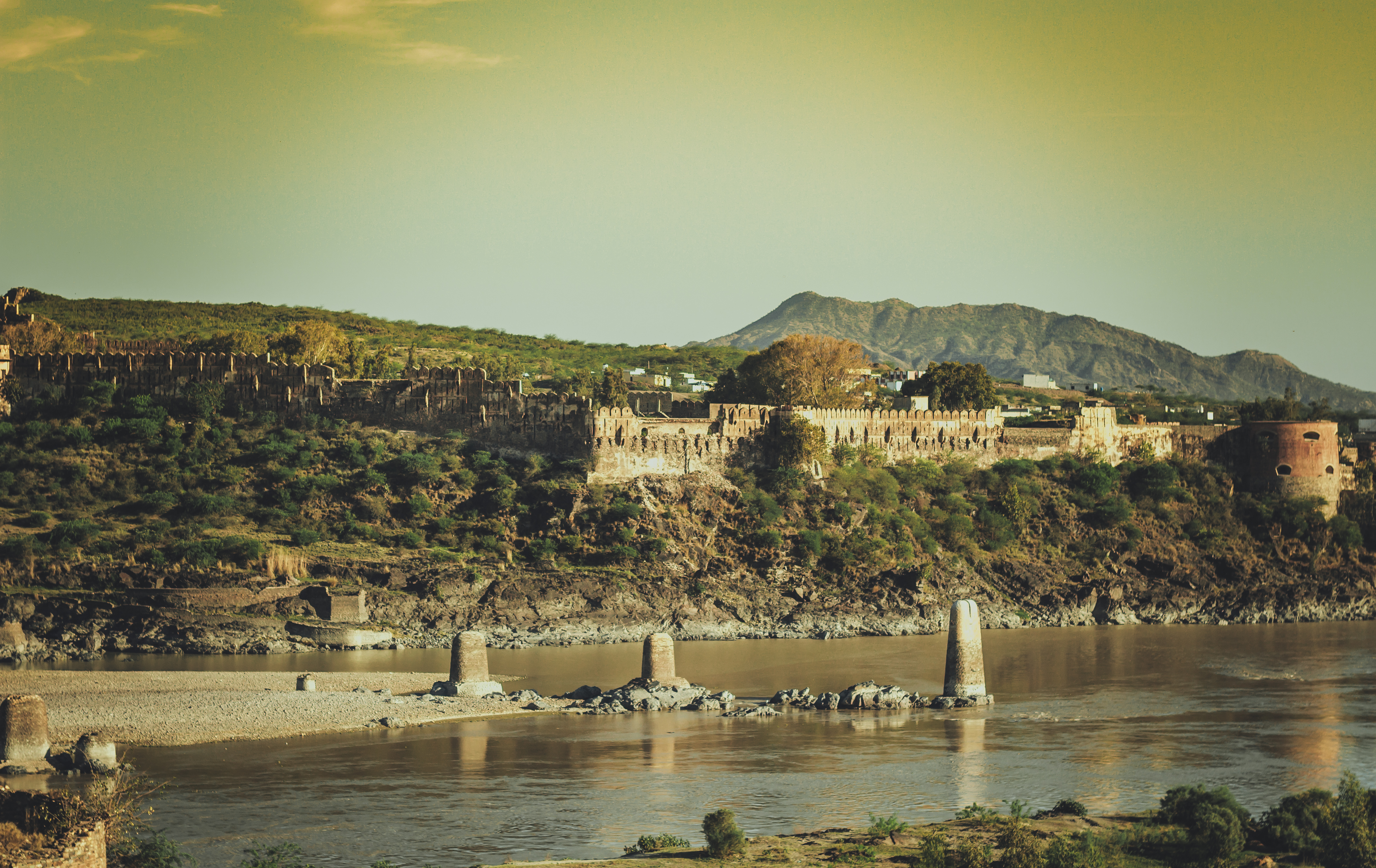 50
50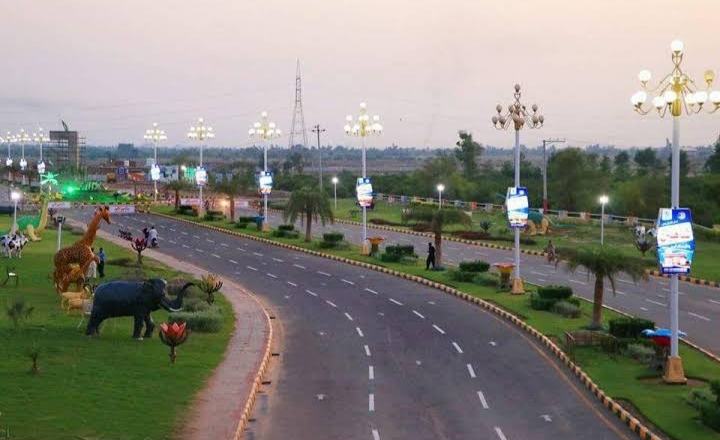 51
51 51
51 50
50 49
49Why your bank statement does more work than you think
A six-month bank statement is the spine of your application. Officers don't read it month by month. They scan for rhythm. The same amount arriving every two weeks from a US payroll processor. Invoices paid within a few days of the same calendar date. Irregular freelance income broken up into half a dozen small deposits that never quite add up to a convincing living gets flagged quickly.
That matters because this visa has no published minimum income figure. The requirement is that you show "sufficient funds to cover your stay," which leaves the interpretation to the person reviewing your file. Practically, that means your bank statement is both the proof of remote earnings and the proof of ongoing affordability. If your statement shows a healthy average balance but the income side is choppy, you can still get through, but you'll need to explain the irregularity somewhere in your cover letter. If the balance is low and the income is choppy, the decision point arrives fast.
One trap: waiting too long to apply after you stop receiving a conventional salary. The last six months are what they see. Someone who quit a job three months ago and only has sporadic freelancing to show will look less stable than someone who has been contracting for two years even if the dollar amounts are similar. Shift your application timeline so the window you submit is as smooth as possible. Deposit a large lump sum a few weeks before submitting and it may look staged; keep the balance healthy over a longer stretch so it doesn't telegraph a last-minute borrow.
The statement also anchors your address and your spending patterns, which a careful officer will compare against the accommodation you claim. More on that in the next section.
The accommodation reservation that sinks applications
Hotel bookings are one of the most misunderstood requirements in any visa process. Applicants treat them as a box to tick, so they book a cancellable room for four nights, print the confirmation, and figure they're done. That can work, but it gets rejected often enough that it's worth understanding why.
A short hotel stay suggests you'll be transient or reliant on finding long-term housing after landing, which in turn raises a question about your actual plans. The officer might wonder whether you intend to overstay or work locally without permission. A better signal is a reservation that covers at least two weeks, preferably a month, even if it's refundable. That shows intent to settle briefly, not just touch down and disappear. Some applicants also include a lease agreement or a letter from a host alongside the hotel booking to create a fuller picture. That's not required explicitly, but when the aim is to demonstrate a stable stay, stacking two forms of proof helps.
The other failure mode is a mismatch with the rest of your file. If your bank statement shows rent payments or utilities in another country right up to the month before you apply, the officer might wonder why you need accommodation in Pakistan at all. The hotel booking alone won't bridge that gap. Provide a short note explaining that you've ended your previous lease or are transitioning to a nomadic base. Don't overexplain. A sentence or two is enough.
None of this is about the hotel itself. It's about continuity. Every document you submit is read in relation to every other document, and the accommodation piece is often the weakest link because it's treated like an afterthought.
The remote work letter that holds up
Employment letters and client contracts pull more weight here than they do in some richer countries' digital nomad schemes. The reason is simple: Pakistan's visa doesn't set a salary floor, so the officer needs to believe the work is genuine and ongoing abroad, not a prelude to taking a local job.
The strongest letter comes from an employer on letterhead stating your role, confirmation that you work remotely, and how long you've been employed. If you freelance, contracts are fine, but they shouldn't be screenshots from a freelancing platform's message thread. Gather signed agreements or invoices that show consistent projects with the same clients. The officer is looking for a story of stability and distance: that your income is earned from sources outside Pakistan and will remain so during your stay.
The curriculum vitae that's also required is a quiet test of consistency. If the CV lists a series of six-month gigs in different industries and no clear progression, that doesn't match the image of a remote professional with an established income stream. A CV that logically supports the work you're doing now tells the officer you're not reinventing yourself at the border. It's not about prestige. It's about plausibility.
One thing that trips up freelancers with multiple small clients: the bank statement shows a patchwork of deposits, and the contracts don't connect cleanly to those amounts. If you can, annotate a few of the larger deposits with invoice numbers so the officer can trace the link without guessing.
Is this easier than everywhere else? The judgment call
Most digital nomad visas that gained popularity in the last five years settled on a formula: a published monthly income threshold, usually somewhere between $2,000 and $5,000, depending on the local cost of living. Pakistan went the other way. There is no named income minimum, only a requirement to demonstrate sufficient funds. For a freelancer who earns irregularly or a retiree living off investment withdrawals, that can make the difference between qualifying and being shut out.
Ease of application tracks the same direction. Some countries require an in-person consulate appointment, fingerprinting, or a locally sworn affidavit. This one is fully online, with no interview. As of 2026, the document list is standard: passport, bank statements, insurance, police clearance, accommodation booking, proof of work, CV, photos. The one element that takes time is the police clearance certificate from your country of residence, but that's a predictable delay rather than an obstacle.
The actual trade-off is the living environment. If you're choosing between Pakistan and, say, Bali or Mexico City, you're choosing between a fledgling digital nomad scene with limited peer community and a more established one with English-speaking coworking spaces and meetups everywhere. The connectivity issue is real and uneven. But you're also choosing between spending three times as much on the basics. Making that call honestly requires thinking about what a typical Tuesday looks like for you, not just the ideal Saturday.
Work Permissions
What's typically permitted:
Application Steps
- 1
📋 Research eligibility criteria
1-2 days
- 2
📄 Gather required identity documents
3-5 days
- 3
📄 Prepare financial proof
1 week
- 4
📬 Submit online application
1 day
- 5
⏳ Wait for processing decision
- 6
🏛️ Arrive and register locally
1-2 days
Frequently Asked Questions
Click any question to expand the answer.
Ready to Apply?
Work with trusted visa specialists who handle the paperwork so you can focus on your move.
Get help with this visa →* We may earn a commission if you apply through our link
At a Glance
Last verified: May 13, 2026