Norway Svalbard Digital Nomad
Norway · Europe
Data updated Sep 3, 2026
Min Monthly Income
$2,251
Overview
Svalbard’s remote-work path centers on one number: $2,251 a month, as of 2026,, which is the same threshold shown as $2,251 USD/month in the program rules. A freelancer pulling $3,800/month from ETF dividends plus rental income clears that income floor on paper, but the page does not publicly specify whether passive income alone is accepted, whether a local client is required, or whether earned income has to make up part of the total. The application side is light on stated friction: no local bank account, no apostille, no FBI background check, and no medical exam are required in the published details.
Residency rules are the odd part. The visa facts do not specify a physical presence requirement, max consecutive absence, or a path to permanent residence or citizenship, and the visa is marked non-renewable. That matters because Svalbard itself is treated differently from mainland Norway: if you can lawfully enter the territory, the stay framework is tied to the Svalbard system rather than a standard mainland residence permit. For anyone splitting time between two countries, the missing presence rule means the real constraint is not a day-count test in the published rules, but the entry and stay logistics of reaching the archipelago.
The main annoyance is uncertainty rather than paperwork volume. The facts also leave local-work permission, income-source rules, and employment type rules undefined, which makes this a harder file to interpret than the low bureaucracy score suggests. The document list in the third-party sources points to proof of accommodation and sufficient funds, and the governor’s office handles the local side in Svalbard rather than a generic immigration ministry.
This makes most sense if you have at least $2,251 a month in verifiable remote or passive income and want a territory where the program does not show a local bank-account requirement or an apostille stack. It is a poor fit if you need a clear route to renewal, PR, or citizenship, because the published requirements say renewable: No and disclose no settlement pathway.
Tax picture
Svalbard sits inside Norway’s legal framework, but the public material tied to this visa points to a 22% tax rate and a 183-day tax-residency trigger in Norway. The key issue is that the program does not specify a separate Svalbard tax regime, so foreign-source income treatment is not clearly documented in the published data. For a FIRE reader with foreign ETF dividends, pension distributions, and rental income, the missing answer is whether those streams are pulled into Norwegian taxation once tax resident or treated differently under Svalbard rules.
For US Citizens and Green Card Holders
- FEIE (Form 2555) only covers earned income up to $126,500 for 2024, so it can shelter remote salary or self-employment pay but not dividends, capital gains, pension distributions, or Social Security.
- The Physical Presence Test requires 330 full days in any 12-month period, and time spent in Norway counts toward that total; the Bona Fide Residence Test is harder to use when the program does not show a permanent residence track.
- FTC (Form 1116) matters only if Norway taxes the same income stream at a rate high enough to offset US tax. If your ETF dividends or capital gains are not clearly taxed locally under the Svalbard facts, the FTC may not solve much.
- FBAR (FinCEN 114) applies if foreign account balances exceed $10,000 at any point in the year, and the facts say no local bank account is required.
The practical team for year one is a US CPA who does expat FEIE/FTC/FBAR work and a Norway tax advisor who can tell you whether Svalbard stays outside the mainland 183-day rule in your exact setup. Spending $1,500–$3,000 on that pair is cheaper than an incorrect Form 2555 position or an FBAR penalty stack.
Eligibility Requirements
Any nationality can apply in principle under this program. For applicants from Russia, Iran, North Korea, Syria, or Cuba, the practical issue is not the eligibility rule itself but consular and banking friction that can complicate document handling, payments, and travel logistics even when the application is legally open. The official authority to verify is the Governor of Svalbard, Sysselmesteren, before assembling a full package.
Min Income
$2,251
Requirements Checklist
• Identity: valid passport; copy of all used passport pages; passport-size photographs.
• Application: completed application form; signed application form; printed UDI checklist.
• Employment: contract with Norwegian client; documentation of business established abroad; CV; work history; proof of education; relevant qualifications.
• Financial: proof of income; bank statements.
• Health: health insurance covering Norway.
• Accommodation: proof of accommodation in Svalbard.
• Background: police clearance certificate.
Tax Information
Local tax picture The public material attached to this visa points to a 22% general income tax and says that once you stay more than 183 days in Norway, you are considered a tax resident. That creates a straightforward risk for remote workers with foreign salary, ETF dividends, pensions, and rental income: once tax residency starts, Norway has a claim on your income streams under its own system unless a separate Svalbard-specific rule excludes them. The visa materials do not include a territorial, remittance, or non-dom regime for this visa, and individual capital gains on shares are taxed under Norway's shareholder model at an effective rate of 37.84%.
Capital gains on foreign investments are taxed under Norway's shareholder model at an effective rate of 37.84% for Norwegian tax residents. That means a FIRE retiree selling index funds from a foreign brokerage cannot rely on the visa facts alone to assume exemption, deferred taxation, or remittance-only treatment.
Tax residency is triggered by the 183-day rule under Norwegian tax law, not by visa grant. The facts do not show a separate tax-status deadline, local registration deadline, or special filing cadence for the visa holder.
For US Citizens and Green Card Holders - FEIE (Form 2555) covers earned income only, up to $132,900 for 2026. - It does not cover dividends, capital gains, pension distributions, or Social Security. - The Physical Presence Test is 330 full days in any 12-month period; this visa’s 183-day Norway tax-residency trigger can collide with that planning if you stay long enough to become locally taxable. - FTC (Form 1116) only helps when Norway taxes the same income stream at a rate that offsets US tax. If a foreign dividend stream is taxed at an effective rate of 37.84% locally, the FTC can matter; if it is not taxed locally, there is no foreign tax to credit. - FBAR (FinCEN 114) is required when foreign financial accounts exceed $10,000 at any point in the year.
A US expat CPA for FEIE, FTC, FBAR, and a Norway tax advisor for residency and filing are the two advisors that matter here. The $1,500–$3,000 spent in year one on professional guidance typically recovers itself in avoided penalties and cleaner elections.
Living in Norway
COL Index vs NYC
69.0
Monthly Cost (excl. rent)
$1,386
1BR Rent (City Center)
$1,348
Safety Index
67.0
Healthcare Index
75.6
Quality of Life Index
195.0
Time Zone
UTC+01:00
Capital
Oslo
Population
5.4M
Official Languages
Norwegian Nynorsk, Norwegian Bokmål, Sami
Avg Internet Speed
172 Mbps
Public Transit Quality
Excellent
With a budget covering rent and living costs, you'd need roughly $2,734/mo for a comfortable single-person lifestyle in Norway.See how far your money goes →
🏙️ Best Cities in Norway for Digital Nomads
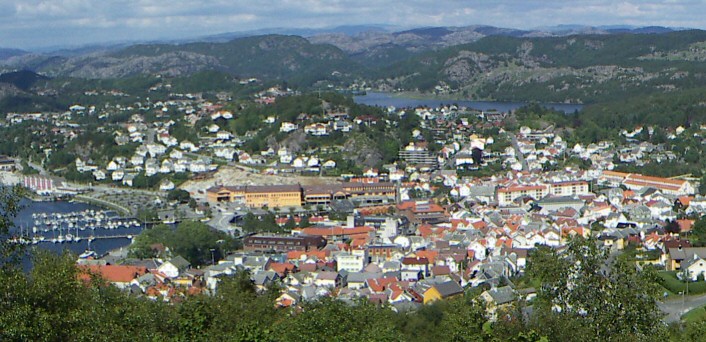 74
74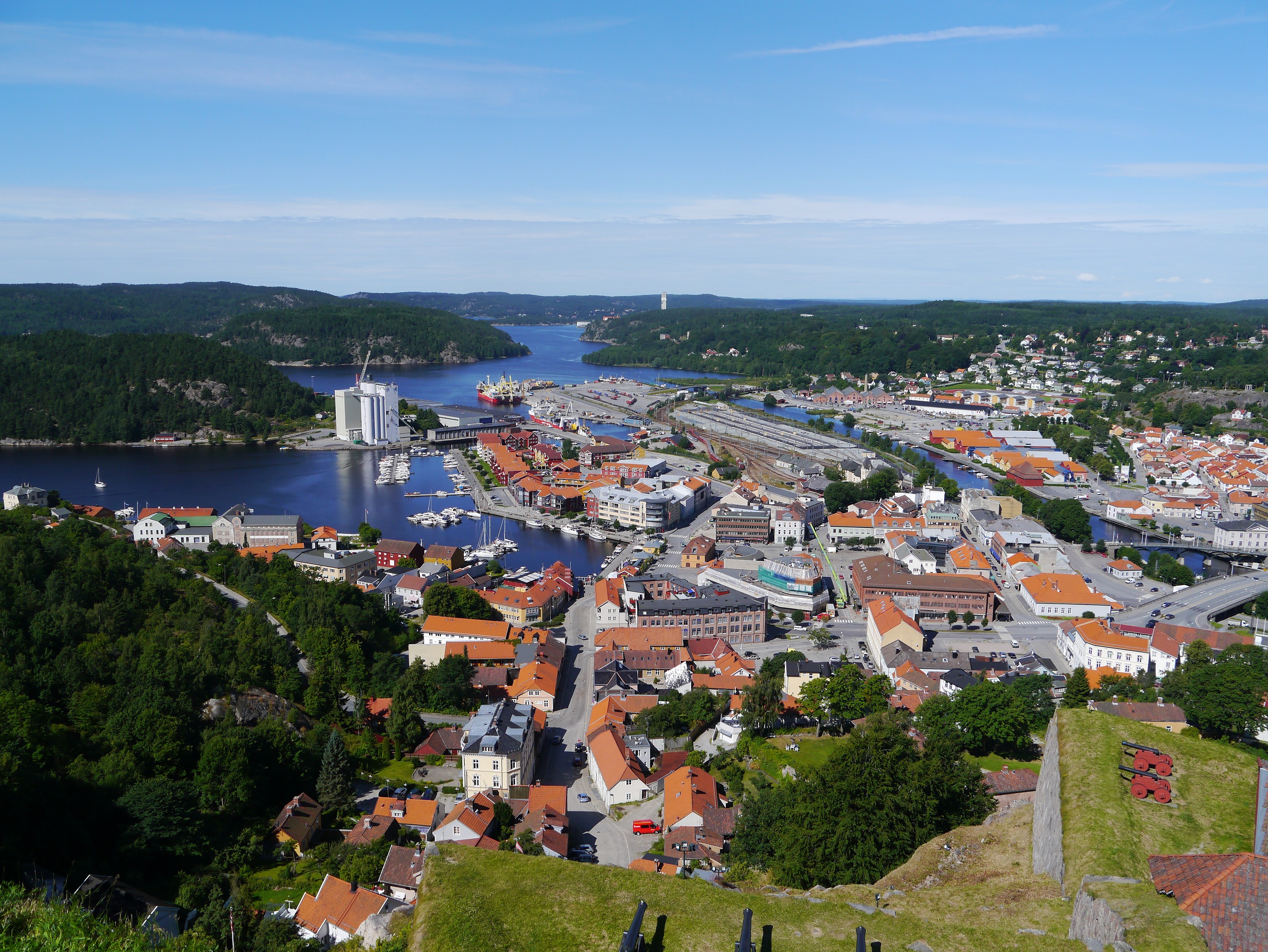 ✦ 75
✦ 75 ✦ 79
✦ 79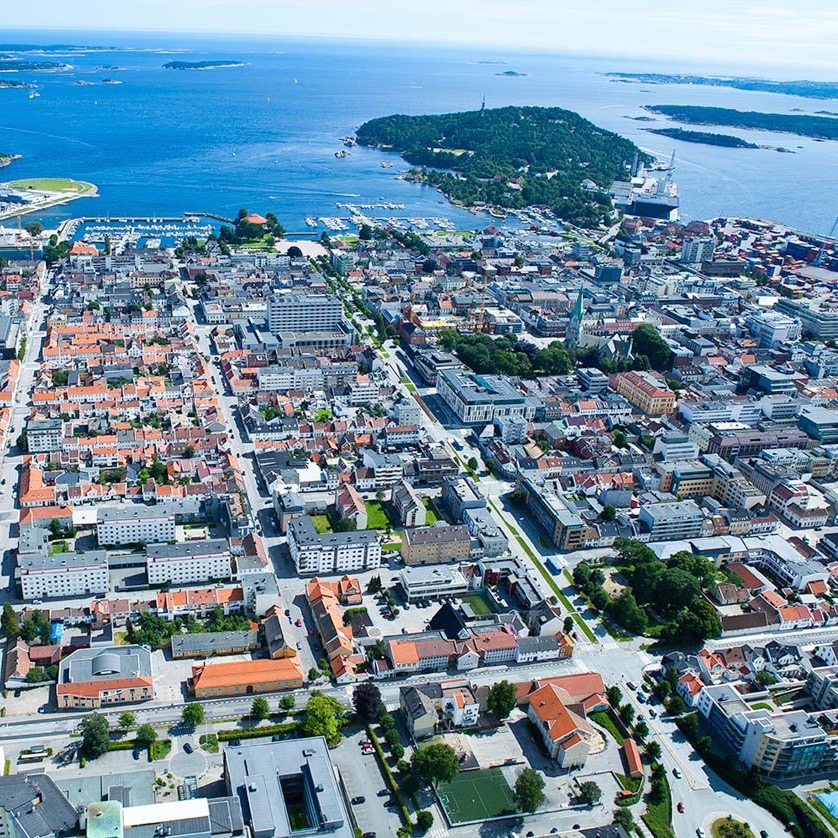 ✦ 75
✦ 75 ✦ 79
✦ 79 ✦ 77
✦ 77The housing requirement and how people get it wrong
Proof of accommodation sounds like a box to check, and on paper it is. In reality, Svalbard's housing market is one of the tightest anywhere Norway has jurisdiction, most of it tied to employers, and Longyearbyen has run population and housing policy tightly enough that a casual short-term booking doesn't function the way it would as accommodation evidence in a normal visa file. A screenshot of a week-long Airbnb reservation reads, to anyone evaluating your situation, as tourism, not settlement.
What actually works is a lease, an employer-provided housing agreement, or something that demonstrates a housing arrangement lasting long enough to match the stay you're claiming. People coming from remote-work backgrounds sometimes assume they can sort housing after arrival, the way you might in a city with a normal rental market. Svalbard doesn't have a normal rental market. Vacancy is scarce, turnover is slow, and showing up without accommodation secured in advance can mean weeks of scrambling in a town with truly limited inventory and a short list of landlords who deal with newcomers at all.
The mistake compounds when people treat this step as parallel to the income documentation instead of sequential to it. Sort housing first, because your income proof and your housing proof often need to tell a consistent story, someone who can show $2,251/month and a six-month lease reads very differently to anyone reviewing the file than someone who shows the same income and a five-night hotel booking.
What happens after you land
There's no permit ceremony waiting for you at the airport, no stamp that converts your entry into legal residence. For most nationalities you simply arrive, because Svalbard sits outside the ordinary visa apparatus. What comes next is administrative rather than immigration-related, and it happens after arrival, not before. You register with the Population Register of Svalbard, and if your situation triggers a tax obligation, you notify the tax office as well.
This is where people misjudge the pace of things. Because entry itself is frictionless, there's a tendency to treat the whole move as informal, something you can get around to formalizing once you're settled in. Registration isn't optional cleanup, it's the step that actually establishes you as a resident rather than a visitor who hasn't left yet. Delay it and you're in a strange middle status that becomes a problem the moment anything else, a lease renewal, a tax question, a school enrollment for a dependent, requires proof of where you actually live.
For those on the Schengen visa route rather than the visa-free entry, the sequencing is inverted: the embassy or consulate step happens before you travel, and the Svalbard registration happens after, which means two separate bureaucracies with two separate timelines, neither of which talks to the other automatically. Nobody at the Population Register is going to reconcile your Schengen paperwork for you.
The long-term path, and why there mostly isn't one
This is the part people research the least and regret the most. Svalbard residence doesn't build toward anything. There's no renewal ladder, no accumulating years toward permanent residence, no route from a Svalbard stay into Norwegian citizenship. The status doesn't renew at all. You're not climbing a staircase here, you're standing on a platform that has a fixed shape, and planning your finances or your family's schooling as though it's the first rung of a longer Norwegian immigration story is a mistake that surfaces late, usually when someone realizes their years on Svalbard count for nothing if they eventually want to settle on the mainland.
That reframes the whole decision. If the plan is eventually mainland Norway, Svalbard should be treated as a separate chapter, not a warm-up act. If the plan is truly open-ended, income-driven remote life with no particular endpoint, the lack of a long-term path stops mattering as much, because you were never optimizing for permanence anyway. Where this bites people is when the initial decision gets made around lifestyle and cost, and the permanence question gets deferred until a partner wants stability, or a dependent hits school age, or the four walls of Longyearbyen start to feel smaller than they did in the pitch.
The judgment call against mainland Norway
The comparison that actually matters isn't Svalbard against Portugal or Spain, it's Svalbard against the rest of Norway. Mainland Norway runs an ordinary permit system: applications, review, approval, a path that eventually leads somewhere if you stay employed and compliant. Svalbard runs almost the opposite model, open entry for most nationalities, no formal permit standing between you and the archipelago, and in exchange, no accumulating status and no institutional safety net if things go sideways financially.
That trade is real, and it's not obviously better or worse, it depends on what you're optimizing for. Someone earning $6,000/month from two US clients who wants minimum friction and doesn't care about a long Norwegian residency arc gets something from Svalbard that mainland Norway can't offer as quickly: almost immediate physical relocation without waiting on a permit decision. Someone in the same financial position who eventually wants Norwegian permanent residence or citizenship is better served applying for the mainland system from day one, even though it's slower and more document-heavy, because Svalbard time doesn't transfer into that track at all.
The people who end up disappointed are usually the ones who picked Svalbard for the ease of entry without pricing in what that ease is trading away. The ease is real. So is the ceiling on it.
Work Permissions
What's typically permitted:
Application Steps
- 1
📋 Check Schengen visa need
1-4 weeks
- 2
📋 Secure passport and accommodation
1-2 weeks
- 3
📄 Prove sufficient funds
1 week
- 4
📋 Travel to Svalbard
- 5
🏛️ Register as resident if over 6 months
1 week
- 6
🏛️ Notify address change to tax office
Same day
Frequently Asked Questions
Click any question to expand the answer.
Ready to Apply?
Work with trusted visa specialists who handle the paperwork so you can focus on your move.
Get help with this visa →* We may earn a commission if you apply through our link
At a Glance
Last verified: July 15, 2026