Vietnam Temporary Residence Card (TRC)
Vietnam · Asia
Data updated Sep 11, 2026
Application Fee
$25
Processing Time
1 wks–3 wks
Duration
12 months
Overview
The Vietnam Temporary Residence Card is not a digital nomad visa dressed up in bureaucratic language. It is a residence document built for people who already have a formal role inside Vietnam's economy - as an employee with a work permit, an investor with registered capital, or a dependent of someone who qualifies on those terms. What you are committing to when you apply is not just a longer stay; you are committing to maintaining that underlying status for as long as you want the card to remain valid. The TRC doesn't float free of your job or your company structure. It is anchored to it, and if that anchor shifts, so does your legal footing.
The profile that moves through this process cleanly is a foreign national employed by a Vietnamese company or a foreign-invested enterprise, holding an LD2 visa, with a work permit that has at least a year left on it and an employer willing to sponsor the application. That person has a relatively straightforward path. The profile that struggles is the freelancer or remote employee who has been living in Vietnam on tourist visa runs or e-visas, assuming the TRC is something they can eventually graduate into - it isn't, not without first converting to an eligible visa class, which requires a local sponsor and a work permit, which requires an employer. The profile that is in the wrong category entirely is the independent remote worker with no Vietnamese employer, no registered local business, and no qualifying family relationship. There is no pathway here for that person, regardless of income.
What most applicants don't work out until they're already deep into the process is how the tax residency question interacts with the TRC. Holding a multi-year residence card, registering your address with local police, and spending the majority of your time in Vietnam will make you a Vietnamese tax resident under both the 183-day rule and the registered-residence rule. Vietnam taxes residents on worldwide income, including foreign salary and freelance earnings, at progressive rates that reach 35% above roughly $4,300 per month. There is no bilateral tax treaty between Vietnam and the United States, so you are working entirely with domestic tools - FEIE, foreign tax credits, and careful structuring - to avoid paying full rates in both countries. This is manageable, but it needs to be planned before you apply, not after you've already registered your address.
For someone who fits the employment or investor profile, what the TRC actually unlocks is stability - the ability to sign a multi-year lease without anxiety about your next extension, to open bank accounts without friction, to leave and re-enter the country without applying for a new visa each time. Vietnam's cost of living remains low enough that even after accounting for local tax obligations, the financial picture for a mid-to-senior earner is favorable. The card doesn't offer a path to permanent residence or citizenship in any practical sense, but for a two-to-five year chapter of working life in Southeast Asia, it provides a legal foundation that short-term visas simply can't.
Eligibility Requirements
Application Fee
$25
Duration
12 months
Requirements Checklist
Valid passport with at least 6 months validity
Proof of sufficient income (bank statements, employment contract)
Health insurance covering the entire stay
Clean criminal background check
Completed application form with all required documents
Proof of accommodation in the country
Tax Information
Vietnam Taxes Worldwide Income - and That Includes Yours
Vietnam taxes tax residents on worldwide income. Not just what you earn in Vietnam, not just what you remit there - everything. Once you cross the 183-day threshold in a calendar year, or in any 12-month period that starts or ends in the tax year, you're a Vietnamese tax resident and your global income is in scope. The same applies if you have a registered residence in Vietnam and can't prove tax residency somewhere else.
For a US remote worker on a TRC, that means your remote salary is taxable in Vietnam. So is freelance income, foreign rental income, and potentially investment income if it's considered received in or remitted into Vietnam under current guidance. Capital gains on securities get their own separate deemed-rate treatment, and foreign dividends and interest may fall under the standard progressive rates if they're sourced to or received in Vietnam.
Those progressive rates run from 5% on the first meaningful income band up to 35% on anything above roughly VND 100 million per month (as of 2026) - which at recent exchange rates is approximately $4,300/month. The monthly personal deduction is VND 15.5 million as of 2026, applied before the progressive rates. The top bracket isn't reserved for the wealthy by Vietnamese standards; a US remote worker earning $70,000-$80,000 a year will likely find themselves somewhere in the 25-30% range once the brackets are applied. Non-residents pay a flat 20% on Vietnam-sourced employment income only, which is actually simpler - but most TRC holders will cross the 183-day line before long.
No Special Expat Tax Regime
Vietnam does not have a preferential tax program for foreign residents or remote workers. There is no territorial opt-in, no flat-rate expat regime, no remittance-based carve-out. Vietnamese law does not provide for this, and there is no indication that such a program is in development. What you see in the brackets above is what applies.
The US Layer - FEIE, FTC, and FBAR
The IRS does not stop taxing you because you moved to Hanoi. US citizens and green card holders file US returns regardless of where they live, and Vietnam's worldwide income basis means you'll be filing in both countries on the same income.
The Foreign Earned Income Exclusion lets you exclude up to $132,900 in earned income from US taxation for 2026 - which adjusts annually for inflation. It covers salary and freelance income from services. It does not cover dividends, capital gains, rental income, interest, or pensions. To claim it, you qualify either through the Physical Presence Test (330 full days outside the US in any 12-month period) or the Bona Fide Residence Test (demonstrating established residency in Vietnam). Spending too much time back in the US in year one is the most common way people blow the physical presence test without realizing it until it's too late.
Given Vietnam's rates - which can push toward or past US effective rates at higher income levels - the Foreign Tax Credit may be more useful than FEIE, or at least worth running the numbers on both. FTC lets you offset US tax liability with Vietnamese taxes already paid, and unlike FEIE it can apply to some forms of passive income as well. The two can sometimes be used in combination, but the coordination is complicated, and making the wrong election in year one can lock you into a suboptimal position.
There is no US-Vietnam income tax treaty. No reduced withholding rates, no tie-breaker residency rules, no special pension treatment. You're working entirely within domestic US rules - FEIE and FTC - while complying with Vietnamese law in full.
On FBAR: the TRC process and day-to-day life in Vietnam will almost certainly require you to open a local bank account. Once combined foreign account balances exceed $10,000 at any point during the year, FinCEN 114 is mandatory. The non-willful penalty for failing to file is about $16,700 per violation as of 2026, adjusted from the $10,000 statutory base. This is not a technicality that gets waived.
Getting Year One Right
The decisions that tend to go wrong in year one aren't complicated in theory - they're just easy to defer until the window has closed. FEIE elections have method implications that follow you into future years; switching from Physical Presence to Bona Fide Residence (or back) isn't always straightforward, and choosing wrong at the start can cost you more in corrective filings than the original advisory would have. Vietnam has no preferential regime registration window to miss, but the FEIE/FTC choice itself is the kind of structural decision that's much harder to unwind than to get right from the beginning.
FBAR non-filing is the other one. The account the visa process effectively requires you to open is the account that triggers the obligation. People miss it because it feels like a banking formality rather than a tax filing, and the IRS does not treat it that way.
Budget $1,500-$3,000 for a US expat CPA and a Vietnamese tax advisor working in parallel in year one. That covers correct FEIE or FTC elections, FBAR filing, and a clear picture of what Vietnam will actually tax you on given your specific income mix. The absence of a treaty makes local Vietnamese advice more important here than in countries where treaty provisions do some of the heavy lifting. A clean first year means every subsequent year runs off a foundation that's already been stress-tested.
Living in Vietnam
COL Index vs NYC
26.6
Monthly Cost (excl. rent)
$431
1BR Rent (City Center)
$401
Safety Index
59.2
Healthcare Index
61.3
Quality of Life Index
95.8
Time Zone
UTC+07:00
Capital
Hanoi
Population
97.3M
Official Languages
Vietnamese
Avg Internet Speed
343 Mbps
Public Transit Quality
Fair
With a budget covering rent and living costs, you'd need roughly $832/mo for a comfortable single-person lifestyle in Vietnam.See how far your money goes →
🏙️ Best Cities in Vietnam for Expats
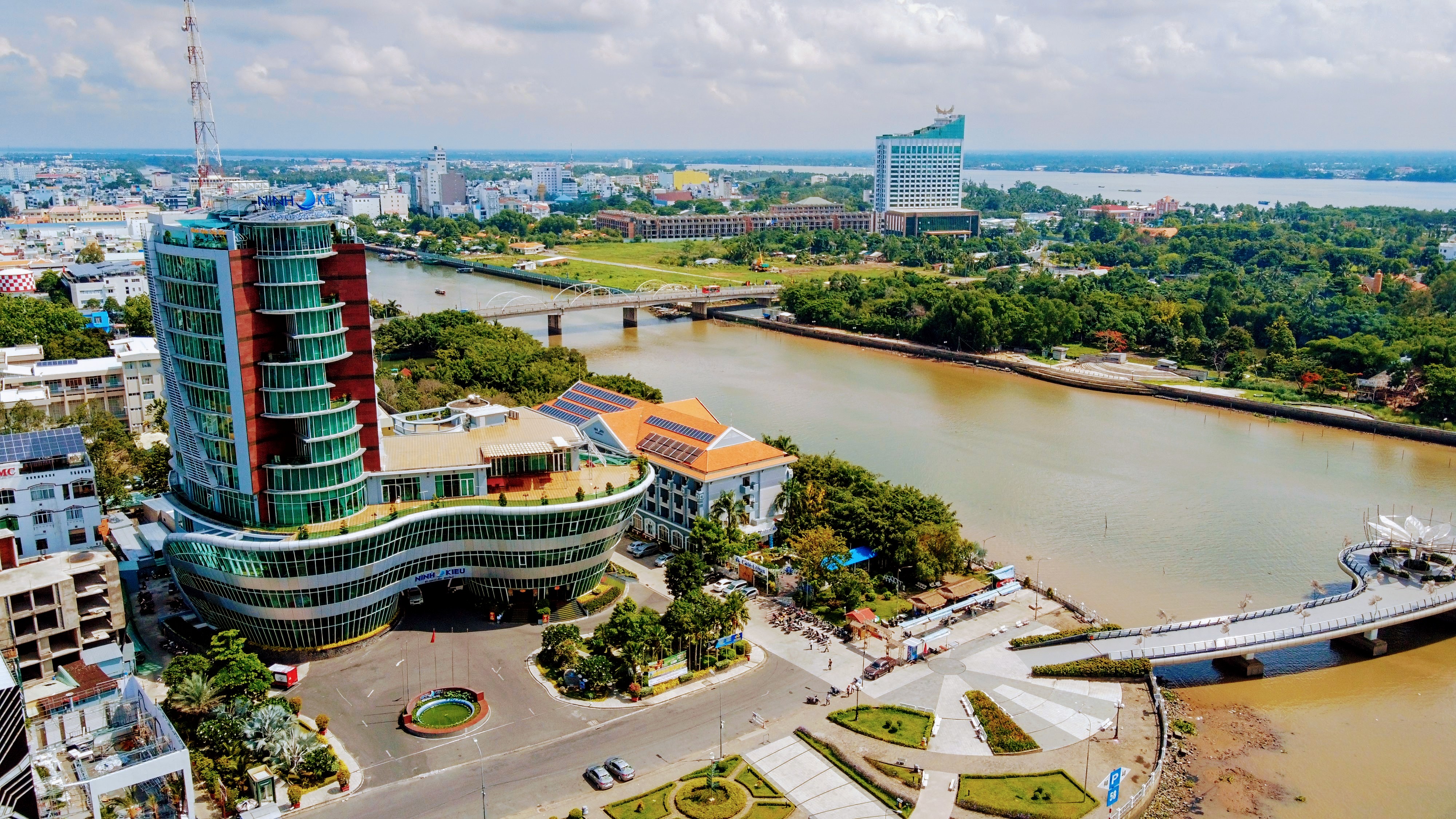 ✦ 88
✦ 88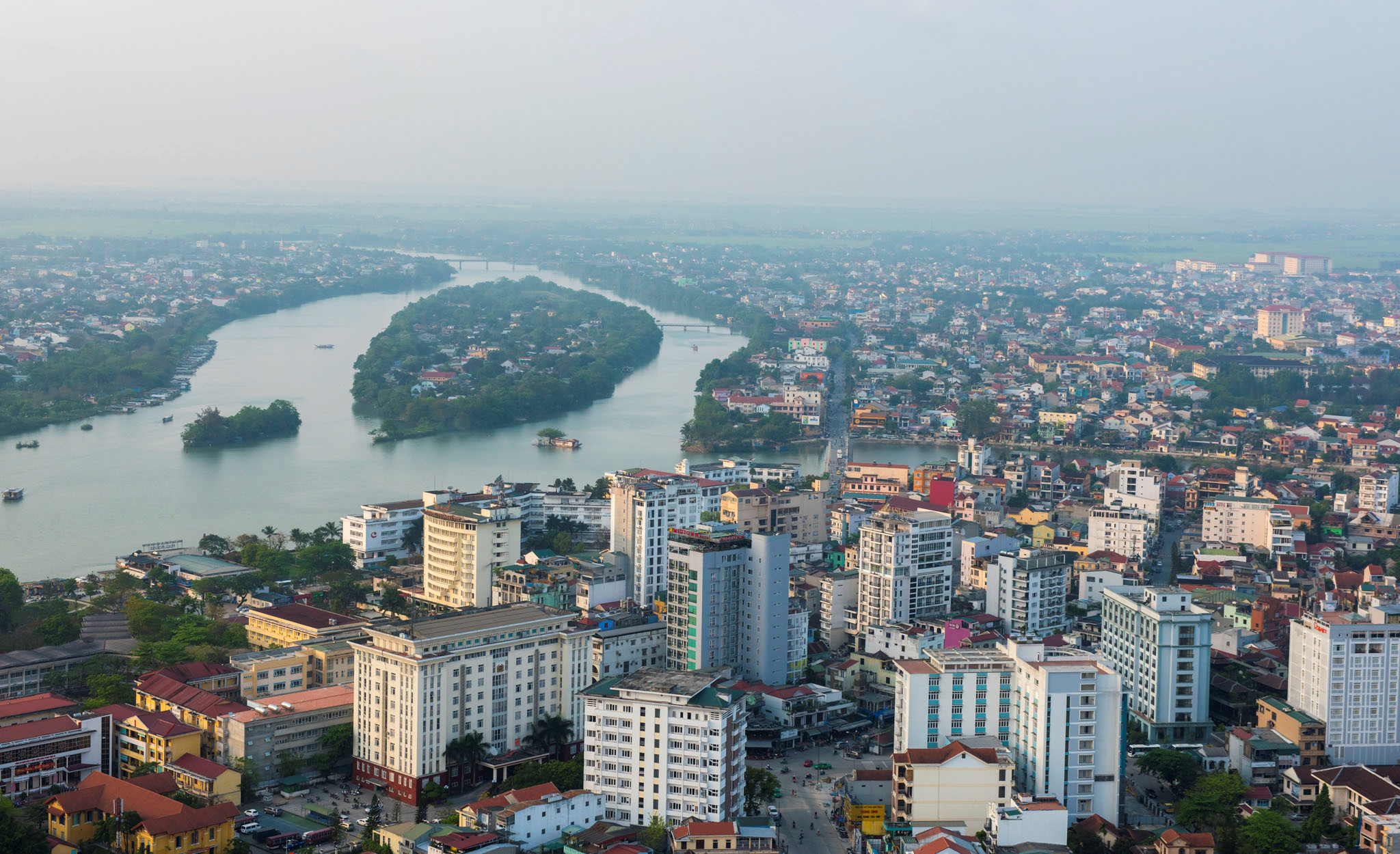 ✦ 87
✦ 87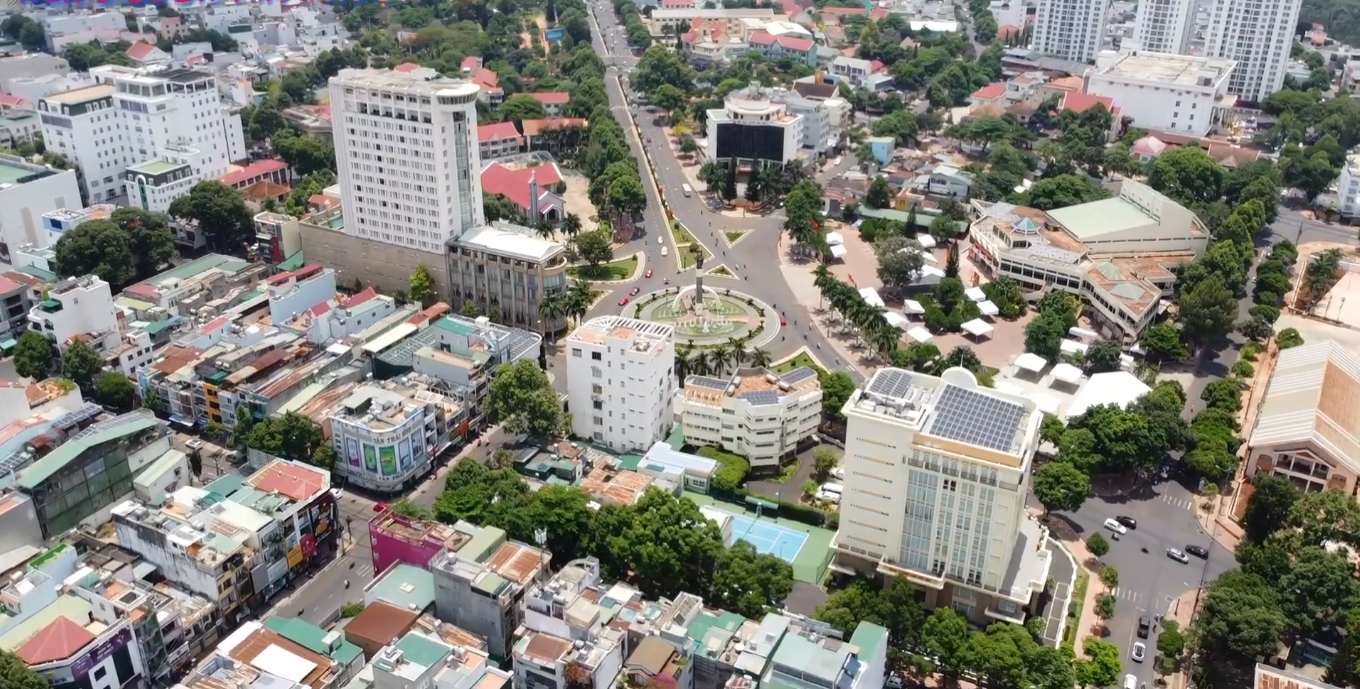 ✦ 85
✦ 85 ✦ 87
✦ 87 ✦ 84
✦ 84 ✦ 83
✦ 83Getting Your Income Documentation Story Straight
The TRC application itself doesn't ask for proof of income the way a passive income visa would. What it asks for is proof of your underlying status - your work permit, your employment contract, your investment registration, your company documents. But the income question doesn't disappear; it just moves somewhere else in the process, specifically into your Vietnamese tax registration and your US filing obligations, both of which you'll be dealing with almost immediately after the card is issued.
If you're employed by a Vietnamese entity, your employer will be withholding personal income tax from your salary and filing on your behalf, which simplifies things considerably. If you're a foreign employee of a foreign company working remotely from Vietnam, the picture is murkier. Vietnamese tax authorities increasingly take the position that income earned while physically present in Vietnam, regardless of where the employer is based, is Vietnam-sourced and taxable. That means your documentation story needs to account for where you're actually performing the work, not just where the paycheck originates.
For US citizens, the interaction between FEIE and the foreign tax credit requires a decision that should be made before your first full tax year in Vietnam, not at filing time. If your effective Vietnamese tax rate is high - and at income levels above $4,300 per month, it can be - the foreign tax credit may offset more of your US liability than the exclusion would. Getting this wrong in year one doesn't necessarily create a catastrophe, but unwinding it is annoying and sometimes costly.
The documentation you'll need for the TRC application itself is employer-driven: the sponsoring company files the request, your work permit is the central document, and everything else flows from that. If your work permit is up for renewal around the same time as your TRC, sequence those carefully, because a lapsed work permit during TRC processing creates problems that take time to resolve.
The Housing Requirement and Where People Get It Wrong
Residence registration in Vietnam is not a formality. It is a legal requirement that connects your physical address to your immigration status, and it has to be done correctly for your TRC to remain in good standing. After the card is issued, you're expected to register your temporary residence with the local police in the district where you're actually living, and your landlord is supposed to notify authorities of your tenancy as well. In practice, many landlords in major cities are familiar with this and handle it routinely. In smaller cities or with private landlords who've never rented to foreigners, it can take some convincing.
The mistake people make is treating the address they put on their TRC application as a formality and then living somewhere different. If your registered address doesn't match where you're actually staying - because you moved apartments, because you're splitting time between cities, because you listed your employer's address for convenience - that creates a gap between your legal registration and your actual situation. This matters more than it sounds, because residence registration feeds into your tax residency status, and discrepancies can surface during renewal or if you ever need to deal with authorities for any other reason.
Serviced apartments and co-living spaces in Hanoi and Ho Chi Minh City generally have processes for this. Standard rental apartments in the expat-heavy districts of either city are usually manageable. The situation gets more complicated if you're trying to maintain a fixed address while traveling frequently, which is a real tension for people whose work involves regional travel.
One thing that catches people off guard: when you renew the TRC, you'll need updated residence registration documentation, not just updated employment documents. If you've moved since the original application, that needs to be reflected in the renewal dossier.
What Actually Happens After You Land
The TRC is not issued at the border. You arrive on whatever visa got you into Vietnam - typically an LD2 if you're going the employment route - and the TRC application is filed afterward, from inside the country, by your sponsoring employer or an authorized agent. The processing window is roughly one to almost three weeks as of 2026, under normal circumstances, and during that time your passport is held by the Immigration Department. Plan around that.
The gap between having a valid visa and having an actual TRC in hand is a period where you're technically legal but don't have the card that makes everything else easier. You can't use the TRC to open a bank account if you don't have it yet. Some landlords want to see it before signing longer leases. It's a minor inconvenience in the scheme of things, but it's worth knowing that the first few weeks after arrival involve a waiting period that most people don't fully account for in their planning.
After the card is issued, the next immediate task is getting your residence registration sorted with the local police, which your employer or agent can usually help facilitate. Then the practical benefits start to materialize - the ability to move through the country and region without worrying about visa status, the simplified interactions with banks and administrative offices, the general sense of being a resident rather than a visitor on an extended stay.
What doesn't happen automatically is any kind of tax registration or filing setup. That's a separate process, and if your employer isn't handling withholding on your behalf, you'll need to engage a local tax advisor relatively quickly.
The Long-Term Path in Practice
Vietnam does not have a meaningful route from TRC to permanent residence for most foreign nationals, and the citizenship path is narrow - long continuous residence, Vietnamese language ability, demonstrated integration, and in most cases relinquishment of your current citizenship. In practice, nearly every long-term foreign resident in Vietnam is simply renewing their TRC on a rolling basis, tied to continued employment, active investment, or a Vietnamese family relationship.
This is worth sitting with before you commit. The TRC is a renewable temporary status, not a building block toward something more permanent. Every renewal requires updated documentation proving your underlying status still exists - your work permit was extended, your company is still registered, your investment is still active. If your employment situation changes, you may have a grace period, but you don't have the kind of buffer that a points-based permanent residence system would give you. The card is only as stable as the status that supports it.
For investors, the picture is somewhat better in terms of card duration - large investors can qualify for up to ten years - but the underlying business still has to remain active and compliant. A dormant company with lapsed registration doesn't sustain a TRC.
None of this is disqualifying if your plan is to spend a defined period of years in Vietnam and then reassess. Most people who use this visa successfully are thinking in three-to-five year increments, not in terms of putting down permanent roots. The question is whether that timeline matches what you're actually trying to build.
TRC vs. Staying on Work Visas - The Actual Tradeoff
The alternative to pursuing a TRC is staying on your LD2 work visa and extending it as needed. That path is less paperwork upfront and keeps you in a more flexible posture - you're not locked into a multi-year registration, your residence situation is lighter, and if your job or plans change, the administrative consequences are smaller. The cost is that you're dealing with extensions more frequently, you don't have the multiple-entry convenience of the TRC, and some practical tasks like longer-term leases and certain banking relationships are harder to establish on a shorter-status document.
For someone who is settled - same employer, same city, planning to stay for at least two years - the TRC is worth the application effort. The friction of getting it done is a one-time event, and the day-to-day convenience of having it is real. For someone whose situation is more fluid, whose employer might change, who might want to spend significant time outside Vietnam, the work visa extension route is less commitment and probably the right call.
Thailand comes up as a regional comparison frequently, usually framed around the question of which country is easier to establish legal residence in as a foreign professional. Thailand's non-immigrant B visa with a work permit has its own set of requirements around company capitalization and Thai employee ratios that can be harder to satisfy than Vietnam's work permit process, particularly for smaller foreign-invested companies. Vietnam's cost of living tends to be lower, particularly in Hanoi. The tradeoff is that Thailand has more formalized long-term resident options and a slightly more predictable regulatory environment for immigration purposes. Neither is obviously better - it depends on where your employer operates, where your professional network is, and frankly where you'd rather live.
Work Permissions
Application Steps
- 1
📋 Determine eligibility category
1 week
- 2
📋 Enter Vietnam on appropriate visa
1-2 days
- 3
📄 Collect required documents
1-2 weeks
- 4
📬 Submit at provincial Immigration Department
1-2 days
- 5
⏳ Await processing and collect card
1-3 weeks
Frequently Asked Questions
Click any question to expand the answer.
Ready to Apply?
Work with trusted visa specialists who handle the paperwork so you can focus on your move.
Get help with this visa →* We may earn a commission if you apply through our link
At a Glance
Last verified: July 15, 2026