Vanuatu Citizenship by Investment
Vanuatu · Oceania
Data updated Sep 3, 2026
Difficulty
Easy
Path to Citizenship
No
Overview
Vanuatu’s Citizenship by Investment program is a straight purchase of citizenship, not a residency visa that looks at pension, salary, or portfolio income. The core threshold is a minimum capital outlay of $150,000 in investment plus a $5,500 application/due diligence fee, with higher all‑in costs if you add dependents. There is no publicly specified minimum monthly income or savings requirement, and Social Security or pension income is not recognized as part of any financial threshold in the official criteria. If you can write a check for at least $155,500 as a single applicant, you clear the main hurdle.
Physical presence obligations are effectively zero. The program is structured so that you can obtain citizenship in 0 years with 0 days/year of required presence and no disclosed maximum consecutive absence. Processing time runs about 4–8 weeks from submission to approval, and you can complete the process remotely through a licensed agent. For a FIRE household that wants to keep living in Thailand, Mexico, or Portugal, Vanuatu citizenship functions as a bolt‑on Plan B passport rather than a move-your-life-to-the-Pacific commitment.
There is no path from this program to permanent residency because you jump straight to citizenship. That means no multi‑year clock to PR, no separate naturalization stage, and no renewal of the underlying status: “Renewable: No” refers to the investment pathway, not your nationality. You will, however, need to renew the physical passport itself on the standard validity cycle the same way any other citizen does.
Friction comes from compliance rather than paperwork volume. The government does not require an apostille, FBI background check, medical exam, local bank account, or interview, and health insurance is also not mandatory. Bureaucracy is light (1.875/5), but you must pass Vanuatu Financial Intelligence Unit due diligence, pay the $5,500 fee up front, and work through a designated agent. All names are screened; prior serious criminal issues, sanctions, or murky source‑of‑funds history will stop the file even if you have the cash.
This setup makes most sense if you can comfortably allocate $155,500+ from your portfolio or business for a second citizenship, while keeping your existing tax residency and lifestyle elsewhere. It is a poor fit if your net worth is under $500,000, you need the invested capital to keep generating income, or you were hoping for a low‑cost retirement residency tied to a monthly pension instead of a lump‑sum outlay.
Local tax picture
Vanuatu operates a territorial tax regime. In practice this means there is no personal income tax on either local or foreign income: no tax on wages, self‑employment income, ETF dividends from a foreign brokerage, pension distributions, or rental income from property abroad. The system relies mainly on VAT and various indirect taxes. For someone using this citizenship as a flag with $5,000/month from foreign dividends and US rentals, Vanuatu itself does not levy income tax on those streams, regardless of where the paying entity is located.
Capital gains on foreign investments, including index funds or ETFs held in a foreign brokerage, are exempt under this territorial, no‑income‑tax framework. Selling a US‑listed ETF inside a US or EU brokerage while you are a Vanuatu citizen does not create Vanuatu capital gains tax, even if you were physically present in the country at the time of sale.
Tax residency is much less of a constraint here than in countries that tax worldwide income. Vanuatu’s rules are not fully codified in a widely public source, but the standard 183‑day presence test is the practical trigger used in the region: staying 183 days or more in a calendar year would treat you as a local tax resident. Because there is no personal income tax, crossing that threshold does not suddenly subject your foreign income to local tax, but it can change your reporting relationship with local authorities and interact with other countries’ exit or residency rules.
There is no widely advertised special preferential regime such as Portugal’s NHR or Italy’s lump‑sum non‑dom because the default position is already zero income and capital gains tax. Local filing obligations for individuals are minimal; with no income tax, there is generally no annual income tax return to file. You still need to comply with VAT and business‑related registrations if you operate a local business, but holding this citizenship alone does not create ongoing tax filings. The presence or absence of a US tax treaty is not affected by this program; either way, the lack of local income tax means the treaty has little practical effect on private investors’ day‑to‑day planning.
For US Citizens and Green Card Holders
US citizens and green card holders remain taxed on worldwide income regardless of Vanuatu’s territorial, zero‑income‑tax regime or the fact that you acquire citizenship in 0 years with 0 days/year required presence. Nothing in this program reduces your US filing obligations. Foreign Earned Income Exclusion via Form 2555 applies only to earned income: remote salary, self‑employment, or consulting. For 2024, the exclusion cap is $126,500 of earned income per person. It does not cover ETF dividends, capital gains, pension distributions, or Social Security.
Given that this citizenship does not require residence, many investors will not meet the Physical Presence Test of 330 full days in a foreign country in a 12‑month period if they spend substantial time in the US. Those who do base themselves full‑time in Vanuatu or another foreign country could use the Physical Presence Test more readily than the Bona Fide Residence Test, because Vanuatu’s regime does not demand formal income‑tax registration to demonstrate residence.
Foreign Tax Credit on Form 1116 is far less useful here than in high‑tax countries. Because Vanuatu levies no income tax and has a territorial regime, the local effective tax rate on portfolio income, pensions, and earned income is effectively 0%. With a 0% foreign rate, there is no foreign income tax to credit against US liability, so FTC does not reduce your US bill on those streams.
FBAR (FinCEN 114) remains mandatory if the aggregate value of your non‑US financial accounts exceeds $10,000 at any point in the calendar year, irrespective of whether Vanuatu requires a local account (it does not for this program). If you open Vanuatu bank or brokerage accounts to diversify jurisdictional risk, those balances count toward the $10,000 threshold, and non‑willful penalties start at $10,000 per violation. FATCA Form 8938 may also apply at higher asset levels.
For someone pairing Vanuatu citizenship with a truly global lifestyle, the optimal setup is usually structured around US tools: FEIE for earned income where you can meet the 330‑day test, and standard US taxation for your portfolio, with no help from FTC. The sensible move is to engage two advisors in year one: a US CPA who specializes in expat taxation (FEIE, FTC, FBAR, FATCA) and a Vanuatu‑based tax or legal advisor for any local registrations or business activities. The $1,500–$3,000 you spend up front usually pays for itself through avoided penalties and better elections.
Any nationality can apply for Vanuatu Citizenship by Investment in principle; the program has no published nationality bans in its legal framework. In practice, applicants from heavily sanctioned or high‑risk jurisdictions such as Iran, North Korea, Syria, and Cuba, and sometimes Russia or Belarus, often struggle with FIU due diligence and international banking, which can make applications unworkable even if not formally prohibited. Before assembling a full document pack or wiring the $5,500 due diligence fee, confirm current eligibility and any informal restrictions directly with the Vanuatu Citizenship Office and Commission (vancitizenship.gov.vu) or through a listed designated agent on that site.
Eligibility Requirements
Any nationality can apply for Vanuatu Citizenship by Investment in principle; the program has no published nationality bans in its legal framework. In practice, applicants from heavily sanctioned or high‑risk jurisdictions such as Iran, North Korea, Syria, and Cuba, and sometimes Russia or Belarus, often struggle with FIU due diligence and international banking, which can make applications unworkable even if not formally prohibited. Before assembling a full document pack or wiring the $5,500 due diligence fee, confirm current eligibility and any informal restrictions directly with the Vanuatu Citizenship Office and Commission (vancitizenship.gov.vu) or through a listed designated agent on that site.
Min Investment
$150,000
Min Age
18 yrs
Physical Presence
None required
Requirements Checklist
• Identity: Valid passport (certified copy); National ID card or driver’s license (certified copy); Birth certificate (original or certified copy); Marriage certificate or divorce certificate if applicable (certified copy); Passport-size colour photographs (6–8, 40mm x 50mm).
• Financial: Bank statements showing at least USD 250,000 balance or equivalent; Bank reference letter; Professional reference letter; Global asset statement or asset proof; Documents confirming source of funds and source of wealth (e.g., tax returns, employment or business income records); Proof of investment payment or receipt for required contribution (including at least 25% initial payment where applicable).
• Employment: Curriculum vitae (CV) or personal profile including education and employment history; Employment certificate or employer letter confirming position, salary, and duration; Academic qualification certificates (degrees, diplomas).
• Health: Medical certificate confirming good health and absence of contagious diseases for each applicant (typically required for applicants over 18).
• Background: Police clearance certificate from country of origin; Police clearance certificates from all countries of residence for 12 months or more during the last 10 years; Interpol or similar international clearance if requested; Vanuatu Financial Intelligence Unit approval letter where applicable.
• Accommodation: Proof of current residential address (e.g., utility bill, tenancy agreement, residence permit, or visa page).
• Other: Completed nomination form for each applicant; Completed Vanuatu passport application form for each applicant; Vanuatu Citizenship Commission due diligence forms where applicable; Change of name documents if applicable; Additional documents for spouse and dependants as requested by authorities or agent.
• Translation: Certified English translations of all documents not issued in English; Legalisation or apostille of civil status and police documents where required by Vanuatu authorities.
Tax Information
Local tax regime – what territorial really means here
Vanuatu operates a territorial tax regime for individuals. In practical terms for this citizenship-by-investment profile, that means Vanuatu taxes income sourced in Vanuatu but not foreign‑source income earned or realized outside the country. For most holders of this citizenship, the big categories – remote work for a foreign employer, consulting income billed to US/EU clients, dividends and capital gains from a US or Canadian brokerage, pension and 401(k)/IRA distributions paid from abroad, Social Security, CPP/OAS, UK State Pension, rental income from property in the US, Canada, Australia, or Europe – are foreign‑source and typically fall outside Vanuatu’s income tax net as long as you’re not running a local Vanuatu trade.
If you actually earn local income in Vanuatu (for example, you open a resort, run a local consulting company, or draw a salary from a Vanuatu entity), that income is treated as Vanuatu‑source and subject to whatever local tax rules apply at the time – though Vanuatu is widely characterised as a low‑or‑no income tax jurisdiction. The key is source: location of the client, the activity, or the payer – not your passport. Merely becoming a Vanuatu citizen by investment does not convert your US brokerage dividends into Vanuatu‑source income.
Capital gains on foreign investments – the FIRE lever
For FIRE practitioners and heavy ETF investors, the central question is whether Vanuatu tries to tax capital gains from your foreign portfolio. Under a territorial system, foreign‑source capital gains – for example, selling VTI or VWRA in a US or UK brokerage account – generally fall outside the domestic tax base. Based on the regime type provided (“territorial”), there is no indication that Vanuatu imposes tax on capital gains realized entirely outside Vanuatu.
The nuance is that “foreign‑source” is about where the asset and activity sit, not where you sleep at night. Owning and selling US stocks through a US broker is foreign‑source for Vanuatu. Owning and selling a rental property physically located in Vanuatu would be Vanuatu‑source, even if the proceeds never touch a Vanuatu bank. For most Rewire Abroad readers, this makes a Vanuatu passport paired with offshore brokerage accounts inherently tax‑efficient at the Vanuatu level – though your home country (US, Canada, etc.) may still tax those gains.
Tax residency triggers – when do you actually become a Vanuatu taxpayer?
The program data does not define a specific tax residency day count (e.g., 183 days), nor does it state that citizenship automatically confers tax residency. In practice, Vanuatu follows the standard pattern: tax residency is triggered by physical presence and/or establishing a primary residence or centre of vital interests in Vanuatu, not by merely holding a passport. Since the physical presence requirement for maintaining citizenship via this investment route is explicitly 0 days/year, it is entirely possible – and common – to be a Vanuatu citizen and not a Vanuatu tax resident in any given year.
For digital nomads and perpetual travelers, that’s both an opportunity and a risk. If you spend significant time in higher‑tax countries, those jurisdictions may assert tax residency over you even while Vanuatu does not. If you structure your life so that you are not a tax resident anywhere, you may lower your tax bill but increase audit risk and complexity. There is no indication that the Vanuatu citizenship program forces you into tax registration by default, so becoming a tax resident is a separate decision, typically tied to actually living there.
Special preferential regimes
The structured data does not mention any named special regimes (such as NHR, non‑dom, or a flat tax) for Vanuatu; the base system itself is territorial and already functions like a de facto non‑dom regime for most foreign‑source income. There is also no stated “tax status deadline” – a common feature in European regimes where you must opt in within a certain period after arrival. This means there is no additional application clock running in the background when you obtain citizenship by investment.
For the typical Vanuatu CBI holder who does not physically relocate, there is no special tax status to obtain or maintain. Your planning is about avoiding triggering higher‑tax residency elsewhere and making sure your corporate and banking structures align with your actual personal tax residency, not with the flag on your passport.
US expat obligations – unchanged by a Vanuatu passport
For US citizens and long‑term green card holders, Vanuatu citizenship does not change your relationship with the IRS. The US taxes you on worldwide income regardless of where you live or how many other passports you hold, until you formally expatriate under US law. Three mechanisms matter here:
- FEIE (Foreign Earned Income Exclusion, Form 2555): For 2024, up to 126,500 USD of foreign earned income (remote employment, freelancing, self‑employment) can be excluded if you meet either the physical presence test or the bona fide residence test. Vanuatu’s 0‑day physical requirement means it doesn’t help you qualify; you qualify based on where you actually live, which will almost always be somewhere else.
- FTC (Foreign Tax Credit, Form 1116): This applies when you pay foreign income taxes that can offset US tax. In a territorial, low‑tax jurisdiction like Vanuatu, foreign‑source income often faces a 0% local rate, so you accumulate little or no foreign tax credits. That’s excellent from a global tax perspective only if the US rate on that income is also low or zero (e.g., qualified dividends and long‑term capital gains in a reasonable bracket) – otherwise you remain exposed to US tax with no offset.
- FBAR (FinCEN 114) and FATCA (Form 8938): If you hold more than 10,000 USD in aggregate in non‑US financial accounts at any point in the year, you must file FBAR, and you may need to report higher thresholds under FATCA as well. Vanuatu bank or brokerage accounts count, but so do accounts in any other country where you actually bank as a nomad.
For a US FIRE practitioner using Vanuatu as a secondary passport while living in, say, Mexico or Thailand, the FEIE will generally be driven by Mexican or Thai residence, foreign tax credits will mostly reflect those countries’ taxes, and Vanuatu’s territorial regime simply means you don’t layer an extra tax on top.
Tax treaty status – what “unknown” means in practice
The structured data indicates the tax treaty status with the US is “unknown.” That is your cue not to rely on any assumed treaty benefits. In particular, you should not assume:
- That there is a double tax treaty preventing US tax on certain income types; or
- That there is a totalization agreement covering Social Security contributions or benefits.
In the absence of a clearly identified treaty, US citizens should plan as if there is no treaty relief: US Social Security is taxable under US rules, and any local treatment in Vanuatu (which is effectively neutral under a territorial system) will not change that. Likewise, non‑US citizens should confirm how their home country tax authority views Vanuatu – but given the territorial regime and lack of active taxation on foreign income, treaty benefits are less relevant than in high‑tax countries.
Local filing requirements – what you actually have to do
For many citizenship‑by‑investment holders who do not relocate, the practical reality is that they never register with the Vanuatu tax authority at all because they do not meet the physical presence or local‑income triggers for tax residency. There is no indication in the available facts of a mandatory annual income declaration simply for holding citizenship, nor of a separate tax status deadline you must meet.
If you do decide to live in Vanuatu or generate Vanuatu‑source income, expect to:
- Register for a local tax identification number (a TIN) if required for business activities.
- Comply with any VAT, business license, or other indirect tax obligations if you run a local operation.
- File any required returns related to local‑source income.
Because the official data does not specify deadlines or procedural details, you should get this directly from the Vanuatu revenue authority or a local advisor at the point you become resident or start a business. For everyone else using Vanuatu citizenship primarily as a portable second passport, local filing obligations will often be zero – but that does not exempt you from your home country’s reporting.
Closing advisory – the professionals you actually need
If you combine a Vanuatu passport, tax residency in a third country, and assets in yet another jurisdiction, you are firmly in “don’t DIY this” territory. You should budget for two distinct advisors in your first year after obtaining Vanuatu citizenship:
- A US-, Canadian-, UK-, or Australian‑qualified CPA or tax adviser who specializes in expats and cross‑border investors, to manage your home‑country filing obligations, FEIE/FTC optimization, and reporting (FBAR/FATCA for US persons).
- A local tax adviser in the country where you are actually tax resident (which may or may not be Vanuatu) to make sure your presence, registrations, and business structure line up with local law.
Expect to spend roughly 1,500–3,000 USD on this advice in year one. For anyone with 500,000–3,000,000 USD in investable assets or mid‑five‑figure annual remote income, that spend is almost always recouped quickly through optimized structuring, reduced double taxation, and avoiding penalties for mis‑filing or non‑filing across multiple jurisdictions.
Living in Vanuatu
COL Index vs NYC
59.0
Monthly Cost (excl. rent)
$1,469
1BR Rent (City Center)
$1,569
Safety Index
68.4
Healthcare Index
55.1
Quality of Life Index
112.4
Time Zone
UTC+11:00
Capital
Port Vila
Population
307.1K
Official Languages
Bislama, English, French
Avg Internet Speed
5 Mbps
Public Transit Quality
Poor
With a budget covering rent and living costs, you'd need roughly $3,038/mo for a comfortable single-person lifestyle in Vanuatu.See how far your money goes →
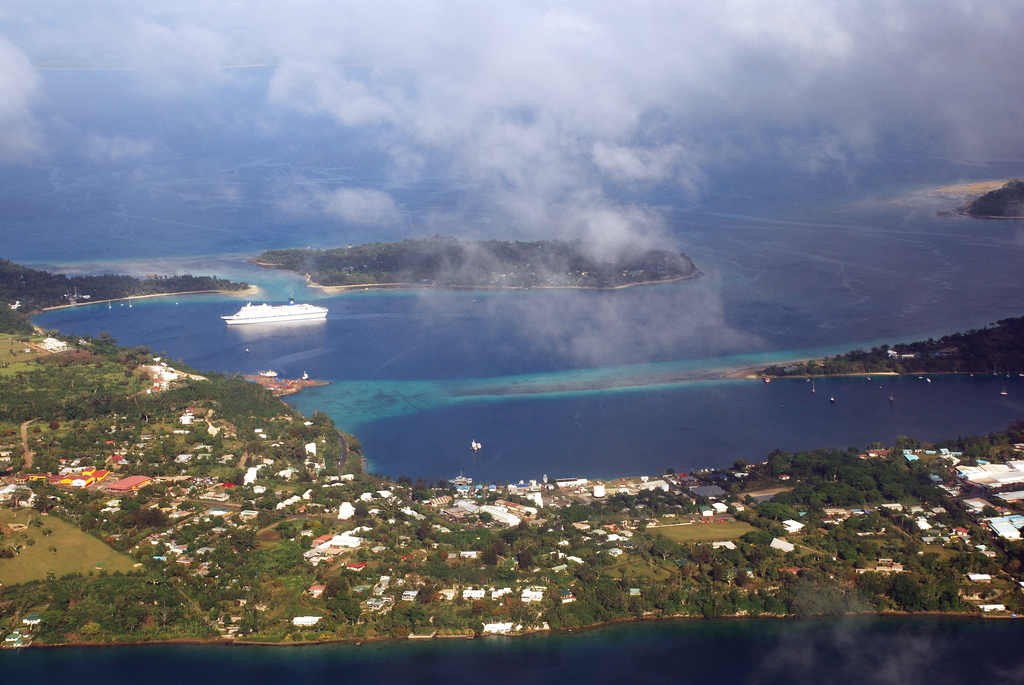
🏙️ Best Cities in Vanuatu for Golden Visa Holders
 69
69The residential proof requirement is about your history, not a home in Vanuatu
There's no minimum stay attached to this program, so the proof of current residential address in the document list has nothing to do with establishing a life in Vanuatu. It exists so the Commission can confirm who you are and where you've actually been living, feeding into the same background check that pulls your police clearances. People occasionally over-prepare for this, assuming they'll need to show a lease or property arrangement in Port Vila before approval. They don't, and spending time or money building a case for Vanuatu ties is wasted effort here in a way it wouldn't be on a residency-based golden visa.
Where applicants actually stumble is the opposite problem: treating the current-address proof as an afterthought, submitting a utility bill that's six months old or a tenancy agreement that expired before filing. That kind of gap triggers a follow-up request from the Commission, which adds weeks to a process that otherwise moves in a matter of months. If you've relocated recently, or you split time between two countries without a formal lease in either, get ahead of this by lining up something dated and current, ideally something that matches the address on your bank correspondence too. Consistency across documents matters more than the strength of any single one.
What actually happens after approval
Most of this process runs through a licensed agent and never requires you to set foot in Vanuatu. Applications go to the Citizenship Office remotely, review happens remotely, and for many applicants the only in-person step is biometrics, which get captured at an approved consulate in the UAE, Hong Kong, or New Caledonia, or through a mobile consul appointment arranged separately. That single requirement ends up being the real logistical bottleneck for a lot of applicants, not the paperwork. Someone based in the US or Canada is looking at a dedicated trip to one of three locations, and scheduling around agent availability and consulate slots can add real time to a process that otherwise moves faster than most residency-based programs.
Once biometrics clear and citizenship is granted, passport issuance itself is handled remotely, so there's no second in-country visit required to collect the document. The gap people misjudge is between "approved" and "passport in hand": approval is the finish line for the Commission's review, but the physical document still has to be produced and shipped, and travel plans built around a specific date should build in slack on both ends.
There is no ladder to climb here
Programs that route through a residence permit toward permanent residency and eventual citizenship ask you to accumulate years, renewals, and often physical presence days before the passport shows up. This isn't that. Citizenship here is the outcome of the approval itself, with no residency step in between and no waiting period layered on top. That's a fundamentally different product from a golden visa that leads to PR, and it's worth being honest with yourself about which one you actually want before you commit the investment.
What you're buying is a passport and the travel access that comes with it, full stop. You're not buying tax residency, and Vanuatu's territorial system won't do anything for pension income specifically, since that isn't recognized under the local regime. Social security contributions elsewhere don't carry over or count toward anything here either. If your goal is a place to actually live, work remotely from, and build a tax position around, this program answers a narrower question than that. If your goal is a second passport as insurance, or as a way to unlock visa-free travel that your current passport doesn't offer, it answers exactly the question you're asking.
Vanuatu against the other citizenship-by-investment options
The comparison set for this program isn't digital nomad visas or retirement permits, it's other citizenship-by-investment jurisdictions, mostly in the Caribbean. The decision usually comes down to three things that don't show up cleanly in a comparison chart: how the resulting passport is treated by banks and other governments when you a second citizenship, how quickly the program actually moves once your file is complete, and how the jurisdiction's due diligence reputation affects your ability to open accounts later. A passport from a program with a reputation for weak vetting can create friction years after you've acquired it, in ways that have nothing to do with the application itself.
Vanuatu's process is truly fast relative to most alternatives in this category, and the absence of any physical presence requirement removes a scheduling burden that some Caribbean programs still carry in one form or another. Where it asks more of you is the up-front documentation discipline around source of funds, since a thin financial file will stall a Vanuatu application the same way it stalls any due diligence review, just without the runway that a longer program timeline would otherwise give you to fix it. If your file is truly clean and you can get biometrics scheduled without months of delay, that speed is real. If your financial history has gaps or complexity you haven't yet documented clearly, no citizenship-by-investment program is fast, and the choice between jurisdictions matters less than getting that groundwork done first.
Work Permissions
Application Steps
- 1
📋 Research program and agents
1-2 weeks
- 2
📄 Gather personal documents
1-2 weeks
- 3
📋 Pay due diligence fee
1 day
- 4
📬 Submit full application
1 week
- 5
📅 Attend biometrics appointment
1-2 days
- 6
⏳ Wait for approval
4-8 weeks
- 7
⏳ Receive citizenship certificate
1-2 weeks
Frequently Asked Questions
Click any question to expand the answer.
Ready to Apply?
Work with trusted visa specialists who handle the paperwork so you can focus on your move.
Get help with this visa →* We may earn a commission if you apply through our link
At a Glance
Last verified: July 15, 2026