Tanzania Digital Nomad Visa
Tanzania · Africa
Data updated Sep 3, 2026
Overview
Tanzania has publicly announced an intention to create a Tanzania Digital Nomad Visa, but as of now virtually none of the hard parameters are publicly specified: no published minimum monthly income, no savings requirement, and no disclosed application fee. For a FIRE retiree living on $3,800/month in ETF dividends and U.S. rental income or a remote worker drawing $5,000/month from a foreign employer, that means there is still no official confirmation on what will count as qualifying income or how to document it. Existing commentary about €2,000–3,500 thresholds is speculative; the published data for this program lists all the core financial fields as "not specified."
On residency mechanics, no presence requirement has been disclosed for this digital nomad category: the fields for duration, renewable status, physical presence requirement, and maximum consecutive absence are all marked "not specified." That leaves unanswered whether you will be able to spend 30–60 days per year in Tanzania while maintaining the visa, or whether a 183‑day‑style rule will apply as it already does in Tanzania’s tax-residency law. Until an official regulation or immigration circular is published, anyone planning to split time between Tanzania and another base country has to treat these variables as unknown.
The long-term path is equally opaque. There is no confirmed information on whether this visa will lead to permanent residency, how many years would be required for PR, or how many years of residence could count toward Tanzanian citizenship. All those fields are "not specified" in the current fact pattern, which is a material gap for a 10‑year relocation plan compared to, say, Panama’s Pensionado (which is a known immediate permanent residence path). Travelers focused on long-run second residency or a passport need to assume, for now, that this is a time-limited stay permit rather than an immigration track.
The bureaucracy score of 1/5 suggests that, once finalized, the procedure may be comparatively light-touch: no apostille, no FBI background check, no medical exam, and no interview are listed as requirements in the current data. At the same time, processing time is "not specified," the application fee is "not specified," and even basic elements such as health-insurance and local bank-account requirements are not publicly specified, so there is real uncertainty about the final friction level. Anyone who has dealt with Tanzania’s existing e‑visa system will recognize that “low bureaucracy” in principle does not eliminate on-the-ground annoyances like payment glitches or inconsistent document requests.
Given how many core parameters are still "not specified," this visa only makes clear sense if you already want to spend 3–6 months per year in Tanzania for lifestyle reasons and are comfortable treating the visa as a flexible stay tool rather than a tax or residency strategy. It is a poor fit if your primary goal is a clearly defined ladder to permanent residency or a second passport, or if you need guaranteed rules around remote work legality and foreign investment taxation before moving capital or family life there.
Eligibility Requirements
Any nationality can apply in principle for the Tanzania Digital Nomad Visa under the current "all" nationality setting, with no officially published exclusion list. In practice, citizens of sanctioned or high‑risk jurisdictions such as Iran, North Korea, Syria, and in some contexts Russia or Cuba often face additional security screening, banking hurdles, or outright rejection even when a program is formally open to all. Before assembling a full document package, confirm your specific eligibility directly with the Tanzania Immigration Department (www.immigration.go.tz), which is the competent authority for visa rules and any nationality-based exceptions.
Requirements Checklist
• Identity: Valid passport with at least 6 months remaining validity and at least 2 blank visa pages; passport-sized photograph (if requested in application form).
• Application: Completed Tanzania visa application form (online eVisa or paper, as applicable); printed copy of online application submission confirmation (for eVisa).
• Accommodation: Hotel reservation(s) or other proof of accommodation in Tanzania for the intended stay.
• Financial: Recent bank statement showing sufficient funds to cover stay in Tanzania.
• Health: Travel medical insurance covering the duration of stay in Tanzania.
• Translation: Certified translations and notarizations for any required document not in English.
Tax Information
Local tax regime and what it means for nomads
Tanzania’s tax rules exist independently of this announced Tanzania Digital Nomad Visa, whose tax regime fields are all "not specified." Tanzania does not run a formal non-dom or NHR-style system; the default is that tax residents are taxed on worldwide income, while non-residents are taxed on Tanzania‑source income. For a U.S. or Canadian remote worker on this visa earning $5,000/month from a foreign employer, that foreign salary is generally not treated as Tanzania‑source, but once you cross tax-residency thresholds it can fall into the worldwide-income net. Foreign ETF dividends, bond interest, and rental income from property in your home country are likewise outside Tanzanian source rules but can be reportable and taxable if you are a Tanzanian tax resident.
For FIRE investors, the key question is capital gains on foreign investments. Tanzanian law taxes capital gains on certain assets, but the treatment of portfolio gains on foreign securities for non-citizen remote workers sitting on an as-yet-unimplemented digital nomad visa is not publicly specified at this time. You should not assume an automatic exemption: this is not a published territorial or remittance-based regime where foreign gains are clearly outside scope. If you plan to fund Tanzania living expenses by selling index funds in a foreign brokerage, you should model both possibilities: that gains are taxed locally and that they are not, because there is no authoritative answer yet for this visa category.
Tax residency in Tanzania is often associated with spending 183 days or more in a tax year or establishing an ordinary place of residence, but the exact triggers for holders of the proposed digital nomad permit are not disclosed in the current facts. The visa’s "Tax Status Deadline" is also "not specified," so there is no clear published requirement about when or whether a digital nomad must register with the Tanzania Revenue Authority (TRA), obtain a tax ID, or file an annual return. With the "Tax Treaty with US" field marked "unknown," U.S. persons cannot rely on a documented treaty structure for relief on double taxation, and non‑U.S. nationals likewise have to check their own country’s treaty position with Tanzania.
For US Citizens and Green Card Holders
For Americans on a future Tanzania Digital Nomad Visa, U.S. tax rules remain fully in force regardless of how Tanzania eventually categorizes your income. Form 2555 (Foreign Earned Income Exclusion, FEIE) can exclude up to $126,500 of earned income in 2024 from U.S. tax, but only for wages or self-employment income from services — not for ETF dividends, long-term capital gains, pension distributions, or Social Security. If you spend 330 days or more in any 12‑month period outside the U.S., including time physically in Tanzania on this visa, you can use the Physical Presence Test; if Tanzania ultimately builds this as a long-stay, renewable visa with a clear tax-residency track, some Americans may instead qualify under the Bona Fide Residence Test, but that is uncertain until the visa is actually implemented.
Form 1116 (Foreign Tax Credit) only helps when Tanzania actually taxes a stream of your income and the Tanzanian effective rate approaches or exceeds the U.S. rate. If Tanzania either exempts your foreign salary and portfolio income under practice, or if you structure your stay to avoid Tanzanian tax residency, your effective Tanzanian tax on those items will be zero, and the FTC gives no added benefit — there are simply no foreign taxes to credit. In that scenario you rely primarily on FEIE for earned income and pay full U.S. tax on passive income like dividends and gains.
FEIE and FTC planning sit alongside FBAR (FinCEN 114) and, where thresholds are met, FATCA Form 8938. If Tanzania eventually requires a local bank account for this visa (currently "not specified"), and your aggregate foreign accounts exceed $10,000 at any point during the year, you must file FBAR; non‑willful penalties start around $10,000 per violation. Significant brokerage or cash balances abroad can easily trigger FATCA reporting at $50,000–$100,000 thresholds depending on filing status.
For this visa, the smart move is to line up two professionals: (1) a U.S. CPA who specializes in expat taxation and understands FEIE, FTC, FBAR, and FATCA in the context of uncertain local rules, and (2) a Tanzanian tax advisor who tracks how the TRA actually treats digital nomads once this visa is live. The $1,500–$3,000 spent in year one on that combined advice commonly pays for itself through avoided penalties, correct first-year registration, and optimized FEIE/FTC elections.
Living in Tanzania
COL Index vs NYC
31.8
Monthly Cost (excl. rent)
$439
1BR Rent (City Center)
$407
Safety Index
48.6
Healthcare Index
28.3
Quality of Life Index
83.5
Time Zone
UTC+03:00
Capital
Dodoma
Population
59.7M
Official Languages
English, Swahili
Avg Internet Speed
21 Mbps
Public Transit Quality
Fair
With a budget covering rent and living costs, you'd need roughly $846/mo for a comfortable single-person lifestyle in Tanzania.See how far your money goes →
🏙️ Best Cities in Tanzania for Digital Nomads
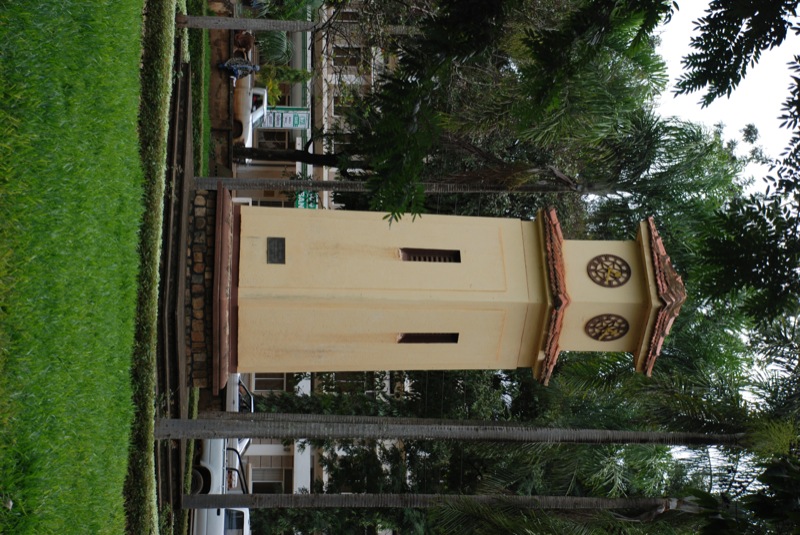 49
49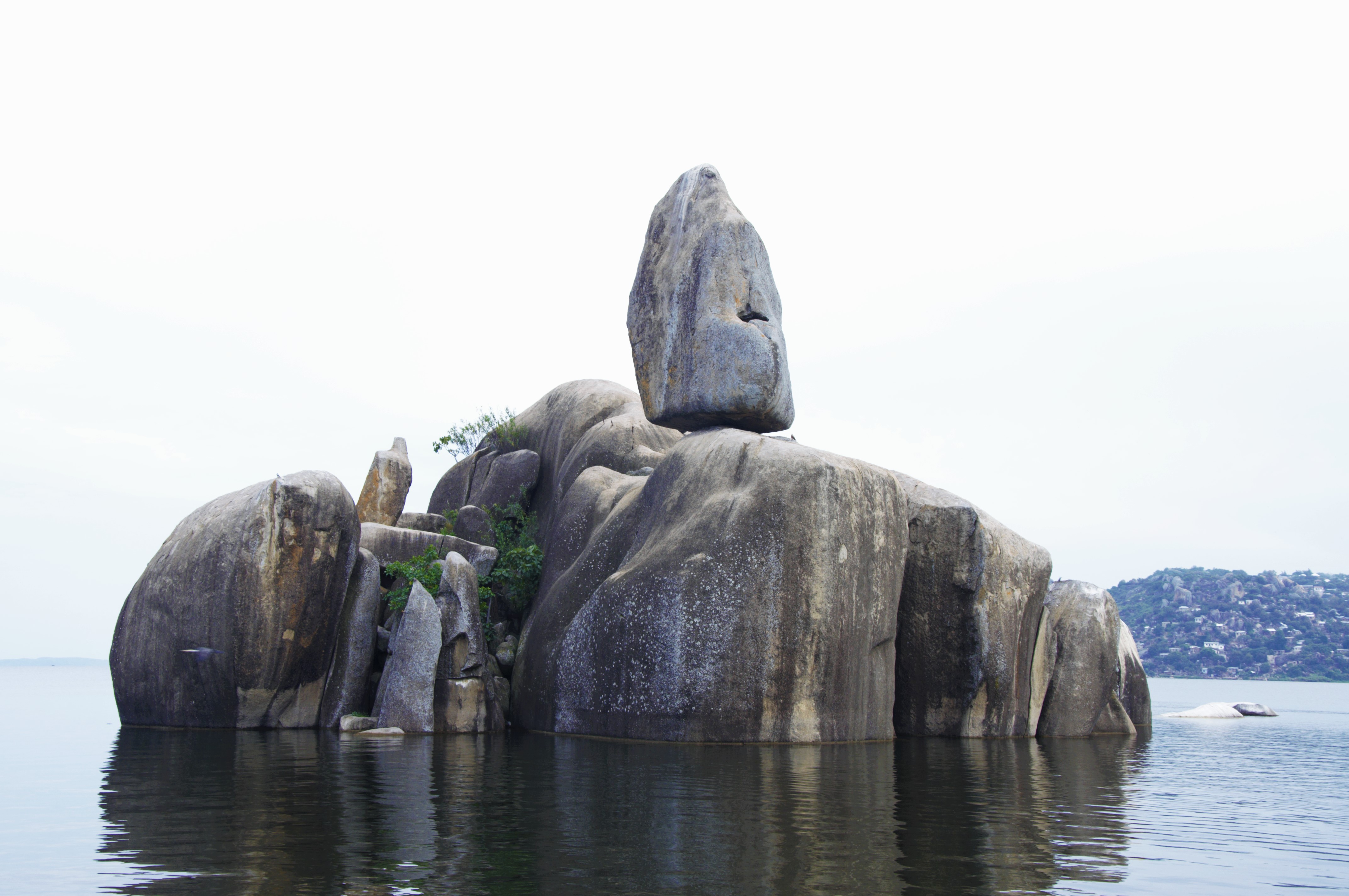 57
57 49
49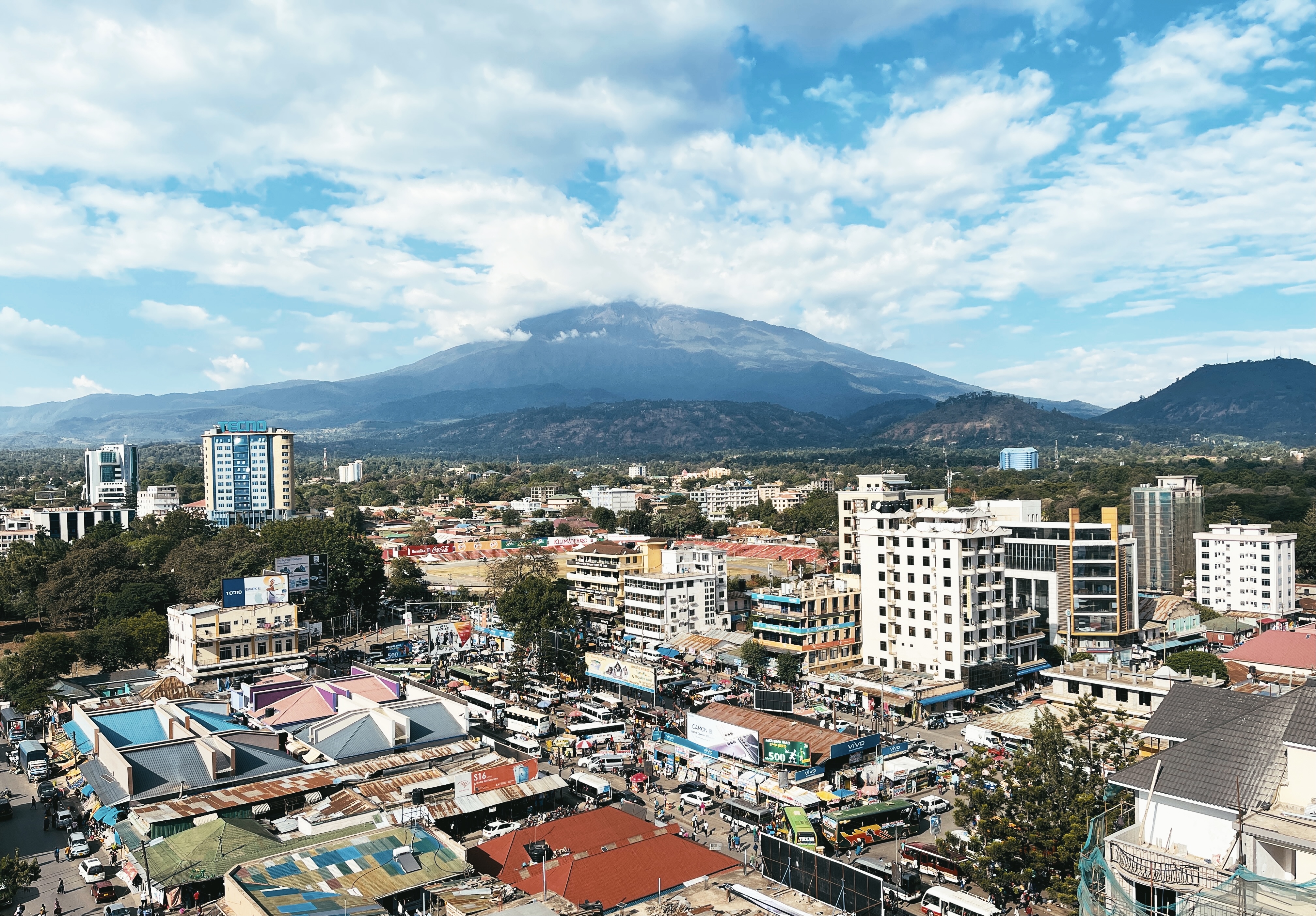 62
62Work Permissions
What's typically permitted:
Application Steps
- 1
📋 Research visa status
- 2
📋 Verify passport validity
1-4 weeks
- 3
📄 Gather supporting documents
1-2 weeks
- 4
⏳ Monitor official announcements
- 5
📬 Fill and submit application
- 6
⏳ Wait for approval
- 7
🏛️ Register upon arrival
Same day
Frequently Asked Questions
Click any question to expand the answer.
Ready to Apply?
Work with trusted visa specialists who handle the paperwork so you can focus on your move.
Get help with this visa →* We may earn a commission if you apply through our link
At a Glance
Last verified: May 13, 2026