Kazakhstan Highly Qualified Specialist Permit
Kazakhstan · Asia
Data updated Sep 3, 2026
Difficulty
Moderate
Overview
Kazakhstan’s Highly Qualified Specialist (HQS) permit is a work‑tied residence route for foreigners with specialized skills who want to earn local salary rather than live off savings. There is no publicly specified minimum monthly income or savings requirement in the official data, but the permit does require local employment and sponsorship by a Kazakhstan employer, and Social Security or foreign pension income does not count toward eligibility. Local work is explicitly allowed, and you are authorized to work only in the specified capacity for the sponsoring employer, so this is not a remote‑only or passive‑income visa.
Duration, initial validity, and exact processing time are all listed as not publicly specified, though the permit is renewable and in practice is often granted for a multi‑year term aligned with your employment contract. Because processing time is not disclosed, planning a move without a buffer is risky, especially if you are timing an exit from another country’s visa. The visa status is active with a moderate difficulty rating and a low Bureaucracy Score of 1.125/5, suggesting fewer formal hurdles than many work‑permit regimes in the region.
There is a formal pathway from the HQS permit to permanent residency (PR), with a “Yes” for PR access, but the number of years required for both PR and eventual citizenship is not specified. Physical presence requirements and maximum consecutive absences are also not disclosed, so anyone planning to split time between Kazakhstan and another base (for example, 6 months in Almaty and 6 months in Portugal) needs to structure their travel after clarifying these thresholds directly with the employer’s migration handler or local counsel.
On friction points, health insurance is required from the outset, but a local bank account is not mandated by the visa rules themselves, and there is no requirement for an apostille, FBI background check, medical exam, or consular interview in the published data. Dependents are allowed, although any additional income percentage required for adult or child dependents is not specified, so families will be assessed case‑by‑case by employers and authorities.
This route makes most sense if you have a concrete job offer in Kazakhstan paying a strong local salary and you want both legal work authorization and a future path to PR while keeping your portfolio and passive income abroad. It is a poor fit if you are financially independent, earning $4,000–$8,000 per month from dividends and rental income and do not plan to take on local employment under a single employer’s sponsorship.
Eligibility Requirements
Any nationality can apply for the Kazakhstan Highly Qualified Specialist permit in principle, since the structured data flags nationality restrictions as applying to “all”. In practice, citizens of sanctioned or politically sensitive states such as Iran, North Korea, Syria, and in some banking contexts Russia or Belarus, can encounter serious obstacles with Kazakh consulates, security clearances, or opening local payroll and personal accounts even where the law does not formally bar them. Before assembling a full dossier, check current eligibility, quotas, and any informal red‑flag nationalities directly with Kazakhstan’s Ministry of Labor and Social Protection or its migration service, which administer work permits.
Requirements Checklist
• Identity: Valid passport with at least 3–6 months remaining validity beyond intended stay and at least 2 blank pages; completed visa/permit application form; recent passport-size colour photographs.
• Employment: Signed employment contract specifying position, salary, and duration; employer’s invitation letter or letter of intent for Highly Qualified Specialist position; notarized copy of employer’s registration documents (certificate of incorporation or charter); employer’s power of attorney for representative (if applicable).
• Qualification: University degree or professional qualification certificates proving high qualification (apostilled or legalized, as required); detailed CV/resume showing relevant professional experience; professional licenses or certifications, if required for the occupation.
• Financial: Proof of salary level meeting Highly Qualified Specialist minimum income threshold (e.g., employment contract stating salary; employer confirmation letter); proof of payment of state fee or consular fee for the permit/visa.
• Health: Valid health insurance covering medical expenses in Kazakhstan for the duration of stay as required by authorities; medical certificate, if requested by the competent authority or consulate.
• Background: Police clearance certificate or criminal record check from country of residence or nationality, if requested by authorities.
• Other: Entry visa support/authorization number or letter from Kazakhstan competent authority (e.g., MFA or migration service) if required; proof of no outstanding tax liabilities by employer, if requested; power of attorney and copy of ID of authorized representative (if a representative submits the application).
• Translation: Notarized translations into Kazakh or Russian of foreign-issued documents such as diplomas, police clearance, civil status documents, and employer documents, where applicable.
Tax Information
Local tax picture for HQS workers in Kazakhstan
Kazakhstan’s tax regime type for this visa is not specified in the structured data, so you have to assume that once you live and work there as an HQS employee, your Kazakhstan‑source salary is subject to standard personal income tax. For a typical HQS holder, the core taxable stream is local employment income from the sponsoring employer; remote salary paid by a non‑Kazakh employer, foreign ETF dividends, and rental income from property abroad may or may not fall into scope depending on how Kazakhstan defines tax residency and worldwide versus territorial taxation, which is not disclosed here.
The crucial FIRE question — capital gains on foreign investments held in a non‑Kazakh brokerage — does not have a published answer in the data set. It is not disclosed whether index fund or ETF gains are exempt as foreign‑source, taxed at a standard personal rate, or taxed under a special regime. Anyone relying on large portfolio rebalancing events should obtain written guidance from a local tax advisor before triggering six‑figure sales.
Tax residency triggers, including day counts such as 183 days, are also not specified. You should not assume that holding an HQS permit automatically makes you a Kazakhstan tax resident, nor that it doesn’t; local rules often combine presence tests with registration obligations. Deadlines for declaring income and any requirement to obtain a taxpayer identification number are not disclosed, so first‑year registration needs to be handled via your employer’s payroll or a local accountant.
The Tax Treaty with the US is marked as unknown. That means an American or Canadian cannot rely on treaty relief for pensions, dividends, or double‑tax credits without checking the actual bilateral convention text (if any). With “unknown” status, you must model worst‑case outcomes: full Kazakhstan tax on local salary and potential exposure on other income streams, combined with full home‑country obligations.
For US Citizens and Green Card Holders
For an American using the HQS permit, US tax rules remain fully in force. The Foreign Earned Income Exclusion (FEIE), claimed on Form 2555, can shelter up to $126,500 of earned income for 2024, but only on active income such as your Kazakhstan salary, remote work, or consulting. It does not touch ETF dividends, bond interest, capital gains, rental income, Social Security, or IRA/401(k) distributions. Given that this visa is employment‑based with no disclosed physical‑presence obligation, many holders will qualify under the Physical Presence Test (330 full days abroad in any 12‑month period) if they stay out of the US, but long US visits can break eligibility; the Bona Fide Residence Test may apply once you embed your life in Kazakhstan and stay for multiple calendar years.
Foreign Tax Credits (FTC) on Form 1116 matter if Kazakhstan taxes your employment and possibly other income at meaningful rates. FTC only helps when Kazakhstan’s effective tax on a specific income stream is at or above the US liability on that same stream; if Kazakhstan taxes only your local salary and leaves foreign passive income untaxed, you will still owe full US tax on your dividends, interest, and capital gains, with no FTC relief because no foreign tax was paid on those categories.
FBAR (FinCEN 114) and FATCA Form 8938 reporting kick in once the aggregate value of your non‑US financial accounts exceeds $10,000 (FBAR) or higher thresholds for Form 8938. A local bank account is not legally required by this visa, but in practice many HQS employees open one for payroll and daily expenses, which pulls you into US foreign‑account reporting. Non‑willful FBAR penalties start around $10,000 per year, so you need tight data on balances and account details.
For a US person combining Kazakhstan salary with substantial brokerage assets, the right advisory stack is a US CPA who specializes in expat FEIE/FTC/FBAR/FATCA, plus a Kazakhstan tax advisor for residency status, filing obligations, and local treatment of foreign investments. The $1,500–$3,000 you spend in year one on that combined advice usually repays itself in optimized FEIE versus FTC strategy and in avoiding multi‑year penalties for missed forms.
Living in Kazakhstan
COL Index vs NYC
26.6
Monthly Cost (excl. rent)
$555
1BR Rent (City Center)
$498
Safety Index
54.8
Healthcare Index
60.7
Quality of Life Index
106.8
Time Zone
UTC+05:00
Capital
Nur-Sultan
Population
18.8M
Official Languages
Kazakh, Russian
Avg Internet Speed
88 Mbps
Public Transit Quality
Good
With a budget covering rent and living costs, you'd need roughly $1,053/mo for a comfortable single-person lifestyle in Kazakhstan.See how far your money goes →
🏙️ Best Cities in Kazakhstan for Expats
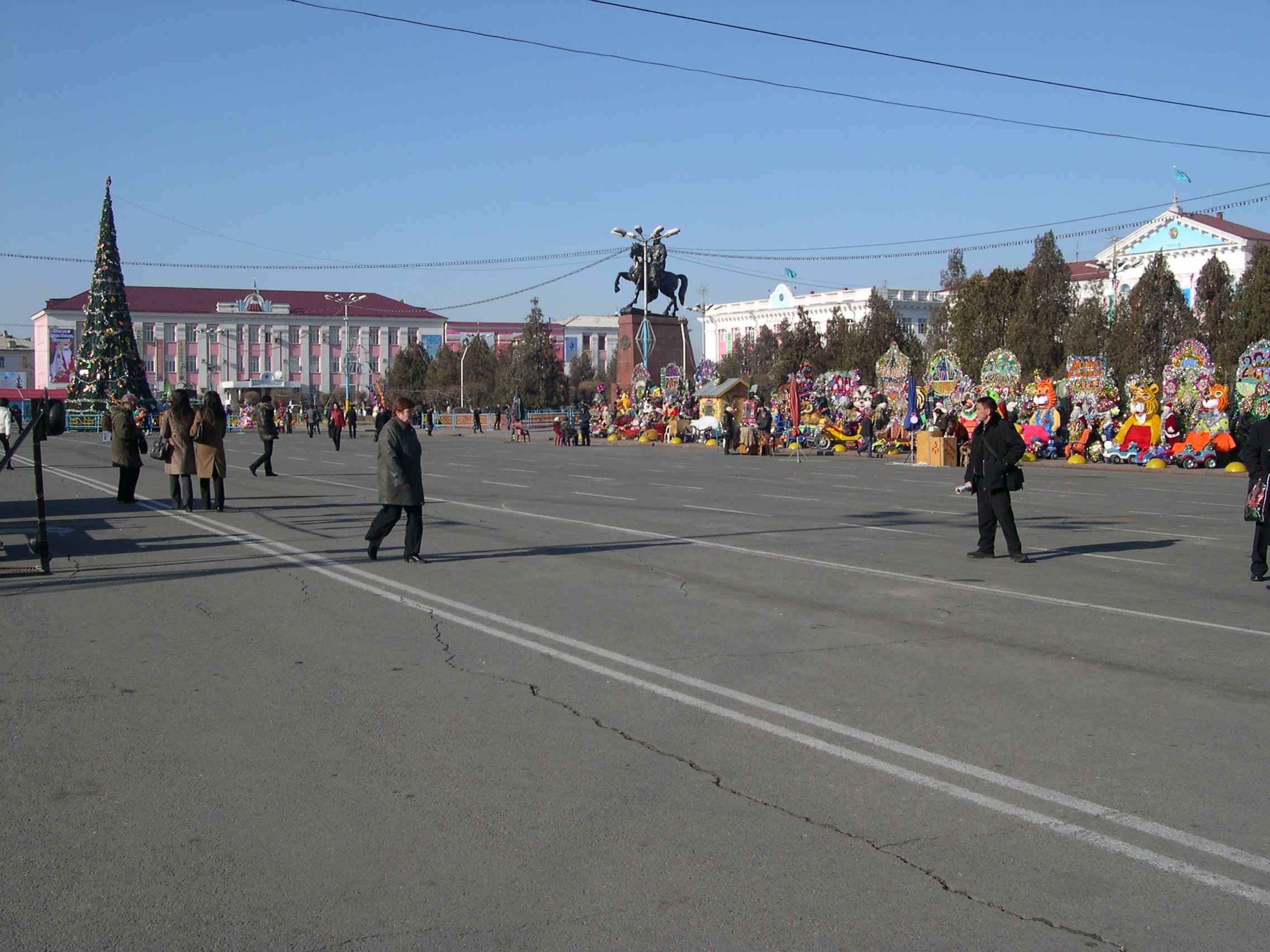 64.5
64.5 56
56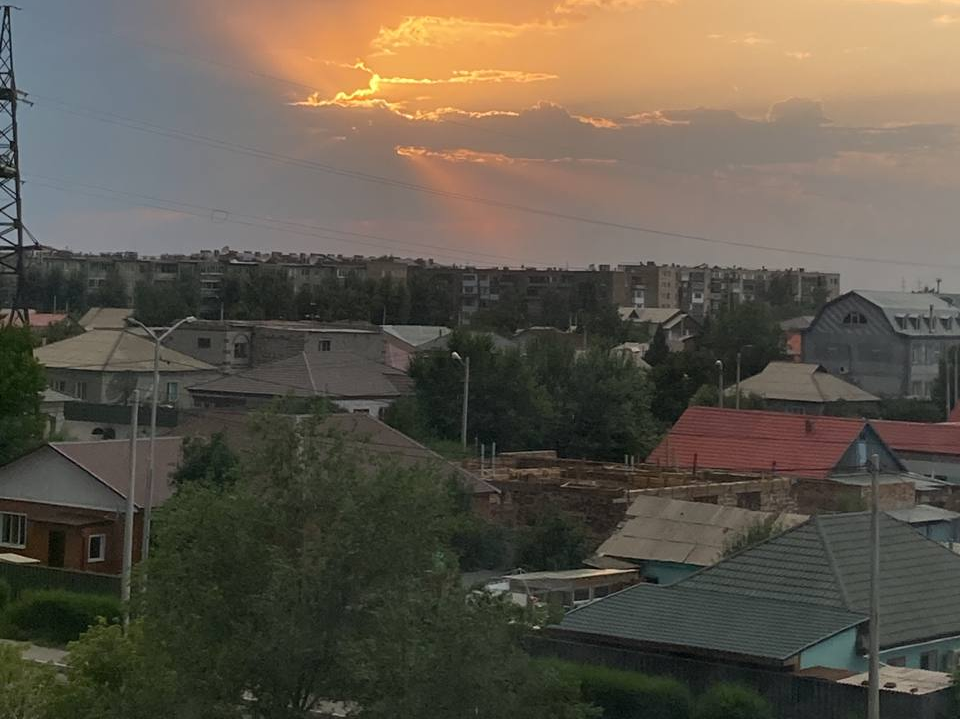 60.9
60.9 58
58 62.2
62.2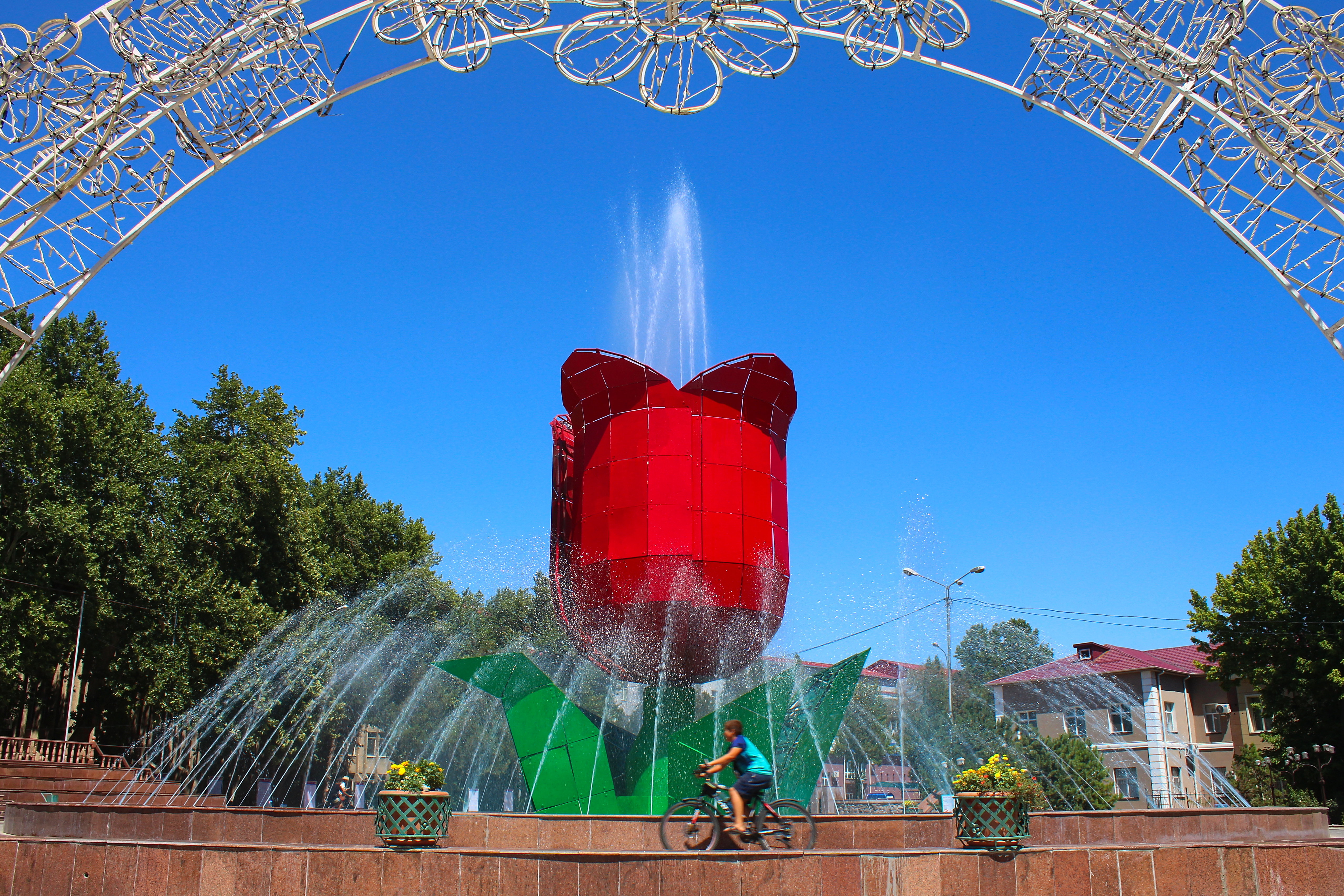 57.8
57.8The housing question nobody puts on the checklist
There's no lease or property document sitting in the application packet for this permit, and that surprises people coming from visa categories where proof of accommodation is table stakes. It's easy to read that absence as meaning housing doesn't matter here. It matters, just later, and differently.
Once you're in the country, an address becomes relevant for local registration in a way that has nothing to do with the permit application itself. The mistake people make is timing: signing a long lease before the permit is actually approved, which risks a deposit and months of rent on a status that hasn't cleared yet, or arriving with no address lined up at all because nobody told them it would matter this soon after landing. Neither extreme serves you well.
The better sequence is to treat housing as a two-step decision. Short-term, flexible accommodation covers the gap between approval and settling in, something month-to-month or through a corporate housing arrangement if your employer offers one. Longer-term housing gets sorted once your status is actually confirmed and you know how long you're staying and where you'll be working day to day. Employers who've sponsored Highly Qualified Specialist hires before often have a landlord relationship or corporate housing arrangement already in place, and it's worth asking directly rather than assuming they'll mention it. Employers who haven't done this before frequently haven't thought about it either, which means the question falls to you by default.
None of this is written into the permit requirements, and that's exactly the point of raising it. The formal document list tells you what gets submitted. It doesn't tell you what happens between approval and actually living somewhere, and that gap is where people either land smoothly or spend their first month scrambling for an address they need for reasons the application never mentioned.
The days after approval look different from what you expect
There's no consulate appointment in this process, no interview, no visa officer across a desk. The application moves through Kazakh labor and migration authorities, often through an e-government portal, and your employer is the one submitting it, whether locally or online. You hand documents to your sponsor, and the sponsor carries the file forward. For applicants used to booking a consulate slot and showing up with a folder, this can feel oddly hands-off, even opaque, because the visible steps mostly belong to someone else.
That structure creates a specific kind of risk: approval on paper doesn't mean the process is finished. The permit gets handled in-country, after approval or after entry, which means there's a window where your status exists in an administrative sense before it exists in the form of a document you're holding. People sometimes treat the approval notice as the finish line and relax their attention right when the in-country steps still need following up on, by them or by their employer.
The practical response is to stay engaged past the point where it feels like the hard part is over. Confirm with your sponsor what happens after approval, specifically, and who is responsible for each remaining step once you're physically in the country. Since there's no consulate touchpoint to force a checkpoint, nothing automatically flags a stalled file the way a missed interview date would. If your employer treats this as routine, that's a good sign. If they seem unsure what comes next, that's worth resolving before you book a flight, not after.
What the permanent residence path actually requires
On paper, the path looks linear: hold the permit, renew it, accumulate time, eventually apply for permanent residence. It's designed to lead there, and the renewable structure exists specifically to support that progression. What the paper version leaves out is that every renewal depends on the same employment relationship that got you in the door in the first place.
That's the practical difference between how this reads and how it plays out. This isn't a status you carry independent of your job the way some points-based or income-based residence permits work. If the sponsoring relationship ends, whether because the company folds, the role changes, or you simply move to a different employer, your basis for renewal doesn't automatically transfer with you. Someone else has to be willing to sponsor the next stage, and that sponsorship has to hold together through however many renewal cycles sit between where you start and where permanent residence becomes available.
The people who get to permanent residence smoothly on this track tend to be the ones who treat employer stability as part of their own planning, not as background noise. Before accepting a role under this category, it's worth asking not just about salary and title but about the company's history of retaining sponsored hires through multiple renewal cycles. A company that's done this before, with people still there years later, is a different bet than a company doing it for the first time with you as their test case.
Weighing this against a pure remote-work visa
If the plan is to keep working for US clients or a US employer while living somewhere else, this isn't the right door. Remote-work and digital nomad style visas exist for exactly that situation: they let you keep your existing income sources, they generally don't ask an employer to sponsor anything, and they leave you free to end the arrangement and move on without unwinding an employment relationship first. That independence is the entire appeal of those categories, and this permit doesn't offer it. Local work is expected, not just permitted, and your legal status is tied to a specific job rather than to your own income.
What this route offers instead is depth rather than flexibility. It brings dependents into the picture cleanly, it's built to run through renewal into permanent residence, and it grants real local work rights rather than a temporary stay tied to foreign income. Nomad-style visas rarely offer any of that; they're built for people passing through, not people settling into a country's legal and economic life.
So the decision isn't really about which visa is better. It's about which trade you're actually prepared to make. If you have, or can realistically get, a genuine job offer from a company operating in Kazakhstan, and you want a status that can carry a family and lead somewhere permanent, this is a stronger foundation than anything built around remote income. If you want to keep your current clients, your current employer, and the freedom to leave on your own terms, a remote-work category will serve you better even though it won't get you nearly as far.
Work Permissions
Application Steps
- 1
📋 Secure employer sponsorship
2-4 weeks
- 2
📄 Gather required documents
1-2 weeks
- 3
📬 Employer submits to authorities
Same day to 1 week
- 4
⏳ Await permit approval
Varies; 1-3 months
- 5
🏛️ Enter Kazakhstan and register
1-3 days
- 6
🏛️ Apply for renewal if needed
1-2 months prior
Frequently Asked Questions
Click any question to expand the answer.
Ready to Apply?
Work with trusted visa specialists who handle the paperwork so you can focus on your move.
Get help with this visa →* We may earn a commission if you apply through our link
At a Glance
Last verified: May 13, 2026