Jordan Digital Nomad Visa
Jordan · Middle East
Data updated Sep 3, 2026
Duration
3 months
Overview
Jordan’s so‑called Digital Nomad Visa currently aligns in practice with the new 3‑month temporary residency stamp that most visitors receive on entry, rather than a standalone remote-worker permit with its own statute. The hard data points you can actually plan around are a 3‑month duration and the absence of any publicly specified income floor, savings requirement, or investment minimum. That means a remote worker living on $3,800/month from rental income and ETF dividends abroad is not screened on explicit financial thresholds, but still needs to convince immigration they can support themselves during a 90‑day stay.
From a residency perspective, the visa itself runs for 3 months, and no physical presence requirement is publicly specified beyond not overstaying that period. Jordan’s separate tax rules use a 183‑day threshold for tax residency, so a nomad cycling in for a single 90‑day stretch each year stays clearly under that line, whereas stacking multiple entries in a year starts to blur into long‑term presence with possible tax consequences. Because the maximum consecutive absence or renewal pattern is not fixed, you cannot assume back‑to‑back 3‑month periods will be granted indefinitely.
There is no path from this 3‑month digital‑nomad‑style status to permanent residency or citizenship. Years to permanent residence and years to citizenship do not apply. Someone planning a 10‑year relocation to Jordan needs to think of this as a short‑stay framework to test the waters or run a single quarter from Amman, then explore separate long‑term residence or work permits if they want continuity.
On the friction side, the published data are unusually light: no local bank account requirement, no apostille requirement, no FBI background check, no medical exam, and no interview. The bureaucracy score is 1/5, which matches the reality that much of this is handled via standard tourist‑visa or e‑visa channels with a 3‑month stamp at the border. Processing time, application fee, and renewal cost vary, so you have to treat official e‑visa guidance and border‑control practice as your reference rather than a codified digital‑nomad framework.
This setup makes the most sense if you want a low‑friction, single 90‑day stint, say one quarter per year in Jordan, while keeping your main tax and residency ties elsewhere. It is a poor fit if your goal is to base yourself in Jordan for more than 183 days per year and work toward long‑term residency using predictable, published rules tied to this specific visa label.
Eligibility Requirements
Any nationality can apply in principle under Jordan’s digital‑nomad‑style 3‑month entry framework, as the VISA FACTS list nationality restrictions as “all” rather than a curated Western‑only pool. In practice, citizens of sanctioned or politically sensitive states such as Iran, Syria, Afghanistan, Yemen, and North Korea, and sometimes holders of Russian or Nigerian passports, encounter tighter vetting, may be denied e‑visas, or be required to secure advance security clearance and stronger documentation. Before assembling a full document package, verify your exact eligibility and channel (e‑visa, visa on arrival, or prior approval) directly with Jordan’s Ministry of Interior via the official e‑visa portal linked from Jordan Gate, which is the government’s primary immigration gateway.
Duration
3 months
Max 0% from local sources
Requirements Checklist
• Identity: Valid passport; passport bio page copy; passport-style photograph.
• Financial: Bank statements; proof of sufficient funds; credit or debit card for visa fee payment.
• Accommodation: Hotel booking or accommodation confirmation.
• Travel: Return or onward flight ticket.
• Employment: Proof of remote work or self-employment status; employer letter or business registration documents.
• Background: Police clearance certificate.
• Other: Completed visa application form; valid email address; travel health insurance.
Tax Information
Local tax picture for Jordan digital nomad stays
Jordan uses a residence‑based system that in practice works like a worldwide regime for residents: once you are treated as tax resident, global income is in scope, including remote salary, foreign dividends, pensions, and rental income from overseas property. Jordan taxes residents on worldwide income, though foreign income is often taxed only when remitted, and the 183‑day rule referenced in nomad guides aligns with a standard residence model. If you stay under 183 days in a tax year and do not otherwise register or present as resident, your foreign salary from a US or EU employer, ETF dividends in a foreign brokerage, and rental cash flow from property back home generally sit outside Jordanian tax filing.
Jordan generally does not impose capital gains tax on individuals, including gains from foreign investments. For FIRE readers selling index funds or ETFs in a US brokerage while spending under 183 days in Jordan, those gains are taxed in your home system, not locally. Once tax resident (crossing 183 days and/or registering as such), Jordan can tax global income, which would encompass foreign capital gains; however, Jordan generally does not tax individual capital gains, though local professional confirmation is still worthwhile for cross-border cases.
Tax residency in Jordan is commonly triggered at 183 days of presence in a calendar year, regardless of visa label, whereas the digital‑nomad‑style entry itself only runs for 3 months. The visa grant alone does not automatically make you a tax resident; day‑count and substantive ties matter. No specific tax registration or filing rules apply to this visa type beyond standard residency rules, so there is no requirement to obtain a tax ID or file a return if you remain clearly non‑resident and have no Jordan‑source income.
Local filing mechanics for residents, deadlines, payment schedules, and whether you must register proactively, are not detailed for this specific visa type. Anyone approaching or exceeding the 183‑day presence threshold or deriving Jordan‑source business income should assume they need to register with the tax authority and file an annual return, and should confirm the exact obligations with a local tax advisor.
There is no bilateral tax treaty between the US and Jordan. That means you cannot rely on any double‑taxation agreement for Social Security, dividends, or pensions. If a treaty does exist, it would govern tie‑breaker rules and relief mechanisms, but in the absence of confirmed details US persons must assume that standard US worldwide taxation applies and that Jordan’s ability to tax residents’ worldwide income is not neutralized by a clearly documented treaty in this context.
For US Citizens and Green Card Holders
US citizens and green card holders on Jordan’s 3‑month digital‑nomad‑style entry remain fully taxable by the US on worldwide income, regardless of Jordan’s treatment. The Foreign Earned Income Exclusion (FEIE), claimed on Form 2555, can shelter up to $132,900 of foreign earned income for 2026, but only for earned income: remote salary, freelance coding, consulting, or self‑employment profits. It does not touch ETF dividends, long‑term capital gains on index funds, pension payouts, or Social Security. Because this visa is short (3 months) and physical presence in Jordan might be under 183 days, most nomads will lean on the Physical Presence Test (330 full days outside the US in any 12‑month span) rather than the more demanding Bona Fide Residence Test, which is harder to meet when your legal status in Jordan is explicitly temporary.
The Foreign Tax Credit (FTC) on Form 1116 matters only if Jordan actually taxes your income and its effective rate on that income stream is higher than or comparable to the US rate. If you structure your stays so you never hit Jordanian tax residency and you have no Jordan‑source earnings, your local tax bill on foreign salary, dividends, and gains will often be zero; in that scenario the FTC does nothing for that income because there is no Jordanian income tax to credit against US liability. If you cross 183 days and Jordan begins taxing your remote salary or business profits, FTCs can offset the double taxation to the extent of the Jordanian tax paid.
FBAR (FinCEN 114) and FATCA Form 8938 remain live issues even though this visa does not require a local bank account. FBAR kicks in once aggregate foreign financial accounts—Jordanian or otherwise, exceed $10,000 at any point in the year, with non‑willful penalties starting around $16,700 per violation as of 2026 (inflation‑adjusted from a $10,000 statutory base). Form 8938 has its own higher thresholds but is filed with your tax return and captures foreign assets, including some brokerage accounts and certain foreign pensions. If you decide voluntarily to open a Jordanian bank or brokerage account for convenience during your 3‑month stays, that account will count toward both FBAR and 8938 thresholds.
For a sustainable plan, you need two professionals: a US CPA who specializes in expat taxation and understands FEIE, FTC, FBAR, and FATCA in the context of short‑term, multi‑country stays, and a Jordan‑based tax advisor who can tell you exactly when presence and activities tip you into local tax residency. The $1,500–$3,000 spent in year one on that combined guidance is often repaid via optimized FEIE/FTC strategy and by avoiding FBAR/FATCA penalties or unexpected Jordanian assessments.
Living in Jordan
COL Index vs NYC
37.2
Monthly Cost (excl. rent)
$670
1BR Rent (City Center)
$345
Safety Index
60.0
Healthcare Index
65.2
Quality of Life Index
125.0
Time Zone
UTC+03:00
Capital
Amman
Population
10.2M
Official Languages
Arabic
Avg Internet Speed
256 Mbps
Public Transit Quality
Good
With a budget covering rent and living costs, you'd need roughly $1,015/mo for a comfortable single-person lifestyle in Jordan.See how far your money goes →
🏙️ Best Cities in Jordan for Digital Nomads
 51
51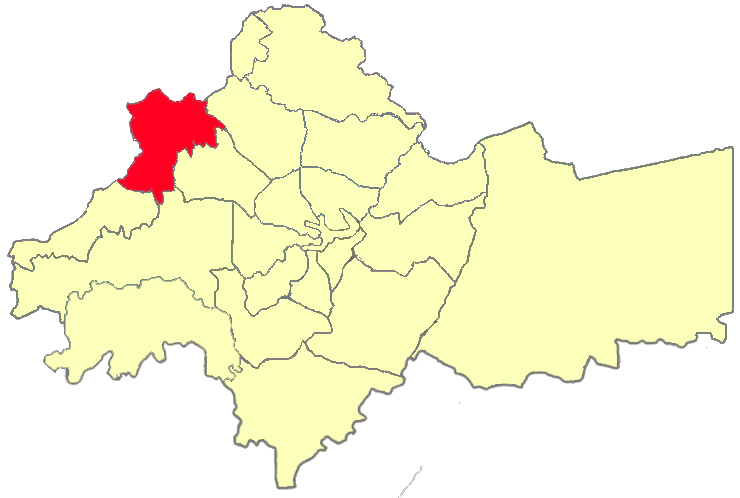 69
69 49
49 55
55 59
59Getting the income documentation story straight before applying
With no interview built into this process, the paperwork has to do all the talking, and it has to tell one story rather than several half-matching ones. The required package includes bank statements, proof of funds, and either an employer letter or business registration documents, and immigration officers reviewing that stack aren't looking for perfection so much as coherence. An employer letter describing a salaried remote role next to bank statements showing irregular invoice-style deposits from three different companies reads as two different employment situations, not one. If you freelance across multiple clients, your documentation should look like freelance income throughout, invoices, a registered business entity if you have one, and statements that show a pattern rather than a single lump deposit that showed up two weeks before you applied.
Sequence this backwards from what a reviewer sees first. Start by pulling bank statements covering several months so a rhythm is visible, then draft or request the employer or business letter so its dates and figures don't contradict the statements. Doing it the other way, writing the letter first and hoping the numbers roughly line up, is how people end up with a letter claiming a fixed salary that the bank records don't support.
Because local work is off the table entirely, every dollar showing up in those statements needs to trace back to something outside Jordan. That matters more here than it would somewhere permitting partial local income, because there's no percentage buffer to argue about. A single Jordanian client payment mixed into an otherwise clean foreign-income picture doesn't just look bad, it violates the basis of the stay outright. If you've done any local consulting or contract work in the months before applying, either resolve that fully before you submit or be prepared for the statements to raise a question nobody will actually ask you directly, they'll just decide.
The accommodation requirement and how people overthink it
The entry requirement here is a hotel booking or accommodation confirmation, not a lease, and people manage to get this wrong in both directions. Some applicants overbuild it, signing a twelve-month rental agreement before they've even entered the country because they assume immigration wants to see long-term housing commitment. For a three-month renewable stay, that's premature money on the table, and if your plans shift after arrival, you're stuck negotiating an early exit from a lease you didn't need to sign yet.
The more common mistake runs the other way: booking one night at a hotel as a technicality while an onward flight sits three months out. That gap between a one-night booking and a ninety-day itinerary is the kind of inconsistency that draws a second look even without a formal interview process, because it doesn't match. A booking that covers your first week or two, with the understanding that you'll sort longer-term housing after landing, reads as normal. A booking that looks like it exists purely to check a box doesn't.
Once you're in the country and looking for something longer than a hotel stay, a different friction shows up. There's no requirement to open a local bank account, which keeps the entry process light, but it also means landlords dealing with remote-work arrivals may lean toward cash deposits or international card payments rather than the local transfer setup they'd use with a resident. Budget for that conversation before you're standing in an apartment you like with no clean way to pay the deposit. It's a small thing that catches people who assumed banking friction would show up earlier in the process, when actually it shows up later, once you're trying to settle rather than just arrive.
What actually happens after you land
The most important thing to understand about the period after arrival is what doesn't happen. There's no conversion step, no filing that turns your entry stamp into a separate residency card, no follow-up appointment with a local immigration office to formalize anything. You land, the stamp is already active, and your three months run on their own clock. That absence of a bureaucratic follow-up cuts both ways. It means almost no ongoing admin, no medical exam, no local bank account to open, nothing chasing you for paperwork once you're settled in. It also means nobody in the system is tracking your status the way an EU residency program might, so managing your own exit and renewal timing becomes entirely your responsibility rather than something a case officer reminds you about.
Local work restrictions carry through the entire stay without exception. Taking on even a small local client, doing a paid workshop for a Jordanian company, or accepting local project work while your remote clients keep paying you abroad puts you outside the terms of the entry regardless of whether the stamp itself is still technically valid. This is where people who've operated more flexible nomad visas elsewhere sometimes assume a little local income is tolerated as long as it's minor. Here, the restriction reads as a full bar rather than a percentage cap, and treating it as negotiable is a mistake people usually only discover at renewal, if at all.
Renewal itself isn't an escalation into something more permanent, it's a repeat of the same short window. Treat each three-month period as its own complete unit rather than an accumulating record, because nothing here is designed to add up toward a longer-term status automatically.
The long-term path, or the absence of one
If part of your calculus for choosing a country involves eventually settling there permanently, this visa needs to be mentally separated from that goal entirely. There's no residency track built into it, no accumulation of stay time that counts toward anything, and no mechanism inside the digital nomad framework itself that leads anywhere beyond another renewal of the same three-month stamp. That's not a criticism of the program, it's simply what it is: a repeatable short-stay instrument, not the first step of an immigration plan.
This matters most for the way people sequence their decisions around it. Someone planning to spend a year in Jordan before deciding whether to put down roots can use this visa exactly as intended, renewing as needed while keeping every other option open. Someone hoping renewals will eventually translate into a residency application, or that time spent under this status will count favorably if they later pursue a different visa category, is planning around something that isn't there. If permanent residency in Jordan specifically is the actual goal, that requires a separate legal pathway outside this visa altogether, and the sooner that gets separated from the nomad visa timeline, the less likely you are to build a housing or business plan on an assumption that never had backing.
The call against the obvious alternative
Set this against a country offering a defined route from nomad visa to residency, and the decision isn't close on either axis, it's just a question of which axis matters to you. Jordan wins decisively on friction: no interview to schedule, no apostille chain to assemble and mail internationally, no background check that takes weeks to clear, and an entry mechanism that issues automatically rather than requiring you to wait on a consulate's processing queue. For someone who wants to be operating from a new base within days of deciding to go, rather than months into an application, that friction difference is the whole reason to pick Jordan over a more bureaucratically demanding program.
Where it loses is horizon, and this is where the decision actually gets made. A program with a residency ladder asks for more upfront, more documentation, more waiting, sometimes a formal interview, but it's building toward something durable. Jordan's version asks for very little and gives back exactly what it asked for: a light, renewable, capped stay with no accumulation. If your plan is truly open-ended, testing a region before committing anywhere, running a business from a low-cost base for twelve to eighteen months, Jordan's minimal friction is the right trade. If you already know you want one country to build a long-term life in, the lower barrier to entry here is a reason to be cautious rather than a reason to choose it, because the ease of getting in has no relationship to what happens three years from now. Choosing based on how simple the paperwork is, rather than on where the visa actually leads, is the mistake that shows up here more than almost anywhere else.
Work Permissions
Application Steps
- 1
📋 Verify passport validity
1 day
- 2
📋 Apply for eVisa or Jordan Pass
1-3 days
- 3
📋 Book travel to Jordan
- 4
📬 Arrive and receive stamp
Same day
- 5
🏛️ Settle in Jordan
Frequently Asked Questions
Click any question to expand the answer.
Ready to Apply?
Work with trusted visa specialists who handle the paperwork so you can focus on your move.
Get help with this visa →* We may earn a commission if you apply through our link
At a Glance
Last verified: July 9, 2026