Hungary Guest Investor Visa
Hungary · Europe
Data updated Sep 15, 2026
Application Fee
$120
Processing Time
4 wks–8 wks
Difficulty
Moderate
Duration
120 months
Overview
Qualification here hinges not on how much you earn each month, but on how much capital you can commit and lock away. The Hungary Guest Investor Visa is a residence-by-investment program, which means the real decision you're making is whether to place at least EUR 250,000 into a qualifying real estate investment fund for a minimum of five years - or donate EUR 1,000,000 to an eligible Hungarian university with no expectation of getting it back. The income you make from remote work is almost beside the point at the application stage. What Hungary is asking is whether you have a significant chunk of capital you're willing to tie to a specific asset class, in a specific country, under rules that have already changed once since the program launched.
The profile that sails through this is someone who was already looking for a place to park investment capital in Europe, wants a long-validity Schengen-area residency as a byproduct, and can absorb a five-year illiquidity window without it affecting their operating life. A high-earning freelancer or remote employee who's been accumulating savings and wants optionality in Europe - that person can make this work. Who struggles: anyone treating the EUR 250,000 fund route as a "cheap" golden visa without fully accounting for the fund-lock period, the fact that residency rights are tied to ongoing investment compliance, and that the program's rules shifted materially in early 2025. Who is in the wrong category entirely: someone earning $5,000 a month with no significant capital reserves who wants to live in Budapest. There are easier, cheaper ways to do that.
The thing most applicants don't fully reckon with before applying is Hungarian tax residency. Once you establish a permanent home in Hungary - which living there on a 10-year permit essentially means you're doing - Hungary taxes your worldwide income at a flat 15%, plus potential social contribution taxes on certain income types. There is no non-dom regime, no territorial tax system, no special flat-tax program for new residents the way Portugal or Italy offer. For a US citizen, that means layering Hungarian tax obligations on top of your existing US filing requirements, and carefully coordinating the Foreign Earned Income Exclusion and Foreign Tax Credits so you're not leaving money on the table or accidentally double-paying.
What this visa actually unlocks, for the person it fits, is one of the longest-validity residence permits in the EU - up to 10 years - with the right to live and move freely through the Schengen Area. Your spouse and dependent children can be included on the same application. And the EUR 250,000 fund route, whatever its constraints, is lower than comparable EU investment residency programs. If Budapest is where you want to build a life and you have the capital to make the investment without straining your finances, the math is cleaner than it looks from the outside.
Eligibility Requirements
Min Investment
$250,000
Application Fee
$120
Min Age
18 yrs
Duration
120 months
Requirements Checklist
Valid passport with at least 6 months validity
Proof of sufficient income (bank statements, employment contract)
Health insurance covering the entire stay
Clean criminal background check
Completed application form with all required documents
Proof of accommodation in the country
Tax Information
Hungary Taxes Residents on Everything
Hungary runs a worldwide income tax system, and once you're a tax resident here, that scope covers your entire financial life - not just what you earn in Budapest. Remote salary paid by a US employer, freelance invoices, dividends from your US brokerage, capital gains, rental income from the apartment you still own back home, crypto: all of it falls into Hungarian tax jurisdiction.
The residency trigger isn't purely a day-count rule. Yes, 183 days in a calendar year makes you a resident, but you can hit that threshold well before the halfway point if Hungary is where your permanent home is, or where your center of vital interests sits - your family, your regular life, your lease. Spending fewer than 183 days does not automatically keep you outside the system if those other conditions are met.
The rate itself is simple: Hungary applies a flat 15% personal income tax across most income types. There are no progressive brackets. Whether you're earning $60,000 or $300,000 in equivalent income, the rate is 15%. On top of that, a 13% social contribution tax can apply to certain income categories - employment income, some capital income - up to an annual cap. For a freelancer or remote worker, the practical read is 15% on income, with the social contribution question depending on how you're structured and whether a totalization agreement applies to your situation.
No Special Regime for Guest Investors
Hungary does not have a non-dom program, a remittance-basis option, or a flat-tax expat scheme comparable to what Portugal or Italy have offered. There is no dedicated preferential regime tied to the Guest Investor Visa.
Some narrow carve-outs exist for inbound researchers and highly qualified employees in specific sectors, but nothing that functions as a broad personal tax benefit for foreign investors or remote workers arriving under this visa category. If you've read comparisons that put Hungary alongside southern European expat programs, those comparisons don't hold on the personal income tax side.
Hungary's 9% corporate tax rate does create real planning possibilities if you structure investments through a Hungarian entity, but that's a corporate structure decision with its own legal and compliance overhead - not a personal tax regime you simply elect into. Whether that route makes sense depends on your investment size and the nature of your income, and it requires local legal and tax advice to set up correctly.
Dividends and capital gains are taxed at the standard 15% personal income tax rate. The 13% social contribution may apply to some of these on top of that, up to the annual cap. There is no reduced rate for investment income linked to guest investor status.
The US Layer - FEIE, FTC, and FBAR
The IRS doesn't adjust its expectations because you moved abroad. US citizens and green card holders file US federal returns regardless of where they live, and Hungary residency doesn't change that.
The Foreign Earned Income Exclusion covers earned income only - your remote salary, your freelance revenue - up to the annual limit ($132,900 for 2026). It does not cover dividends, capital gains, interest, rental income, pensions, or Social Security. For a remote worker whose income is entirely salary or self-employment, FEIE can be a significant offset. For someone with substantial investment income, it leaves a lot of exposure on the table.
You qualify for FEIE either through the Physical Presence Test (330 full days outside the US in any 12-month period) or the Bona Fide Residence Test (establishing genuine, settled residence abroad). The Guest Investor Visa can support a bona fide residence claim, but the IRS makes its own determination. If you spend meaningful time in the US during year one - visiting family, working with clients, whatever the reason - you may fail the physical presence test for that year while Hungary still treats you as a full resident.
The Foreign Tax Credit is often more useful than FEIE once you have significant non-earned income or earnings above the exclusion cap. Since Hungary taxes most income at 15%, FTCs can offset much of the US liability on income both countries reach. The coordination between FEIE and FTC requires care - using FEIE on earned income can block FTC use on that same income, and the passive versus general basket rules add another layer. This is not a calculation to run in a spreadsheet the night before the filing deadline.
The US-Hungary income tax treaty was terminated as of January 2024, but it previously addressed issues like pensions and business profits. There is also a totalization agreement that can prevent double social security contributions for employees. However, the treaty was terminated as of January 2024 - US-Hungary treaty provisions have been subject to changes and limitations in the mid-2020s, and practitioners have reported that certain benefits are being phased out. In practice, many US individuals in Hungary rely primarily on foreign tax credits under the Internal Revenue Code rather than the treaty for most income. Confirm treaty provisions with a qualified advisor before any planning that depends on it.
On FBAR: most Guest Investor Visa holders will open a Hungarian bank account. The moment your combined foreign account balances exceed $10,000 at any point during the calendar year, FinCEN 114 is due. The non-willful penalty for failing to file is a statutory $10,000 per violation, adjusted for inflation to approximately $16,700 as of 2026. The account the visa process itself pushes you to open is the account that triggers the requirement.
Getting Year One Right
The mistakes that cost the most in year one aren't usually about the tax rates - they're about elections and deadlines that don't come around again. The FEIE method you choose in your first year of foreign residency - Bona Fide Residence versus Physical Presence - has consequences for subsequent years and for how the IRS views your residency status going forward. Revoking a FEIE election after making it triggers a multi-year suspension period during which you can't use it again. Choosing the wrong method, or making the election without understanding what it commits you to, is a recoverable mistake, but a costly one.
Hungary has no registration window for a preferential regime to miss, which removes one common first-year risk. What remains is the FBAR filing for accounts you're required to open, the FEIE and FTC coordination question, and the treaty uncertainty that makes it worth understanding which provisions you can actually rely on before assuming treaty benefits apply to your situation.
Budgeting $1,500 to $3,000 for a US expat CPA plus a Hungarian tax advisor in year one is a reasonable planning figure. What that buys is correct elections made with full information, FTC and FEIE coordination handled by someone who does this regularly, treaty positioning reviewed against current law, and FBAR compliance for accounts you couldn't avoid opening. Year one sets the structure that everything after it runs on.
Living in Hungary
COL Index vs NYC
46.9
Monthly Cost (excl. rent)
$753
1BR Rent (City Center)
$575
Safety Index
66.3
Healthcare Index
54.3
Quality of Life Index
144.6
Time Zone
UTC+01:00
Capital
Budapest
Population
9.7M
Official Languages
Hungarian
Avg Internet Speed
237 Mbps
Public Transit Quality
Excellent
With a budget covering rent and living costs, you'd need roughly $1,328/mo for a comfortable single-person lifestyle in Hungary.See how far your money goes →
🏙️ Best Cities in Hungary for Investors & FIRE Seekers
 ✦ 84
✦ 84 ✦ 83
✦ 83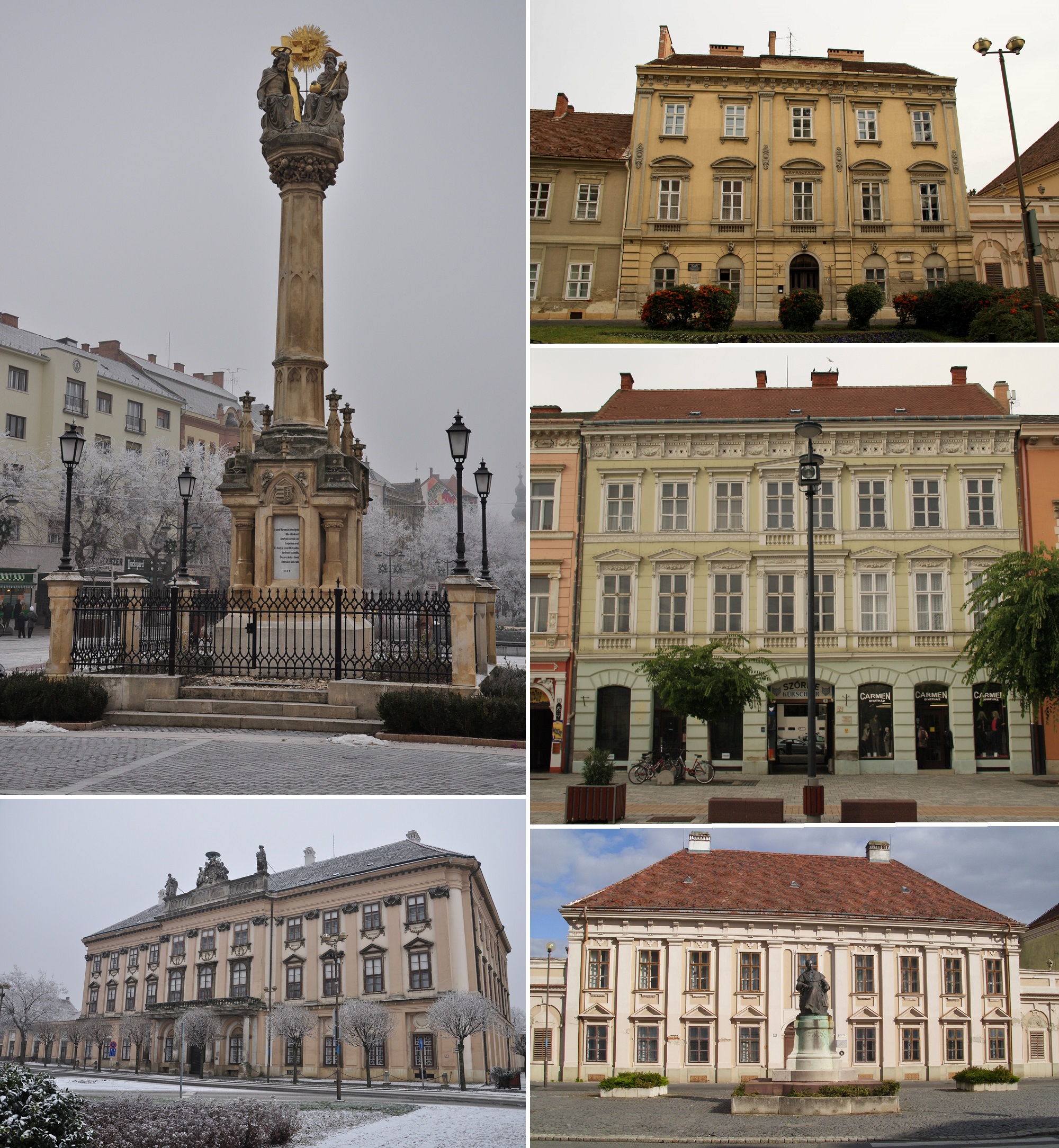 ✦ 85
✦ 85Getting Your Income Documentation Story Straight
Because there's no statutory income threshold for this visa, applicants sometimes assume the financial documentation piece is easy. It isn't - it's just different. What the Hungarian immigration authority wants to see at the visa stage is evidence that you can support yourself and any dependents without becoming a burden, and "sufficient financial resources" is deliberately vague language that puts the burden on you to make a compelling case.
In practice, this means your documentation needs to tell a coherent story. Bank statements, brokerage accounts, and income records should all point in the same direction. If you're a freelancer with variable monthly income, the question isn't whether you hit a specific number in any given month - it's whether your overall financial picture reads as stable. A single month of strong income surrounded by erratic figures will raise questions. Twelve months of consistent deposits, even if not enormous, reads better than three months of high income with gaps before and after.
The investment documentation is a separate layer on top of this. You'll need evidence of the planned investment at the visa stage - typically a draft subscription agreement for the fund route - before you've actually committed the capital. Some applicants find this sequencing awkward, because you're essentially showing intent to invest before the visa is approved. Getting this documentation in order early, ideally with the help of a firm that has done this specific application before, prevents the most common delays.
The Housing Requirement and Where People Go Wrong
Hungary requires that you demonstrate a place to stay - either owned or rented accommodation - as part of establishing your residence. This is straightforward in principle and surprisingly easy to mishandle in practice.
The most common mistake is treating a short-term rental or Airbnb booking as sufficient proof of accommodation for the residence permit stage. It isn't. You need a genuine rental contract or proof of property ownership registered at a Hungarian address, and that address becomes your official registered address with the immigration authority. If the lease is in someone else's name, or if the landlord isn't willing to register you as a tenant with the local municipality, you have a problem that no amount of other documentation will fix.
For the fund investment route, there's also a timing issue worth understanding. You're not buying property directly - you're investing in a fund - so you don't automatically have a Hungarian property address to register. That means you need to sort out your rental situation independently, and the rental market in Budapest, particularly for longer-term furnished apartments, can move quickly. Waiting until after visa approval to start looking for accommodation is a mistake a lot of people make.
Landlords in Budapest are generally accustomed to foreign tenants, but not all of them are comfortable with the official registration process that residence permit applications require. Finding one who is, before you're on a 93-day clock after entry, is worth doing early.
What Actually Happens After You Land
The gap between visa approval and having a functioning residence permit is where the process gets real, and it's the part that most pre-application research doesn't prepare you for. You enter Hungary on the guest investor visa, which gives you up to six months. Within roughly three months of entry, you need to complete the investment. Then, within 93 days of first entry, you need to file the residence permit application.
That's a compressed timeline for someone who is simultaneously getting settled in a new country, opening bank accounts, potentially enrolling children in school, and working through the actual mechanics of the fund subscription. The fund investment itself requires due diligence - you're placing USD 250,000 into a specific vehicle with specific terms, and rushing that decision because of a visa deadline is not a good position to be in. Ideally, you've done the fund selection and preliminary paperwork before you arrive, so that completing the investment after landing is a formality rather than a scramble.
Processing for the residence permit, once filed, reportedly runs four to eight weeks as of 2026 for a complete application. During that window you're in Hungary on your entry visa, technically in status but waiting. Practically speaking, this period is also when you're dealing with things like getting a Hungarian tax number, registering your address, and figuring out the local banking system - none of which are difficult individually, but they pile up.
The residence card itself, once issued, is valid for up to 10 years. That length of validity is unusual enough that it changes how you relate to the bureaucracy - you're not thinking about renewals every year or two, which is a genuine quality-of-life difference compared to most other residency paths.
The Long-Term Path - What PR and Citizenship Actually Require
The 10-year permit is long, but it isn't permanent residence, and it isn't citizenship. Those are separate processes with separate requirements, and the gap between what looks possible on paper and what's realistic in practice is wider than most people expect when they apply.
EU long-term residence status in Hungary generally requires five years of continuous lawful residence, stable income, and evidence of integration. Hungarian citizenship by naturalization typically requires eight years of continuous residence, a clean criminal record, proof of integration, and - this is the part that catches people - a Hungarian language exam and demonstrated knowledge of Hungarian history and constitutional structure. The language requirement is not a formality. Hungarian is difficult, and "demonstrated knowledge" means passing an actual exam, not just getting by in daily life.
There's also the question of what "continuous residence" means in practice for someone on a Guest Investor permit. If you're spending significant time outside Hungary - traveling for work, visiting family, spending summers elsewhere - you need to understand how those absences affect the continuity calculation. The rules on this aren't always applied uniformly, and practitioners report that documentation and record-keeping matter more than most applicants anticipate.
The honest framing is that the Guest Investor permit gives you a decade of stable legal presence in Hungary and Schengen access, which is valuable in its own right. Whether that decade turns into permanent residence and eventually citizenship depends on choices you make during it - about where you actually live, whether you learn the language, and how seriously you engage with the integration requirements.
Hungary vs. Portugal - A Judgment Call, Not a Comparison Chart
The Portugal Golden Visa comes up in almost every conversation about the Hungary program, and the comparison is worth thinking through carefully rather than resolving with a simple verdict.
Portugal's program has gone through significant changes in recent years - the direct real estate route was closed, the options have narrowed, and the regulatory environment has been in flux in ways that have frustrated applicants mid-process. Hungary's program has its own instability record: the direct real estate route was abolished in early 2025, less than a year after the program relaunched. Both programs have shown a willingness to change the rules with relatively short notice, which is a real consideration when you're committing capital on a five-year horizon.
The citizenship timeline is where Portugal has historically had an edge. Portugal allows naturalization after five years of legal residence, and the physical presence requirement is lower than you might expect - you don't need to be there full-time. Hungary's eight-year requirement, combined with the language exam, is a meaningfully higher bar for most Americans. If an EU passport is the actual goal, Portugal's path is shorter on paper, though the recent regulatory changes have complicated the practical picture.
What Hungary offers that Portugal doesn't is simplicity of tax structure - a flat 15% rate with no progressive brackets - and, frankly, a lower cost of living in the places most people actually want to live. Budapest is a functional European capital at a price point that's hard to match in Lisbon right now. Whether that matters to you depends on what you're optimizing for, and that's a question only you can answer.
Work Permissions
Application Steps
- 1
📋 Confirm investment route and amount
2-4 weeks
- 2
📋 Engage Hungarian legal counsel
2-4 weeks
- 3
📄 Prepare personal documents
2-3 weeks
- 4
📬 Submit via Enter Hungary portal
1-2 months
- 5
⏳ Collect residence permit in Hungary
1-2 months
Frequently Asked Questions
Click any question to expand the answer.
Ready to Apply?
Work with trusted visa specialists who handle the paperwork so you can focus on your move.
Get help with this visa →* We may earn a commission if you apply through our link
At a Glance
Last verified: July 15, 2026