Germany Job Seeker Visa
Germany · Europe
Data updated Sep 3, 2026
Processing Time
4 wks–12 wks
Difficulty
Moderate
Overview
Germany’s Job Seeker Visa is aimed at non‑EU nationals who want to spend several months in Germany hunting for a job, without needing an employment contract upfront. From a financial perspective, you must show at least USD 11,000 in savings; this is your core qualifying reality. That amount generally has to be liquid and accessible (blocked account or bank balance). The rules do not distinguish between income types in the law, but for this visa consulates usually want to see cash or near‑cash, not future ETF dividends or rental income, so a FIRE retiree with USD 500,000 in Vanguard funds still needs around USD 11,000 ring‑fenced for living costs.
No minimum monthly income is publicly specified for this visa, and there is no disclosed investment requirement, so you are not committing capital the way you would under something like Greece’s Golden Visa or Spain’s non‑lucrative visa. The trade‑off is that this status is explicitly for job search, not for running a location‑independent business or enjoying a long stay while living purely off passive income. Health insurance is mandatory from day one, which for many applicants means private expat insurance covering the full stay, and an apostille is required, but there is no FBI background check or medical exam according to the current program details.
Processing ranges from 4 to 12 weeks, so you are locking in 1–3 months of lead time before travel. This visa is renewable, but in practice consular information sheets often talk about a single continuous stay window, after which you must either convert to a work‑based residence title or leave. Because the published rules do not specify whether local work is formally permitted while job‑seeking, you should assume the safe baseline: you are there to find future employment, not to clock German‑sourced freelance income while on this status.
Nothing in the current fact pattern confirms whether time on the Job Seeker Visa counts toward permanent residency or citizenship, and there is no published number of years to PR or to naturalization tied to this status. For a 10‑year relocation plan, that’s the key limitation: you are using this as an entry ramp into a standard German residence permit, not as a long‑term standalone track. On the friction side, bureaucracy is relatively light (an apostille required, no FBI check, no interview required in the published requirements) and the bureaucracy score is just 1.125 / 5, but completeness of documentation is critical, consulates routinely reject applications that miss a single translation or financial proof.
This path makes the most sense if you have at least USD 11,000 in liquid savings, can handle a 4–12 week processing lag, and you are actively targeting German employment as your medium‑term plan. It is a poor fit if your intention is to live off ETF dividends and rental income for 5–10 years in Germany without ever taking local employment or if your primary need is a renewable, low‑touch residency comparable to Portugal’s D7 or Spain’s non‑lucrative visa.
Eligibility Requirements
Citizens of EU member states do not need Germany’s Job Seeker Visa at all, because they already hold free movement and work rights under EU law and can move to Germany without prior authorization. Everyone else — including Americans, Canadians, Australians, New Zealanders, Britons, and nationals of Asian, African, and Latin American countries — falls outside the EU/EEA framework and therefore uses routes like the Job Seeker Visa when they want to job‑hunt on the ground.
For this German program, EEA nationals from Norway, Iceland, and Liechtenstein, as well as Swiss citizens, are treated much like EU citizens and do not require a Job Seeker Visa. Post‑Brexit UK citizens, however, lost EU free movement and are now third‑country nationals for German immigration purposes, so they do use this visa category if they want to spend extended time in Germany searching for work. This distinction often surprises British applicants who were used to EU status before 2021.
Anyone who holds dual citizenship where one passport is from an EU or EEA country (or Switzerland) should apply to live and work in Germany using that EU/EEA/Swiss passport instead of pursuing the Job Seeker Visa. Entering as an EU free mover is not a loophole; it is the intended, legally superior route, with far less paperwork, no need to prove USD 11,000 in savings to a consulate, and a much more straightforward transition into long‑term residence and employment.
Requirements Checklist
• Identity: Valid passport; copy of passport data/biometric page; biometric passport photos.
• Application: Completed job seeker visa application form; signed declarations if applicable; appointment confirmation if required; visa fee payment receipt.
• Education: Degree certificate(s); academic transcripts; proof of degree recognition/equivalence in Germany (e.g. ANABIN printout or Zeugnisbewertung, if applicable).
• Employment: Curriculum vitae (CV) with full education and employment history; work experience certificates/reference letters relevant to intended employment in Germany.
• Financial: Proof of blocked account (Sperrkonto) showing required minimum funds for entire intended stay; or formal obligation letter (Verpflichtungserklärung) from sponsor in Germany; or recent bank statements if accepted by the mission.
• Accommodation: Hotel booking or rental contract; or invitation letter/formal obligation from host confirming accommodation.
• Health: Travel health insurance covering entire intended stay in Germany and valid in the Schengen area, meeting the minimum coverage required by the German mission.
• Purpose: Cover/motivation letter explaining purpose of stay, job-search plan, duration of stay, and plans if no job is found.
• Other: Passport-sized photos in required quantity if specified by mission; copies of all submitted documents.
Apostille required on official documents
Tax Information
Local tax regime and how it hits your income
Germany taxes tax residents on their worldwide income under a standard worldwide regime. That means once you become a German tax resident, your remote salary from a US or Canadian employer, ETF dividends from a foreign brokerage, US‑source pension distributions, and rental income from property abroad are all within the German tax net. Progressive federal rates run high in the upper brackets, and there is a solidarity surcharge and church tax for members, so effective rates often exceed US marginal rates for higher earners. Non‑residents, by contrast, are taxed only on German‑source income (e.g., a job with a German employer), so a short stay on a Job Seeker Visa without local earnings will often carry little or no German tax.
For FIRE readers, the critical point is capital gains on foreign investments. Germany taxes capital gains on shares, ETFs, and most financial assets, regardless of where the brokerage is located, once you are tax resident; these are not exempt under any territorial concept because Germany does not use a territorial system. In practice, gains and dividends are generally taxed at a flat investment income rate plus surcharges. If you remain non‑resident (for example, short visit under the 183‑day threshold and no German tax residence registration), then selling an index fund in a US brokerage while on a brief job‑search trip would not, on its own, create German capital gains tax exposure.
Tax residency is triggered primarily by presence and by establishing a habitual abode. The generally applied threshold is 183 days in a calendar year, but German law also looks at having a dwelling available that suggests an intention to reside. A Job Seeker Visa itself does not automatically make you a tax resident; tax residency flows from where you actually live and for how long. Once resident, you must register with the local Einwohnermeldeamt (residents’ registration office), obtain a Steueridentifikationsnummer (tax ID), and file annual income tax returns reporting worldwide income.
Germany operates various special regimes (for example, certain expat reliefs and inbound reliefs), but these are not structured as a broad non‑dom or flat‑tax system comparable to Italy’s lump‑sum or Portugal’s NHR and are not specifically tied to the Job Seeker Visa for this visa category. For someone arriving on this visa with USD 5,000 per month in foreign passive income, expect that income to be fully taxable once you are resident unless you qualify for a narrow exemption or treaty allocation.
Germany and the US do have an income tax treaty and a separate totalization agreement, but the treaty is in force, covering income tax and a separate totalization agreement, so you should confirm specific provisions before planning around it. In practice, treaties allocate taxing rights on pensions, dividends, and capital gains and prevent double taxation through credits, not through blanket exemptions. Social Security treatment and pension taxation frequently depend on detailed treaty articles, so you must read the current treaty text or work with an advisor, rather than assuming full exemption.
For US Citizens and Green Card Holders
US citizens and green card holders on a Germany Job Seeker Visa remain fully taxable by the US on worldwide income, regardless of German residence status. The Foreign Earned Income Exclusion (FEIE) on Form 2555 only shelters earned income — salary from a German or US employer, self‑employment, or consulting revenue, up to USD 132,900 as of 2026. It does not apply to ETF dividends, long‑term capital gains, US rental income, pension distributions, or Social Security. Because this visa encourages longer stays and potentially leads into regular residence, many users will aim to qualify under either the Physical Presence Test (330 full days abroad in any 12‑month window) or the Bona Fide Residence Test once they settle in Germany.
For someone who moves to Germany, becomes tax resident there, and lands a local or remote job, the Foreign Tax Credit (FTC) on Form 1116 is often more important than FEIE in the medium term. German tax on employment and investment income can exceed US tax, so in those years your German tax payments can offset your US liability on the same income. If your effective German rate on a given stream is 0% (for example, in a year you are not yet resident or you have no German‑taxable income), there is no foreign tax to credit, and Form 1116 cannot help; you would owe full US tax on your salary, dividends, and gains.
FBAR (FinCEN 114) kicks in once the aggregate value of your non‑US financial accounts, German bank accounts, a blocked account with EUR 11,000+, local brokerage, or even a Revolut‑style e‑money account based in the EU — exceeds USD 10,000 at any point during the year. This is separate from FATCA Form 8938, which has higher thresholds but overlapping reporting. Because this visa often requires a blocked account approaching the USD 11,000 level and a local bank for rent and utilities, US applicants almost automatically trigger FBAR, with non‑willful penalties starting around USD 16,700 per year as of 2026.
A sustainable setup here needs two professionals: a US CPA who specializes in expat files (Form 2555, Form 1116, FBAR, FATCA) and a German tax advisor (Steuerberater) to handle registration, payroll withholding, and annual returns. The USD 1,500–3,000 you will spend in the first year on advice is commonly recovered through avoiding late‑filing penalties, double taxation, and by making the right FEIE vs FTC decisions early rather than trying to correct them after an IRS or German audit.
Living in Germany
COL Index vs NYC
58.4
Monthly Cost (excl. rent)
$1,146
1BR Rent (City Center)
$943
Safety Index
60.6
Healthcare Index
71.9
Quality of Life Index
190.2
Time Zone
UTC+01:00
Capital
Berlin
Population
83.2M
Official Languages
German
Avg Internet Speed
102 Mbps
Public Transit Quality
Excellent
With a budget covering rent and living costs, you'd need roughly $2,089/mo for a comfortable single-person lifestyle in Germany.See how far your money goes →
🏙️ Best Cities in Germany for Expats
 ✦ 91
✦ 91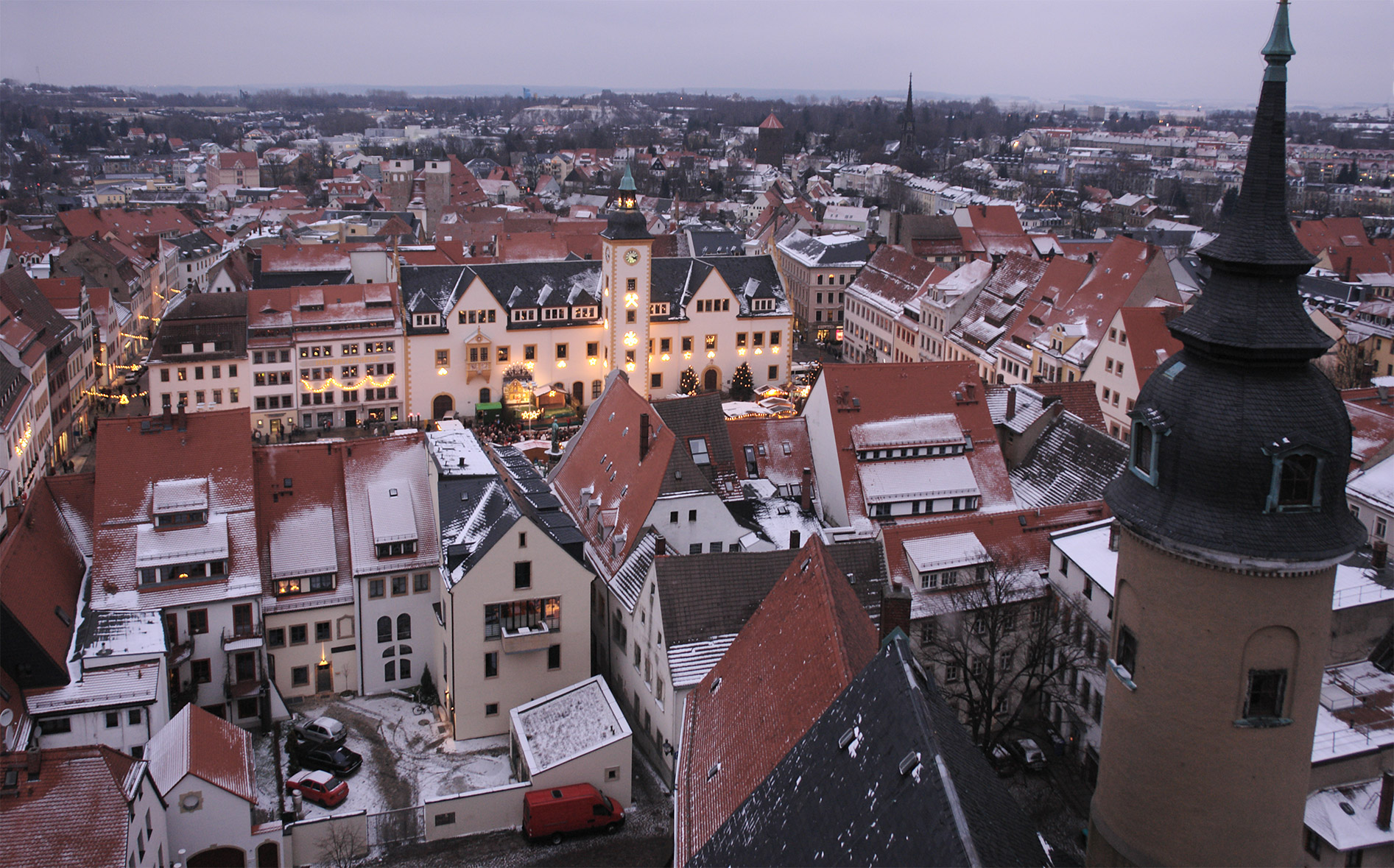 ✦ 75.3
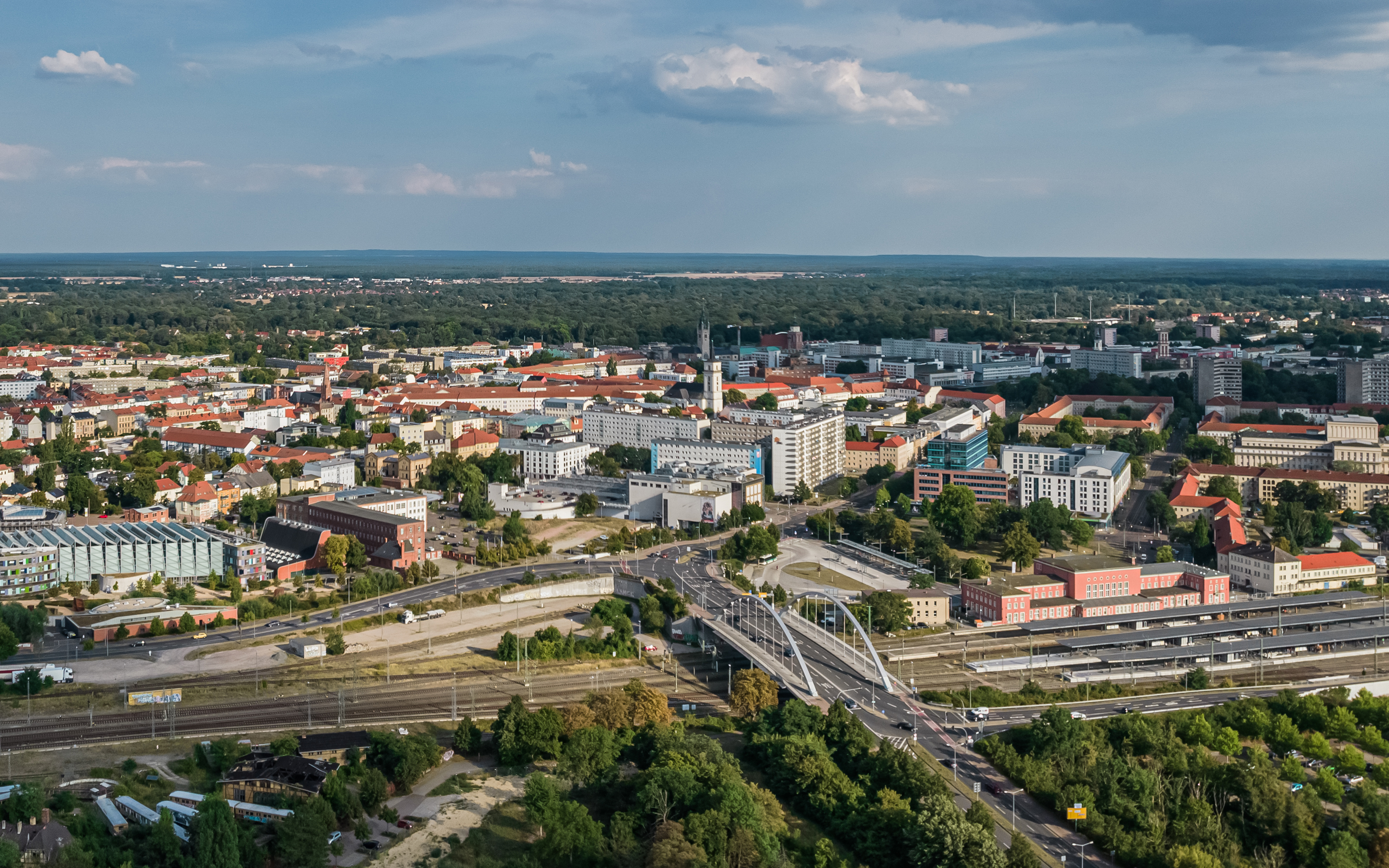 ✦ 76.1
 ✦ 79
✦ 79 ✦ 76.9
The housing and accommodation requirement, and how people get it wrong
The accommodation document exists to answer a narrow question: where will you actually be, physically, for the period this visa covers. It does not need to be permanent housing, and treating it like a lease application is the most common overcorrection people make. A hotel booking that covers your intended stay is usually enough, but a booking that covers two weeks when your stated job-search plan describes months creates a mismatch a reviewer will flag. The document has to agree with the story in your motivation letter, and inconsistency between the two is a more common rejection trigger than the document type itself.
The opposite mistake also happens: overcommitting to a rental contract signed sight-unseen from abroad, on an apartment you've never seen, because it felt like it would look more serious. It doesn't buy you much credibility with the consulate, and it exposes you to a lease you may need to break if the job search doesn't land where you expected. A short-term booking with an option to extend, or an invitation letter from a host confirming address and duration, usually does the job without locking you into anything.
Where this gets underrated is what happens after arrival. The address on your accommodation document becomes the address tied to your paperwork once you're in the country, and if you've booked something temporary with the plan to move once you land, you're creating a second administrative step you'll need to handle almost immediately. It's worth deciding before you leave whether you're optimizing the accommodation proof for the visa application or for the first month of actually living there, because those aren't always the same booking.
What actually happens after you land
This is the part people underestimate the most: the job seeker visa gets you into the country to look for work, and nothing about it authorizes you to start working the day you sign an offer. If you're one of the handful of nationalities, US citizens among them, who can enter Germany without applying for this visa in advance at all, you're allowed to arrive and apply for a work residence permit locally instead. That's a truly different sequencing decision than the one facing applicants who have to secure the visa from a consulate before travel, and it's worth deciding early which path you're actually on rather than assuming the standard process applies to you by default.
Either way, the moment that matters is the signed employment contract, not the job offer conversation. Once you have that in hand, the visa or entry permission that got you into the country stops being the relevant document, and what you're applying for next is a residence permit tied to that specific job. This is a separate application, with its own processing time, and it's the step where people who assumed the job seeker visa itself would just roll over into work authorization get caught off guard. Budget for a gap between the offer and the day you're legally allowed to start, and don't give notice on anything, financial or otherwise, until that permit is actually in hand rather than promised.
What the long-term path requires in practice
Nothing about the job search period itself moves you toward permanent residence. The clock that matters for long-term status starts once you're on a work-authorized permit tied to an actual job, not during the months you spend searching, interviewing, and waiting on responses. This matters for planning purposes more than people expect: two candidates who both eventually land jobs in Germany can be in very different positions years later depending on how long the search phase took, because that phase doesn't count toward anything.
It also means the job you land matters more than the job you were hoping for. A slower, less exciting offer that gets you onto a stable work permit sooner starts the residency clock earlier than holding out for a better title while your search window runs down. This is a harder call for someone coming from a well-paid remote role in the US, where the instinct is to hold out for a comparable salary. In Germany, the practical move is often to take the first legitimate offer that gets you converted to a real permit, and treat career optimization as something to revisit once your status is secure rather than something to solve during the search itself.
The judgment call against staying remote somewhere else
The honest alternative to this visa, for most people considering it, isn't another country's job seeker program. It's not moving through a job-search visa at all, and instead taking a digital nomad or remote-income visa somewhere that lets you keep your US clients or your US salary while you live abroad. That path doesn't require giving up your income to go looking for local work, and it doesn't put a clock on how long you can stay before something has to change.
The German job seeker visa asks for something different and more demanding: a bet that you can find employment in the German market within a fixed window, using savings to fund the search rather than continuing income. That's the right call if what you actually want is to work inside the German economy long-term, build toward permanent residence there, and access a job market and a tax and social system that a remote-income visa never puts you inside. It's the wrong call if what you actually want is simply to live in Germany while keeping the income and client relationships you already have, in which case you're solving a problem this visa isn't built to solve, and you'll spend months on a job search you didn't need to run.
The decision point isn't really about savings or paperwork. It's about whether the thing you're optimizing for is being employed in Germany specifically, or just living there. Those two goals point to different visas, and choosing this one because it's the most visible option for Germany, rather than because it matches what you actually want, is where a lot of otherwise well-prepared applicants end up in the wrong process for their own goals.
Work Permissions
What's typically permitted:
Application Steps
- 1
📋 Research eligibility and requirements
1-2 days
- 2
📄 Gather required documents
1-2 weeks
- 3
📅 Book consulate appointment
1-4 weeks
- 4
📬 Submit visa application
Same day
- 5
⏳ Wait for processing and approval
4-12 weeks
- 6
🏛️ Enter Germany and register
1-2 weeks
Frequently Asked Questions
Click any question to expand the answer.
Ready to Apply?
Work with trusted visa specialists who handle the paperwork so you can focus on your move.
Get help with this visa →* We may earn a commission if you apply through our link
At a Glance
Last verified: July 15, 2026