Andorra Active Residency (Investor)
Andorra · Europe
Data updated Sep 3, 2026
Difficulty
Moderate
Overview
The active residency investor category in Andorra is built around a specific premise: you are starting or substantially investing in a real business that operates inside Andorra, and your residency follows from that activity, not the other way around. The way it gets discussed online often inverts this - "invest in Andorra, get residency, pay almost no tax" - and that framing isn't wrong exactly, but it skips the part where the business has to be genuine. Andorran immigration authorities review these applications carefully, and what they're looking for is economic activity that contributes something to a country of 77,000 people, not a holding structure designed to produce a residency card. The commitment you're actually making is to run a business in one of the smallest countries in Europe, which is a real thing, not an administrative formality.
The profile that moves through this cleanly is a European entrepreneur with actual commercial intent - someone who has identified a business opportunity in Andorra or wants to headquarter an existing operation there for legitimate structural reasons, has the capital the investment threshold requires, and is prepared to spend the time in country that active residency demands. The profile that struggles is the remote worker who sees this as a tax optimization vehicle and builds the business requirement around their existing income structure after the fact; the application reviewers have seen that pattern repeatedly and the business case needs to be credible before the application goes in. The profile in the wrong category entirely is anyone whose income comes exclusively from a foreign employer with no intent to conduct business inside Andorra - that's a different residency category, and applying under the investor route without genuine business activity is a fast path to a rejection.
The thing most applicants don't reckon with before they start: active residency requires genuine presence. The 183-day threshold isn't a technicality you can engineer around - it's the threshold at which Andorra considers you a tax resident, and for the active residency category the expectation is that your business is actually being run from there. People who imagine spending a few months in Andorra while continuing to operate primarily from elsewhere find that the residency and the business start to feel like two separate obligations instead of one coherent move.
What this visa unlocks, when the business case is real, is something that's very difficult to find elsewhere in Europe: a company domiciled in a stable, well-regulated Western European jurisdiction, subject to a maximum 10% corporate and personal income tax rate, with no wealth tax and broadly no capital gains tax on financial investments, in a country that has been a serious legal and financial base for European business for decades. That combination exists almost nowhere else at this scale.
Eligibility Requirements
Min Age
18 yrs
Physical Presence
183 days/yr
Requirements Checklist
Valid passport with at least 6 months validity
Proof of sufficient income (bank statements, employment contract)
Health insurance covering the entire stay
Clean criminal background check
Completed application form with all required documents
Proof of accommodation in the country
Tax Information
How Andorra Taxes Residents Running a Business There
Andorra taxes residents on worldwide income, which means your salary drawn from your Andorran company, any freelance income, foreign dividends, brokerage gains, and rental income from property you still own back in the US all fall within scope from the moment you establish tax residency. That residency triggers at 183 days in Andorra in a calendar year, or earlier if Andorra becomes the clear center of your economic life - which, for someone operating a business incorporated there, it plausibly does from the day the company starts trading. The personal income tax brackets run at 0% on the first €24,000 of annual income, 5% from €24,001 to €40,000, and 10% on everything above that, with no bracket above 10% regardless of income level. Corporate tax follows the same ceiling. There is no wealth tax and no inheritance tax. Capital gains on most financial instruments held for investment purposes are taxed at a flat 10% rate under IRPF, though the specific treatment of gains generated through your Andorran corporate structure should be confirmed with a local advisor rather than assumed.
There Is No Special Regime to Elect Into
Andorra has no NHR-style program, no flat-rate expat scheme, no registration window you need to hit in your first year of residency to access preferential treatment. The 10% personal and corporate ceiling is what every resident gets, and it's the system itself rather than an exception to something higher. For active residency investors whose income flows through an Andorran entity, the effective rate on profits extracted as salary depends on how that salary sits within the personal income brackets; dividend treatment from a resident-owned Andorran company is fully exempt from IRPF, with no minimum shareholding or holding-period requirement, but should still be confirmed and should be confirmed with an Andorran commercialista before you build your income extraction strategy around any specific assumption.
What the IRS Still Wants From You
Relocating to a 10% tax jurisdiction doesn't close your US filing obligation. American citizens and green card holders file federal returns on worldwide income regardless of where they live or where their company is domiciled. The Foreign Earned Income Exclusion covers earned income only - salary drawn from your Andorran company, active freelance payments - up to $132,900 for 2026. It does not cover dividends, capital gains, rental income, or passive investment returns, so the portion of your income structure that doesn't qualify as earned income remains fully exposed to US taxation at ordinary rates, offset only by whatever Foreign Tax Credit applies to Andorran tax already paid on the same income. There is no US-Andorra tax treaty, which means edge cases that bilateral agreements typically resolve - income classification disputes, certain pension treatments, cross-border structure questions - get worked through under domestic law on both sides, and that requires planning rather than assumption. Once you open an Andorran bank account, which the business incorporation and residency process effectively requires, FinCEN 114 is mandatory if combined foreign account balances exceed $10,000 at any point during the year. Non-willful failure to file carries a statutory $10,000 penalty per violation, adjusted for inflation to approximately $16,700 as of 2026.
What First-Year Advice Actually Costs and What It Prevents
For Americans setting up under the active investor category, the mistakes that happen without proper professional advice cluster in specific places. Choosing the wrong FEIE election method - Bona Fide Residence versus Physical Presence Test - can cost you the exclusion for a partial year you were entitled to claim. Structuring your income extraction from the Andorran company in a way that creates unexpected US passive income characterization, particularly under PFIC rules for certain investment structures, is a problem that surfaces on year-two or year-three returns and requires unwinding earlier decisions that were never reviewed. And FBAR non-filing for accounts opened as part of the company formation process - accounts the visa itself required you to open - is the penalty exposure that catches people who assumed the account didn't qualify or didn't realize it was their obligation to report. A US expat CPA with non-treaty jurisdiction experience combined with an Andorran tax advisor typically runs $1,500 to $3,000 in combined first-year advisory costs as of 2026, covering the income extraction structure, FEIE election, FBAR compliance, and how the corporate layer interacts with your personal US return. The business residency path in Andorra can run a decade or more; year one is when the structural decisions get made, and they're significantly harder to correct later than to get right from the start.
Living in Andorra
COL Index vs NYC
74.0
Monthly Cost (excl. rent)
$877
1BR Rent (City Center)
$1,315
Safety Index
82.6
Healthcare Index
58.3
Quality of Life Index
188.6
Time Zone
UTC+01:00
Capital
Andorra la Vella
Population
77.3K
Official Languages
Catalan
Avg Internet Speed
240 Mbps
Public Transit Quality
Good
With a budget covering rent and living costs, you'd need roughly $2,192/mo for a comfortable single-person lifestyle in Andorra.See how far your money goes →
🏙️ Best Cities in Andorra for Investors & FIRE Seekers
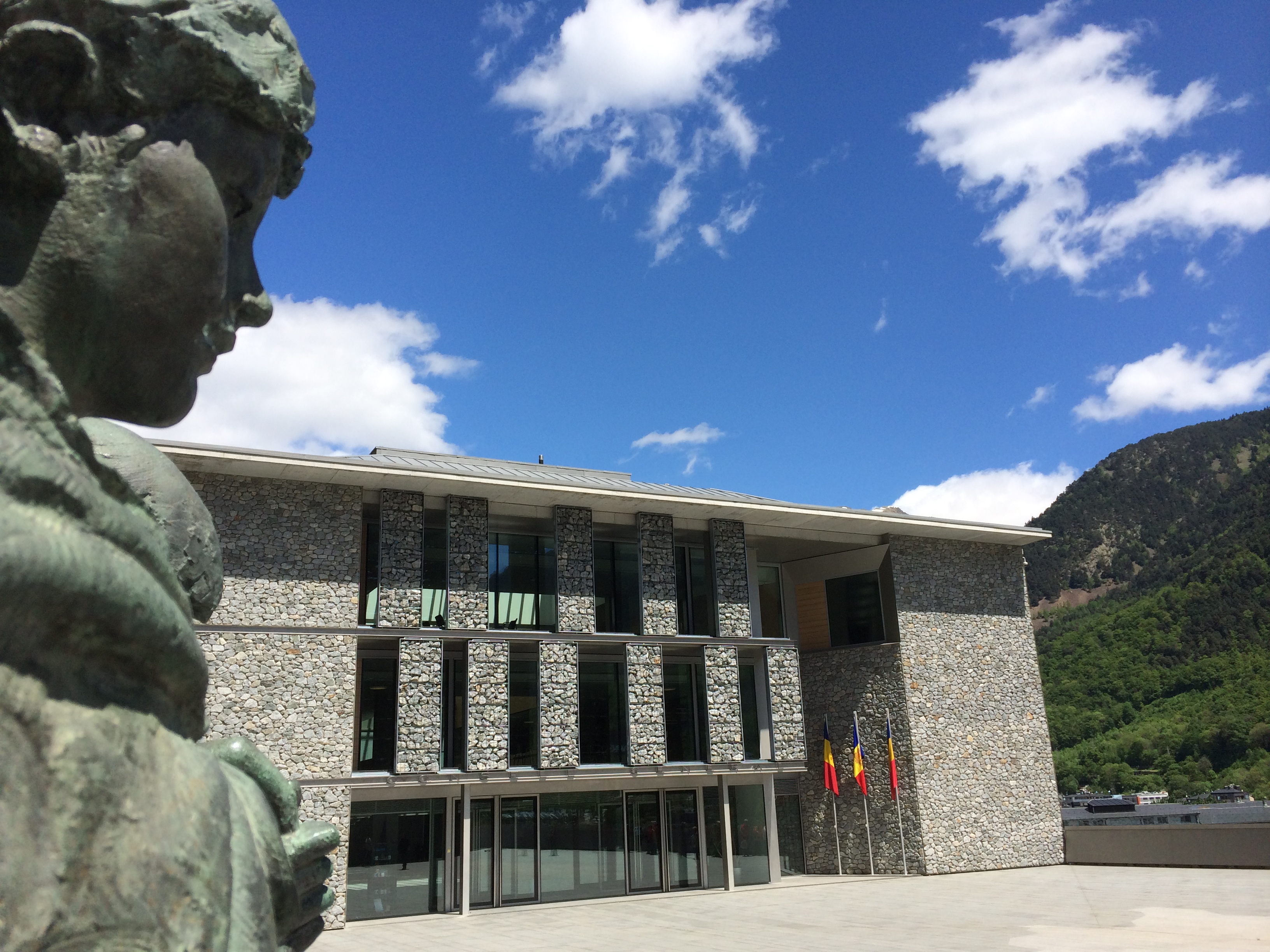 69
69Getting the Business Case Right Before You Apply
The investment threshold is a number you can find on the page, but the business case is the part that determines whether the application succeeds. Andorra's government reviews investor residency applications with an eye on whether the business is actually going to operate there - employing people, generating commercial activity, paying Andorran business taxes - and the applications that fail are usually ones where the business exists on paper without a coherent story about what it actually does inside Andorra.
Before the application stage, the question worth sitting with is whether your business idea or existing operation has a genuine reason to be headquartered in Andorra versus being structured there for the tax rate. Those aren't mutually exclusive, but Andorra is a real economy with a real services sector, tourism industry, and retail base, and a business that fits into that context reads differently in a review than a consulting company with no Andorran clients, no Andorran employees, and revenue that flows entirely from abroad. Some immigration advisors will help you build a structure that technically satisfies the requirements; what matters is whether it holds up to scrutiny.
The investment itself needs to be documented in detail - company formation records, evidence of capital contribution, the business plan - and the sequence matters. Most applicants work with an Andorran lawyer to establish the company before submitting the residency application, because the residency is contingent on the business existing and being viable. Trying to do both simultaneously or in the wrong order adds delay and sometimes creates gaps in documentation that require explanation.
The Housing Situation in a Country This Size
Finding housing as part of an investor residency application in Andorra involves the same basic challenge as the passive category - you need a genuine lease or owned property before residency is established - but with the additional consideration that your business address and your residence address are both going to be in a very small country where the two are often uncomfortably close to each other.
Andorra la Vella has the most commercial infrastructure and the highest rents. Escaldes-Engordany runs adjacent to it and functions similarly. If the business will have an office - which many investor applications benefit from having, since it reinforces the genuine activity argument - the question of where to put it relative to where you plan to live is worth thinking through before you arrive. The outer parishes are cheaper and quieter, and some business types suit them well; others don't.
Rental agreements need to be formal and registered. The informal arrangements that are common enough in some parts of southern Europe are harder to sustain in Andorra, where the administrative requirements around residency registration are taken seriously and an undocumented housing situation creates problems at the commune level.
What Happens Between Approval and Having a Real Permit
Approval in principle from the immigration authorities is not the end of the process. After that comes the in-person registration at the commune, the medical examination, the permís de residència application itself, and the bank account opening - which, for Americans in particular, involves a due diligence process that has historically been more involved than most people expect. Andorran banks are small, they take FATCA compliance seriously, and a new American client with a recently formed Andorran company triggers review that can take weeks.
The business also needs to be operationally real by the time the residency is issued, which means if you've formed the company but haven't started trading, hiring, or generating activity, the period between company formation and business launch needs to be managed carefully. Some applicants spend this window setting up the company, signing a lease on commercial space, opening accounts, and doing the preliminary work - which is fine, but it means you're paying for Andorran costs before the business is generating Andorran revenue.
None of this is unusual for business immigration anywhere. Andorra's process is not particularly slow or difficult by European standards. But the expectation that the permit arrives and life begins is one that takes longer to materialize than people who haven't done this before tend to assume.
The Permanent Residency and Citizenship Path
Permanent residency in Andorra follows after a sustained period of legal continuous residence and compliance, but the active residency category does not itself count toward permanent residency eligibility. Citizenship timelines are longer and require, among other things, renouncing other citizenships in most cases - a clause that American applicants often read quickly and then don't think about again until it becomes relevant much later.
What continuous residence actually means in practice is that your life is actually centered in Andorra for those years, not that you're there periodically to maintain a residency card. Extended absences can affect eligibility, and the expectation that you'll be running an Andorran business throughout that period means the long-term path requires the business to remain viable for years, not months. People who move to Andorra with an investor residency, build a business that works for two or three years, and then want to wind it down while maintaining residency find that the business and the visa are more tightly coupled than they anticipated.
How This Compares to Running a Business From Portugal or Spain
The honest comparison isn't other Andorran visa categories - it's whether to base the business in Andorra versus a larger EU country with competitive tax structures for new residents. Portugal's NHR replacement and Spain's Beckham Law both offer meaningfully reduced personal tax rates for qualifying new residents, in larger economies with larger markets, EU membership, and more international infrastructure. For a business that sells primarily to EU customers or needs EU regulatory standing, those jurisdictions do things Andorra legally cannot - including EU passporting for financial services and access to the EU single market as a domestic operation rather than a third country.
What Andorra offers that Spain and Portugal don't is the ceiling. The maximum personal income tax rate of 10% applies to everything above €40,000; there's no bracket above it. For a profitable business with a high net income, the difference between Andorra's ceiling and Spain's top rate - which reaches 47% at the national level before regional additions - is the math that makes the smaller country worth the constraints. The question is whether your business can actually operate from a country of 77,000 people, in a jurisdiction outside the EU, and still reach its market effectively. For some business types the answer is clearly yes. For others it requires more thought than the tax comparison alone suggests.
Work Permissions
Application Steps
- 1
📋 Confirm investment category and amount
2-4 weeks
- 2
📄 Engage Andorran lawyer and structure investment
1-3 months
- 3
📄 Prepare personal documentation
2-3 weeks
- 4
⏳ Submit application and deposit AFA bond
3-4 months
Frequently Asked Questions
Click any question to expand the answer.
Ready to Apply?
Work with trusted visa specialists who handle the paperwork so you can focus on your move.
Get help with this visa →* We may earn a commission if you apply through our link
At a Glance
Last verified: May 21, 2026