Plovdiv vs Tbilisi: Europe's Two Cheapest Expat Cities Compared (2026)
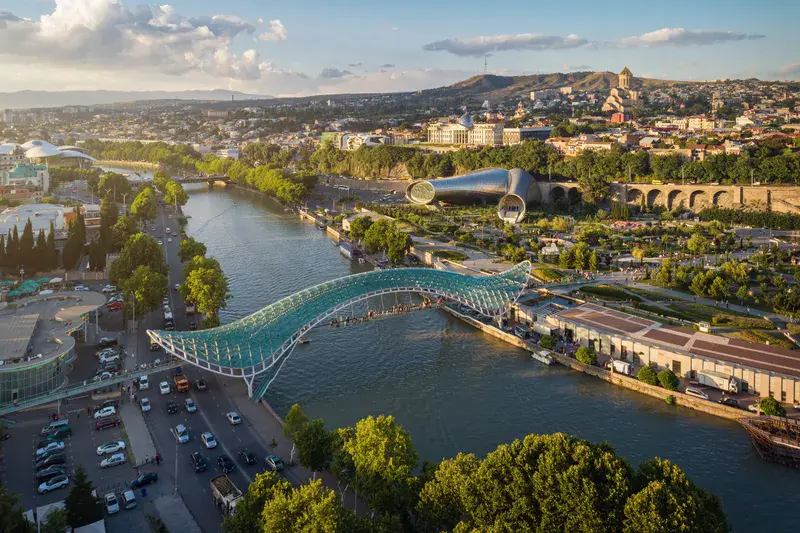
📊 Quick Comparison
Monthly cost (comfortable, 1 person) | ~$1,030 | ~$1,212 |
1BR rent, center | $496/mo | $700/mo |
Utilities | $104/mo | $82/mo |
Internet speed | 70 Mbps | 40.2 Mbps |
Safety Index | 70/100 | 67/100 |
Crime Index | 30/100 | 33/100 |
Digital Nomad Score | 60/100 | 90/100 |
FIRE Score | 75/100 | 81/100 |
Walkability | 75/100 | 75/100 |
Air Quality (AQI) | 58 | 72 |
Climate (summer / winter) | 31°C / 0°C | 31°C / 0°C |
Expat community | Medium | Large & Active |
English proficiency | Common in tourist areas | Common in tourist areas |
Best neighborhoods | Kapana, Old Town | Vake, Vera, Saburtalo |
Population | 329,489 | 1,258,526 |
Coworking spaces nearby | 4 | 29 |
Coworking availability | Moderate | Abundant |
Want to run these numbers for your specific income? Compare Plovdiv and Tbilisi directly →
⚙️ Before the Numbers, Run Your Numbers
These two cities affect your FIRE timeline differently. See the exact impact for your situation:
- Compare these cities side-by-side → — plug in both city names and see every metric head-to-head
- Geo-Arbitrage Calculator — see how your specific income and expenses map to each city's costs
- FIRE Calculator — how many years does each city shave off your timeline?
Quick read: most people save around $2,470/month in Plovdiv compared to a typical US city spending $3,500. Tbilisi costs roughly $182/month more than Plovdiv but delivers a coworking scene seven times larger, a borderline visa-free residency policy, and a food culture that makes Plovdiv's café options look like airport dining.
🏘️ Neighborhoods: Where You'll Actually Live
The real difference between these two cities isn't in the headline cost — it's in the texture of daily life depending on which block you rent on.
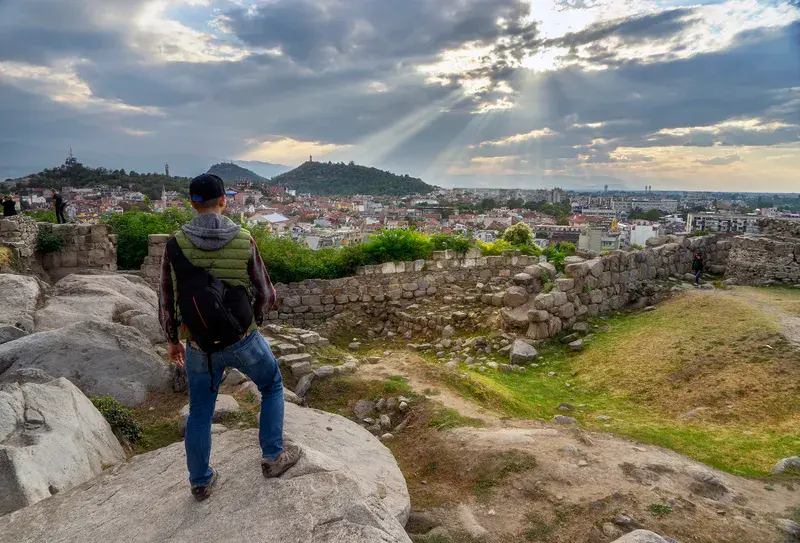
Plovdiv organizes its expat life around two zones. The Old Town (Stария Град) is a UNESCO-listed warren of Bulgarian Revival architecture built into the side of Nebet Tepe hill — renting there means cobblestones outside your door, zero ground-floor parking, and neighbors who have lived there for thirty years. It's beautiful and genuinely historic, but it's also tourist-facing in summer, which means noise, day-trippers photographing your breakfast, and pricing that creeps above the city average. The better long-term choice for most expats is Kapana, the arts quarter immediately below the Old Town. A former craftsmen's district turned creative neighborhood, Kapana gives you the walkable character of the Old Town without the tourist overlay — independent cafés, local art studios, small bars, and rents that sit closer to the city average than the premium the Old Town commands. If you're staying more than three months, most experienced expats in Plovdiv end up in Kapana. Avoid Stolipinovo, a large neighborhood in the eastern part of the city, which has elevated safety concerns compared to the rest of Plovdiv.
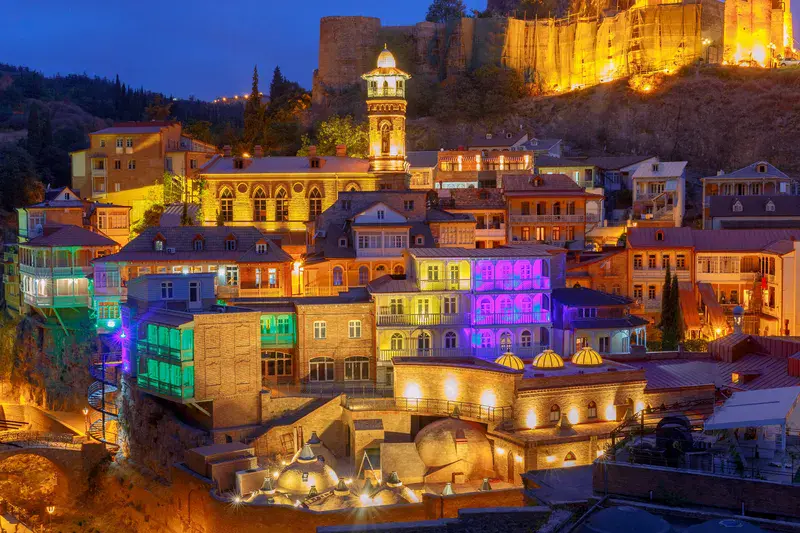
Tbilisi is more complicated, partly because the 2022–2024 wave of Russian and Ukrainian relocation reshaped entire districts. Vera and Vake are where most nomads who've been here a few months land — Vera for the cafés and social density (Impact Hub Tbilisi is in Vera), Vake for quieter streets and a slightly more established feel. Saburtalo is where you end up when you've been in Tbilisi long enough to want a bigger apartment at lower rent, with easier parking and less tourist traffic. The Old Town (Abanotubani and Narikala area) is worth visiting daily; renting there is romantic for about two weeks before the uneven streets and ancient plumbing convince you otherwise. The Gldani and Isani districts on the city's eastern fringe are not areas where most expats end up, and for good reason — distance from the nomad infrastructure and limited English in daily situations make them a harder base.
The neighborhood call: Plovdiv's Kapana is a more contained, walkable choice for someone who wants to be embedded in a neighborhood. Tbilisi's Vera/Vake corridor has more variety, more cafés with fast wifi, and a bigger social scene — but the city requires more navigation knowledge to get right.
💻 The Workday
The 30 Mbps gap between these two cities is real and it matters for specific use cases, but it's not the headline.
Plovdiv posts 70 Mbps average speeds — fast enough for video calls, screen sharing, and async uploads without thinking about it. The city has four coworking spaces. Beehive Coworking Plovdiv (around $130/month) is the most established option with a real community feel; Coworking by MOVE.BG Plovdiv runs cheaper at $95 and has a startup-community angle. Four spaces for a city of 330,000 is a thin infrastructure for anyone who relies on coworking socially as much as practically — you'll see the same twenty people every day inside of a week. That's not a problem if you work alone well; it's a problem if your work depends on bumping into people in your field. The time zone (EET, UTC+2) aligns cleanly with European client hours and puts you 7–8 hours ahead of US Eastern — morning calls work, afternoon calls in US time are a 10 PM situation.
Tbilisi runs 40.2 Mbps average — slower than Plovdiv, though in practice 40 Mbps handles most remote work without issue. Where Tbilisi pulls ahead decisively is coworking infrastructure: 29 spaces compared to Plovdiv's four. Terminal has multiple locations across the city (Vake and Saburtalo included) at around $180/month and serves the professional end of the nomad community. LOKAL at $120/month skews younger and more social. The density means that when you want to work somewhere other than your apartment, you have real options within walking distance of wherever you're staying. Tbilisi's time zone (GET, UTC+4) is the workday complication: US East Coast calls land at 9 PM at the earliest. If your clients are primarily European, this is manageable. If you have a standing US team call at 3 PM EST, you're working until midnight.
The workday call: Plovdiv for European-client remote workers who want faster raw speeds and a quieter work environment. Tbilisi for anyone who needs coworking density, a larger nomad network, or whose income is location-independent with no fixed call hours. If coworking is central to how you work and connect, Plovdiv's four spaces will feel like a constraint after month two. To understand how location-independent income performs in each city, run your specific numbers through the geo-arbitrage calculator above.
💰 The Real Monthly Cost
These are honest assumptions for a single person living comfortably — not the budget floor, not the "technically possible on $600" number that requires eating instant noodles.
Monthly cost in Plovdiv (comfortable):
- Rent (1BR, Kapana or central): $496
- Utilities (electricity, water, internet): $104
- Food (mix of local restaurants and groceries): $300
- Transport (bus pass + occasional ride-share): $50
- Misc (gym at ~$39, going out, weekend trips): $80
- Total: ~$1,030/month
Monthly cost in Tbilisi (same lifestyle):
- Rent (1BR, Vera or Vake): $700
- Utilities (electricity, water, internet): $82
- Food (local Georgian restaurants + groceries): $300
- Transport (metro + Bolt app rides): $50
- Misc (gym at ~$59, going out, weekend trips): $80
- Total: ~$1,212/month
Annual difference: $2,184/year more expensive to live comparably in Tbilisi.
Both cities will save a US expat spending $3,500/month at home serious money — $2,470/month in Plovdiv, $2,288/month in Tbilisi. If you're running FIRE numbers, Tbilisi's FIRE Score of 81/100 reflects a genuinely strong case for early retirement there. Plovdiv's FIRE scores are not displaying correctly on the city page at time of writing — see the fact-check note below.
For a deeper look at how these cost differences compound into years of work saved, the FIRE Calculator lets you model your specific portfolio and spending rate for each city. The Retire Abroad on $1,000/Month article covers the practical floor for both cities if you want to see what the budget-minimum scenario actually looks like.
🧳 The Expat Community (And What Kind)
This is where the two cities diverge most sharply, and where the "same budget" framing starts to feel misleading.
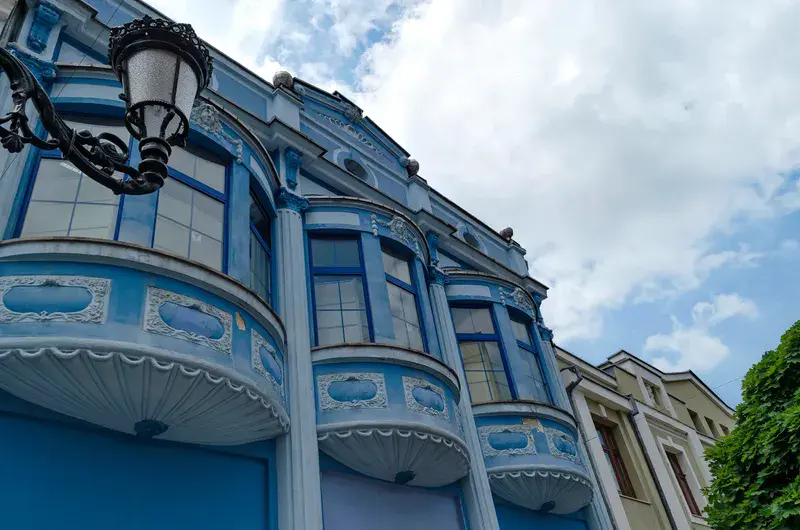
Plovdiv has a medium-sized expat community that's genuinely small by practical standards — think 500–800 foreign residents who interact regularly, mostly remote workers and a modest contingent of retirees drawn by Bulgaria's EU membership and low costs. The city's student population (Plovdiv University has around 20,000 students) creates social energy and keeps the café scene from feeling dormant, but it's not an expat social scene the way certain European capitals have one. English works well in Kapana cafés, at coworking spaces, and in the Old Town tourist corridor — it becomes unreliable quickly once you're dealing with landlords, utility companies, or local bureaucracy. Bulgarian uses the Cyrillic alphabet, which creates a real friction point even for simple tasks like reading a menu in a neighborhood restaurant that doesn't cater to tourists. The community that does exist in Plovdiv tends to be people who've made a deliberate choice to live somewhere quiet and affordable — less transient, more settled.
Tbilisi is a different proposition entirely. The post-2022 wave of Russian and Ukrainian relocation turned the city into one of the most internationally dense cities in the Caucasus — the expat community is large, active, and complicated. On one hand, this means a functioning nomad café circuit in Vera and Vake, more English everywhere, more international restaurants, and a constant stream of people to meet. On the other, it means certain neighborhoods have lost the Georgian character that made Tbilisi interesting in the first place, and rents in nomad-popular areas have climbed as a result. The Georgians who remain in these neighborhoods are not uniformly happy about the transformation. If you arrived in Tbilisi in 2020, you found something different from what you find now. The Georgia country guide covers this context in more detail.
The community call: If you want a large, ready-made international social scene, Tbilisi delivers it out of the box. Plovdiv requires more effort to find your people, but the people you find tend to be less transient. For retirees specifically, Plovdiv's quieter pace and EU-anchored stability may feel more sustainable long-term. For newer digital nomads who want community immediately, Tbilisi wins easily.
🛡️ RELOCATION SECURITY
Peace of mind in the Balkans & Caucasus
While Plovdiv and Tbilisi are statistically safe, your home health insurance likely won't cover you in Bulgaria or Georgia. We recommend SafetyWing for this specific move because it covers medical emergencies, travel delays, and evacuations with a simple monthly subscription you can start or stop at any time. It's the standard for expats in this region.
Affiliate link: We may earn a commission at no extra cost to you. Affiliate Disclosure
🛡️ Safety — Specifically
These two cities have similar safety profiles at the headline level, but the texture of the concern is completely different.
Plovdiv posts a Safety Index of 70/100 and Crime Index of 30/100. For a city of 330,000, that's a genuinely low-crime environment. The main risks are petty theft and pickpocketing in crowded areas — the central market area and busy bus routes in particular — and the occasional taxi overcharging targeting obvious tourists. Kapana and the Old Town are well-policed and walkable at night. Stolipinovo is the district to avoid after dark; it's far enough from the expat center that most residents never have reason to be there. For anyone arriving from a major US city, Plovdiv's daily safety reality will feel noticeably relaxed.
Tbilisi comes in at Safety Index 67/100, Crime Index 33/100 — slightly less safe than Plovdiv by the numbers, and the character of the concern is different. Petty theft happens in crowded transit situations (Metekhi Square, marshrutkas — the shared minibus system), and nightlife districts see more opportunistic crime late at night. The more significant consideration is geopolitical: Georgia's unresolved South Ossetia conflict and proximity to Russia sit in the background of daily life. This poses minimal daily risk in Tbilisi itself, but it's a variable that doesn't exist in Bulgaria. Most expats don't think about it day-to-day; it becomes relevant if you're planning long-term residency and want political stability in your FIRE planning. Use registered taxi apps (Bolt is the standard in Tbilisi) rather than hailing street cabs.
The safety call: Plovdiv is marginally safer by the numbers and has zero geopolitical variables. Tbilisi is safe for daily life with standard urban awareness, but the background context is worth factoring into long-term planning.
🌤️ Climate: What the Tourism Brochure Leaves Out
Here's an uncomfortable fact: these two cities have nearly identical climate data on paper. Both hit 31°C in summer, both drop to 0°C in winter, both register 62% average humidity. If you pick your destination based on climate, you'll need to go deeper than the numbers.
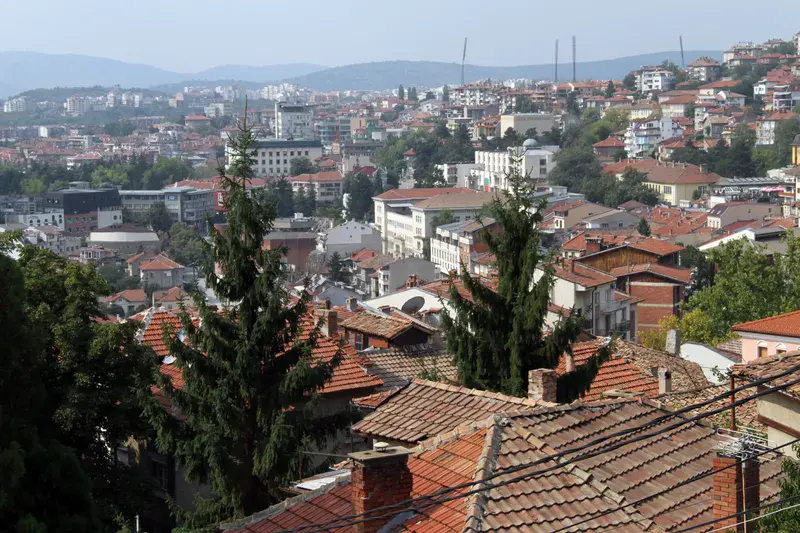
Plovdiv sits at 160m elevation in the Thracian Plain — a broad agricultural valley that has no geographic buffer against Balkan winter. When temperatures drop to 0°C there, they stay there, and the humidity at 62% means the cold is damp rather than crisp. Summers are hot and genuinely sunny — July and August push 30°C+ regularly, and the valley location means little wind to moderate it. The city's Air Quality Index of 58 (significantly above the WHO guideline of 15) is partly a winter heating story: older buildings and proximity to industrial zones push particulate matter up in the colder months. The best months for Plovdiv living are May–June and September — warm, lower humidity, and air quality at its best.
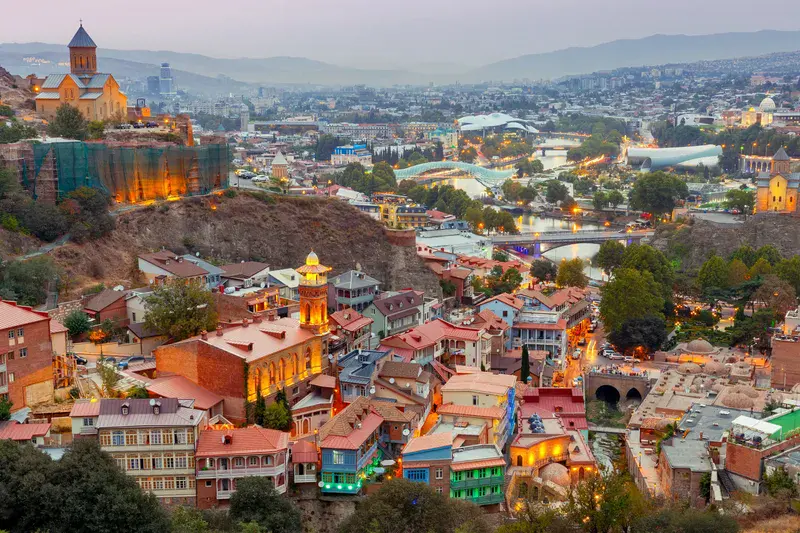
Tbilisi at 489m elevation has similar summer temperatures but with more evening relief thanks to Mtatsminda Mountain sitting directly above the city's western edge. The bigger climate story in Tbilisi is air quality: AQI of 72, worse than Plovdiv, driven primarily by the city's notorious traffic congestion. If you're sensitive to air pollution, Tbilisi's traffic density (the Car-Free Score of 10/100 is not a mistake — this city is highly car-dependent) means the AQI problem is worse in practice than the headline figure. The city's best months are April and September–October; summers are hot and hazy, winters are grey and damp rather than severely cold. The Kazbegi road trip — a four-hour drive north into the Greater Caucasus mountains — is one of the most dramatic day trips available from any cheap expat city in Europe, and it's weekend-accessible from Tbilisi.
The climate call: Marginally similar on paper, meaningfully different in practice. Plovdiv wins on air quality. Tbilisi wins on evening summer temperatures and weekend escape options. Neither city is a climate relocation destination — both are cold enough in winter to require proper heating budgets.
🤐 What Nobody Tells You
About Plovdiv: The Cyrillic alphabet problem is more significant than most pre-arrival research suggests. Bulgaria uses Cyrillic across essentially all official signage, menus outside the tourist corridor, utility bills, and government documents. You can absolutely live in Plovdiv without reading Bulgarian — but you'll be dependent on Google Translate for basic tasks for longer than you expect, and the learning curve for the script is steeper than, say, learning a Latin-alphabet language's basics. The expat community doesn't have the density to absorb you if things go wrong; you'll need to develop local contacts or pay a Bulgarian-speaking helper for bureaucratic tasks. Also: the local salary average of $1,122/month means you're in a city where Western income creates significant power imbalances — not a safety concern, but worth being aware of as a social dynamic. This is also why Bulgaria's long-term residency path matters: EU membership gives you more legal stability than most cheap-city alternatives.
✈️ SCOUTING TRIP
Book the "Dual-City" scouting route
The best way to choose is to see both. There are no direct flights between Plovdiv and Tbilisi, but Trip.com is excellent at finding the best connections through Sofia or Istanbul. It’s our preferred platform for booking regional Balkan and Caucasus carriers that often don't show up on major US search engines.
Affiliate link: We may earn a commission at no extra cost to you. Affiliate Disclosure
About Tbilisi: Rent prices have risen sharply since 2022 and have not fully corrected. The $700/month center figure on the city page reflects current market conditions, but it represents a significant increase from pre-2022 Tbilisi, and some neighborhoods that were bargains in 2021 are now pricing out budget travelers entirely. The coworking scene, while excellent, has also repriced upward. If you arrived in 2019 reading about Tbilisi as a "$500/month city," that city no longer exists in the nomad-popular neighborhoods. The other underreported issue is that Georgia's Georgian language (which uses its own Mkhedruli script, unrelated to any other writing system) creates even more friction for daily life than Bulgarian's Cyrillic — younger Georgians often speak English or Russian, but anything official or older-generation involves a script that most expats never learn. The Georgia country guide goes into the practical implications in more detail.
📋 Detailed Comparison Table
Monthly cost (comfortable) | ~$1,030 | ~$1,212 |
1BR rent, center | $496 | $700 |
1BR rent, outside center | $292 | $349 |
3BR rent, center | $920 | $1,400 |
Utilities/month | $104 | $82 |
Internet speed | 70 Mbps | 40.2 Mbps |
Safety Index | 70/100 | 67/100 |
Crime Index | 30/100 | 33/100 |
Digital Nomad Score | 60/100 | 90/100 |
FIRE Score | 75/100 | 81/100 |
Walkability | 75/100 | 75/100 |
Car-Free Score | 20/100 | 10/100 |
Air Quality (AQI) | 58 | 72 |
Climate (summer / winter) | 31°C / 0°C | 31°C / 0°C |
Humidity | 62% | 62% |
Elevation | 160m | 489m |
Expat community | Medium | Large & Active |
English proficiency | Common in tourist areas | Common in tourist areas |
Coworking spaces | 4 (Moderate) | 29 (Abundant) |
Best neighborhoods | Kapana, Old Town | Vake, Vera, Saburtalo |
Population | 329,489 | 1,258,526 |
Airport | PDV (11.9km) | TBS (14.3km) |
Avg local salary | $1,122/mo | $643/mo |
Overall Score | 35.2/100 | 67.0/100 |
Run your personal numbers: Compare Plovdiv and Tbilisi side-by-side →
🏆 The Verdict by Persona
The Digital Nomad Who Needs Coworking Daily: Tbilisi (Winner). Plovdiv's four spaces feel like a constraint within weeks; Tbilisi's twenty-nine — with Terminal and Impact Hub Tbilisi running proper professional infrastructure — give you genuine variety.
The Early Retiree Optimizing the FIRE Number: Plovdiv (Winner). Lower rent, EU legal stability, quieter cost base, and — once Plovdiv's FIRE scores are correctly populated — a strong case for the lowest sustainable withdrawal rate of the two. The FIRE abroad comparison puts both cities in context against other cheap-city options.
The Couple Living on One US Income: Plovdiv (Winner). The $2,184/year savings over Tbilisi compounds significantly over a 3–5 year stay. See the Couple's FIRE Abroad framework for how this math works over time.
The Person Who Wants to Feel Plugged In Immediately: Tbilisi (Winner). The large, active expat community in Vera and Vake means you'll meet people in the first week without effort. Plovdiv requires building a social network rather than arriving into one.
The Retiree Who Wants EU Access and Political Stability: Plovdiv (Winner). Bulgaria's EU membership matters for healthcare reciprocity, banking, and long-term legal certainty. Georgia is not in the EU, and the geopolitical proximity to Russia is a variable that simply doesn't exist in Bulgaria.
The Food and Wine Obsessive: Tbilisi (Winner). Khinkali dumplings, khachapuri, Kakhetian natural wine, and a restaurant density of 3.2 per km² versus Plovdiv's 1.2 — there's no real contest here. Plovdiv's food scene is hearty and affordable but limited in range.
The Remote Worker on US Client Hours: Neither city is ideal — both put you 7–8 hours ahead of US Eastern. Plovdiv's time zone (UTC+2) is marginally closer. If US time zone alignment is your primary constraint, look at Da Nang vs Chiang Mai for Southeast Asian options, or the Colombia vs Argentina comparison for Americas-based alternatives.
Ready to Rewire your Life?
Sign up to receive updates and insights.
By submitting your email address, you will receive a free subscription to RA Postcards and special offers from Rewire Abroad and our affiliates. You can unsubscribe at any time, and we encourage you to read more about our Privacy Policy.
🔄 Why Not Both?
If you're doing a longer Europe/Caucasus trip rather than a permanent decision, the sequencing that comes up most in nomad communities is Plovdiv first (spring/summer), Tbilisi second (autumn). Plovdiv's best months are May–June; Tbilisi's are September–October. That gives you warm, low-humidity weather in the Bulgarian Thracian Plain followed by Tbilisi's most comfortable season — the light in the Caucasus in October is genuinely worth scheduling around. The two cities are about a three-hour flight apart (Sofia to Tbilisi, roughly), which makes the combination logistically clean.
The reverse — Tbilisi in spring, then Plovdiv in summer — works less well because Tbilisi's spring is grey until mid-April and Plovdiv in August is hot enough to make you wish you'd stayed in the mountains.
✅ Who Should Go Where
Go to Plovdiv if: you're optimizing the FIRE number rather than the social calendar; you want EU legal infrastructure and banking that works without complications; you work with European clients and value the EET time zone; or you're a retiree who wants a genuinely walkable city without the geopolitical variables that come with the Caucasus. The lower cost base and quieter pace make Plovdiv a serious option for anyone who knows they work well independently. For the full picture on what retiring here looks like financially, the Retire 10 Years Early article covers Bulgaria's position in the European FIRE landscape.
Go to Tbilisi if: you want to arrive into an existing expat infrastructure rather than build one from scratch; your work depends on coworking community; you want one of the most genuinely interesting food cultures available at these prices; or the visa-free, low-bureaucracy entry into Georgia matters for your situation. Tbilisi rewards curiosity — it's a city with real depth if you engage with it beyond the nomad café circuit. The Georgia hidden gem guide has more on the long-term residency picture.
Go somewhere else entirely if: your primary constraint is US-hours client work. Neither city solves that problem. Both are 7–8 hours ahead of US Eastern, which means morning calls in the US land in your evening — workable for async roles, difficult for anything requiring presence during US business hours. The Digital Nomad Visas guide has a time-zone-indexed breakdown of alternatives.
🛠️ Plan Your Move
- Compare Plovdiv vs Tbilisi side-by-side →
- Geo-Arbitrage Calculator — map your income to each city's costs
- FIRE Calculator — model your retirement timeline for each city
- Plovdiv city page →
- Tbilisi city page →
- Bulgaria country guide →
- Georgia country guide →
Related reading: FIRE in 10 Countries: Real Cost Comparison (2026) · Retire Abroad vs US: The Real Financial Comparison · 7 Steps to FIRE Faster · Expat Health Insurance: Complete Coverage Guide