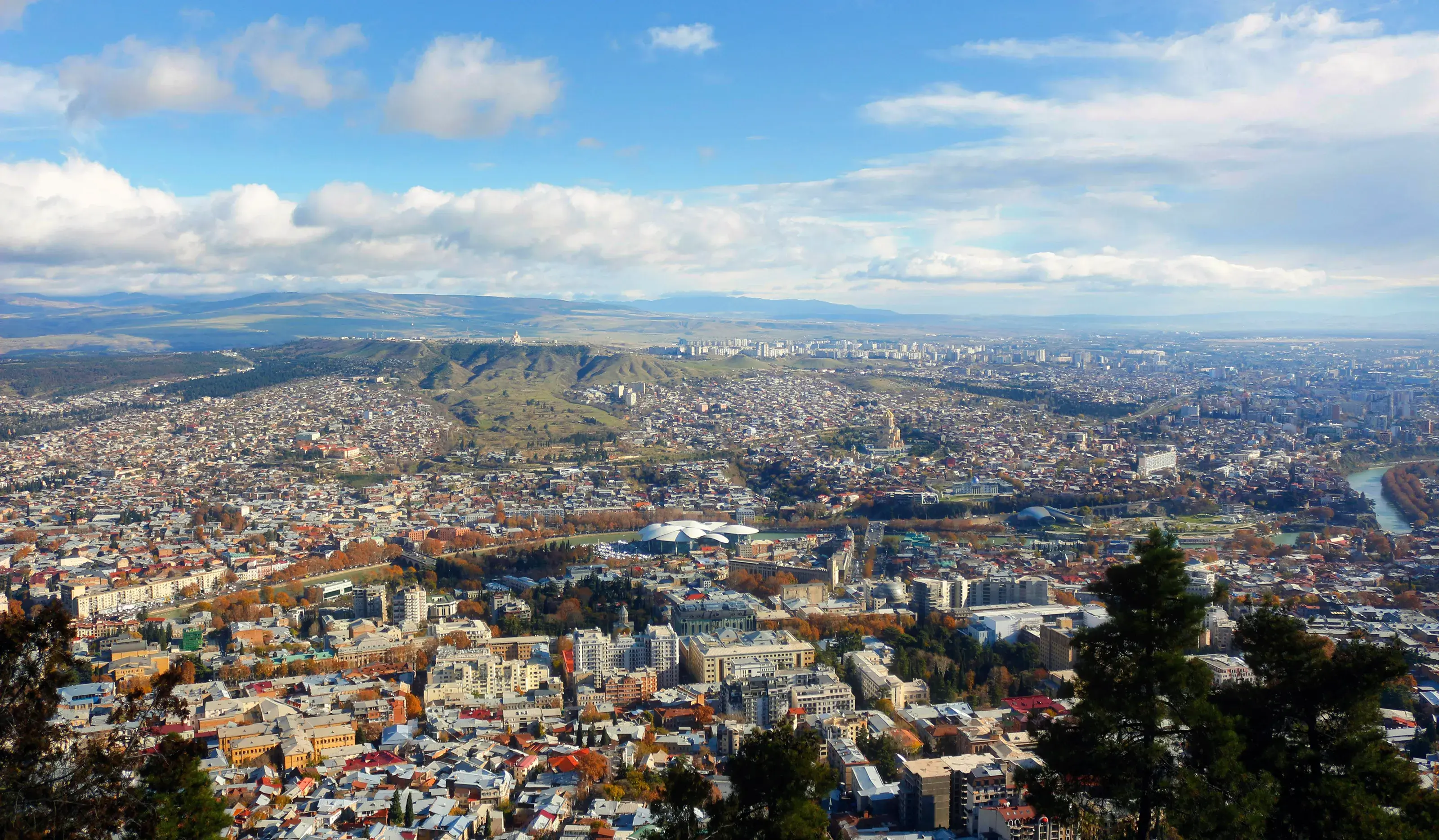
Tbilisi, Georgia
Data updated Sep 3, 2026
📊 Scores
Tbilisi, Georgia: A Guide for Digital Nomads and Geoarbitrage Seekers
For about four years, Tbilisi was the answer when a remote worker asked where they could land for a year with no paperwork, pay almost no tax, and live well on very little. Most of that is still true. Citizens of more than 95 countries can show up and stay for 365 days without a visa, the freelancer tax setup is one of the lowest on the planet, the wine is older than most countries, and your money goes about twice as far as it would in Western Europe. What changed, and what a current guide has to be straight about, is that two of the things that made Tbilisi frictionless got more complicated in the last year: the rules around legally working here, and the country's political direction. Neither cancels the case for coming. Both belong in the math before you book.
What you're actually moving into
Tbilisi sits in a narrow valley with the Mtkvari river running through the middle and hills rising on both sides, which gives the city a vertical, folded quality that maps badly but feels great to walk. The old town is a tangle of carved wooden balconies, crumbling courtyards, sulphur bathhouses, and wine bars wedged into cellars, with the Narikala fortress looking down over all of it. Around that core the city spreads into distinct districts, and which one you pick shapes your daily life more than the rent number suggests.
Vera is the unofficial nomad hub, central and walkable with a cafe on every block, close to the action but residential enough to sleep. Vake is the leafy, polished district, full of embassies, the big city park, and a more buttoned-up European feel, and it costs a little more for the calm. Sololaki is old-town character with cobblestones and balconies, romantic and a bit rougher around the edges. Saburtalo is further out, plainer, cheaper, and tied to the center by a metro that actually works. Most people who stay a while cycle through a couple of these before settling.
The international community is large and a little unusual in its makeup. Alongside the usual nomads and remote workers, Tbilisi absorbed a big wave of Russians and Belarusians after February 2022, which reshaped the rental market and the cafe scene and added some local tension you'll occasionally feel. The expat infrastructure that grew up around all this is real: active Facebook and WhatsApp groups, a coworking scene, and the cultural anchor of Fabrika, a converted Soviet sewing factory that now holds a hostel, bars, studios, and coworking, and functions as the closest thing the city has to a town square for foreigners.
The political backdrop, and why it matters now
This is the part most nomad guides skip, and it's the part that has changed most. In late 2024 the ruling party suspended Georgia's EU accession talks until 2028, after a disputed October election and the passage of a Russian-style "foreign agents" law. Large pro-EU protests have run in central Tbilisi for well over a year since, centered on Rustaveli Avenue outside parliament, met with periodic police crackdowns, and the EU has frozen the accession process and floated sanctions on Georgian officials.
For your day to day, the practical impact is usually small. The protests are localized around the parliament building, life in Vera and Vake continues normally, and visitors are not targets. But the trajectory is the opposite of the story that pulled people here in 2022, when Georgia read as a friendly, Western-leaning country on a clear path into Europe. If your plan depends on that path, an eventual EU pathway, long-term stability, a predictable rights environment, this is the single biggest thing to weigh, and it's worth noting the government also passed sweeping anti-LGBTQ legislation in 2024 if that affects you directly. Go in with current eyes, not the 2022 brochure.
Working here legally changed in March 2026
The famous pitch was that you could enter visa-free for a year, register as a sole trader, and pay 1 percent tax, all without a residence permit. The first half still holds. The second half got more complicated.
Labor migration amendments that took effect on March 1, 2026 now require foreigners doing paid activity, including remote workers, the self-employed, and entrepreneurs, to hold a work permit alongside their legal stay. Early reporting suggests the new permit is fairly straightforward to obtain in practice, but it is a genuine change to the old frictionless setup, and the details are still settling. Treat any guide written before 2026, and any forum advice based on the old playbook, as out of date. Confirm the current requirement with a Georgian accountant or immigration lawyer before you build a plan around registering a business here.
The climate
Tbilisi has a continental climate with hot summers and cool winters, averaging around 12 degrees Celsius over the year. Summer is the catch. The valley traps heat, and July and August routinely push into the mid-30s with the city baking, which sends a lot of residents to the mountains or the Black Sea for the worst weeks. Winters are cold but not severe, with occasional snow and gray stretches. Spring and autumn are the sweet spots, long and mild and made for sitting outside. Air quality is moderate and dips in winter, and the traffic adds to it, so it's a factor without being a dealbreaker.
Cost of living
Tbilisi is cheap, with the asterisk that it is less cheap than it was. Rents in the popular nomad neighborhoods have climbed 20 to 30 percent since 2022, driven partly by the post-war influx, so the bargain-basement numbers floating around old blog posts no longer hold.
A single person living comfortably runs roughly 1,000 to 1,500 dollars a month: a furnished one-bedroom in Vera or Vake at 400 to 700, food and eating out at 200 to 350, a coworking membership at 80 to 150, transport at 30 to 50, and room to spare. Trim toward the center, cook more, and work from cafes, and you can run a good life closer to 800 to 1,000. Studios in plainer districts like Saburtalo start around 300 to 500. Many landlords prefer cash, often in dollars, and the best listings live in Facebook groups and on local sites like SS.ge and Myhome.ge rather than Airbnb, where monthly rates run a good bit higher.
Food is where the budget feels generous. A full Georgian spread of khinkali and khachapuri with a glass of wine at a neighborhood spot lands around 8 to 12 dollars, and the wine deserves its own line. Georgia has been making wine for some 8,000 years in clay qvevri buried underground, and a bottle of good Saperavi costs 4 to 6 dollars at a shop. Groceries from the big markets run well below Western European prices if you cook.
Internet, coworking, and getting around
Internet is a strength here, not a workaround. Fiber at 100 to 200 Mbps is standard and usually already installed in apartments, and unlimited mobile data from Magti, Silknet, or Geocell runs 10 to 15 dollars a month. You are not running backup plans the way you would somewhere with shaky power.
Coworking is mature for the city's size. Impact Hub Tbilisi is the most established, with reliable connections and a steady events calendar. Terminal is the quieter, more heads-down option. Lokal runs cheaper and more casual, and Fabrika's coworking area puts you inside that larger cultural complex if you like noise and company. For cafe workers, the Stamba Hotel lobby and Leila are the reliable picks, with the usual caveat that the WiFi thins out when they fill up.
Getting around is easy and cheap. There's a working metro at 1 lari a ride, Bolt is the ride-hailing default at a couple of dollars across town, and the center is walkable once you accept the hills. Marshrutka minibuses cover everything else if you're willing to learn them. You do not need a car.
Language
Georgian is its own language family with its own alphabet, the looping Mkhedruli script, and it is unrelated to anything you likely know. The script is beautiful and you will not pick it up as fast as you might Cyrillic, so plan to lean on translation apps for menus and signs early on. Russian is widely understood, English is common among younger people and in the center, and Georgians are, as a rule, warm to foreigners who make any effort at all. A few words of Georgian go a disproportionately long way socially.
Georgia's visa and tax setup
Georgia's appeal was never really a visa, it was the combination of a long visa-free stay and a tax system built to welcome small operators. Here's how the pieces fit, with the March 2026 work-permit change layered on top of all of them.
The headline is the 365-day visa-free stay for citizens of 95-plus countries, including the US, UK, Canada, Australia, and the EU. You arrive, you're in for a year, no application. That governs your presence. Working now sits under the separate permit framework described above, so don't treat presence and the right to work as the same thing anymore.
The Remotely from Georgia program is a free, roughly 10-day online registration for remote workers earning at least 2,000 dollars a month from foreign sources. Its real value these days is documentation: it makes opening an account at TBC Bank or Bank of Georgia smoother, which is the practical hurdle most nomads actually hit.
On tax, the draw is the small-operator regime. Registering as an Individual Entrepreneur is the vehicle, and on top of it you apply for Small Business Status, which taxes gross turnover at 1 percent up to 500,000 lari a year, roughly 165,000 to 180,000 dollars, with anything over that taxed at 3 percent. There's a Micro Business tier at 0 percent for turnover under 30,000 lari with no employees. One important nuance: the 1 percent applies to gross revenue with no expense deductions, and it's meant for Georgian-source income, so how your work is sourced matters. Tax residency generally triggers at 183 days.
For software companies specifically, Virtual Zone status gives a Georgian LLC 0 percent corporate income tax and 0 percent VAT on qualifying IT income earned from foreign clients. That's a different structure from the sole-trader route and worth it only above a certain scale.
All of this is favorable and all of it is in flux. Get a Georgian accountant before you register anything. A consultation runs 50 to 150 dollars and will save you from building on a rule that changed last quarter.
Who Tbilisi is for
Tbilisi suits the person who wants a long, easy runway in a city with great food, absurdly good cheap wine, fast internet, and a tax setup that rewards freelancers, and who can hold two things at once: the daily life is excellent and the political weather has turned. It's a place to build a base for a year while keeping an eye on the trajectory, not a place to assume a frozen-in-2022 stability that no longer exists.
It's the wrong call if you need long-term political certainty, a clear EU pathway, or a settled rights environment to feel comfortable, or if mid-30s valley summers and a brand-new work-permit regime sound like more uncertainty than you want to manage. For everyone else, the core offer that made Tbilisi famous is still on the table. Just read the current terms, not the old reviews.
Visa, tax, and cost figures verified June 2026. Georgia's work-permit rules changed on 1 March 2026 and the special tax regimes were amended in February 2026, so confirm current requirements with a licensed Georgian accountant or the Public Service Hall before applying.
🏚️ Cost of Living
💰 Budgets and Costs
Grocery Basket
Eating Out
Utilities & Lifestyle
Housing
A 1BR in the center runs about $700/mo. If your income is in another currency, bank FX fees add up. A multi-currency account can cut that cost.
See low-fee transfersWe may earn a commission at no cost to you.
💰 Real Spend Reports
🛡️ Safety & Crime
(Higher is safer)
(Lower is safer)
Tbilisi is genuinely safe for expats, with a welcoming atmosphere and low violent crime rates. Petty theft and pickpocketing occur in crowded areas (Metekhi Square, marshrutkas) and nightlife districts, but serious crimes against foreigners are rare. Avoid displaying expensive items and use registered taxis or ride-apps rather than hailing cabs. The main concern is Georgia's proximity to Russia and the unresolved South Ossetia conflict, though this poses minimal daily risk in the capital. Overall, Tbilisi is a solid choice for remote workers and retirees seeking affordability and culture with manageable safety precautions.
🏥 Healthcare
🌤️ Climate
Best Months
Climate Notes
Humid subtropical climate with continental influences; hot summers and cold winters.
💻 Digital Nomad
Community Notes
| Name | Price/mo | Notes |
|---|---|---|
| Impact Hub Tbilisi | $150 | Located in Vera, Impact Hub Tbilisi offers a collaborative environment with a focus on social impact. It's a great place for expats looking to connect with local entrepreneurs and participate in community events. |
| Terminal | $180 | With multiple locations across Tbilisi, including Vake and Saburtalo, Terminal provides modern coworking spaces with various amenities like meeting rooms and event spaces. It's popular among digital nomads and offers a professional yet relaxed atmosphere. |
| LOKAL | $120 | Situated in the heart of Tbilisi, LOKAL offers a vibrant and creative coworking space. It's known for its community events and is a good option for those seeking a more social and less corporate environment. |
| Regus Tbilisi | $200 | Regus offers several locations in Tbilisi, providing a reliable and professional coworking experience. It's a good choice for those who prefer a more established and globally recognized brand with consistent amenities. |
Planning to live in Tbilisi long-term? Georgia Remotely From Georgia Program lets remote workers live legally.
View full requirements →Working remotely from Tbilisi? Nomad health insurance covers you across borders, month to month.
See nomad insuranceWe may earn a commission at no cost to you.
🧳 Expat Life
Expat Life Notes
A major global hub for digital nomads due to its generous visa policy, affordability, and vibrant culture.
Pros
- ✓ Very affordable
- ✓ Easy residency rules
- ✓ Amazing food and wine
Cons
- ✗ Traffic and air pollution
- ✗ Bureaucracy in Georgian language
- ✗ Rising rent prices
🛂 Visa Options for Georgia
Many long-stay visas require proof of health insurance. Compare international health plans before you apply.
Compare health insuranceWe may earn a commission at no cost to you.
Not sure which Georgia visa you qualify for?
Answer 10 questions and get a personalized match in under 2 minutes.
Could living/working in Tbilisi cut years off your work life?
With a 1-bedroom in the center at $700/mo, your FIRE number here might be much lower than you think.
Moving to Tbilisi? Estimate what an international move would cost and compare mover quotes.
Estimate my move costShare This Guide
Tbilisi won't stay this cheap forever.
Cost-of-living and visa updates for Tbilisi and the rest of Georgia. Free with RA Postcards.
By submitting your email address, you will receive a free subscription to RA Postcards and special offers from Rewire Abroad and our affiliates. You can unsubscribe at any time, and we encourage you to read more about our Privacy Policy.