I've Bought Four Apartments in Marrakech. Here's What Moving Here Actually Costs.
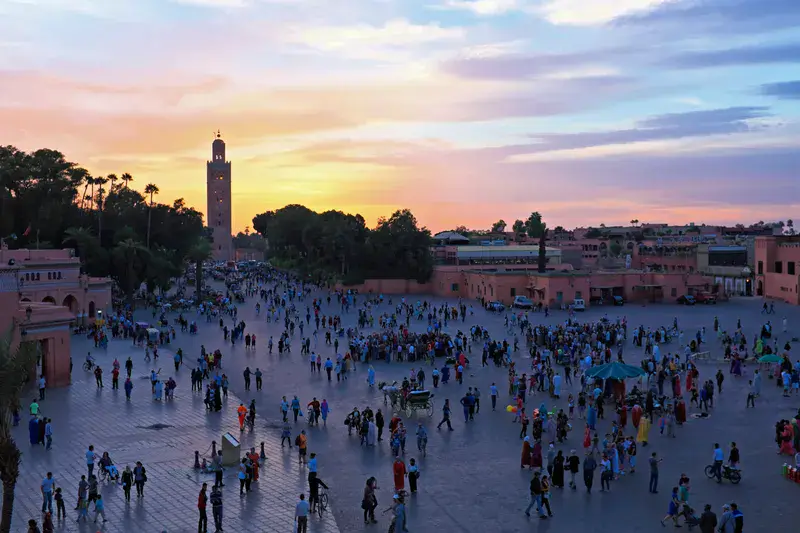
My wife is from Marrakech. On our first dates she told me, very directly, that she could not live anywhere else. I thought she was being sentimental about her hometown.
Two years later, after buying four apartments here, navigating agents and notaries and bureaucracy I did not fully anticipate, and spending six months in Agadir trying to see if somewhere else could work for us, I understand completely what she meant.
I moved here in 2023. I was born in Italy, grew up moving between Europe and Morocco, and I was not arriving as a total stranger. Marrakech still caught me off guard. The market is not what it looks like from the outside. The costs are not what the expat guides say. The neighbourhoods feel completely different once you actually live in them.
This is not a Marrakech-is-paradise piece. It is what I actually know from living here, buying property here, renting to tenants, and figuring out where to shop and eat without spending like a tourist.
Marrakech Is Not One City
The first thing that tripped me up was thinking of Marrakech as a single place. It is not.
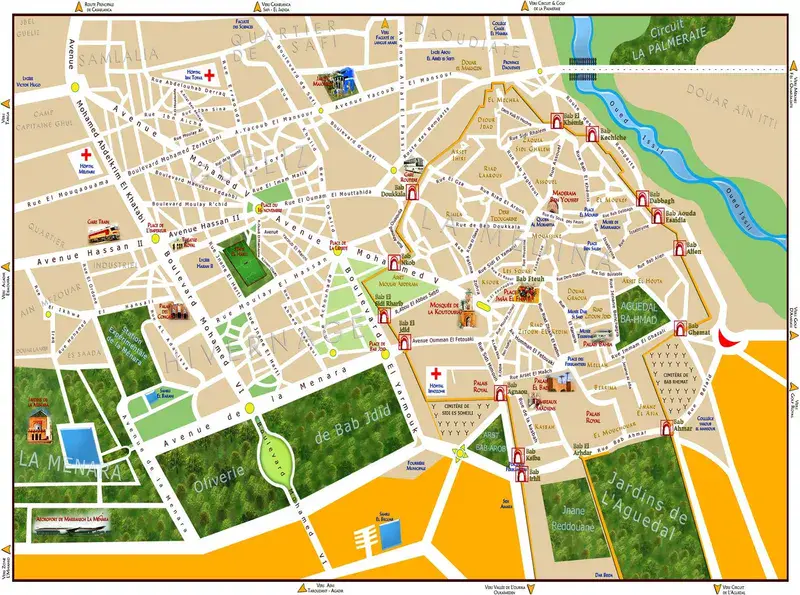
Depending on which part of the city you are in, you are looking at completely different prices, a different lifestyle, and a different daily experience. Hivernage and Gueliz feel like two separate cities compared to Targa or the Casablanca Road side. A riad in the Medina has nothing in common with a studio apartment in Izdihar. What works for a retiree who wants charm and character is not what works for a remote worker who needs fast internet, a nearby supermarket, and somewhere to park.
I see a lot of foreigners arrive with a general idea of Marrakech and make decisions based on that. It always costs them time, and sometimes it costs them real money.
The neighbourhood matters more than the city. Always.
What Things Actually Cost Here
I will give you real numbers - not ranges from a blog post written by someone who visited for two weeks, but what I see and pay living here.
All USD equivalents are approximate, based on a rate of roughly 9.2 MAD to $1 (May 2026).
Rent
In the residential areas outside the main expat zones - Targa, Izdihar, parts of Agdal - a decent furnished apartment runs between 3,000 and 5,000 MAD ($325-$545) per month. In central Gueliz or Hivernage, you are looking at 6,000 to 9,000 MAD ($650-$975) minimum for something decent. Medina riads vary enormously, from 4,000 MAD ($435) for something basic to 20,000+ MAD ($2,170+) for something well-renovated and tourism-ready.
Groceries
This is where you can save significantly if you know where to go.
My wife and I drive to Souk Sabt for vegetables and meat. It is about 20 minutes outside Marrakech and the prices are not comparable to what you find in the city. A simple example: 1kg of ground beef costs around 120 MAD ($13) in Marrakech. At Souk Sabt we pay 90 MAD ($10). That gap adds up over a month.
For staples - milk, tuna, tea, cleaning products - we use Atakaddaw, a wholesale market. We have a card through my father-in-law, but even without one the prices beat most regular shops. Worth knowing about if you are going to be living here properly.
If you shop exclusively at Label Vie or Marjane, you will spend more. Not outrageously more, but noticeably more. The local options exist and work well; you just have to find them.
Eating Out
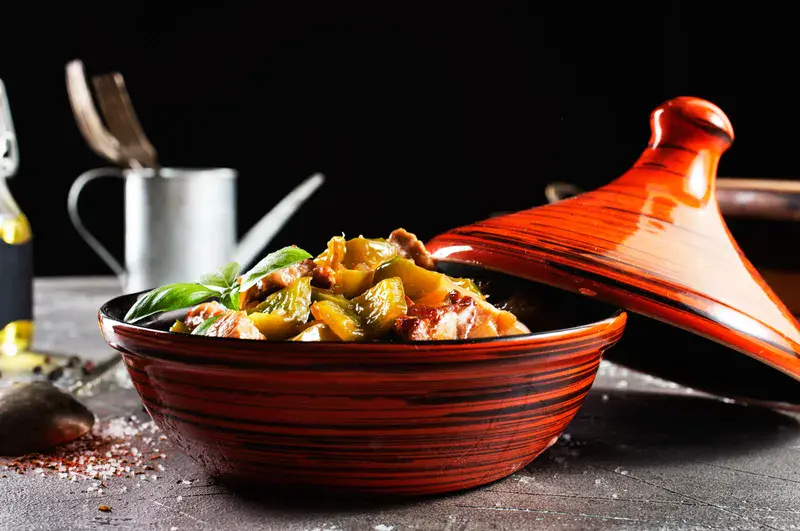
Marrakech has, in my opinion, the best food in Morocco. And if you eat where Moroccans eat rather than where tourists eat, it is also extremely affordable.
My wife and I go to Espace Ismail and La Fleche regularly. At Espace Ismail, a full meal costs around 4 to 5 USD. The food is genuinely good. These are not places you will find in a tourism guide - they are places where local people actually eat.
A mid-range place in Gueliz will cost 150 to 300 MAD ($16-$33) per person. A touristy restaurant in the Medina will often charge more and give you less. The gap between eating local and eating expat is wide here, which is one of the things I genuinely like about the city.
Utilities
Our electricity and water bill sits at around 300 MAD ($33) per month with minimal usage - no AC, barely any oven, almost no TV. That is our baseline, and it has crept up slightly. If you are running AC through summer or have more appliances running, budget higher.
Internet and Phone
A SIM with solid data runs 50 to 150 MAD ($5-$16) per month. Home fibre is around 200 to 400 MAD ($22-$43) per month and is available in most modern buildings in Gueliz and the main residential areas. It can be inconsistent, so keeping a backup SIM ready is a sensible habit.
Transport
Taxis are cheap, but there is one thing to know before you get in: always ask the driver to use the compteur - the meter. It counts the kilometres and gives you the real price. If they do not switch it on, agree on a fixed price before the car moves.
Some drivers, especially at night or very early in the morning, will quote you a flat price that has nothing to do with the actual distance. They know that foreigners often do not know the difference.
A tenant staying at one of my Airbnb apartments took a taxi at 6am and was charged 800 MAD ($87) for a 20-minute drive. The correct price should have been a fraction of that. She did not know, she was tired, and she paid it. The lesson: always confirm the meter is running or agree on a price before you move.
If you do not have a car, Gueliz and the central areas are manageable on foot and taxi. Palmeraie and the outer parts of Agdal are harder without your own transport.
Gym and Coworking
I pay 300 MAD ($33) a month for my gym - clean equipment, no complaints. That covers weights only; add 500 MAD ($54) per month for swimming. The annual membership is 5,000 MAD ($545) and includes everything, so if you are committing to the city, that is clearly the better deal.
Coworking has grown a lot in Gueliz. My regular spot is La Blasa - 100 MAD ($11) per day for drop-ins, around 1,500 MAD ($163) per month for a commitment. Private desks, snacks, good atmosphere. Honestly my main reason for going is not the internet or the desk - it is to be around other people. Working online can get solitary, and La Blasa solves that. Other coworking spaces exist in Gueliz and quality varies, so if it is not your style, visit a few before settling.
One-Off Admin Costs
These are not monthly, but they show up: notary fees on property, bank charges, residence permit renewals, translations, legalisation. Annoying but manageable if you expect them. Budget a buffer.
Bottom line for a single person renting a decent apartment, eating out a few times a week, and not trying to live like you are in a European city: 8,000 to 15,000 MAD ($870-$1,630) per month is realistic. The range is that wide because your own choices drive the number far more than the city does.
My Own Four Apartments: What I Actually Did
The four apartments I bought are small studio-style units in the Izdihar/Casablanca Road area - close to Gueliz but not in the most expensive part of it. Each one rents for around 4,000 MAD ($435) per month.
I ended up here for a specific reason. I was not looking for the most prestigious postcode. I was looking for genuine rental demand from real tenants, not from tourists or the high end of the expat market. This part of the city has local workers, young professionals, students, and people relocating to Marrakech for work. That is a stable tenant base and it is far less work to manage than short-term lets.
The entry price was also lower than buying in prime Gueliz or Hivernage, which meant better numbers on paper and less exposure if something went wrong.
I am not saying this approach works everywhere or that my situation is a formula. Two studios in the same building can perform differently depending on which floor they are on, how they are furnished, and how well they are managed. But the principle - buying slightly outside the most fashionable zone, where values are more grounded and demand is local rather than speculative - is something I would do again.
One thing worth saying clearly: many foreigners overestimate short-term rental income and underestimate how much work it involves. Airbnb can work in Marrakech, especially in the right area with the right property, but it is not passive. You are managing turnover, guest communication, cleaning, and a more complex legal setup. Long-term rentals typically bring in less on paper, but for most investors the consistency and reduced overhead make them the more sensible choice - especially while you are still learning the market.
Renting vs. Buying: What I Would Tell Someone Arriving Today
If you are new to Marrakech and someone is already pushing you toward buying property, slow down.
I am not saying do not buy. I bought four apartments here and I am glad I did. But I knew the city first. I understood specific streets, which buildings had structural or management issues, which areas had genuine rental demand versus which ones just looked good on a listing. That knowledge takes time to build and you cannot shortcut it with online research.
Neighbourhoods that look similar on a map feel very different once you live in them. An area that photographs well can have noise problems, access issues, or a building situation that makes it difficult to rent or eventually sell. Renting first lets you work all of that out without being locked into it.
Planning a trial stay?
Find short-term rentals in Marrakech
Renting before you commit is the smartest move. Browse apartments in Gueliz, Agdal, and beyond to get a feel for each neighbourhood before signing a long-term lease.
We may earn a commission Affiliate Disclosure
Moroccan property purchases also involve notaries, title checks, transfer taxes, and fees - and they are not easy to reverse once you have committed. Foreigners who buy quickly and without local knowledge tend to overpay. Not because they are careless, but because agents here know who does not know the market yet.
I have watched this happen. Someone gets shown a property that looks stunning, urgency gets created around it, and they buy before doing the groundwork. Later they find out the building has issues, or the title is not clean, or the renovation will cost three times what they estimated, or they simply cannot find tenants because the location is not what they assumed.
Before you buy anything here, ask yourself: who will you sell this to when the time comes? How liquid is this type of property in this specific area? A studio in a solid residential building is a very different proposition to a riad in a complicated part of the Medina. A cheap entry price means nothing if the paperwork has problems or the exit is unclear.
The Neighbourhoods, Honestly
Here is how I would describe each area to someone who asked me in person.
Gueliz
The most practical area for a foreigner living here full time. Walkable, good supermarkets, cafes, restaurants - everything is close. Most of the expat community gravitates here. Internet infrastructure is solid in most buildings. It is the most expensive of the residential areas, but it earns it.
Hivernage
More upscale, more central, a stronger luxury feel. Lots of hotels and higher-end residences. If budget is not your main concern and you want to be close to everything, it works. You pay for it.
Medina
The old city, and genuinely beautiful to walk through. Living in it is a separate question. If you are considering buying here - especially a riad - be very careful. Title issues are more common than people expect. Renovation projects almost always end up more complicated and more expensive than the initial estimate. Car access is limited. It can be done, but it requires patience and due diligence that many buyers underestimate.
Palmeraie
Villas, space, greenery, more privacy. Feels removed from the city rather than part of it. You need a car for daily errands. The market is thinner and properties are expensive. It suits a specific lifestyle, and not everyone who tries it stays.
Agdal
Growing, newer developments, slightly more of a resort feel in some parts. More car-dependent. Some decent value compared to Gueliz. Still developing its character, which makes it harder to read long term.
Targa, Izdihar, and the Casablanca Road Corridor
This is where I bought. More residential, more local, better value. It is not the Marrakech you see in travel photography, but it is the Marrakech where people actually live and work. Rental demand here comes from a real local population, not from tourism or the premium expat market. That matters if you are buying to rent.
Majorelle and Semlalia
Mixed residential with reasonable central access. Semlalia has grown more popular with younger Moroccan professionals recently and can offer decent value compared to central Gueliz.
The Bureaucracy Part
Morocco has paperwork, and it moves on its own timeline. I will not pretend otherwise.
Everything goes through French, and sometimes Arabic or Darija. If you are not comfortable in French, you need someone who is - not occasionally, but consistently. It matters for banking, residency paperwork, property transactions, and anything administrative.
A few specific things worth knowing:
- Bank accounts: Opening one as a non-resident takes time. Sometimes multiple visits. Requirements vary between banks and sometimes between branches of the same bank.
- Residence permit (carte de sejour): Involves the prefecture, a specific document list, and patience. It will almost certainly take longer than whoever helps you first suggests.
- Property purchases: All go through a notary - that is not optional. Title checks are important, especially in the Medina and for older buildings. Do not skip them because someone tells you it will be fine.
- Money transfers: Do not transfer money directly to sellers or informal agents outside a proper legal process. Use the notary. Read what you sign before you sign it.
- Bringing money into Morocco: The way you import funds matters if you ever want to repatriate them. For foreigners considering ownership, understanding the notary process, title checks, taxes, and money transfer rules before buying property in Morocco as a foreigner is essential.
None of this stopped me and it should not stop you. But going in knowing what to expect is very different from finding out in the middle of it.
Who This City Actually Works For
Let me tell you the Agadir story, because I think it explains something important.
About a year into our marriage, my wife and I decided to try living somewhere else. We rented in Agadir for six months and gave it a genuine attempt. Agadir is a fine city - the summer is great, nice beaches, good weather, a relaxed pace. But after six months we both knew it was not right for us. The food was not the same. The energy was too quiet. Outside of summer it felt slow in a way that did not suit either of us. We packed up and came back to Marrakech.
My wife always said she could not live anywhere else. After that six months, I stopped thinking that was sentiment.
Marrakech has a specific energy and a quality of daily life that is hard to explain before you have felt it. In my view it also has the best food in Morocco, and people here are more relaxed than in most other Moroccan cities. That combination matters.
Who tends to do well here:
- Remote workers with stable income who want a lower cost base and a genuinely interesting place to live. The city has enough infrastructure now that working from here is realistic. If you are planning to stay long term, Morocco's digital nomad visa runs for 12 months and is renewable - worth understanding before you commit.
- Retirees who want sun, culture, and real daily life rather than a resort setting. Morocco's retirement residence permit is renewable annually and can lead to longer-term status after several years - a realistic path if Marrakech becomes your base.
- Patient investors willing to do proper groundwork - genuine opportunity exists, particularly in residential areas rather than tourist-facing parts of the market.
Ready to Rewire your Life?
Sign up to receive updates and insights.
By submitting your email address, you will receive a free subscription to RA Postcards and special offers from Rewire Abroad and our affiliates. You can unsubscribe at any time, and we encourage you to read more about our Privacy Policy.
Who tends to struggle:
- People who need everything to run exactly as planned. If tight timelines matter to you, if slow-moving paperwork affects your daily mood, if you expect Moroccan systems to behave like European ones, you will find this city draining. That is not a criticism of Morocco - it is the reality of adapting to a different pace and structure.
- Emotional buyers. The ones who fall in love with a riad on a viewing and want to move fast are the ones who most often end up with problems. The city rewards patience and local knowledge. It punishes decisions made on aesthetics alone.
Before You Go
I have been living here for three years and I am still learning things about this city. That is not a warning - it is just the truth about a place with this much happening beneath the surface.
What I know for certain: rent before you buy if you do not already know the city well. Spend real time in a neighbourhood before committing to it. Do not let anyone rush you into a property decision. Find people who actually know the local market, not people who know how to sell to foreigners who do not.
The costs here are real and manageable. The food is genuinely good. The lifestyle, for the right person, is hard to match anywhere else at this price point.
My wife was right about this city from the beginning. Most days, living here, I am glad we stayed.

Anis Chity
Anis Chity is the founder of Buy Property Morocco, a practical resource for foreigners interested in buying, investing, or relocating to Morocco. He has lived in Marrakech for three years, personally purchased four properties in Morocco, and writes from firsthand experience about local property costs, neighbourhoods, bureaucracy, and the mistakes foreign buyers most commonly make.
Buy Property Morocco