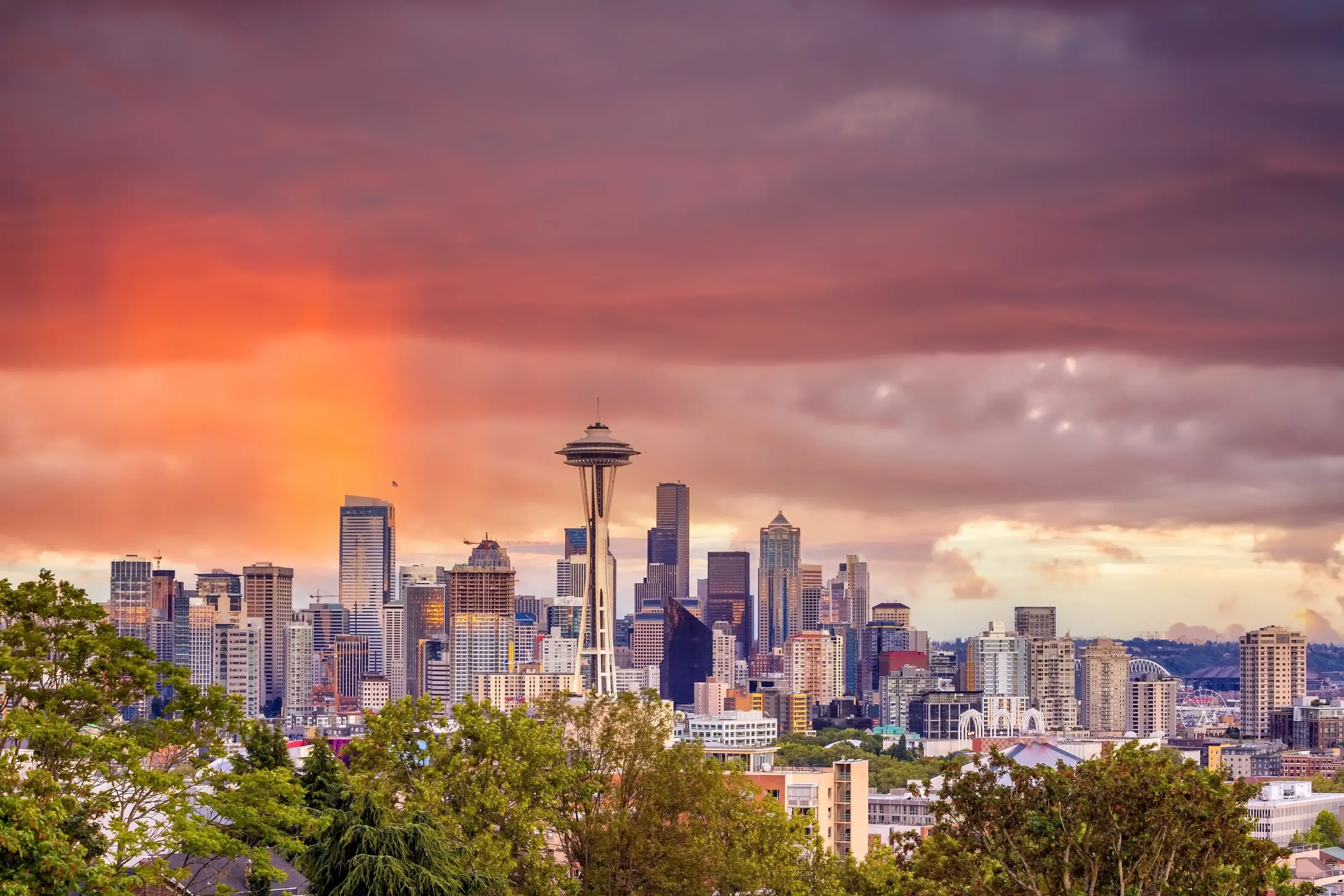
Seattle, United States
Data updated Sep 3, 2026
📊 Scores
Best fit: Digital Nomad (score: 71)
Seattle is a city that people defend more than they describe, which usually means the reality is more complicated than the pitch. The version locals offer to prospective transplants emphasizes the mountains, the water, the coffee, and the tech salaries. All of that is accurate. The version they omit covers the grey, the cost, the homelessness visible in nearly every neighborhood, and the social dynamic that has its own name: the Seattle Freeze. Arriving with both versions in mind produces fewer surprises.
The economy is dominated by tech in a way that reshapes everything downstream. Amazon's headquarters campus occupies a significant portion of South Lake Union and has physically transformed the neighborhood over fifteen years. Microsoft sits across the lake in Redmond. Boeing's presence, though diminished from its peak, still runs through the region's industrial identity. The result is one of the higher concentrations of software engineers and technical workers in the country, which inflates housing costs, restaurant prices, and the general cost of living in ways that catch people expecting a cheaper alternative to San Francisco. It is not a cheaper alternative to San Francisco. It is a lateral move with different tradeoffs.
Housing has softened from its peak but remains expensive. A one-bedroom in Capitol Hill, Queen Anne, or Belltown runs $1,900 to $2,600 monthly. Fremont and Ballard offer more neighborhood character at similar prices. Further out in West Seattle or the Rainier Valley, costs come down meaningfully and the tradeoff is transit time rather than quality of life. Washington has no state income tax, which on a tech salary produces a material post-tax advantage over California and makes the nominal cost comparison with San Francisco look better than the sticker prices suggest.
The grey is the thing nobody adequately prepares people for. Seattle does not get dramatic winter storms. It gets a low ceiling of cloud that arrives in October and lifts, inconsistently, sometime in April or May. Rainfall totals are not actually extreme by national standards but the distribution is relentless, producing more days of grey drizzle than almost any other major American city. Seasonal affective disorder is discussed here the way allergies are discussed in Phoenix, as a routine condition that responsible people manage rather than a curiosity. A significant portion of the population runs light therapy lamps through the winter. People who grew up in genuinely sunny climates and have never spent a winter somewhere like this tend to underestimate the cumulative weight of it.
The summers are the legitimate rebuttal to all of that. June through September in Seattle is among the better seasonal experiences in the country: long days, low humidity, temperatures in the 70s, and a landscape that rewards every form of outdoor activity. The mountains are close enough for day trips. Rainier is visible from the city on clear days and draws serious hikers and climbers. The San Juan Islands are accessible by ferry. Kayaking, sailing, and cycling infrastructure is well developed. The outdoor culture is real and not aspirational, and it pulls a particular type of person to the city and keeps them through winters they describe as manageable once the summer comes back around.
Transit is functional within certain corridors and inadequate across much of the city. Light rail has expanded meaningfully and the line connecting the airport to downtown and Capitol Hill to the University District works well. Beyond that spine, bus service fills in unevenly and car ownership becomes more useful the further from the core you live. The hills and the disconnected street grid make cycling more demanding than the bike infrastructure investment would suggest.
The food scene is strong and has grown more serious over the past decade. Pike Place Market functions as both tourist destination and genuine food sourcing operation. The seafood quality reflects the geography. Vietnamese, Japanese, and Korean food are all well represented, driven by the Asian American communities concentrated in the Rainier Valley and the Eastside. Ethiopian food anchors several neighborhoods. Coffee is taken seriously in the way that it is in cities with a real coffee culture rather than cities that merely have Starbucks, which Seattle also has, everywhere, constantly.
The Seattle Freeze is a documented phenomenon rather than a local myth and it affects expats and domestic transplants equally. The population skews educated, employed, and introverted in the specific way that tech industry concentration produces. People are polite, helpful when asked, and genuinely difficult to turn into friends in the organic way that happens more easily in cities with different social textures. Newcomers often report a six to twelve month period of surface-level pleasantness before anything resembling a social life develops. Those who build it tend to do so through outdoor activities, organized sports, or professional adjacency rather than the bar and neighborhood culture that seeds friendships in other cities.
Best suited for: tech professionals who want strong post-tax compensation, serious outdoor enthusiasts willing to earn their summers through long winters, and transplants with enough patience for the social climate to eventually thaw along with the weather.
🏚️ Cost of Living
💰 Budgets and Costs
Grocery Basket
Eating Out
Utilities & Lifestyle
Housing
💰 Real Spend Reports
🏥 Healthcare
🌤️ Climate
💻 Digital Nomad
| Name | Price/mo | Notes |
|---|---|---|
| The Cloud Room | $330 | Design-led, women-owned space on Capitol Hill (Chophouse Row) with an in-house bar. Hot desk ~$330-390/mo, $40 day pass. |
| The Pioneer Collective | — | Independent, community-focused; Belltown and Ballard. Hot desks, 24/7 dedicated desks; lounge-style Work Club from $149/mo. Check site for full membership rates. |
| Industrious Seattle | — | Premium, hospitality-focused; downtown (301 Congress-style towers). Tour/inquiry for current rate. |
| WeWork Seattle | — | Downtown and South Lake Union; hot/dedicated desks (~$320/mo hot desk historically), global network. Check site for current rate. |
🧳 Expat Life
🛂 Visa Options for United States
Not sure which United States visa you qualify for?
Answer 10 questions and get a personalized match in under 2 minutes.
Could living/working in Seattle cut years off your work life?
With a 1-bedroom in the center at $2470/mo, your FIRE number here might be much lower than you think.
Share This Guide
Seattle won't stay this cheap forever.
Cost-of-living and visa updates for Seattle and the rest of United States. Free with RA Postcards.
By submitting your email address, you will receive a free subscription to RA Postcards and special offers from Rewire Abroad and our affiliates. You can unsubscribe at any time, and we encourage you to read more about our Privacy Policy.