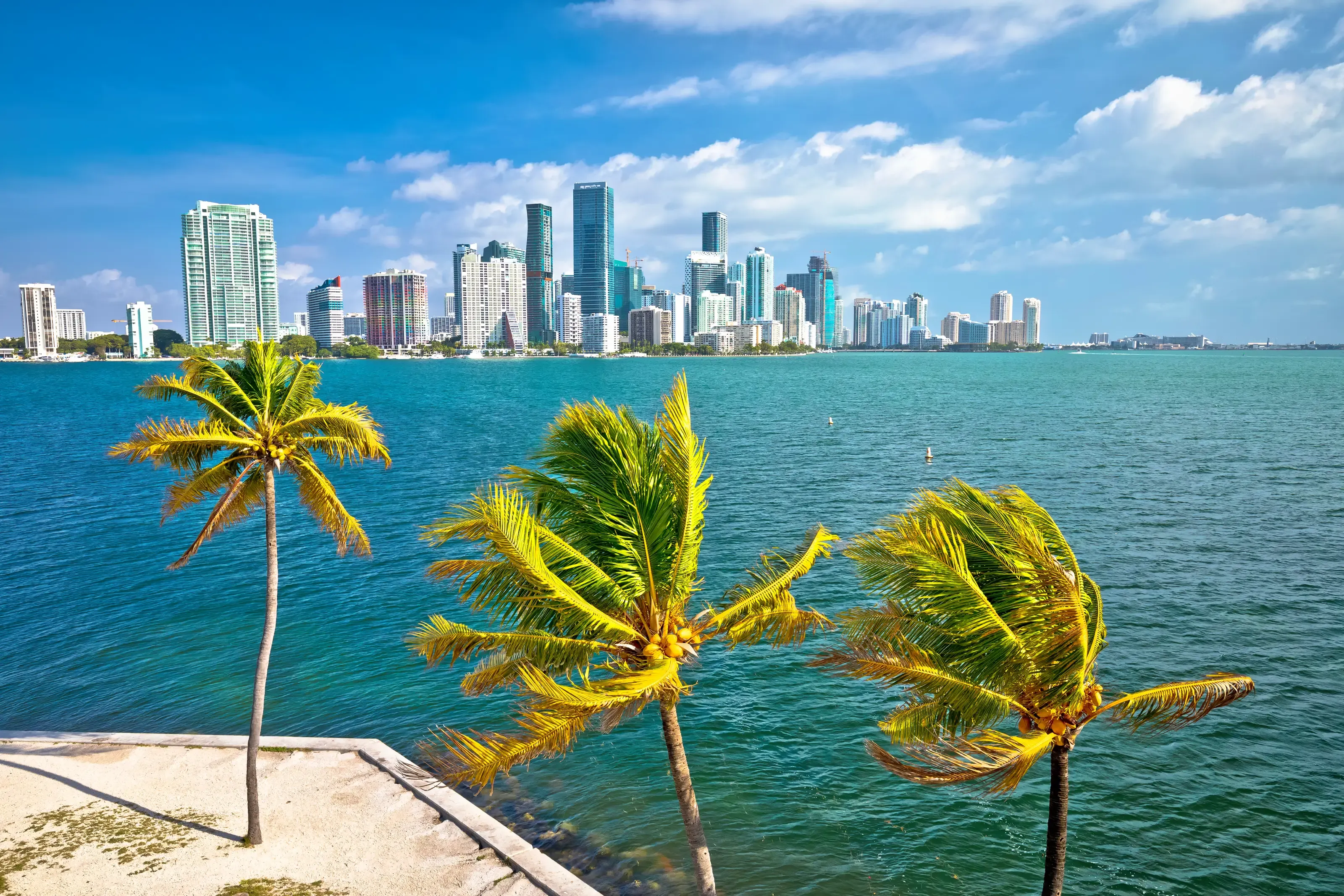
Miami, United States
Data updated Sep 3, 2026
📊 Scores
Best fit: Digital Nomad (score: 76)
Miami is two cities at once and most expats only ever live in one of them. The version marketed to outsiders is Brickell condos, South Beach clubs, and $18 cocktails. The city that actually works for long-term living is spread across Doral, Kendall, Little Havana, and Wynwood, depending on what you're after and how much Spanish you speak.
The economy runs on finance, real estate, tourism, and the unofficial Latin American business capital function Miami has filled for decades. Remote workers land here in large numbers because Florida has no state income tax, flights to New York and Europe are frequent, and the time zone cooperates with both coasts. That combination makes it genuinely competitive on a post-tax basis even though nominal costs run high.
A one-bedroom in Brickell or Edgewater will run $2,200 to $2,800 monthly. Doral cuts that to $1,600 and you trade nightlife proximity for a quieter, heavily Venezuelan neighborhood with excellent Cuban coffee. The only thing Miami gets truly cheap is international calling minutes, because half the city is already fluent in wherever you're trying to reach.
You will not survive without a car. The Metrorail is fine if you live along its single north-south corridor, which most people do not. Traffic on I-95 and the 836 is aggressive and predictable in the worst way: slow from 7 to 9, fast briefly, slow again from 4 until 7 or 8.
Weather is the other honest cost. Summers are long, humid, and punctuated by afternoon thunderstorms that last 40 minutes and vanish. June through October means hurricane awareness, which is less dramatic than it sounds most years but shapes how locals think about insurance and preparation. Winters are genuinely beautiful, which is when everyone from New York and Chicago arrives and reminds you why you pay the premium.
Healthcare quality is high. Jackson Memorial is a serious academic medical center, and private insurance here functions normally unlike some markets. Spanish-language medical care is easy to find across the city.
The expat community is enormous and self-organizing by nationality. Argentines have found Brickell. Venezuelans are concentrated in Doral and Weston. Brazilians cluster in Aventura. There are active communities for almost every origin point and enough Portuguese and Spanish floating around that English fluency is useful but not strictly required in large swaths of daily life. For Americans moving abroad in reverse, Miami functions more as a soft landing with international texture than a true expat experience.
Best suited for: remote workers or finance professionals who want tax efficiency, direct Latin American flight access, and warm winters, and who can absorb $3,000 plus monthly in living costs without stress.
🏚️ Cost of Living
💰 Budgets and Costs
Grocery Basket
Eating Out
Utilities & Lifestyle
Housing
💰 Real Spend Reports
🏥 Healthcare
🌤️ Climate
💻 Digital Nomad
| Name | Price/mo | Notes |
|---|---|---|
| The LAB Miami | — | Miami's original coworking space, in the Wynwood Arts District; creative/startup community, day passes and memberships. Miami hot desks typically $250-450/mo (2026); check site. |
| Pipeline Workspaces | — | Locations in Brickell, Coral Gables and Doral; professional/finance focus, events. Official URL and current rate not confirmed - verify before publish (Miami hot desks ~$250-450/mo). |
| Mindspace Miami | — | Upscale, design-led; Wynwood and Downtown (100 Biscayne). Day/multi-day passes plus memberships. Check site for current rate. |
| WeWork Miami | — | Brickell and Wynwood; hot/dedicated desks, global network. Check site for current rate. |
🧳 Expat Life
🛂 Visa Options for United States
Not sure which United States visa you qualify for?
Answer 10 questions and get a personalized match in under 2 minutes.
Could living/working in Miami cut years off your work life?
With a 1-bedroom in the center at $2257/mo, your FIRE number here might be much lower than you think.
Share This Guide
Miami won't stay this cheap forever.
Cost-of-living and visa updates for Miami and the rest of United States. Free with RA Postcards.
By submitting your email address, you will receive a free subscription to RA Postcards and special offers from Rewire Abroad and our affiliates. You can unsubscribe at any time, and we encourage you to read more about our Privacy Policy.