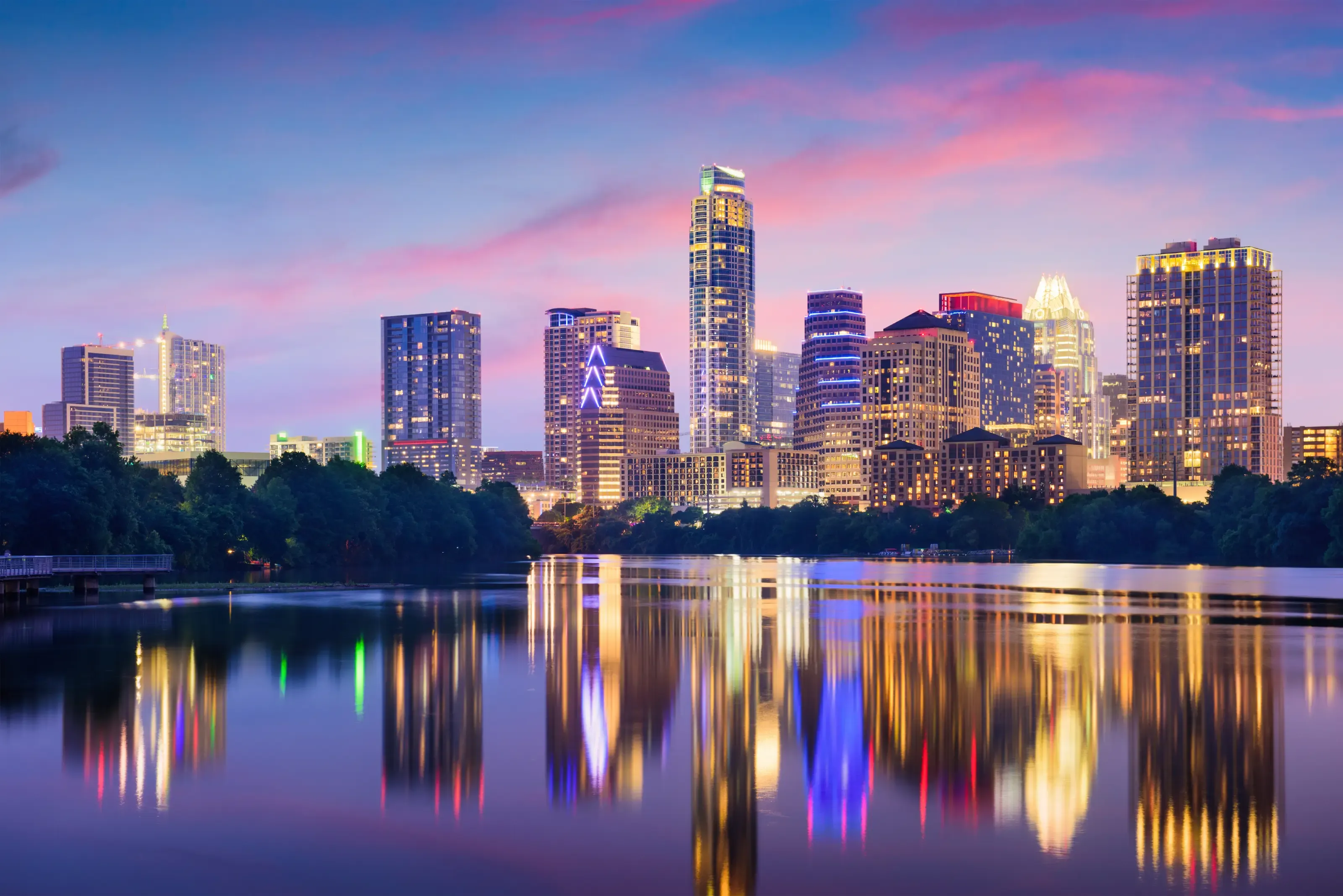
Austin, United States
Data updated Sep 3, 2026
📊 Scores
Best fit: Digital Nomad (score: 77)
Austin is in the middle of a complicated conversation with itself about what it is becoming versus what people moved there expecting it to remain. That tension is not unique to Austin but it is unusually visible here, because the transformation happened fast enough that the before and after exist simultaneously in the same city and the same conversations.
The economy pivoted hard toward tech over the past decade and the pivot worked. Tesla, Oracle, and a long list of California-headquartered companies relocated operations or headquarters here, drawn by no state income tax, lower real estate costs than the Bay Area, and a political environment friendlier to business than California's. That relocation wave brought salaries, capital, and a professional class that reshaped the cost structure of the entire metro. The Austin that was cheap is largely gone. What replaced it is a city with Bay Area compensation expectations attached to costs that are lower than San Francisco but no longer the bargain that drove the original migration.
Housing tells that story directly. A one-bedroom in East Austin, South Congress, or the Domain runs $1,600 to $2,200 monthly. The suburbs that absorbed overflow growth, Round Rock, Cedar Park, Pflugerville, offer more space at lower cost and require a car and tolerance for significant commute times into the core. The property tax situation is the detail that surprises people coming from states with income tax: Texas funds local government heavily through property taxes, which run high enough to meaningfully affect the cost calculus for anyone considering buying. The no income tax advantage narrows when property taxes are factored in, particularly for homeowners.
The car dependency is total and non-negotiable in a way that even car-dependent American cities sometimes soften with a functional transit spine. Austin has a rail line and a bus network that serve a small fraction of the metro. The rest is highway, frontage road, and surface street, and the highway system has not kept pace with population growth. I-35 through the core is a national case study in urban highway dysfunction. Rush hour in Austin now resembles what people fled in larger cities, which is an outcome nobody who moved here in 2015 anticipated.
The weather runs hot for longer than the sunbelt reputation fully communicates. Summers start in May and run through October with temperatures regularly above 100 Fahrenheit and humidity that makes the heat feel worse than the number suggests. The trade is a winter that barely exists, with temperatures rarely dropping below freezing for more than a few days. February 2021 is the exception that Austin residents reference the way coastal residents reference hurricanes: a week of temperatures the infrastructure was not built for, widespread power failures, and a collective reckoning with how the grid is managed that has not fully resolved. It is worth understanding before relocating.
The music and food identity that built Austin's reputation is real but compressed. Sixth Street, which was the center of that identity, has become something closer to a bar district than a music district. The genuine live music culture has scattered to venues in East Austin and smaller rooms across the city that require more effort to find. The barbecue reputation is deserved and the quality of central Texas style brisket available within the metro is legitimately exceptional. The taco culture, built on a long Mexican American tradition in the region, remains strong and cheap relative to almost everything else in the city.
The outdoor life is better than the flat urban landscape suggests. Barton Springs Pool, a natural spring-fed swimming hole in the middle of the city, is one of the better urban swimming experiences in the country. The Greenbelt trail system runs along Barton Creek and provides hiking and climbing that functions as a genuine escape. Lake Travis and Lake Austin pull water sports and weekend crowds. The Hill Country to the west offers cycling, hiking, and wine country within an hour. For people who want outdoor access without mountain proximity, the options are stronger than the geography implies.
The cultural and political character of Austin within Texas creates a specific social dynamic that shapes expat and transplant experience. The city votes differently than the state, which matters for how certain populations experience daily life, access to services, and the broader social environment. That gap between city and state governance is a live variable in ways that affect healthcare access, rights, and quality of life for specific communities in concrete rather than abstract terms. It is worth researching directly and specifically before making decisions based on the Austin reputation rather than the Austin and Texas reality.
Best suited for: tech professionals seeking post-tax compensation advantages over California, people who run well in heat and want minimal winter, and transplants who can afford the current cost structure and want a city that still has enough creative and food culture remaining to justify the tradeoff against cheaper sunbelt alternatives.
🏚️ Cost of Living
💰 Budgets and Costs
Grocery Basket
Eating Out
Utilities & Lifestyle
Housing
💰 Real Spend Reports
🏥 Healthcare
🌤️ Climate
💻 Digital Nomad
| Name | Price/mo | Notes |
|---|---|---|
| Capital Factory | — | Austin's flagship startup hub, accelerator and investor network, downtown. Membership pricing on request (tour-based). |
| Createscape | $250 | Open-desk membership $250/mo (2025), East Austin (Tillery St); on-site gym, 24/7 access, $25 day pass. Official URL not confirmed - verify before publish. |
| Dwell Coworking | $79 | Open-seat membership $79/mo (2026), Oak Hill; month-to-month, no contract, Flex-Desk $149 / Dedicated $249. Official URL not confirmed - verify before publish. |
| WeWork Austin | — | Downtown locations; hot desks, dedicated desks, global network. Check site for current rate. |
🧳 Expat Life
🛂 Visa Options for United States
Not sure which United States visa you qualify for?
Answer 10 questions and get a personalized match in under 2 minutes.
Could living/working in Austin cut years off your work life?
With a 1-bedroom in the center at $1963/mo, your FIRE number here might be much lower than you think.
Share This Guide
Austin won't stay this cheap forever.
Cost-of-living and visa updates for Austin and the rest of United States. Free with RA Postcards.
By submitting your email address, you will receive a free subscription to RA Postcards and special offers from Rewire Abroad and our affiliates. You can unsubscribe at any time, and we encourage you to read more about our Privacy Policy.