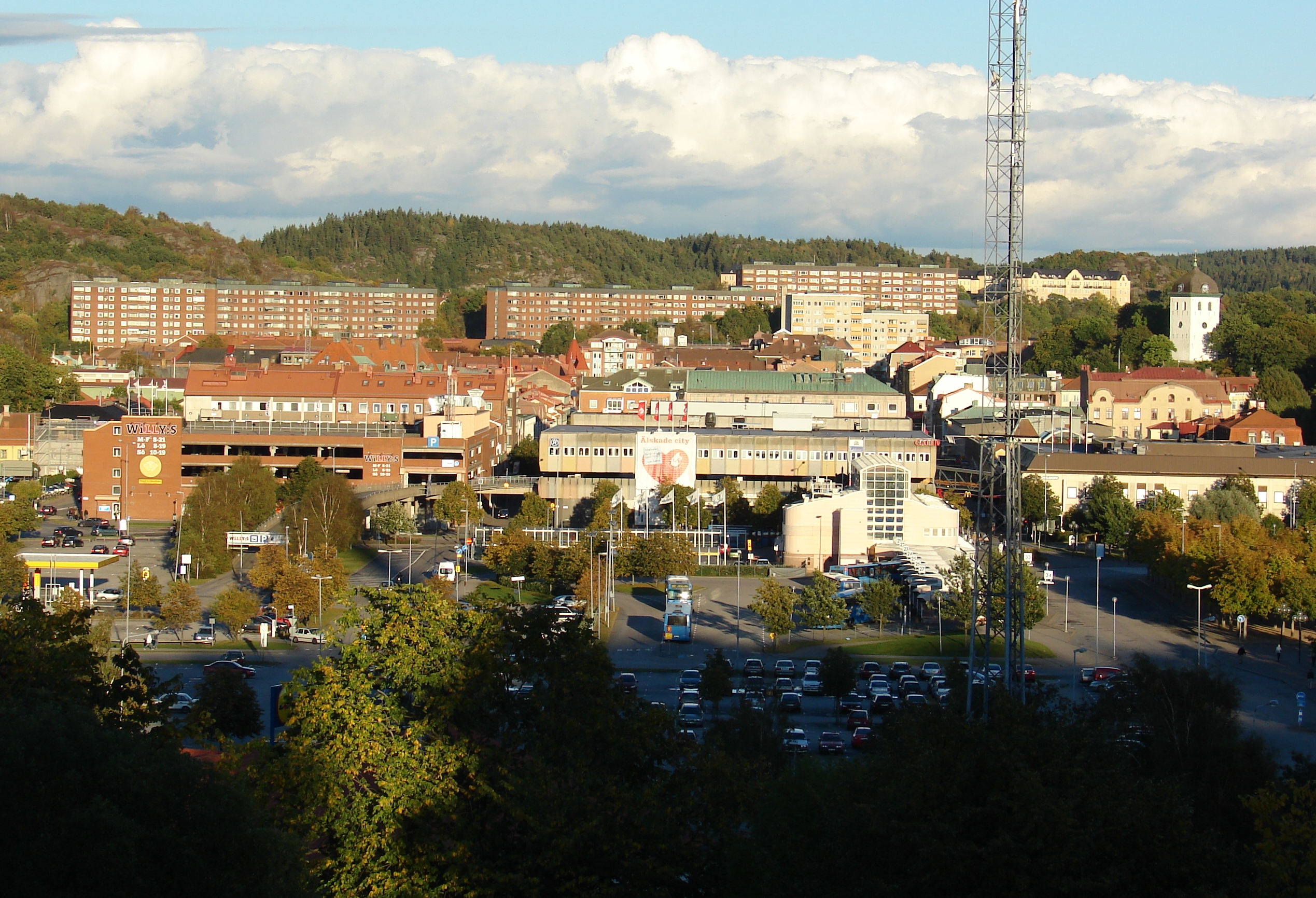
Uddevalla sits on Sweden's western coast, a small city of 36 thousand people where the climate is continental and the elevation above sea level is just 15 m. The timezone is Europe/Stockholm, and the city is compact enough that daily life rarely demands long journeys. Expats tend to settle in Centrum and Hovås, two popular neighborhoods that put residents close to the everyday rhythm of the city. English is widely spoken, which softens the early weeks of a move, though the expat community here is small, so newcomers often build their social circle through work, neighbors, and shared routines rather than an established international scene.
Housing costs are moderate by Swedish standards. A one-bedroom apartment in the city center rents for $800/mo, while the same outside the center drops to $600/mo. Three-bedroom units run $1,200/mo in the center and $1,000/mo outside it. Beyond rent, a single person spends about $1,100/mo, and a family of four about $3,650/mo. Utilities average $181/mo, internet $43/mo, and a mobile phone plan $10/mo. A monthly public transport pass costs $80/mo and a gym membership $40/mo. Meals out are affordable: $14 per person at an inexpensive restaurant, $80 for a three-course mid-range meal for two, and $5 for a cappuccino. The average monthly net salary locally is $2,799/mo, and the cost of living index is 73/100 against NYC as 100. Budget, mid-range, and comfortable tiers for a single adult, rent included, come to $903/mo, $1,331/mo, and $1,703/mo respectively.
Safety is a strong point. The safety index is 75/100 and the crime index is 25/100, where lower is safer. Air quality is good, with an index of 28 where lower is better. Healthcare quality is rated excellent, giving residents confidence in the medical system. Average internet speed reaches 150 Mbps, fast enough for remote work, streaming, and video calls without strain.
Visas follow Sweden's national rules, and the nearest airport is GOT, 10 km away, making arrivals and departures straightforward. The city scores 70/100 overall for expats, 66/100 for FIRE, 67/100 for retirees, and 72/100 for digital nomads. It suits remote workers, early retirees, and anyone who wants a calm coastal setting with manageable costs, reliable infrastructure, and a salary-to-expense balance that leaves room to save. Those who need a large international community may find the small expat scene limiting, but for others the tradeoff is a quieter, more affordable life within easy reach of the airport and the sea.