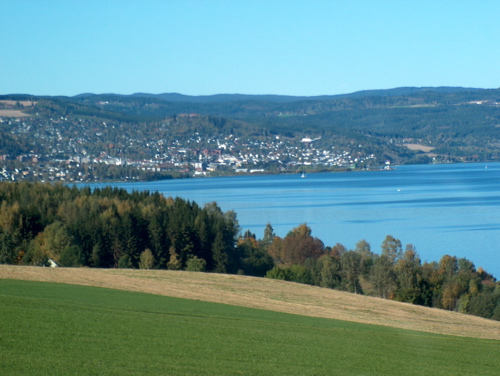
Manufacturing built Gjøvik, and it still defines the economy. O. Mustad & Son dominated for decades; today the base has diversified into tourism, services, and light industry around the Olympic Cavern Hall. The 1902 railway to Oslo (120km south, 90 minutes by train) means some residents commute for work, but local jobs exist in hospitality, municipal services, and small tech firms. Wages track Norwegian standards—high cost of living, high pay.
Rent for a one-bedroom city center runs $1,200/month; outside center, expect $900–$1,100. Public transport is reliable but limited; a car is nearly essential for anything beyond town. Healthcare is excellent and free to residents with a Norwegian ID number (bureaucracy: 2–4 weeks to obtain). English works fine among younger people; older residents and government offices default to Norwegian. Winter heating bills spike November–March. Grocery costs are 20–30% above US prices.
Winters are harsh—dark, cold, snow from November through March. Summers are pleasant but brief. The Olympic Hall hosts concerts and sports; Lake Mjøsa offers kayaking and fishing. Oslo is close enough for weekend trips. The expat community is small and scattered; you won't find an expat bubble. Gjøvik suits remote workers seeking Nordic stability, outdoor access, and lower chaos than Oslo—not those craving nightlife or a ready-made social scene.
Estimate the cost of moving to Gjovik, Norway
Get a free moving cost estimate for moving to Gjovik, Norway. Takes 10 seconds.
How much are you shipping?
When are you moving?
Powered by Sirelo. Free quotes from international movers.
🏚️ Cost of Living
💰 Budgets and Costs
$1,857/mo, one person, rent included
Selected: budget lifestyle
Gjovik at the budget tier comes to about $1,857 a month for one adult, with $1,044 of that going to rent. Beyond rent the estimate covers $258 on groceries, $88.00 on dining out, $48.00 on entertainment and lifestyle, $358 on utilities and connectivity and $61.00 on transport.
Rent
$1,044/mo
1BR outside the centre
Groceries
$258/mo
75% of mid-range grocery spend
Dining out
$88.00/mo
4 inexpensive meals
Entertainment & lifestyle
$48.00/mo
1 cinema trip, 8 cappuccinos
Utilities & connectivity
$358/mo
utilities, mobile, internet
Transport
$61.00/mo
Monthly pass
Budgets (excl. rent)
Single person$813/mo
Excludes rent. The total above is all-in, rent included.
$2,149/mo, one person, rent included
Selected: mid-range lifestyle
Gjovik at the mid-range tier comes to about $2,149 a month for one adult, with $1,044 of that going to rent. Beyond rent the estimate covers $344 on groceries, $220 on dining out, $122 on entertainment and lifestyle, $358 on utilities and connectivity and $61.00 on transport.
Rent
$1,044/mo
1BR outside the centre
Groceries
$344/mo
Staples basket scaled to a full month
Dining out
$220/mo
10 inexpensive meals
Entertainment & lifestyle
$122/mo
gym, 2 cinema trips, 12 cappuccinos
Utilities & connectivity
$358/mo
utilities, mobile, internet
Transport
$61.00/mo
Monthly pass
Budgets (excl. rent)
Single person$1,105/mo
Excludes rent. The total above is all-in, rent included.
$3,210/mo, one person, rent included
Selected: comfortable lifestyle
Gjovik at the comfortable tier comes to about $3,210 a month for one adult, with $1,618 of that going to rent. Beyond rent the estimate covers $481 on groceries, $508 on dining out, $184 on entertainment and lifestyle, $358 on utilities and connectivity and $61.00 on transport.
Rent
$1,618/mo
1BR in the centre
Groceries
$481/mo
140% of mid-range grocery spend
Dining out
$508/mo
6 inexpensive meals + 6 mid-range meals
Entertainment & lifestyle
$184/mo
gym, 4 cinema trips, 20 cappuccinos
Utilities & connectivity
$358/mo
utilities, mobile, internet
Transport
$61.00/mo
Monthly pass
Budgets (excl. rent)
Single person$1,592/mo
Excludes rent. The total above is all-in, rent included.
Estimates for one adult, built from this city's average prices and the usage shown for each tier. Your spending will differ with how often you eat out and where you live.
A 1BR in the center runs about $1618.34/mo. If your income is in another currency, bank FX fees add up. A multi-currency account can cut that cost.
Gjøvik is genuinely one of Norway's safest cities, with a Safety Index of 95 reflecting its reality. Walking alone at night is routine and unremarkable; locals do it without hesitation. The city feels calm and orderly, with strong community policing and low disorder. For expats, the day-to-day experience is one of genuine security—this isn't reputation inflation, it's backed by actual crime statistics.
Petty theft exists but is rare; pickpocketing and bag snatching are not typical concerns. Violent crime is extremely uncommon. The main risks are minor: occasional bike theft, package theft from porches, or opportunistic shoplifting. Solo female travelers and residents face virtually no gender-specific safety concerns. Avoid no neighborhoods—Gjøvik has no dangerous areas. Scams are minimal, though standard online fraud precautions apply everywhere.
Norway has stable governance, reliable police, and zero political instability. Corruption is negligible. Police are professional and trustworthy. The only contextual consideration is Norway's high cost of living and integration challenges for non-Scandinavian speakers, but these are lifestyle issues, not safety ones. For an American considering relocation, Gjøvik presents no safety barriers—it's genuinely one of the world's safest small cities.
Gjøvik has a cool continental climate with cold, snowy winters (December–February) and mild summers, offering a typical Scandinavian experience with significant seasonal variation.
💻 Digital Nomad
Avg Internet Speed
45 Mbps
Internet (monthly)
$52/mo
Coworking Availability
Moderate
Coworking Spaces Nearby
0
Digital Nomad Score
59/100
Community Notes
Offers beautiful nature and a peaceful atmosphere for remote work.
Located in Mjøsparken, this coworking space offers a modern and inspiring environment with views of Mjøsa lake. It's ideal for digital nomads seeking a peaceful yet productive workspace with good amenities and a connection to nature.
Situated centrally in Gjøvik, Kontorhuset provides flexible office solutions, including coworking spaces. It's a professional environment with good transport links, making it suitable for remote workers who value convenience and a central location.
Etablererloftet is a coworking space focused on startups and entrepreneurs, fostering a collaborative and innovative atmosphere. It's a great option for digital nomads looking to connect with the local business community and find potential collaborations.
See how Gjovik's digital nomad life compares with Halden
🧳 Expat Life
English Proficiency
Limited
Expat Community
Small
Top Neighborhoods
Sentrum, Hunndalen
Banks Nearby
3
ATMs Nearby
4
Expat Life Notes
Gjøvik is a Norwegian city on Lake Mjøsa with a technology university (NTNU). Some international students and academics constitute a small expat presence.
Pros
✓ Lake Mjøsa setting
✓ NTNU university
✓ Safe
Cons
✗ Very high cost of living
✗ Norwegian required
✗ Limited international scene
🏘️ Neighborhoods in Gjovik
Areas of Gjovik that expats often consider.
Conditions can change from one block to the next, and these descriptions are general guides, not safety assessments. Before choosing where to stay or live, check current travel advisories, talk to people who live there, and visit in person if you can.
Sentrum (Gjøvik City Center)
Lively, central, convenient amenities
The heart of Gjøvik, Sentrum offers easy access to shops, restaurants, and public transportation. It's a good choice for those who want to be in the middle of everything, but can be noisier than more residential areas. Many services cater to English speakers.
Hunndalen
Residential, family-friendly, affordable
Located a bit outside the city center, Hunndalen is a more affordable and quieter residential area. It's popular with families and offers a mix of housing options. While less touristy, knowing some Norwegian is helpful here.
Vind
Scenic, lakeside, outdoor recreation
Situated near Lake Mjøsa, Vind offers beautiful views and opportunities for outdoor activities. It's a more upscale area with larger homes and apartments. While some English is spoken, integration is easier with Norwegian language skills.
Biri
Rural, peaceful, historic charm
A short drive from Gjøvik, Biri is a charming village with a rich history and a more rural feel. Housing is generally more affordable, but you'll need a car to get around. It's ideal for retirees seeking tranquility, but Norwegian language skills are essential.
Snertingdal
Quiet, agricultural, nature-focused
Even further from Gjøvik than Biri, Snertingdal is a very rural area focused on agriculture and nature. Expect limited services and a strong need for a car. This is a good option for those seeking a very quiet and affordable lifestyle, but Norwegian is a must.
Fastland
Modern, residential, family-oriented
Fastland is a newer residential area with modern housing and good schools, making it popular with families. It's well-connected to the city center by public transport. While some English is spoken, learning Norwegian will greatly enhance your experience.
Page 1 of 2
Could living/working in Gjovik cut years off your work life?
With a 1-bedroom in the center at $1618/mo, your FIRE number here might be much lower than you think.
At the mid-range tier, one adult needs about $2,149 a month in Gjovik, rent included, with $1,044 of that going to rent. That leaves roughly $1,105 for everything except housing.
In Gjovik, a one-bedroom runs $1,618 in the center and $1,044 outside it and three bedrooms come to $2,088 in the center and $1,750 outside it, per month.
Average monthly net salary in Gjovik is $3,759. That is 175% of the $2,149 mid-range monthly budget.
Gjovik scores 95 on the safety index (higher is safer) and a crime index of 5 (lower is safer).
Average internet speed in Gjovik is 45 Mbps. A home connection costs about $52/mo.
In Gjovik, summer averages 17°C, winter averages -6°C and annual rainfall is 1066 mm.
Gjøvik itself has limited tech/startup scenes. Most remote workers and freelancers live here while earning from abroad. Local job market is manufacturing, tourism, and municipal roles. If you need local employment, Oslo (90 min by train) offers far more options.
Winters run November–March with temperatures dropping to –10°C (14°F) regularly. Snow is reliable. You'll need winter tires, a good coat, and thermal layers. Heating bills are substantial. If you hate cold and darkness, this isn't the place.
The expat community is small and dispersed—no established expat neighborhoods. English is widely spoken among people under 40 and in tourism/hospitality. Government offices, healthcare, and older residents operate primarily in Norwegian. You should plan to learn basic Norwegian within 6 months.
Expect to pay around 8,000-12,000 NOK per month for a one- or two-bedroom apartment in central Gjøvik. Prices are lower in areas like Hunndalen or Biri, but you'll need a car or rely on public transport. Factor in additional costs for utilities, which can be significant, especially during winter.
Gjøvik is generally a very safe city with low crime rates. Petty theft can occur, but violent crime is rare. You can feel comfortable walking around most areas at any time of day or night, but as always, be aware of your surroundings.
Norway doesn't have a specific retirement visa. Americans typically need to qualify for a residence permit based on work, study, or family ties. Another option is to apply for a self-sufficiency permit, proving you have sufficient funds to support yourself without working in Norway.
Gjøvik has excellent internet infrastructure. Fiber optic connections are widely available, offering speeds suitable for video conferencing, streaming, and large file transfers. You can expect to pay around 400-700 NOK per month for a high-speed internet plan.
While not all medical professionals are fluent, you can find English-speaking doctors and dentists in Gjøvik. The larger clinics and hospitals, like Gjøvik Hospital, often have staff who speak English. It's best to inquire beforehand when booking appointments.
Opening a bank account requires a Norwegian national identity number (personnummer) or a D-number (temporary identification number). You'll also need to provide proof of address and identification. DNB and Nordea are popular banks with branches in Gjøvik.
Gjøvik has a decent public transportation system, including buses that connect different parts of the city and surrounding areas. Walking and cycling are also viable options, especially in the city center. The train station provides connections to Oslo and other major cities.
Groceries in Norway are generally expensive compared to the US. Expect to pay a premium for fresh produce, meat, and dairy. Eating out can also be pricey; a casual meal at a restaurant might cost 250-400 NOK per person.
As a US citizen, you're still required to file US taxes even when living abroad. The Foreign Earned Income Exclusion (FEIE) can help you exclude a certain amount of your foreign-earned income from US taxes. You may also need to report foreign bank accounts (FBAR).
Gjøvik offers a relaxed and peaceful pace of life. It's a smaller city with less hustle and bustle than Oslo. People value work-life balance, and there's a strong emphasis on outdoor activities and enjoying nature.
While Gjøvik doesn't have a plethora of coworking spaces, some cafes offer a good environment for remote work. Check out local cafes in the city center, many of which provide free Wi-Fi. The Gjøvik library also offers quiet spaces for working.
Living on $3,000 USD (approximately 32,000 NOK) per month in Gjøvik would be challenging but possible with careful budgeting. You'd likely need to live outside the city center, cook most of your meals, and limit discretionary spending. It's definitely a budget-conscious lifestyle.
Gjøvik offers a range of social activities, including hiking, skiing, and other outdoor pursuits. There are local sports clubs, cultural events, and festivals throughout the year. Joining local groups or taking language classes can help you connect with others.
Services like Wise (formerly TransferWise) and Remitly often offer better exchange rates and lower fees than traditional bank transfers. Compare the rates and fees before sending money. Be aware of any reporting requirements for large transfers.
Cost-of-living and visa updates for Gjovik and the rest of Norway. Free with RA Postcards.
By submitting your email address, you will receive a free subscription to RA Postcards and special offers from Rewire Abroad and our affiliates. You can unsubscribe at any time, and we encourage you to read more about our Privacy Policy.