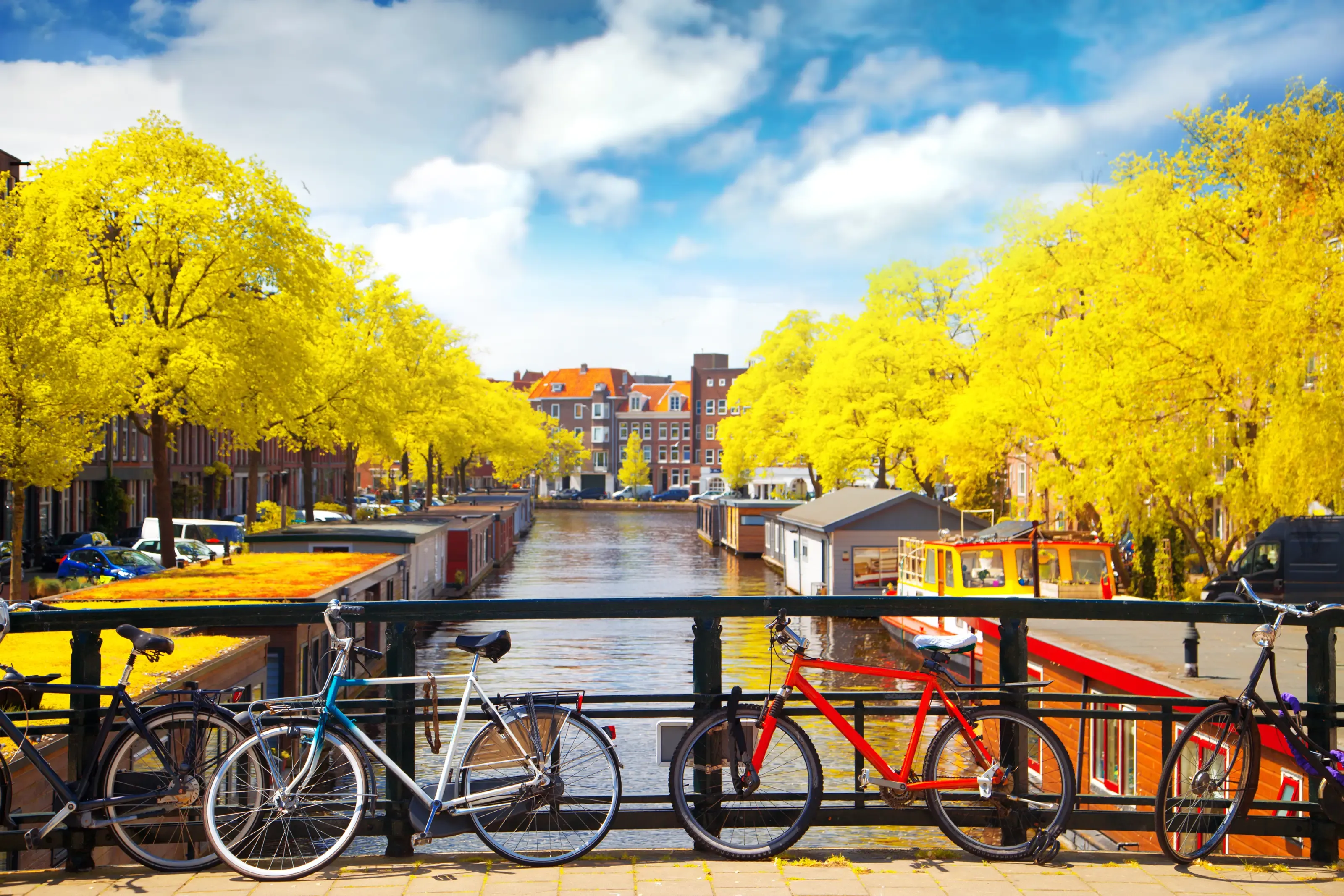
Amsterdam, Netherlands
Data updated Sep 3, 2026
📊 Scores
Best fit: Digital Nomad (score: 72)
Amsterdam operates at a scale that surprises people who expect a European capital to feel like one. The population of the city proper sits around 900,000, which makes it closer to Portland or Denver than to Paris or Berlin. That scale is part of what makes it work. The density is high enough to support serious cultural infrastructure, a genuinely excellent restaurant scene, and transit that functions without a car, while remaining navigable enough that most residents develop a mental map of the city within the first few months.
The economy runs on finance, logistics, tech, and the European headquarters function that Amsterdam has filled for American and Asian multinationals for decades. Booking.com, ASML, Heineken, and a long list of financial institutions anchor the professional job market. The Dutch have structured their economy and tax regime in ways that historically attracted international holding companies, which created a professional class of expats cycling through two to four year assignments that gives the city a particular transient-but-settled social texture. For remote workers, the 30% ruling, a tax arrangement that allows qualifying highly skilled migrants to receive 30% of their salary tax-free for up to five years, makes the Netherlands significantly more attractive financially than the headline income tax rates suggest. The ruling has tightened in recent years and the eligibility criteria are worth checking directly before factoring it into any financial planning.
Housing is the number that ends the conversation for some people. Amsterdam has one of the tightest rental markets in Europe and the combination of high demand, restrictive zoning, and a large social housing sector that removes inventory from the private market has produced a rental environment that requires patience and speed in equal measure. A one-bedroom in the Jordaan, De Pijp, or Oud-West runs $1,800 to $2,500 monthly, with good apartments in desirable neighborhoods going within hours of listing. The outer ring neighborhoods, Amsterdam Noord across the IJ, Bos en Lommer, and the Nieuw-West area, offer more availability at lower cost and are better connected than their reputation suggests following transit improvements. Expats arriving on company packages often land in the southern districts around Zuidas, which is the financial center and has its own residential ecosystem of international schools and higher-end apartments.
The bike is not a lifestyle accessory in Amsterdam the way it is in cities that have built cycling infrastructure as an aspiration. It is the primary mode of transport for most residents across most trips, and the city is organized around that assumption in ways that only become fully apparent after living here. The cycling network is so complete and so integrated into daily movement that not cycling feels like a deliberate choice requiring justification rather than a default. Learning to navigate the bike lanes, the bike parking culture, and the unspoken right of way rules takes a few weeks and pays dividends for the entire duration of a stay. A used bike from Waterlooplein market or any of the second-hand shops costs $80 to $200 and is the most important logistical purchase of the first month.
The Dutch climate is grey in a way that resembles Seattle but with more wind and less topographic drama to compensate. Summers are genuinely pleasant, warm without being hot, and the long days produce an outdoor culture centered on terraces, parks, and the canal system that gives the city its best version of itself between May and September. Vondelpark fills in a way that feels spontaneous but happens every warm weekend. The shoulder seasons are manageable. November through February tests people from sunnier climates, not through dramatic cold but through a persistent overcast and wind off the North Sea that requires deliberate management of energy and mood.
Dutch directness is the cultural adjustment that catches the most people off guard, particularly those arriving from cultures where communication is more indirect. The Dutch say what they think, decline what they do not want, and do not interpret social smoothing as kindness. That directness reads as rudeness to some nationalities and as a profound relief to others. The adjustment period is real but most expats who stay long enough report eventually preferring it to ambiguity. Making Dutch friends requires more sustained effort than the directness implies, because there is a difference between someone being honest with you and someone wanting to spend their weekend with you. The expat community is large enough and international enough that social life is not difficult to build, but it often runs parallel to Dutch social life rather than integrated with it.
English fluency across the population is exceptional, which removes the language barrier almost entirely for daily logistics, professional life, and social navigation. The Dutch rank among the highest non-native English speakers in the world by any measurement, and conducting an entire life in Amsterdam in English is genuinely possible in a way that is not true in France or Germany. Learning Dutch remains worthwhile for integration depth but is not a prerequisite for functioning.
The food scene has improved considerably over the past decade and the reputation for bad Dutch cuisine, which was largely deserved historically, is increasingly outdated. Indonesian food is exceptional and cheap, a legacy of the colonial relationship that produced one of the better culinary inheritances in European cooking. Surinamese, Turkish, and Moroccan food are all well represented. The cheese, bread, and herring culture of traditional Dutch eating is exactly what it appears to be and best appreciated on its own terms rather than compared to French or Italian food traditions.
Best suited for: finance and tech professionals on European postings, remote workers who qualify for the 30% ruling and want a walkable, cycling-oriented city with serious cultural infrastructure, and anyone who can absorb high housing costs in exchange for a quality of daily life that is difficult to replicate at any price in most American cities.
🏚️ Cost of Living
💰 Budgets and Costs
Grocery Basket
Eating Out
Utilities & Lifestyle
Housing
💰 Real Spend Reports
🏥 Healthcare
🌤️ Climate
💻 Digital Nomad
| Name | Price/mo | Notes |
|---|---|---|
| Zoku Amsterdam | $231 | WorkZoku unlimited membership, EUR 200/mo (verified own-site 2026). Rooftop coworking inside a live/work hotel in the Plantage district; 24/7 access. |
| A Lab | $115 | Work Hotel flex desk, EUR 99/mo (2025). Creative/maker building in Amsterdam-Noord. Official URL not confirmed - verify before publish. |
| The Thinking Hut | $87 | Cozy, community-driven space from EUR 75/mo (2025); two Amsterdam locations, weekly community lunches. Official URL not confirmed - verify before publish. |
| WeWork Amsterdam | — | Multiple central locations (Strawinskylaan, Weesperstraat, Weteringschans); hot desks, dedicated desks, global network access. Check site for current rate. |
Planning to live in Amsterdam long-term? Netherlands Orientation Year Visa (Zoekjaar) lets remote workers live legally.
View full requirements →🧳 Expat Life
🛂 Visa Options for Netherlands
Not sure which Netherlands visa you qualify for?
Answer 10 questions and get a personalized match in under 2 minutes.
Could living/working in Amsterdam cut years off your work life?
With a 1-bedroom in the center at $2689/mo, your FIRE number here might be much lower than you think.
Share This Guide
Amsterdam won't stay this cheap forever.
Cost-of-living and visa updates for Amsterdam and the rest of Netherlands. Free with RA Postcards.
By submitting your email address, you will receive a free subscription to RA Postcards and special offers from Rewire Abroad and our affiliates. You can unsubscribe at any time, and we encourage you to read more about our Privacy Policy.