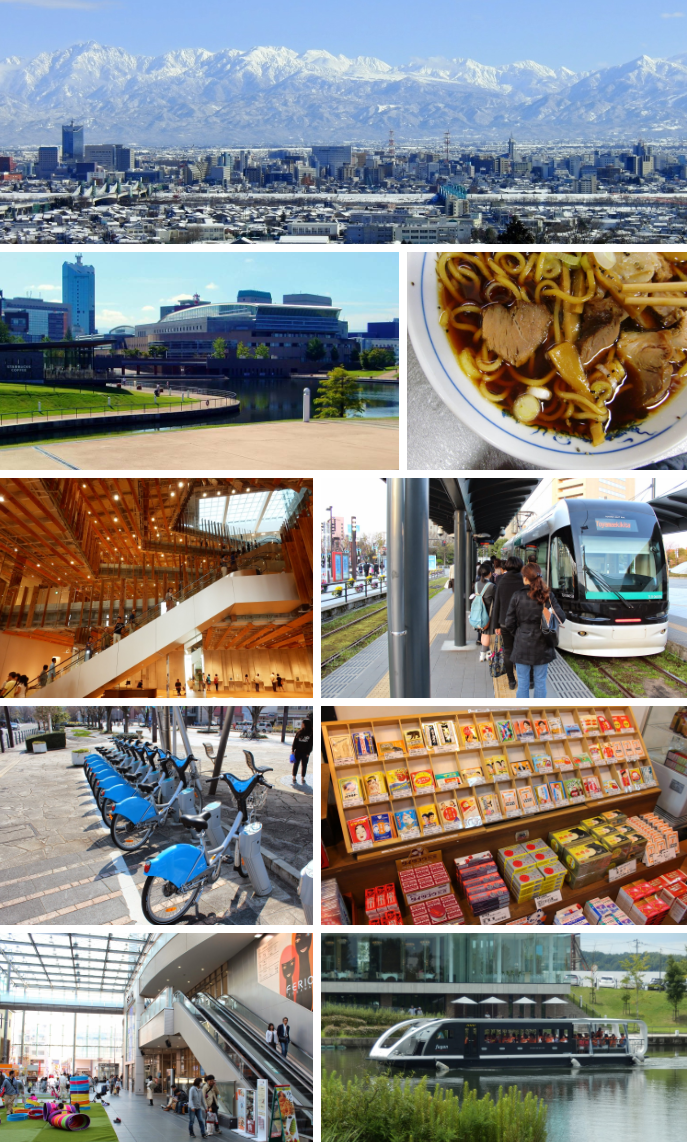
Manufacturing drives this industrial hub, with pharmaceutical giants like Takeda and Astellas operating major facilities alongside electronic parts and industrial robot producers. The cheap hydroelectric power from Kurobe Dam attracts energy-intensive industries, creating steady blue-collar and engineering jobs. English-speaking roles exist mainly in the pharmaceutical sector, but most positions require functional Japanese. The economy runs on traditional Japanese corporate structures — stable but hierarchical, with limited startup culture compared to Tokyo.
Rent averages $600 monthly for a city center 1BR, dropping to $400-450 in suburbs. The Hokuriku Shinkansen reaches Tokyo in 2.5 hours for ¥12,000, but local transport relies heavily on cars — budget ¥30,000 monthly for parking and fuel. Healthcare follows Japan's excellent national system, though finding English-speaking doctors requires effort. City hall bureaucracy moves at typical Japanese pace, meaning multiple visits for residence registration. Winter heating costs spike due to heavy snowfall from December through March.
Winters dump serious snow — expect 2-3 meters annually and gray skies for months. The food scene centers on exceptional seafood from Toyama Bay, particularly white shrimp and yellowtail, plus solid ramen culture. Weekend options include hiking in nearby Alps or soaking in onsen, but nightlife stays quiet after 10 PM. The expat community numbers maybe 200-300 people, mostly pharmaceutical workers and English teachers. This suits outdoorsy types who want authentic Japan without Tokyo chaos, but you'll need Japanese skills and a car.
Estimate the cost of moving to Toyama, Japan
Get a free moving cost estimate for moving to Toyama, Japan. Takes 10 seconds.
How much are you shipping?
When are you moving?
Powered by Sirelo. Free quotes from international movers.
🏚️ Cost of Living
💰 Budgets and Costs
A category breakdown is not available for Toyama yet. We publish a breakdown only when every category can be priced from local data, rather than showing figures we cannot stand behind.
Toyama is exceptionally safe by any standard, with violent crime virtually non-existent and petty theft rare. The city benefits from Japan's strong social order, efficient police presence, and cultural emphasis on community responsibility. Expats should note that while crime is minimal, the main practical concerns are natural disasters (earthquakes, heavy snow in winter) rather than criminal activity. Scams targeting foreigners are uncommon but can occur in entertainment districts; stick to established businesses. For an American relocating here, safety is genuinely not a concern—focus instead on language barriers and cultural adjustment.
Located near Toyama Station, Basis Point offers a modern and professional environment. It's well-suited for expats due to its central location, English-speaking staff, and focus on creating a collaborative community.
SWITCH combines a coworking space with a cafe, creating a relaxed and social atmosphere. Located in the central part of Toyama, it's a good option for those who prefer a more casual and community-focused workspace.
While specific WeWork locations fluctuate, checking their website for Toyama availability is recommended. WeWork provides a consistent, high-quality experience with modern amenities, making it a reliable choice for expats familiar with the brand.
See how Toyama's digital nomad life compares with Kyoto
🧳 Expat Life
English Proficiency
Limited
Expat Community
Very Few
Top Neighborhoods
Toyama City Center
Banks Nearby
35
ATMs Nearby
3
Expat Life Notes
Toyama offers a high quality of life with stunning mountains-to-sea views but lacks a foreign support network.
Pros
✓ Exceptional nature (Japan Alps)
✓ Clean and safe
✓ Low rent prices
Cons
✗ Severe language barrier
✗ Quieter social life
✗ Winter snowfall can be heavy
🏘️ Neighborhoods in Toyama
Areas of Toyama that expats often consider.
Conditions can change from one block to the next, and these descriptions are general guides, not safety assessments. Before choosing where to stay or live, check current travel advisories, talk to people who live there, and visit in person if you can.
Sakuragi-cho
Central, convenient, modern living
Located near Toyama Station, Sakuragi-cho offers easy access to transportation, shopping, and dining. It's popular with younger professionals and families. The area is very walkable and well-connected, but can be a bit pricier than other neighborhoods.
Uchisaiwai-cho
Quiet residential, family-friendly atmosphere
A more suburban area, Uchisaiwai-cho is known for its parks and quieter streets. It's a good option for retirees or those seeking a more relaxed lifestyle. While less central, it's still accessible by public transport, but English may be less commonly spoken.
Shirokane
Historic, traditional, cultural heart
Shirokane offers a glimpse into Toyama's past, with traditional houses and temples. It's a charming area for those interested in Japanese culture. While not as modern as Sakuragi-cho, it's still relatively convenient, but language barriers might be more prevalent.
Meirin-cho
Budget-friendly, student-focused, lively
Close to Toyama University, Meirin-cho has a younger, more energetic vibe and lower rental costs. It's a good option for digital nomads or those on a tighter budget. Expect more noise and a less polished environment, but also more opportunities to connect with local students.
Ariso
Coastal, scenic, relaxed living
Located along the coast, Ariso offers beautiful views and a more laid-back atmosphere. It's ideal for those who enjoy nature and outdoor activities. Transportation options might be more limited, and a car could be beneficial. English proficiency is lower here.
Takeshima
Industrial, developing, affordable housing
Takeshima is an up-and-coming area with more affordable housing options. It's further from the city center and has a more industrial feel. While less charming than other neighborhoods, it offers a lower cost of living and potential for future development. Language support will be minimal.
Page 1 of 2
Could living/working in Toyama cut years off your work life?
With a 1-bedroom in the center at $238/mo, your FIRE number here might be much lower than you think.
In Toyama, a one-bedroom runs $238 in the center and $450 outside it and three bedrooms come to $634 in the center and $800 outside it, per month.
Toyama scores 85 on the safety index (higher is safer) and a crime index of 15 (lower is safer).
Average internet speed in Toyama is 200 Mbps. A home connection costs about $32/mo.
In Toyama, summer averages 30°C, winter averages 0°C and annual rainfall is 2047 mm.
Yes, practically speaking. While the city has buses and trains, most daily activities require a car, especially for shopping and accessing suburban areas where many expats live. Budget ¥30,000+ monthly for parking, fuel, and insurance.
Conversational Japanese minimum for most jobs. Only pharmaceutical companies occasionally hire English-only speakers for specialized roles. Daily life, banking, and city hall procedures all require basic Japanese communication skills.
Brutal by most standards. Expect 2-3 meters of snow, constant gray skies from December-March, and heating bills that can hit ¥20,000+ monthly. Many expats struggle with the seasonal depression aspect more than the cold itself.
Toyama boasts excellent internet infrastructure. You can expect reliable fiber optic connections with speeds of 100 Mbps or more in most apartments and coworking spaces, making video calls and large file transfers a breeze.
Toyama is an incredibly safe city with very low crime rates. You can feel comfortable walking alone at night in most areas, though it's always wise to be aware of your surroundings, especially in entertainment districts.
For budget-conscious expats, consider areas slightly outside the city center like Furumachi or Uozu. These neighborhoods offer more affordable housing options while still providing convenient access to amenities and transportation.
A single person can live comfortably in Toyama on $1500-$2000 USD per month, including rent, utilities, groceries, and some entertainment. Rent for a one-bedroom apartment outside the city center typically ranges from $500-$700 USD.
While not all doctors speak fluent English, some clinics and hospitals in Toyama have English-speaking staff or offer translation services. The Toyama International Center can provide a list of recommended medical facilities.
Opening a bank account can be challenging without a long-term visa and Japanese residency card. Shinsei Bank and Japan Post Bank are often recommended as being more foreigner-friendly, but expect to need your passport, residency card, and proof of address.
Toyama has a relatively small but welcoming expat community. You can connect with other expats through online forums, language exchange events, and international organizations based in the city.
Japan doesn't have a specific retirement visa. Americans typically explore options like the Tourist Visa (allowing stays up to 90 days), the Long-Stay Visa (if eligible, requires substantial savings), or investing in a business to obtain a business visa.
Toyama offers a much slower and more relaxed pace of life compared to major US cities. It's a great place to escape the hustle and bustle and enjoy a more tranquil environment, but be prepared for a less vibrant nightlife scene.
Toyama's lower cost of living compared to many US cities allows you to stretch your Social Security income further. By living outside the city center, cooking at home, and utilizing local transportation, you can significantly reduce your expenses.
As a US citizen living in Toyama, you're still required to file US taxes. You may be eligible for the Foreign Earned Income Exclusion (FEIE) or the Foreign Tax Credit, and you'll need to report foreign bank accounts if they exceed $10,000 (FBAR).
Toyama has an excellent and reliable public transportation system, including trams, buses, and trains. The Centram tram is particularly convenient for getting around the city center, and the Shinkansen bullet train provides easy access to other parts of Japan.
Toyama is known for its fresh seafood, especially during crab season. You'll find a variety of restaurants offering local specialties like Toyama Bay sushi, black ramen, and white shrimp tempura. Dining out is generally affordable, with lunch sets costing around $10-$15 USD.
Toyama can be a good option for FIRE, especially if you're comfortable with a slower pace of life and learning some Japanese. The lower cost of living allows you to stretch your passive income further, and the safe environment provides peace of mind.
Cost-of-living and visa updates for Toyama and the rest of Japan. Free with RA Postcards.
By submitting your email address, you will receive a free subscription to RA Postcards and special offers from Rewire Abroad and our affiliates. You can unsubscribe at any time, and we encourage you to read more about our Privacy Policy.