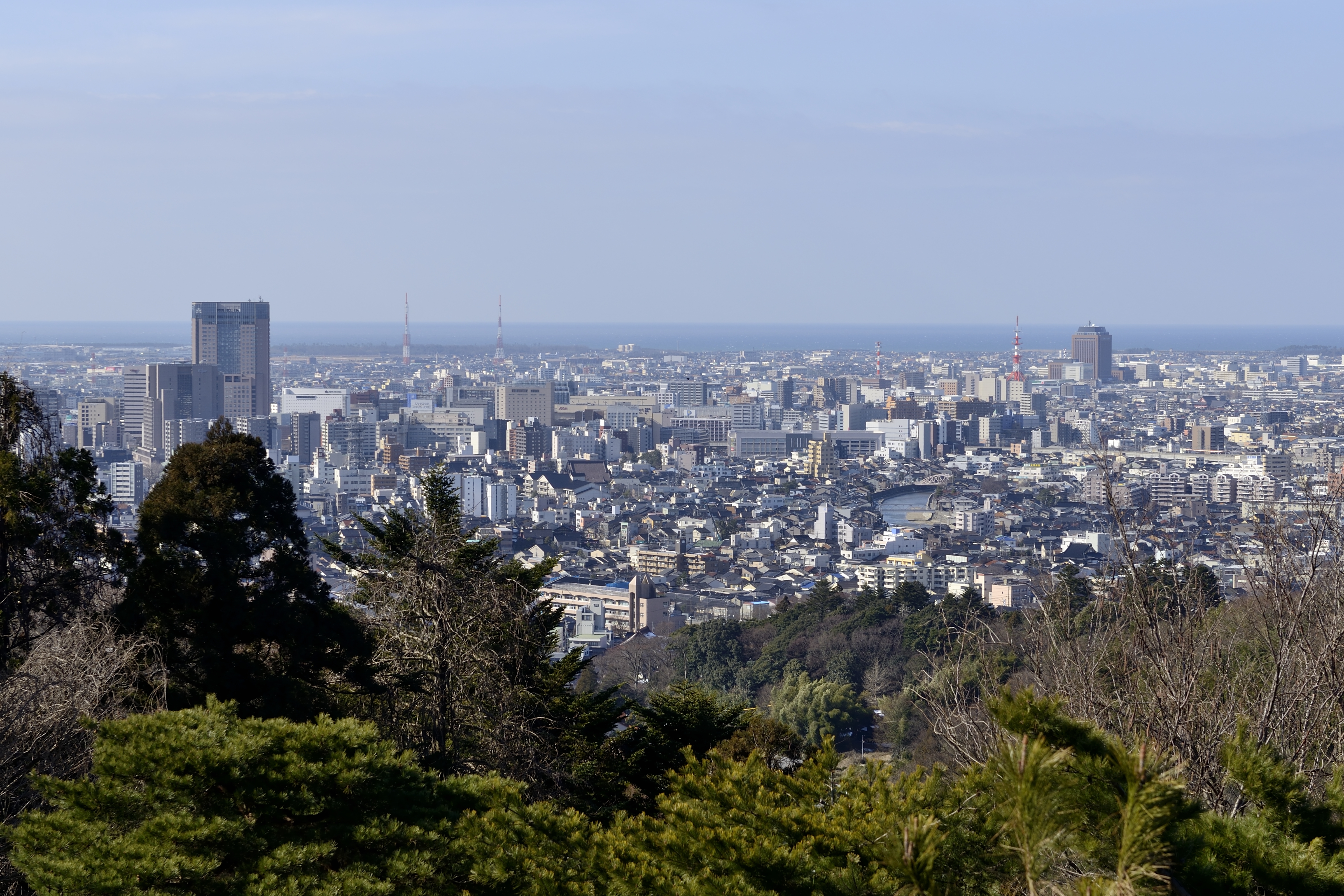
Kanazawa sits on the Sea of Japan coast in Ishikawa Prefecture, a city of 462 thousand people built at 58 m above sea level in a subtropical climate, where humid summers give way to some of the snowiest winters in Japan. The timezone is Asia/Tokyo, and the city keeps a rhythm that rewards people who like four distinct seasons rather than endless mild weather. Expats tend to cluster in Nomachi and Hirosaka, two central districts that put residents within walking distance of markets, temples, and the Kenrokuen garden circuit. The expat community here is small, so newcomers often meet the same faces at language exchanges and local festivals, which makes settling in feel personal rather than anonymous.
Living costs in Kanazawa are moderate by Japanese standards and remarkably gentle compared with Tokyo or Osaka. A one-bedroom apartment in the city center runs $406/mo, while the same unit outside the center drops to $250/mo. Three-bedroom places go for $749/mo centrally and $530/mo farther out. Utilities add $146/mo, internet $43/mo, and a mobile phone plan $24/mo. A monthly public transport pass costs $25/mo and a gym membership $43/mo. Eating out stays affordable: an inexpensive restaurant meal is $8 per person, a mid-range three-course dinner for two is $32, and a cappuccino is $2. A single adult can live on a budget tier of $520/mo with rent included, step up to $718/mo mid-range, or settle into $952/mo comfortable. Excluding rent, a single person spends about $1,050/mo and a family of four about $3,200/mo. Against an average monthly net salary of $1,901/mo and a cost of living index of 70/100 where NYC equals 100, the math favors savers, though local wages mean remote income stretches much further than a local paycheck.
Safety is one of Kanazawa's quiet strengths. The safety index reads 80/100 and the crime index 20/100, where lower is safer, so late walks home and solo evenings rarely raise concern. Healthcare quality is rated excellent, giving residents confidence in everything from routine checkups to specialist care. Air quality sits at 42 on the index, better than many large Asian cities, and average internet speed reaches 142 Mbps, fast enough for video calls, streaming, and remote work without frustration. The overall expat score is 76/100, with a FIRE score of 76/100, a retiree score of 71/100, and a digital nomad score of 70/100, numbers that reflect a city that is comfortable, safe, and steady rather than flashy.
For long stays, the Japan Digital Nomad Visa requires a minimum monthly income of $6,667/mo, a threshold that shapes who can realistically base themselves here on that status. The nearest airport is TOY, just 9 km away, which keeps arrivals and departures simple. English proficiency is limited and the expat community is small, so daily life rewards a willingness to learn some Japanese and build local relationships. Kanazawa suits remote workers with foreign income, early retirees drawn by safety and excellent healthcare, and slow travelers who want a walkable, affordable city with real seasons. It is less suited to people who need a large international crowd or who depend on a local salary alone, since average net pay of $1,901/mo leaves little room for the comfortable tier without careful budgeting.