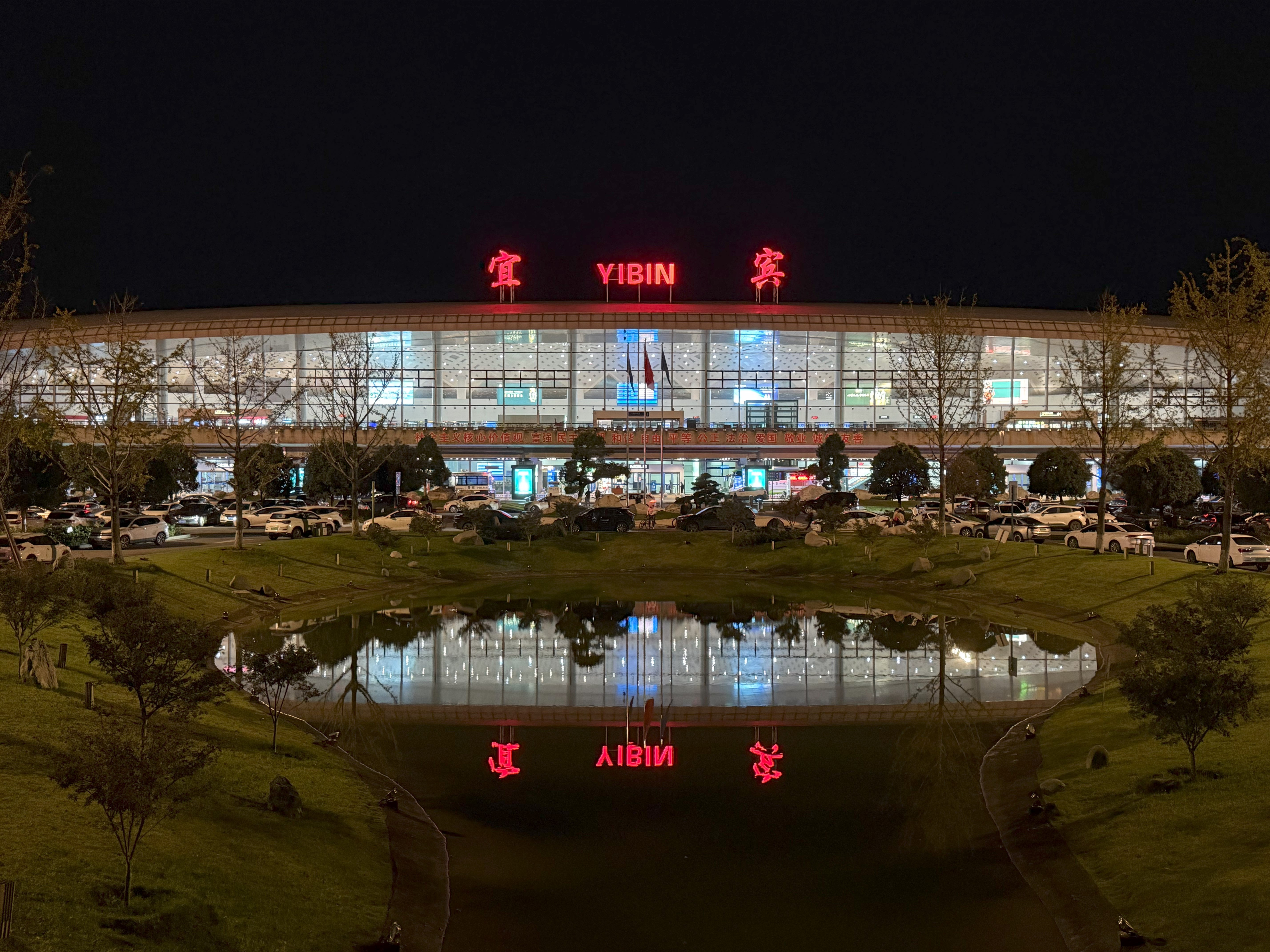
Yibin sits at 300 meters above sea level in China's subtropical zone, where summers can reach 38°C and winters dip to -2°C, with a monsoon-influenced rainy season from May to September and drier conditions from October to April. The city of 1.2 million people is served by the nearest airport at 16 km away, and expats tend to settle in the Cuiping District, which offers a small but welcoming community. The climate shapes daily life, from humid afternoons to crisp winter mornings, and the city's position along the river adds to its character.
Living in Yibin is remarkably affordable, with a single person's monthly cost excluding rent at $450/mo. A one-bedroom apartment in the city centre rents for $250/mo, while outside the centre it drops to $180/mo; a three-bedroom in the centre costs $550/mo, and outside the centre it is $400/mo. Utilities run $47/mo, internet $13/mo, and a mobile phone plan $9/mo. For a single adult, the budget tier total is $285/mo, the mid-range tier total is $392/mo, and the comfortable tier total is $508/mo. A meal at an inexpensive restaurant costs $3, a mid-range restaurant meal for two with three courses is $22, and a cappuccino is $3.
Safety in Yibin is solid, with a safety index of 70/100 and a crime index of 28/100, indicating a low level of crime. Healthcare quality is rated as fair, which is adequate for routine needs, though expats may plan for more complex care elsewhere. The overall expat score is 82/100, reflecting a generally positive experience, while the FIRE score is 84/100, making it attractive for those focused on financial independence and early retirement.
Getting to Yibin is straightforward via the nearest airport, YBP, located 16 km from the city. For visas, the standard pathways for long-term stays apply, though specific programs are not detailed here. This city suits digital nomads, given a digital nomad score of 66/100 and an average internet speed of 79 Mbps, as well as those prioritizing savings, with a retiree score of 56/100 indicating a moderate fit. English proficiency is limited, so learning some Mandarin will ease daily interactions, and the small expat community means a more immersive local experience.