China Talent Visa (R Visa)
China · Asia
Data updated Sep 3, 2026
Processing Time
5 days–1 wks
Difficulty
Difficult
Duration
180 months
Overview
China’s R visa does not hinge on a minimum monthly income, savings balance, or investment amount, so a $3,800/month mix of rental income and ETF dividends does not by itself answer eligibility; the gate is talent status. Article 4 of Beijing’s implementation measures ties the visa to high-level foreign talents, urgently demanded specialists, scientists, technical leaders, international entrepreneurs, and high-skilled people in “high-end, precision, sophisticated and talent-desiring” fields, and the overseas application route depends on a Confirmation Letter for High Level Foreign Talents. Local work is permitted, and dependents are allowed, but the visa is not a passive-income residency for retirees or remote workers.
The main trade-off is time in China after approval: Article 7 says an eligible applicant may get a multiple-entry visa valid for five to ten years, and each stay can run up to 180 days per visit. There is no physical presence requirement or automatic residency clock beyond the 180-day maximum consecutive absence, so this is not a stay-and-keep-a-calendar arrangement. For someone splitting time between two countries, the practical issue is not a day-count rule; it is whether the underlying job, research, or expertise fits the provincial and embassy definition of R-visa eligibility.
Renewal and follow-on status are where the bureaucratic weight shows up. The visa itself is renewable, but the visa can lead to permanent residency after about five years, though the requirements do not specify a path to citizenship. Beijing’s rules say holders working in China must apply for a foreigner’s work permit with the local foreigner work affairs authority or its entrusted agency, and VisaHQ notes that work-permit renewal uses the same core documents, with a possible physical examination in the work-permit process. Processing is listed at 3–5 business days to 1 week as of 2026, with an urgent service in the Beijing rules cutting issuance to 2 working days and waiving charges for the qualifying talent applications described there.
The friction is in documentation, not money: an apostille is required, but no FBI background check, medical exam, interview, or local bank account is required by the requirements, but the application depends on a valid passport, acceptable photos, the visa application form, and the Confirmation Letter for High Level Foreign Talents. A person who already holds a provincial-level talent credential and needs a 5–10 year multiple-entry China visa with local work permission is the cleanest match. Someone whose plan is to live off a brokerage account, stay outside a formal talent category, and treat China as a flexible long-stay base is a poor fit because the visa’s core test is specialized talent, not portfolio size.
Eligibility Requirements
Any nationality can apply in principle, because the structured facts list nationality restrictions as “all.” The practical friction point is not legal eligibility but consulate and banking hurdles for applicants from Iran, North Korea, Syria, Cuba, and Russia, where document handling, payment channels, or local processing can be harder even when the visa itself remains open. Verify directly with the Chinese embassy or consulate handling your filing and, for mainland procedure details, the State Administration of Foreign Experts Affairs / local foreigner work affairs authority before assembling the package.
Duration
180 months
Max Absence
180 days
Requirements Checklist
• Identity: Original passport valid at least 6 months with at least 2 blank visa pages; photocopy of passport information (bio) page and any extension page (if applicable); photocopy of previous Chinese visas and previous passport information page (if applicable); recent color passport photo meeting Chinese visa photo specifications.
• Application: Completed China Visa Application Form filled out online (COVA) and printed; hand-signed visa application form (no digital signature, no handwritten form other than signature); Where You Stay Form printed and hand-signed (if required by consulate).
• Talent/Invitation: Confirmation Letter for High-Level Foreign Talents (High Talent Confirmation Letter) issued by the competent Chinese authority (e.g., State Administration of Foreign Experts Affairs or local/provincial Bureau of Foreign Experts); proof letter from the inviting/receiving employer or unit in China; supporting qualification documents such as expert certificates, employment/appointment letters, or documents proving high-level talent or urgently needed skills as required by the inviting authority.
• Residency/Status: Proof of legal stay or residence permit in the country where you apply if you are not applying in your country of nationality (e.g., valid visa, residence permit, or equivalent).
• Address: Photocopy of driver’s license or state ID showing current address, or recent utility bill showing current address (if required by the consulate).
• Family/Background: Birth certificate and copies of parents’ passports and proof of their legal status at time of birth for first-time applicants with Chinese parents (if applicable); birth certificate and copies of parents’ passports for first-time applicants of Asian descent (if required by the consulate); birth certificate and copies of both parents’ passport name pages for minor applicants, plus notarized parental consent letter if only the minor is applying (if required).
Apostille required on official documents
Tax Information
Local Tax Picture China does not give this visa a named preferential tax regime in the facts provided, and the structured data does not specify a territorial, remittance-based, or special non-dom style regime for R-visa holders. That leaves the local tax result tied to ordinary Chinese tax residency and source rules, not to the visa label itself. In practical terms, local employment income earned in China is the obvious taxable item. Foreign ETF dividends, foreign brokerage gains, overseas pension distributions, and rental income from property abroad are not answered in the source set; the key point is that the visa facts do not disclose an exemption, so a holder cannot assume foreign passive income is sheltered just because the visa is for “high-level talents.”
Capital gains on foreign investments are not publicly specified in the supplied facts for this visa. Tax residency timing is also not specified here, so there is no reliable day-count trigger to quote from the visa facts alone. The only hard compliance item in the source set is that holders working in China must apply for a foreigner’s work permit through the local foreigner work affairs authority or its entrusted agency, which creates a second administrative track beyond the visa stamp.
Tax treaty status with the United States is listed as unknown, so no treaty-based claim should be assumed for dividends, capital gains, pensions, or Social Security on the basis of this dataset.
For US Citizens and Green Card Holders - FEIE (Form 2555) excludes passive income. A US citizen on an R visa who works in China can use the Foreign Earned Income Exclusion only for earned income, up to the 2024 cap of $126,500, and only if the Physical Presence Test or Bona Fide Residence Test is met. The visa structure here does not provide a day-count residency rule, so the Physical Presence Test is the cleaner fit if the person is actually spending 330 days in a 12-month period outside the U.S., including time in China. - FTC (Form 1116) only helps when Chinese tax on the same income exceeds the U.S. tax due. If China taxes foreign passive income at 0 under an unstated or exempt treatment, the FTC does not shelter that income. - FBAR (FinCEN 114) applies if foreign accounts exceed $10,000 at any point in the year. An R-visa holder may need Chinese banking for salary or work-permit administration, so account balances can trigger reporting even when the visa facts do not require a local bank account.
The right setup is a US CPA who handles FEIE, FTC, and FBAR for expatriates, plus a China tax advisor who can map local registration, work-permit-linked filing, and any city-level compliance. The first-year cost often falls in the $1,500–$3,000 range and is easier to justify than a missed FBAR or a bad residency filing.
Living in China
COL Index vs NYC
30.7
Monthly Cost (excl. rent)
$500
1BR Rent (City Center)
$404
Safety Index
76.0
Healthcare Index
68.7
Quality of Life Index
121.4
Time Zone
UTC+08:00
Capital
Beijing
Population
1402.1M
Official Languages
Chinese
Avg Internet Speed
223 Mbps
Public Transit Quality
Excellent
With a budget covering rent and living costs, you'd need roughly $904/mo for a comfortable single-person lifestyle in China.See how far your money goes →
🏙️ Best Cities in China for Expats
 ✦ 89
✦ 89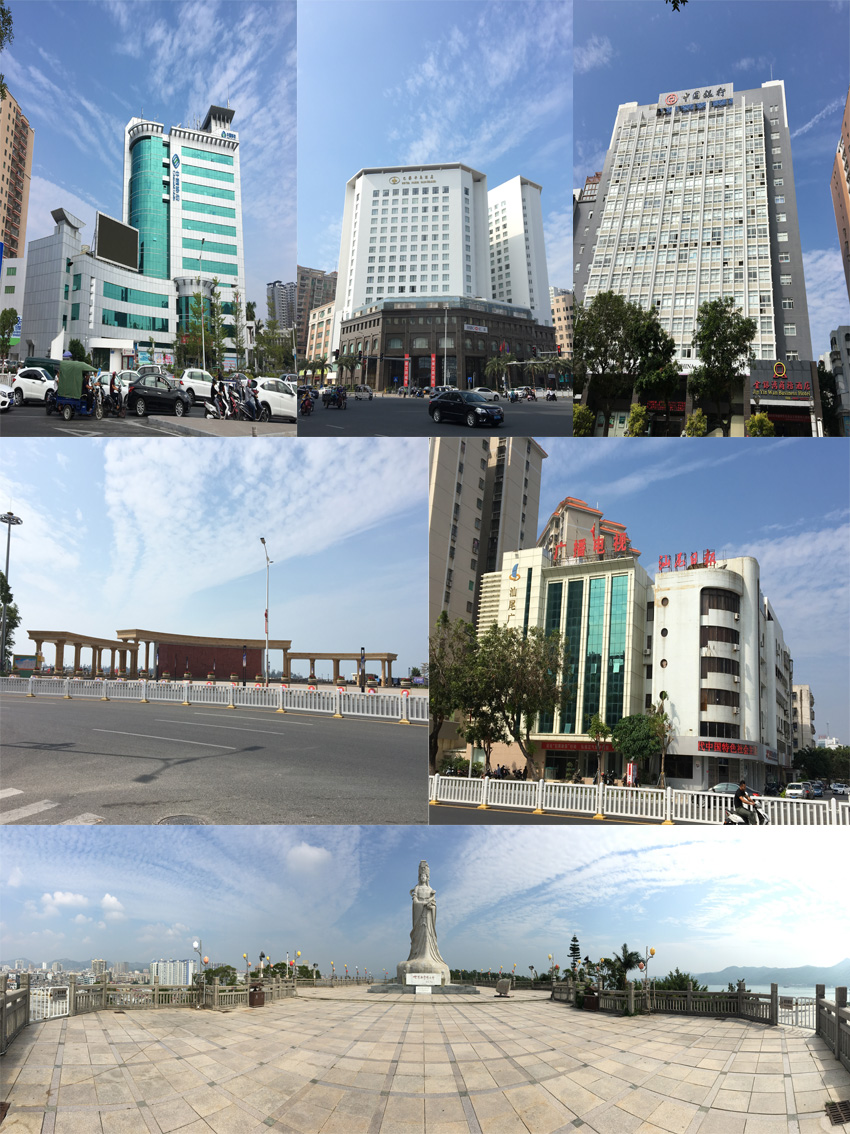 ✦ 90
✦ 90 ✦ 89
✦ 89 ✦ 91
✦ 91 ✦ 95
✦ 95 ✦ 91
✦ 91Getting the income documentation story straight before applying
Most people prepping for this visa think in terms of bank statements and pay stubs, the way they would for a standard remote-income visa. That's the wrong mental model here. The income figure attached to the R Visa, roughly $6,333.33 a month as of 2026, isn't something you prove independently with three months of Wise transfers. It's to the talent designation your inviting employer or institution asserts on your behalf. The Confirmation Letter for High-Level Foreign Talents is the document doing the real work, and it references your compensation as part of a broader case for why you qualify as urgently needed or high-level talent, not as an isolated financial threshold you clear on your own.
This is where freelancers and remote employees run into trouble. If your income comes from two or three US clients and no Chinese entity is formally employing or hosting you, there's no natural path for anyone to issue that letter. The visa assumes an employment or appointment relationship inside China that generates the income, or at minimum vouches for it. Trying to retrofit a freelance income stream into that framework after the fact rarely works. The sequencing that actually succeeds starts with the institutional relationship, whether that's a job offer, a university appointment, or a corporate secondment, and only then moves to assembling the salary documentation, employment letter, and qualification certificates that support the case that relationship is built on.
People also underestimate how much the supporting qualification documents matter relative to the income number itself. Expert certificates, prior employment history in a relevant field, and degree credentials all feed into whether the inviting authority is willing to stake its name on your application. A high salary offer from a company with no track record of sponsoring foreign talent gets more scrutiny than a modest offer from an institution that processes these letters regularly. Where you apply matters too: if you're not applying from your home country, you'll also need to show your legal status there, which adds another document to track down before you ever reach the consulate window.
The accommodation and registration piece people underestimate
There's no landlord reference letter or lease-upload step to the R Visa application itself the way there is for some European residence visas. What trips people up instead is what happens the moment you land. China requires foreign residents to register their address with local police, and the paperwork trail around where you're staying, sometimes formalized through a printed and signed accommodation form at the consulate stage, carries through into your obligations once you're actually in the country.
The mistake is treating this as a formality that hotels or landlords handle automatically. Hotels generally do register you. Private rentals often don't, unless the landlord is used to housing foreigners and knows the drill. If you're moving into an apartment through a personal connection or a short-term sublet, the registration step can fall through the cracks entirely, and it's the kind of gap that doesn't surface until you're trying to renew something later and the paper trail doesn't line up. Given that the visa route runs through an inviting employer, it's worth asking that employer directly whether they handle housing registration for incoming foreign staff or leave it entirely to you. Institutions that sponsor talent visas regularly usually have an HR or foreign affairs office that's done this dozens of times; smaller or first-time sponsors may not have a process at all, which means you're the one figuring out which police station handles registration in your district and how quickly after arrival it needs to happen.
The other detail people miss is that none of this housing or registration groundwork can be assembled retroactively from outside China. You can't arrive on a tourist visa, find an apartment, get comfortable, and then sort out the R Visa side of things. The visa has to be secured before travel, in person, at a consulate or visa center in your home country or country of residence. That forces a specific order of operations: lock in the invitation and the visa first, and only then start solving housing, rather than treating apartment hunting as something to run in parallel.
The distance between R visa approval and actually settled status
Getting the R Visa stamped in your passport is not the finish line, and treating it as one is a common miscalculation. The R Visa is fundamentally an entry document. What determines how settled you actually are once you're inside China is the residence status you convert into after arrival, and that process runs through domestic Chinese authorities rather than anything the consulate abroad controls.
This is also why the visa can't be improvised. You cannot enter China on a tourist visa, find your footing, and then apply to convert into R Visa status from within the country. That door is closed. Whatever status you're going to hold has to be secured before you board the flight, which means all of the invitation-gathering, document collection, and apostille work described earlier has to happen while you're still outside China, with no ability to patch gaps once you land.
Once inside, the practical experience of daily life, banking, work authorization, and freedom of movement depends on how cleanly your inviting institution handles the domestic side of your registration and permit conversion. A well-organized sponsor with experience hosting foreign talent will walk you through this without much friction. A first-time sponsor might leave you managing bureaucratic steps you didn't know existed until they were already overdue. Either way, budget mental space for the fact that your R Visa approval is the beginning of a domestic administrative process, not the end of one, and that process is where most of the actual friction of moving to China as a foreign talent lives.
What the five-year path to permanent residency actually demands
On paper, the timeline to permanent residency here looks unusually short for China: five years, compared to routes that historically demanded far longer for most foreign nationals. That acceleration is one of the more genuine draws of the talent classification, and it's real. But the paper timeline and the lived timeline diverge in one specific way: continuity.
Permanent residency tracks built around continuous residence tend to be strict about absences, and here the ceiling sits at 180 consecutive days away from China before it starts working against your case. That's a generous number by some standards, but it's also easy to underestimate if your work involves regular travel back to the US for client meetings, family obligations, or simply because your employer expects periodic in-person time elsewhere. A pattern of long trips home, each individually under the limit but frequent enough to add up, can undermine the continuity story even when no single absence breaks the rule outright.
The other practical reality is that the five-year clock depends on maintaining the underlying talent status the whole way through. If your original sponsorship relationship ends, whether through a job change, an institutional restructuring, or simply your employer's interest in continuing to sponsor you, the residency clock doesn't necessarily protect you. Renewability is built into the visa, and the renewal itself doesn't require restarting the invitation process from zero if your circumstances haven't changed materially, but a break in your underlying qualifying relationship can force exactly that restart. People planning toward the five-year mark should treat their sponsoring relationship as the actual load their PR timeline sits on, not the visa stamp itself.
The real decision, R Visa sponsorship versus a self-directed nomad visa elsewhere
For a remote worker weighing this against a straightforward digital nomad visa in a country like Portugal or Spain, the honest framing is that these are two different categories of decision, not two flavors of the same one. A self-directed remote-income visa asks you to prove your own finances and lets you control the pace of your application from start to finish. The R Visa asks a third party in China to vouch for you, and that dependency doesn't disappear once you're approved, it follows you into how smoothly your residence status gets handled after arrival.
If your work is truly portable, client-based, and doesn't require a Chinese institutional relationship to exist, a nomad-style visa elsewhere is very likely the lower-friction choice. You retain more control over timing, you're not exposed to a sponsor's internal bureaucracy or turnover, and if the relationship with a client changes, your visa status doesn't automatically wobble with it.
Where the R Visa actually wins is for people whose work already has a China-shaped hook: a research position, a technical role at a company with China operations, an academic appointment, something where the sponsoring relationship is the point of moving, not an obstacle to work around. For that person, the fast processing, the absence of an interview requirement, and the five-year runway to permanent residency make it a truly strong option. For the person trying to reverse-engineer a China move purely because the income threshold looks achievable, the sponsorship requirement will surface as friction almost immediately, usually well before the consulate appointment.
Work Permissions
Application Steps
- 1
📋 Confirm your talent eligibility status
1-2 weeks
- 2
📋 Secure a Chinese employer or sponsor
2-8 weeks
- 3
📄 Request Confirmation Letter from employer
5-7 working days
- 4
📄 Prepare required visa documents
1-2 weeks
- 5
📬 Submit application in person
Same day
- 6
⏳ Wait for visa processing
2-4 working days
- 7
📬 Collect your visa
Same day
- 8
📋 Travel to China
Varies
- 9
🏛️ Apply for Foreigners Work Permit
1-2 weeks
- 10
🏛️ Register with local tax authority
1-2 weeks
- 11
🏛️ Renew work permit and visa as needed
4-6 weeks before expiration
Frequently Asked Questions
Click any question to expand the answer.
Ready to Apply?
Work with trusted visa specialists who handle the paperwork so you can focus on your move.
Get help with this visa →* We may earn a commission if you apply through our link
At a Glance
Last verified: July 15, 2026