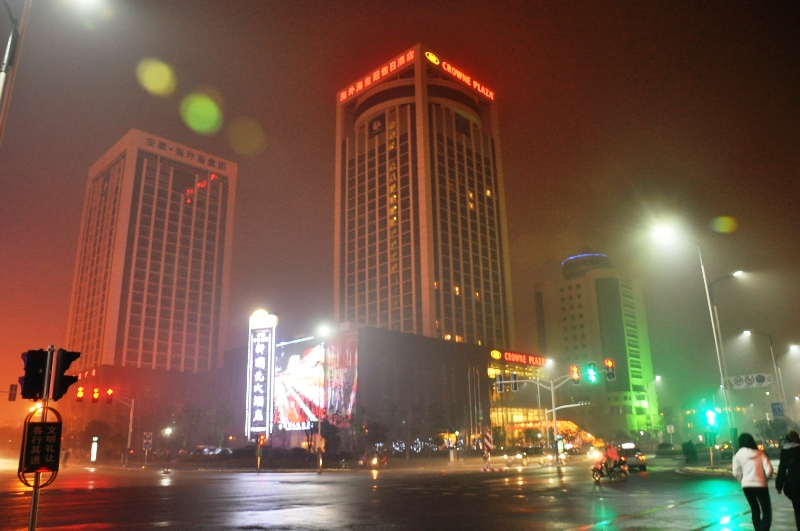
Ma'anshan sits on the southern bank of the Yangtze River in eastern China's Anhui province, about 32 km from Wuhu Xuanzhou Airport (WHU). The city has a humid subtropical climate with hot, muggy summers above 35°C and cold, dry winters down to -8°C, marked by distinct seasonal shifts and moderate air quality challenges typical of industrial regions. For expats, the Huashan District is the most popular choice, offering the closest thing to a central living experience, though the expat community itself remains very few in number.
Living costs here are remarkably low against local wages. A one-bedroom apartment in the city centre rents for $188/mo, while outside the centre it drops to $150/mo; a three-bedroom in the centre costs $289/mo, and outside the centre $230/mo. Utilities run just $43/mo, a mobile plan $9/mo, and a gym membership $26/mo. A cappuccino at a restaurant costs $3. The average monthly net salary is $724/mo, which aligns closely with the budget tier total of $700/mo for a single adult including rent. Mid-range living totals $1,200/mo, and a comfortable tier comes to $1,800/mo, with non-rent monthly expenses averaging $450/mo.
Safety is solid, with a safety index of 66/100 and a crime index of 34/100, indicating a low crime environment. Healthcare quality is rated as good, which provides reassurance for daily medical needs. The city's air quality index stands at 78, a moderate level that reflects its industrial character, but the overall expat score of 85/100 suggests a generally favorable experience for those who settle here.
For those considering a move, visa pathways exist through standard Chinese residency channels, though specific programs are not detailed here. Getting to Ma'anshan is straightforward via WHU airport, located 32 km away. The city suits budget-conscious singles and early retirees who prioritize low costs and safety over a large expat network or high English proficiency, which is limited. With a FIRE score of 87/100, it is particularly attractive for financial independence seekers, while digital nomads may find the 95 Mbps internet speed adequate, though the retiree score of 62/100 suggests it is less ideal for older expats seeking extensive amenities or community.
Estimate the cost of moving to Ma’anshan, China
Get a free moving cost estimate for moving to Ma’anshan, China. Takes 10 seconds.
How much are you shipping?
When are you moving?
Powered by Sirelo. Free quotes from international movers.
🏚️ Cost of Living
💰 Budgets and Costs
A category breakdown is not available for Ma’anshan yet. We publish a breakdown only when every category can be priced from local data, rather than showing figures we cannot stand behind.
Rent, 1 bedroom in the centre
$188/mo
Living costs, excluding rent
$450/mo
Still needed for a full breakdown: restaurant prices.
Ma'anshan is a relatively safe industrial city with low violent crime rates typical of inland Chinese cities. Petty theft and scams targeting foreigners exist but are uncommon compared to major tourist hubs. Main concerns include traffic safety (chaotic driving patterns), air quality from steel manufacturing, and navigating bureaucratic systems as a foreigner. Avoid displaying expensive items and use registered taxis or ride-sharing apps. For American expats, the biggest adjustment is limited English infrastructure and social isolation rather than personal safety—this is a working city, not an expat hub. Overall a reasonable choice for remote workers prioritizing affordability and calm over cosmopolitan amenities.
Ma'anshan has a humid subtropical climate with hot, muggy summers (35°C+) and cold, dry winters (-8°C), featuring distinct seasonal transitions and moderate air quality challenges typical of industrial regions in eastern China.
💻 Digital Nomad
Avg Internet Speed
95 Mbps
Coworking Availability
Abundant
Coworking Spaces Nearby
0
Digital Nomad Score
67/100
Community Notes
Ma’anshan combines industrial prowess with natural beauty, offering nomads a blend of modern and traditional China.
Regus offers a reliable, professional environment in various locations within Ma'anshan. It's a good option for those seeking a familiar, international-standard workspace with flexible terms and business support services.
While a direct Ucommune location in Ma'anshan is unconfirmed, it's likely that remote workers would travel to Nanjing (a major city nearby) to access this popular coworking chain. Ucommune offers a vibrant community and modern facilities, appealing to younger digital nomads.
Similar to Ucommune, TEC is more likely found in the larger city of Nanjing, offering premium coworking spaces. It caters to professionals seeking high-end facilities, a prestigious business address, and comprehensive support services.
See how Ma’anshan's digital nomad life compares with Wuxi
🧳 Expat Life
English Proficiency
Limited
Expat Community
Very Few
Top Neighborhoods
Huashan District
Banks Nearby
8
ATMs Nearby
0
Expat Life Notes
An industrial steel city near Nanjing. Foreigners are almost exclusively here for specific technical projects.
Pros
✓ Good connection to Nanjing
✓ Low cost of living
✓ Modern apartments available
Cons
✗ Heavy industrial focus
✗ Air quality issues
✗ Social isolation for foreigners
🏘️ Neighborhoods in Ma’anshan
Areas of Ma’anshan that expats often consider.
Conditions can change from one block to the next, and these descriptions are general guides, not safety assessments. Before choosing where to stay or live, check current travel advisories, talk to people who live there, and visit in person if you can.
Yushan District (雨山区)
Central, convenient, bustling, established
Yushan is the central district, offering a mix of residential and commercial areas. It's generally considered expat-friendly due to its central location, access to amenities, and relatively higher concentration of English speakers. Expect good public transport but also more noise and traffic compared to quieter areas.
Huashan District (花山区)
Modern, developing, residential focus
Huashan is a more modern district with newer apartment complexes and a focus on residential living. While less central than Yushan, it offers a potentially quieter environment and lower rents. English proficiency is lower here, making it more challenging for those who don't speak Mandarin.
Xiushan New District (秀山新区)
New, spacious, planned community
Xiushan New District is a planned community with wide streets, modern architecture, and green spaces. It's further from the city center but offers a more relaxed and spacious living environment. Public transport is still developing, and English is not widely spoken.
Cihu Scenic Area (采石矶风景区)
Scenic, historic, tourist-oriented
While primarily a tourist destination, living near Cihu Scenic Area offers beautiful views and access to historical sites. Expect higher prices due to tourism and potentially more noise during peak seasons. Some English may be spoken in tourist-facing businesses.
Bowang District (博望区)
Industrial, affordable, local living
Bowang is a more industrial district, offering the most affordable living options. It's further from the city center and lacks many amenities catering to foreigners. Mandarin proficiency is essential for living here.
Page 1 of 2
Could living/working in Ma’anshan cut years off your work life?
With a 1-bedroom in the center at $188/mo, your FIRE number here might be much lower than you think.
In Ma’anshan, a one-bedroom runs $188 in the center and $150 outside it and three bedrooms come to $289 in the center and $230 outside it, per month.
Average monthly net salary in Ma’anshan is $724.
Ma’anshan scores 66 on the safety index (higher is safer) and a crime index of 34 (lower is safer).
Average internet speed in Ma’anshan is 95 Mbps.
In Ma’anshan, summer averages 35°C, winter averages -8°C and annual rainfall is 1343 mm.
Generally yes. The city has a safety index of 66, which is reasonable, and violent crime affecting foreigners is rare. The bigger practical concern is navigating daily life with zero English infrastructure — safety is less of an issue than isolation.
Not comfortably. Unlike Shanghai or Beijing, Ma'anshan has almost no English-language support in shops, hospitals, or government offices. Translation apps help for basics, but for anything administrative — visa registration, banking, healthcare — you'll need Mandarin or a local who can assist you.
Very easy. Rail connections put Nanjing roughly 60–90 minutes away, and the two cities are economically integrated. Many Ma'anshan residents commute to Nanjing regularly. For expats, Nanjing is effectively your nearest hub for international flights, larger hospitals, and a real expat community.
Ma'anshan has a humid subtropical climate, meaning hot, humid summers and relatively mild winters. Expect temperatures to range from around freezing in January to over 90°F (32°C) in July. Spring and autumn are the most pleasant times to be here, but be prepared for rain throughout the year.
Rent in Ma'anshan is quite affordable. You can find a decent one-bedroom apartment in a central location like Yushan for around $300-$500 USD per month. Larger apartments or those in newer complexes might cost a bit more, but overall, housing is very budget-friendly.
The expat community in Ma'anshan is relatively small compared to larger cities like Shanghai or Beijing. You'll mostly find teachers and some business professionals. While it might take some effort to connect, there are usually informal gatherings and online groups where you can meet other foreigners.
For long-term stays, you'll likely need a work visa (if employed) or a student visa (if studying). Tourist visas are only valid for short stays. It's best to consult with the Chinese embassy or consulate in the US to determine the most appropriate visa for your situation and understand the application process.
Internet connectivity in Ma'anshan is generally very good. You can expect reliable high-speed internet in most apartments and cafes. 5G is also becoming increasingly available. Speeds are sufficient for video conferencing, streaming, and other remote work tasks.
Healthcare in Ma'anshan is improving, but it's not on par with Western standards. While some hospitals have international wings, finding English-speaking doctors can be challenging. It's advisable to have comprehensive international health insurance and possibly consider traveling to Nanjing or Shanghai for more specialized care.
Ma'anshan is generally a safe city with a low crime rate. Petty theft can occur, especially in crowded areas, so it's wise to be aware of your surroundings. There aren't any specific areas that are considered particularly dangerous, but as with any city, it's best to exercise caution at night.
Opening a bank account in Ma'anshan can be a bit bureaucratic, but it's doable. You'll typically need your passport, visa, and proof of address. Bank of China and ICBC are common choices. Be prepared for some paperwork and potential language barriers, so bringing a translator might be helpful.
Public transportation in Ma'anshan is affordable and convenient. Buses are plentiful and cover most of the city. Taxis are also readily available and relatively inexpensive. For longer distances, the high-speed train to Nanjing and other cities is a great option.
You can live quite comfortably in Ma'anshan on a budget of $1,500-$2,000 USD per month. This would cover rent, food, transportation, and some entertainment. If you're looking for a more luxurious lifestyle, you might need a bit more, but overall, Ma'anshan offers excellent value for retirees.
Ma'anshan's low cost of living makes it an attractive option for those pursuing FIRE. Your passive income will stretch much further here than in the US. However, be mindful of currency exchange rates and any potential restrictions on transferring funds internationally.
Ma'anshan offers a diverse range of dining options, from local street food to international cuisine. Eating out is very affordable. You can enjoy a delicious meal at a local restaurant for just a few dollars. Expect to pay more at Western-style restaurants, but even those are generally cheaper than in the US.
Be sure to try some of the local specialties like Caishi Geng (a thick soup), fried dumplings, and various noodle dishes. Street food is abundant and delicious, so don't be afraid to explore the local markets and try new things. Many dishes feature local river fish and seafood.
As a US citizen, you're still required to file US taxes even when living abroad. The Foreign Earned Income Exclusion (FEIE) can help you exclude a certain amount of your income from US taxes. Also, be aware of FBAR (Report of Foreign Bank and Financial Accounts) requirements if you have significant assets in foreign accounts. Consult with a tax professional specializing in expat taxes for personalized advice.
Cost-of-living and visa updates for Ma’anshan and the rest of China. Free with RA Postcards.
By submitting your email address, you will receive a free subscription to RA Postcards and special offers from Rewire Abroad and our affiliates. You can unsubscribe at any time, and we encourage you to read more about our Privacy Policy.