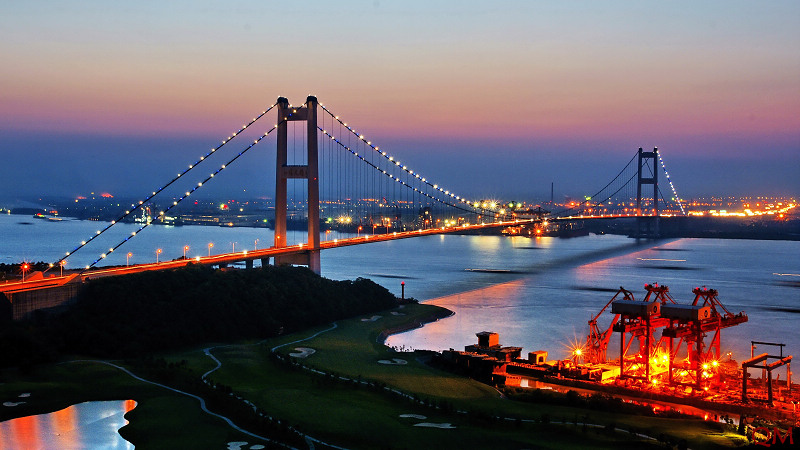
Jiangyin sits in Jiangsu Province on the southern bank of the Yangtze River, a city of 1.8 million people at just 4 m above sea level, keeping time on Asia/Shanghai. The climate is humid subtropical, with hot, muggy summers from June through August and cold, damp winters from December through February, while spring and autumn offer the most pleasant conditions for walking the riverfront or cycling between districts. Expats tend to settle in Chengjiang and Binjiang, two neighborhoods that balance access to daily conveniences with a quieter pace than central Shanghai or Suzhou. Internet runs at an average of 120 Mbps, fast enough for remote work, streaming, and video calls without much friction.
Renting a one-bedroom apartment in the city center costs around $400/mo, while the same outside the center drops to roughly $300/mo. A three-bedroom in the center runs about $800/mo, and outside the center it falls to $600/mo. Excluding rent, a single person spends about $450/mo on monthly costs, which covers groceries, local transport, utilities, and modest dining. A budget tier for a single adult, rent included, lands near $900/mo, while a comfortable tier reaches $2,300/mo for those who want a larger place, more dining out, and occasional travel. These figures make Jiangyin affordable by the standards of nearby megacities, though English proficiency is limited, so everyday errands often require translation apps or a patient approach to Mandarin.
Safety is a strong point, with a safety index of 75/100 and a crime index of 25/100, where lower is safer. Violent crime is rare, and residents generally feel comfortable walking at night, though standard precautions apply in any city of this size. Healthcare quality is rated Good, with hospitals in the urban core handling routine care and specialist referrals, while more complex procedures may prompt a trip to Shanghai or Wuxi. Air quality sits at an index of 68, better than many Chinese industrial cities but still worth monitoring on high-pollution days, especially for those with respiratory sensitivities.
Visas follow China's national framework, and most foreign residents arrive on work, business, or family permits arranged through an employer or sponsor. The nearest airport is WUX, about 40 km away, connecting Jiangyin to major domestic and some international routes. The city suits budget-conscious expats, remote workers, and early retirees drawn by low rents, solid infrastructure, and a medium-sized expat community, though the retiree score of 67/100 and digital nomad score of 76/100 suggest it rewards those who value calm and cost savings over nightlife or a large international social scene. An overall expat score of 87/100 and a FIRE score of 89/100 underline its appeal for anyone building savings while living comfortably in eastern China.