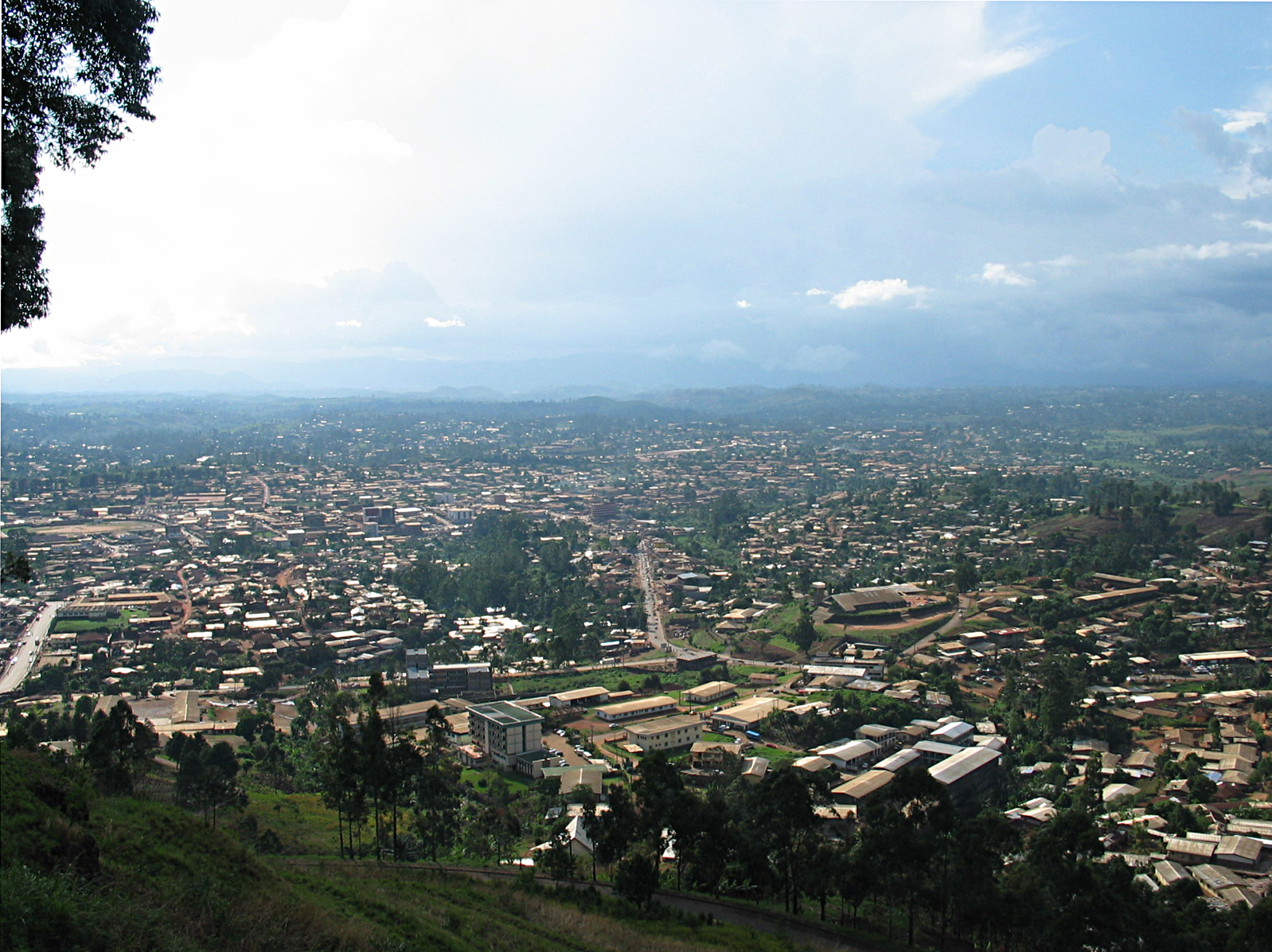
Bamenda sits at 1,610 m above sea level in Cameroon's Northwest Region, a highland city of 420 thousand people on Africa/Douala time. The climate is tropical, softened by the elevation, and the Station area is the neighborhood expats tend to choose. For a city of its size, Bamenda keeps a low profile internationally, which means newcomers arrive to a place that is neither polished for outsiders nor hostile to them.
Rent for a one-bedroom outside the centre runs $34/mo, and a single adult can live on a budget tier of $420/mo including rent or a mid-range tier of $492/mo. Excluding rent, monthly costs come to $392/mo, with utilities at $171/mo, internet at $43/mo, and a mobile phone plan at $30/mo. A monthly public transport pass costs $9/mo and a gym membership $17/mo, while an inexpensive restaurant meal is $5 and a cappuccino $1. Against those figures, the average monthly net salary locally is $96/mo, a gap that shapes daily life for most residents and makes remote income the practical dividing line for foreigners.
The safety index is 45/100 and the crime index 55/100, so caution is part of ordinary routines rather than an emergency posture. Healthcare quality is poor, which makes medical evacuation planning a real consideration rather than a formality. Air quality sits at 45 on the index, and average internet speed is 10 Mbps, workable for messaging and email but not for heavy data work.
Visa arrangements are handled through official channels, and the nearest airport is BPC, 9 km away. English proficiency is limited, the expat community is medium in size, and the overall expat score is 49/100, with 51/100 for retirees and 42/100 for digital nomads. Bamenda suits self-directed remote workers, long-stay volunteers, and retirees who value highland air and low rent over convenience, and who are prepared to manage healthcare, connectivity, and language on their own terms.