Thailand Digital Nomad Visa (DEST)
Thailand · Asia
Data updated Sep 3, 2026
Application Fee
$270
Difficulty
Moderate
Duration
6 months
Path to Citizenship
No
Overview
Thailand’s Digital Nomad Visa (DEST) targets remote workers, freelancers, and contractors who can prove savings rather than a specific monthly income. The hard financial gate is at least $13,700 in savings (as of 2026, roughly aligned with the 500,000 THB figure consulates quote), documented via a recent bank statement in your name. Social Security, pensions, and other passive income are not recognized in the official criteria, so the cleanest path is to show you are a contractor or self‑employed professional with that $13,700 parked in a bank account.
DEST is a short-stay digital nomad option: the visa is granted for 6 months, with multiple entries allowed during that validity window. There is no minimum number of days you must stay in Thailand each year, and no maximum consecutive absence period. Practically this works well for someone splitting time between, say, Thailand and Vietnam or Thailand and the US within the same 6‑month period, as border runs are not structurally embedded into the rules.
There is no path from the Thailand Digital Nomad Visa (DEST) to permanent residency or citizenship: the official stance is “Leads to PR: No” and this visa does not count toward years to citizenship. DEST can be renewed for a further 6 months at a cost of $270 (as of 2026), so DEST should be treated as a medium‑term stay permission rather than the first step in a 10‑year relocation plan. If your goal is Thai permanent residence or naturalization, you would need to switch later into a different visa class with a documented residency track.
On the bureaucracy side, DEST is relatively light: Bureaucracy Score is 1/5, with no apostille, no FBI background check, no medical exam, no interview, and no requirement to open a local Thai bank account. The core friction is assembling clean evidence: a bank statement showing at least $13,700, a passport valid 6+ months, proof of current location, and documentation that you are a contractor or self‑employed. The application fee is $270 (as of 2026) and is non‑refundable, so incomplete uploads or unclear PDFs can turn into real sunk costs.
This visa makes the most sense if you can document at least $13,700 in liquid savings, already earn remotely as a contractor or self‑employed professional, and want a 6‑month legal base in Thailand without touching local employment. It is a poor fit if your plan is a 10‑year stay with a path to Thai permanent residency or if your only income is $2,000–$3,000/month from pensions or Social Security that you cannot credibly tie to remote work or freelancing.
Eligibility Requirements
Any nationality can apply in principle for the Thailand Digital Nomad Visa (DEST); there is no published list limiting it to specific countries. In practice, applicants from sanctioned or diplomatically sensitive states such as Iran, North Korea, Syria, Cuba, or Russia can encounter extra scrutiny at Thai embassies and with banks when proving funds, which can make approval or later financial setup significantly harder even if not formally banned. Before assembling a full document package, confirm your eligibility and any consulate‑specific rules directly with Thailand’s Ministry of Foreign Affairs e‑Visa platform or the nearest Royal Thai Embassy or Consulate, since consular posts can enforce their own stricter interpretations.
Min Savings
$13,700
Application Fee
$270
Renewal Cost
$270/yr
Min Age
20 yrs
Duration
6 months
1099 Contractor · Self-Employed
Requirements Checklist
• Identity: Original passport valid at least 6 months from travel date; passport biodata page copy; recent passport-size photograph (taken within the last 6 months); completed visa application form.
• Financial: Bank statements for the last 3 months showing ending balance of at least 500,000 THB (or equivalent).
• Employment: Foreign employment contract or employment certificate authenticated by the embassy of the country where the company is located; company registration or business license copy authenticated by the embassy of the country where the company is located; proof of salary slips or monthly income for the last 6 months; professional portfolio proving digital nomad/remote worker/freelancer/foreign talent status.
• Accommodation: Proof of prolonged residence in Thailand for at least 6 months such as condominium rental agreement or lease agreement.
• Other: All documents provided in English or Thai (or with certified translation into English or Thai, if originally in another language).
Tax Information
Local tax regime and capital gains
Thailand runs a residence‑based tax system with elements of a territorial approach: residents are taxed on Thai‑source income and, under current policy, on foreign‑source income if it is brought into Thailand in the same tax year it is earned. Non‑residents are taxed only on Thai‑source income. None of this is DEST‑specific, but the moment you cross into Thai tax residency, your global structure starts to matter.
For a DEST holder who becomes tax resident, remote salary from a foreign employer, contractor income, or self‑employment fees paid from clients abroad are foreign‑source. Under current administrative practice, those amounts are taxed if remitted to Thailand in the same year; funds kept offshore or remitted in a later year fall into a grey area and can be treated as outside scope. Dividends from ETFs in a US or Canadian brokerage, rental income from property abroad, and pension or 401(k)/RRIF withdrawals are similarly foreign‑source and become taxable in Thailand when brought in within the same tax year, at progressive rates that can reach 35%.
Capital gains on foreign investments, such as selling index funds or ETFs in a foreign brokerage, are treated as foreign‑source gains. For a Thai tax resident, these gains are taxed locally if the proceeds are remitted into Thailand in the same tax year; if not remitted, they are generally exempt under the de facto territorial/remittance approach. For non‑residents, foreign capital gains are outside Thai tax scope entirely.
Tax residency is based on days in the country, not visa category. Spending 180 days or fewer in Thailand in a calendar year keeps you non‑resident; spending more than 180 days makes you a Thai tax resident under domestic rules. Residency is not triggered just by holding the Thailand Digital Nomad Visa (DEST), and there is no separate tax‑resident registration tied to this visa.
Local filing obligations arise once you are tax resident and have taxable Thai‑source income or foreign income remitted in‑year. At that point, you obtain a Thai Tax ID from the Revenue Department and file an annual return (currently by around March of the following year for individuals). DEST itself does not impose a special tax regime or automatic filing requirement if you stay under the 181‑day residency threshold.
There is no comprehensive US-Thailand income tax treaty, Social Security totalization agreement, or specific relief on dividends or pensions. In practice, Americans should plan as if there is no US–Thailand treaty shielding them from double taxation and then confirm the actual treaty position with a professional.
For US Citizens and Green Card Holders
DEST does not change your US obligations: you remain taxable on worldwide income. The Foreign Earned Income Exclusion (FEIE), claimed on Form 2555, applies only to earned income, remote W‑2 salary, contractor income, or self‑employment profits. For 2026 the limit is $132,900; above that, regular US rates apply. FEIE does not cover ETF dividends, capital gains, rental income, pensions, or Social Security. Given DEST’s 6‑month validity and the fact that staying under 181 days in Thailand avoids Thai tax residency, the Physical Presence Test (330 full days outside the US in any 12‑month period) is usually more relevant than the Bona Fide Residence Test.
The Foreign Tax Credit (FTC), claimed on Form 1116, becomes useful only if you actually pay Thai income tax and the Thai effective tax rate on a given income stream is higher than or comparable to your US rate. If you manage your days to avoid Thai tax residency or avoid remitting foreign income to Thailand in the year it is earned, your Thai tax on foreign‑source income is effectively zero. In that case, the FTC does nothing for that income. If you do become Thai resident and remit, say, $80,000 of contractor income, you could face Thai tax up to 35%, and Form 1116 credits would matter.
FBAR (FinCEN 114) kicks in if your aggregate foreign financial account balances exceed $10,000 at any point during the year, regardless of DEST. This threshold counts all non‑US bank, brokerage, and certain custodial accounts worldwide. Even though a Thai bank account is not required for DEST, many people open one; that single step can trigger FBAR and FATCA Form 8938 reporting if combined balances pass the thresholds. Non‑willful FBAR penalties start around $10,000 per violation, inflation-adjusted to roughly $16,700 as of 2026, so this is not paperwork to ignore.
For an American on DEST with meaningful assets and remote income, the right bench is two professionals: a US CPA who specializes in expat taxation and understands FEIE, FTC, FBAR, and FATCA, and a Thai tax advisor who can interpret current remittance rules and handle local registration/filing if you cross 181 days. The $1,500–$3,000 spent in year one on that combined advice often pays for itself via optimized elections, correct use of Form 2555 vs. Form 1116, and avoided penalties.
Living in Thailand
COL Index vs NYC
33.7
Monthly Cost (excl. rent)
$603
1BR Rent (City Center)
$475
Safety Index
62.7
Healthcare Index
77.5
Quality of Life Index
106.2
Time Zone
UTC+07:00
Capital
Bangkok
Population
69.8M
Official Languages
Thai
Avg Internet Speed
355 Mbps
Public Transit Quality
Good
With a budget covering rent and living costs, you'd need roughly $1,078/mo for a comfortable single-person lifestyle in Thailand.See how far your money goes →
🏙️ Best Cities in Thailand for Digital Nomads
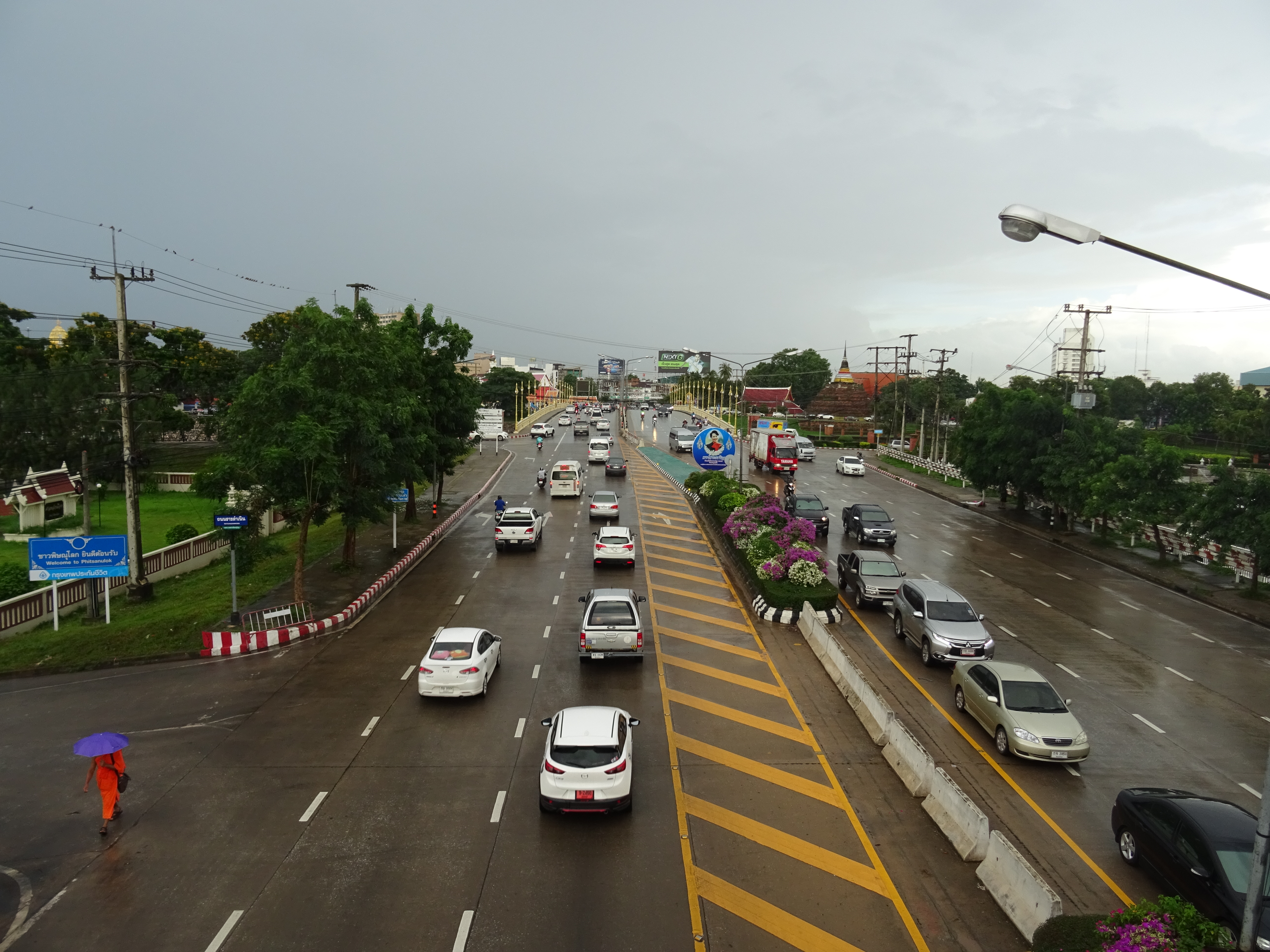 72
72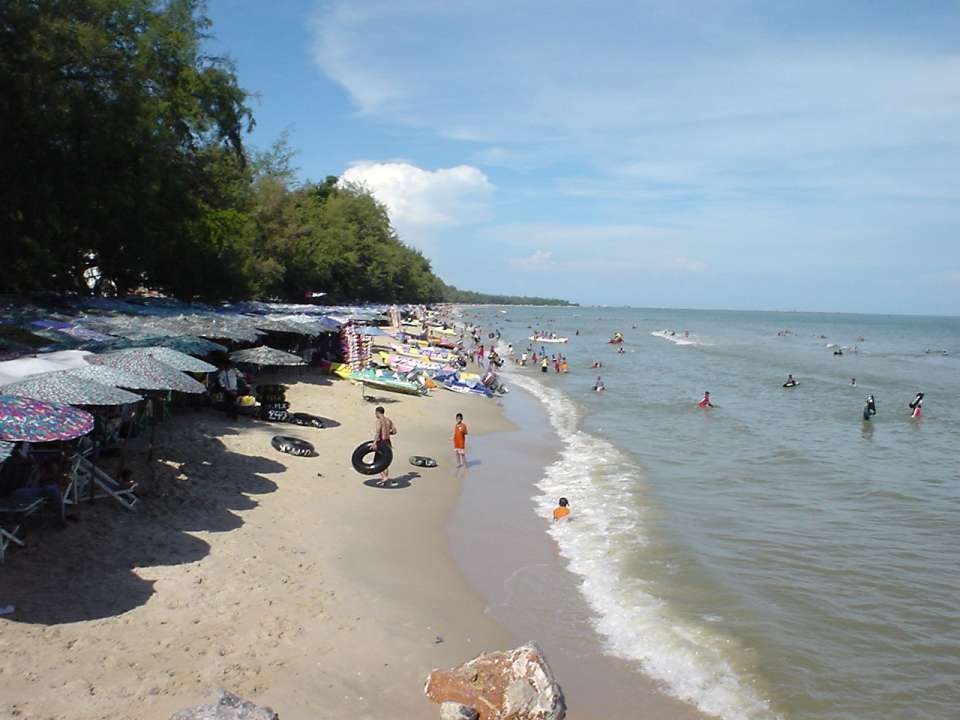 71
71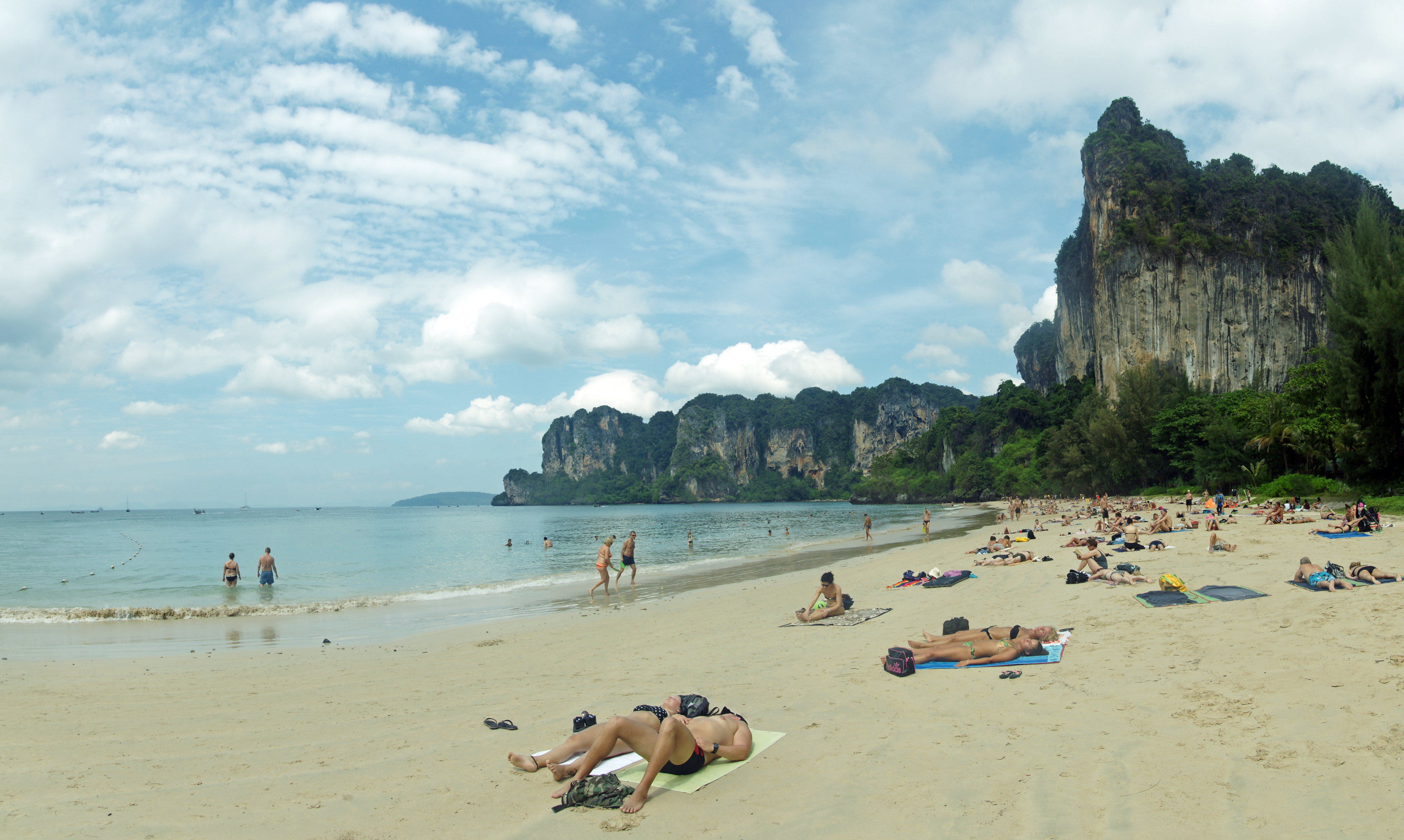 ✦ 80
✦ 80 69
69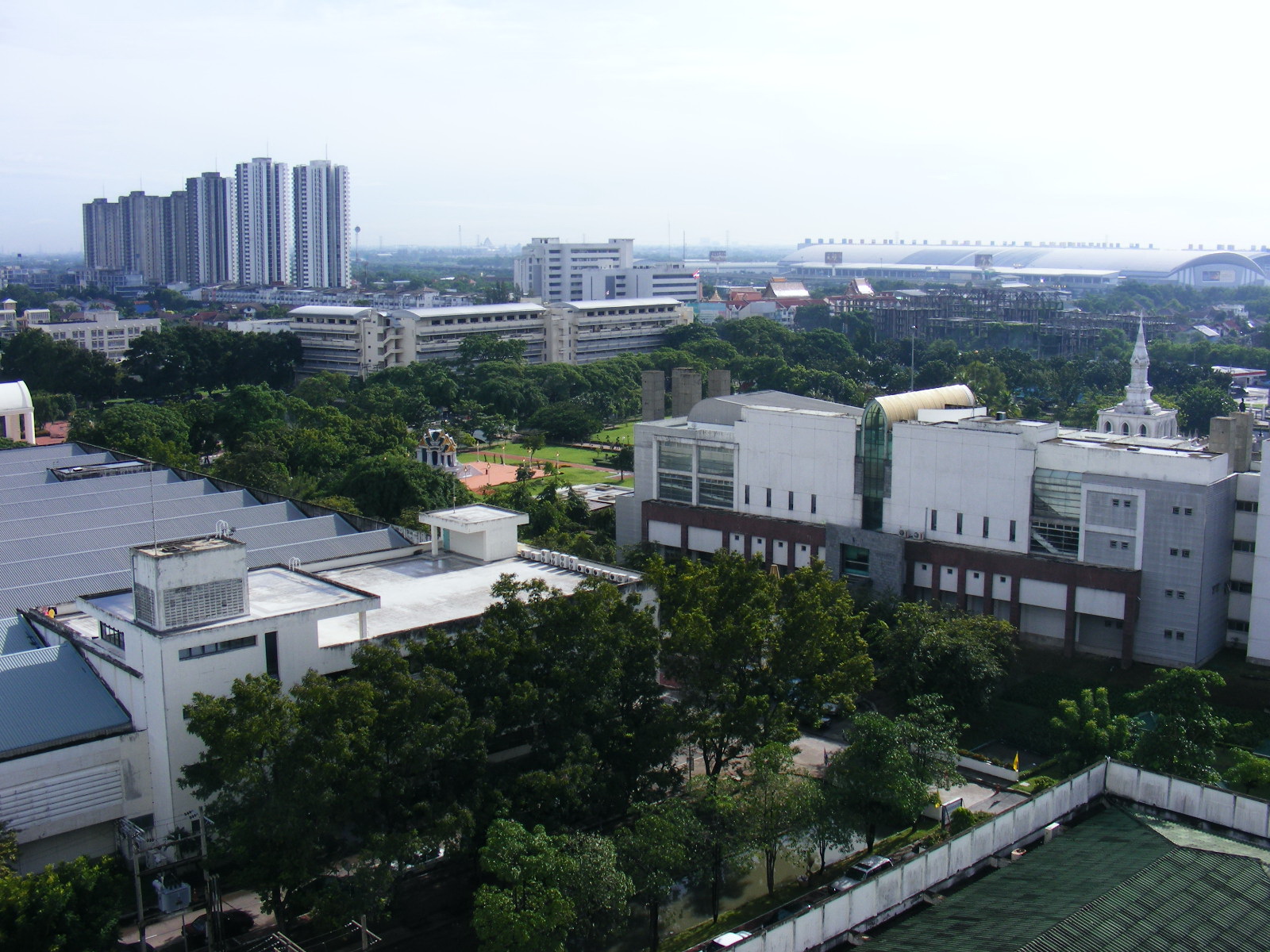 69
69The accommodation problem you have to solve before you've seen the country
This is where a surprising number of otherwise well-prepared applications stall. The requirement calls for proof of prolonged residence in Thailand of at least six months, typically a signed lease, and it has to exist before the visa does. That means committing to a rental agreement, sight unseen, for a country you may never have set foot in, before any Thai authority has told you that you're allowed to come.
The instinct is to solve this with a hotel or serviced-apartment booking confirmation. Don't. A short-term booking confirmation is not the same document as a lease, and it doesn't satisfy what's being asked for, which is evidence of a fixed address for an extended stay, not a reservation. What actually works is a longer-term rental agreement from a landlord or co-living operator who has done this before and knows to issue paperwork in a form consulates recognize, often people renting to remote workers specifically for this reason. Condo buildings and serviced residences that market to the digital nomad crowd have gotten good at producing leases that read correctly to an embassy officer who has seen hundreds of these applications.
The other mistake is signing a lease that starts on the wrong date relative to visa issuance and travel plans. If the lease term doesn't align sensibly with when you'd actually be arriving, it invites a question you don't want asked. Match the paperwork to a plausible timeline, not an aspirational one.
The permit you land with is not the permit you keep
Getting the visa issued abroad is the beginning of the compliance relationship with Thailand, not the end of it. The initial permit runs six months, and it's renewable, but renewal isn't a formality you can assume will run itself. It has its own cost, around $270 based on 2026 figures, and its own documentation expectations, which in practice means keeping the financial and address story current rather than treating the original application packet as a one-time project.
Because there's no requirement to hold a Thai bank account, your income proof for renewal will likely still be coming from the same foreign sources it did the first time, which means the habit of keeping clean, regular statements from your US bank or payment processor needs to continue for as long as you're on this visa, not just for the three months before you first applied. The same goes for the lease. A six-month lease that quietly lapses without a renewal or a new agreement in place creates a gap in the residence story right when you need to show continuity.
There's no medical exam and no interview built into this process, which makes the whole thing feel lighter than it is. That's a little deceptive. The absence of an in-person interview means there's no moment where an officer can ask you a clarifying question about an odd-looking document, which means every document has to stand on its own the first time. People coming from visa processes with interviews sometimes under-prepare the paperwork because they're mentally saving explanations for a conversation that never happens here.
Why this visa was never meant to end in a Thai passport
Worth being clear-eyed about this one going in: this track doesn't lead anywhere permanent. There's no residency status it converts into, no citizenship clock started by holding it, and no accumulation of years that counts toward anything beyond the visa itself. If the plan is a decade in Thailand ending in a Thai passport or even a stable long-term resident status, this isn't the vehicle for that plan, and treating it as step one of a longer immigration strategy will just produce disappointment around year three or four when there's nothing to convert into.
What it is, deliberately, is a renewable temporary status for people who want a legal way to live and work remotely in Thailand for a few years without pretending to be tourists. That's a narrower and more honest use case than a lot of digital nomad visa marketing suggests, and it fits people whose actual life plan involves moving on eventually, whether that's back to the US, on to another country, or into a different Thai visa category entirely once their circumstances change. Anyone applying with the quiet hope that renewability equals a slow path to settlement is applying for the wrong reason, and immigration officers reviewing renewal paperwork aren't evaluating you against a permanence standard because there isn't one to meet.
DEST versus the long-term route which paperwork you're willing to front
Thailand runs more than one lane for people who want to be here without working for a Thai employer, and the choice between this visa and its longer-horizon sibling comes down to what kind of paperwork you'd rather deal with now versus later.
This visa asks for less up front, in cost and in income tier, and gets processed through a relatively fast embassy or e-visa route with no interview and no medical exam standing between you and a decision. In exchange, everything about it stays provisional. You renew every six months, you keep documenting foreign income the same way indefinitely, and nothing about the arrangement builds toward a more settled status over time.
The other track aimed at remote workers and long-term residents in Thailand sits at a different tier of commitment. It generally rewards people who can show a higher income threshold or more capital up front, and in exchange offers something closer to stability, longer validity periods and fewer renewal cycles to manage. If your income comfortably clears whatever bar that program sets and you already know you want Thailand as a multi-year base rather than a few-year experiment, fronting more paperwork and higher qualifying numbers now can save a lot of renewal administration later.
For someone earning in the $4,000 to $10,000 a month range who isn't sure yet whether Thailand is a three-year plan or a ten-year one, the lighter, cheaper, faster visa is usually the right first move. It's easier to walk away from a six-month renewable status than from a program you committed higher capital to qualify for. Treat this one as the trial version, not because it's lesser, but because its whole design assumes you might change your mind.
Work Permissions
Application Steps
- 1
📋 Verify eligibility criteria
1-2 days
- 2
📄 Gather identity documents
1 week
- 3
📄 Collect financial proof
1-2 weeks
- 4
📄 Prepare work proof
1 week
- 5
📬 Complete online application
1 day
- 6
📅 Attend consulate appointment if needed
1 day
- 7
⏳ Wait for visa approval
not specified
- 8
🏛️ Enter Thailand and register arrival
Same day
Frequently Asked Questions
Click any question to expand the answer.
Ready to Apply?
Work with trusted visa specialists who handle the paperwork so you can focus on your move.
Get help with this visa →* We may earn a commission if you apply through our link
At a Glance
Last verified: July 15, 2026