Sri Lanka Golden Paradise Residence Visa
Sri Lanka · Asia
Data updated Sep 3, 2026
Min Monthly Income
$350
Application Fee
$2,000
Difficulty
Moderate
Duration
120 months
Overview
For this visa, the core gate is capital, not monthly income. You must move USD 200,000 in foreign currency into a Sri Lankan bank licensed by the Central Bank and park it there as a Golden Paradise Foreign Currency Account (GPFCA). program rules lists both the minimum savings and investment required as 200,000 USD, and there is no publicly specified minimum monthly income or requirement that your cashflow come from salary vs. pensions vs. dividends. A retiree with a USD 1,000,000 brokerage account or an investor holding USD 200,000 in liquid ETFs or cash can qualify regardless of whether their ongoing income is from Social Security, rentals, or portfolio withdrawals.
The trade-off is that this is a long 120‑month residence permission tied to an immobile deposit. Duration is set at 10 years, but the program does not publicly specify whether you must spend a minimum number of days per year in Sri Lanka or the maximum consecutive time you can be absent. That ambiguity matters if you expect to split time between, say, Sri Lanka and Thailand or do long stints back in the US. This is not marketed as a pure “paper residency,” yet there is no officially disclosed day-count requirement in the Golden Paradise rules.
From a cost standpoint, you pay a 2,000 USD application fee described in the program rules, aligned with the official “Visa fee USD 2000 payable for 10 years.” That is cheap over a 120‑month period compared with the 50,000–500,000 EUR sunk costs seen in European golden visas, but the true price is opportunity cost of locking 200,000 USD into Sri Lanka’s banking system. Renewal after 10 years is not publicly specified; program rules lists renewal cost as 2,000 USD per year, but the official brochure states a flat 2,000 USD for the 10‑year term, so anyone planning beyond the first decade should assume policy risk.
Bureaucratic friction is not high: the program does not require an apostille or FBI background check and does not mandate an in-person interview or a medical exam according to program rules, although the official site references a local medical report and a police clearance from your country of domicile. You must open a local bank account in Sri Lanka, and that can be the most annoying step for US persons due to FATCA compliance questions and for any applicant from higher-risk jurisdictions. Processing time is not publicly specified, so tying up 200,000 USD before you know the exact decision timeline is a real practical consideration.
There is no publicly specified pathway from this 10‑year golden visa to permanent residence or citizenship, nor any official “Years to PR” or “Years to Citizenship” figures. The visa does allow local work (Local Work Permitted: Yes in the program rules), which means you can supplement foreign passive income with Sri Lankan employment or business income, but the detailed employment conditions and income limits are not disclosed. This structure makes most sense for someone already sitting on at least 500,000–1,000,000 USD in liquid assets who wants a 120‑month landing pad in South Asia and is comfortable earning in Sri Lanka or abroad. It is a poor fit if your net worth is 250,000–300,000 USD and you would have to immobilize almost all of it just to secure residence.
Local tax picture
Sri Lanka operates broadly on a worldwide income tax basis for residents, and Sri Lankan‑source income is taxed regardless of residence, but the Golden Paradise program itself does not disclose a special tax regime. The visa page explicitly states that holding a Golden Paradise Residence Visa does not automatically make you a tax resident; tax obligations are determined separately based on tax residency status, source of income, and physical presence. In practice this means remote salary from a non‑Sri Lankan employer, ETF dividends from a US or European brokerage, and rental income from property abroad are primarily relevant if you become Sri Lankan tax resident; without tax residency, Sri Lanka focuses on income sourced in Sri Lanka.
For capital gains on foreign investments (for example, selling index funds in a US brokerage), the Golden Paradise rules do not specify treatment. Under general Sri Lankan tax law, tax on foreign‑source gains depends on residency and whether income is considered derived from Sri Lanka, but the visa materials themselves do not disclose a clear answer. Anyone planning large portfolio rebalancing while resident should obtain up‑to‑date local tax advice, because this is exactly where FIRE investors face unwanted surprises.
Tax residency triggers are not spelled out in the visa documentation either, but Sri Lanka has historically used a 183‑day presence test in a tax year as a key threshold. The Golden Paradise materials only say that residency for tax is determined separately; they do not establish automatic tax residence merely by issuing a 120‑month visa. There is no publicly specified special preferential regime (no NHR‑style program is tied to this visa).
In practice, once you cross the local residency threshold, you should expect to obtain a Sri Lankan tax ID, register with the Inland Revenue Department, and file annual returns covering Sri Lankan‑source earnings and any foreign income that falls within the local rules. Filing deadlines and registration mechanics are not disclosed on the visa pages and need to be confirmed with the Inland Revenue Department or a local tax practitioner. The tax treaty status with the US is listed as unknown in the program rules, so US‑source pensions, dividends, and Social Security should be analyzed as if there were no treaty relief until you confirm otherwise in the actual Sri Lanka–US double tax treaty text, if any.
For US Citizens and Green Card Holders
US persons on the Sri Lanka Golden Paradise Residence Visa keep full US tax obligations regardless of Sri Lankan treatment. Form 2555 Foreign Earned Income Exclusion (FEIE) can shield up to 126,500 USD of earned income for 2024, but only salary, consulting, and self‑employment counts. Dividends, capital gains on ETFs, IRA/401(k) distributions, rental profits, and Social Security remain fully taxable by the US. If you spend the bulk of the year in Sri Lanka under this 120‑month visa, the Physical Presence Test (330 full days outside the US in any 12‑month window) will be the more mechanical route to FEIE; over time, you might also qualify under the Bona Fide Residence Test if Sri Lanka becomes your main home and center of life.
Form 1116 Foreign Tax Credit (FTC) matters only where Sri Lankan tax actually bites. If you are not yet a Sri Lankan tax resident, or if Sri Lanka does not tax your foreign‑source dividends and capital gains, there may be little or no Sri Lankan tax to credit against US liability on those streams. In that case, the FTC does not reduce your US bill on portfolio income; it can still apply to Sri Lankan‑source salary, business income, or rental income once you are taxed locally on that income.
The required local bank account for this visa is a major US compliance trigger. If your Sri Lankan accounts (including the 200,000 USD GPFCA plus any checking or brokerage accounts) ever exceed an aggregate 10,000 USD equivalent during the year, you must file FinCEN Form 114 (FBAR) online, separate from your Form 1040. Non‑willful FBAR penalties start around 10,000 USD per violation. FATCA Form 8938 may also be required if your total foreign financial assets cross 50,000–100,000 USD thresholds (higher for joint filers and those living abroad), which this visa is almost guaranteed to do.
For a US FIRE retiree using this 200,000 USD deposit as part of their asset base, the realistic professional stack is twofold: a US CPA who specializes in expat taxation and understands FEIE, FTC, FBAR, and FATCA interplay, and a Sri Lankan tax advisor who can navigate local residency rules, registration with the Inland Revenue Department, and characterization of foreign passive income. The 1,500–3,000 USD you spend in year one on that combination is often less than a single non‑willful FBAR penalty and can optimize FEIE vs. FTC elections across six figures of annual income.
Any nationality can apply in principle for the Sri Lanka Golden Paradise Residence Visa; program rules lists nationality restrictions as “all,” and the official program materials do not carve out specific passports. In practice, applicants from sanctioned or higher‑risk jurisdictions such as Iran, North Korea, Syria, and in some banking contexts Russia or Cuba can find that opening the required 200,000 USD foreign currency account or passing compliance checks becomes difficult or impossible even if the rules do not ban them outright. Before assembling documents, confirm your eligibility directly with the Sri Lankan Department of Immigration and Emigration and, separately, with a Sri Lankan commercial bank licensed by the Central Bank willing to open the GPFCA for your nationality.
Eligibility Requirements
Any nationality can apply in principle for the Sri Lanka Golden Paradise Residence Visa; VISA FACTS lists nationality restrictions as “all,” and the official program materials do not carve out specific passports. In practice, applicants from sanctioned or higher‑risk jurisdictions such as Iran, North Korea, Syria, and in some banking contexts Russia or Cuba can find that opening the required 200,000 USD foreign currency account or passing compliance checks becomes difficult or impossible even if the rules do not ban them outright. Before assembling documents, confirm your eligibility directly with the Sri Lankan Department of Immigration and Emigration and, separately, with a Sri Lankan commercial bank licensed by the Central Bank willing to open the GPFCA for your nationality.
Min Income
$350
Min Savings
$200,000
Min Investment
$200,000
Application Fee
$2,000
Renewal Cost
$2,000/yr
Duration
120 months
Physical Presence
183 days/yr
Requirements Checklist
• Identity: Valid passport; copy of passport bio-data page; recent passport-sized photographs (if requested); birth certificates of dependents (if applying with dependents).
• Financial: Proof of opening a Golden Paradise Foreign Currency Account (GPFCA); bank confirmation of deposit of minimum USD 200,000 (or equivalent); deposit proof documents confirming fund transfer; proof of payment of visa fee.
• Health: Medical report from a government or government-registered private hospital (or authorized local hospital) confirming clearance from Malaria, Filariasis, Tuberculosis, and HIV/AIDS; proof of private health insurance (if requested).
• Background: Police clearance report from home or domicile country issued within the last 6 months; police clearance report for spouse from home or domicile country (if applying with spouse); police clearance reports for adult dependents (if required).
• Family status: Marriage certificate (if applying with spouse); marriage certificate and birth certificates of dependents (if applying with spouse and dependents).
• Other: Duly completed Residence Visa application form; duly completed Personal Particular Form issued by the Ministry of Defence, Sri Lanka.
Tax Information
Sri Lanka taxes what you bring in, not what you earn abroad
Sri Lanka taxes residents on a remittance basis. Foreign income is only taxed when you transfer it into the country. Local-source income gets no such reprieve, and the residency trigger is unforgiving: 183 days in any tax year, which runs April 1 to March 31, or a permanent place of abode in Sri Lanka. If you move here on the Golden Paradise Residence Visa and keep a remote salary, freelance revenue, foreign dividends, brokerage gains, or rental income from a property back home, none of it touches a Sri Lankan tax return until you remit it. The moment you do, it stacks onto your assessable income and runs through progressive brackets that top out fast. As of 2026, the first LKR 1,800,000 is tax-free, then 6% up to LKR 2,800,000, 18% to LKR 3,300,000, 24% to LKR 3,800,000, 30% to LKR 4,300,000, and 36% on everything above that. At mid-2026 exchange rates, LKR 4,300,000 is around USD 14,300. A US remote worker earning a modest income can land in the 36% bracket with a single large remittance. Dividends from Sri Lankan companies are handled separately: a 15% withholding tax deducted at source, and that is the final tax for a resident individual. Capital gains on investment assets like land or shares are taxed at a flat 10%, though selling your principal residence after holding it more than two years is exempt. Pensions, Social Security, Roth distributions, and 401(k) or IRA withdrawals are all foreign income and therefore taxable only when remitted, but the safe assumption is Sri Lanka will treat Roth distributions as income, not return of capital, because no US treaty exists to clarify otherwise.
The Golden Paradise Residence Visa does not grant a special tax regime. You pay the standard rates. There is no registration window to miss, no preferential rate to claim, and no deadline that permanently locks you out of a lower bracket. The remittance basis is the only structural advantage, and it applies to every resident.
The IRS still files you, no matter where you live
US citizens and green card holders file a US return every year. Moving to Sri Lanka changes nothing about that obligation. The Foreign Earned Income Exclusion lets you exclude up to $132,900 of earned income for tax year 2026, but earned income means salary, wages, and freelance revenue. Dividends, capital gains, rental income, pensions, and Social Security are not earned income and remain fully exposed to US tax. You can qualify for FEIE under either the Bona Fide Residence test or the Physical Presence test, and Sri Lanka’s 183-day residency rule does not determine which one works for you. The Foreign Tax Credit is the other main tool. Sri Lanka’s top rate of 36% often exceeds the US rate on the same income, so FTC can offset a lot of US liability, but at lower Sri Lankan brackets the credit may not fully cover what you owe the IRS. There is no US-Sri Lanka tax treaty, so no treaty repositions income types or resolves double taxation structurally. The FTC is your only backstop.
The visa requires a local bank account. That triggers FBAR: if the combined value of your foreign financial accounts exceeds $10,000 at any point during the calendar year, you must file FinCEN Form 114. Sri Lankan rupee accounts, EPF and ETF accounts, and any investment accounts all count. A non-willful failure to file carries a penalty that adjusts annually; for 2026 the inflation-adjusted figure is approximately $16,700 per violation. FATCA Form 8938 thresholds apply as well.
A cross-border tax preparer who knows both systems is worth the first-year fee, which for a US expat in Sri Lanka typically runs $1,500 to $3,000. The decisions that go wrong unattended are the FEIE election method, because choosing between Bona Fide Residence and Physical Presence changes how you prove your exclusion and when you can claim it. FBAR for the account the visa itself required is another. And the remittance basis is powerful but easy to mismanage: bringing foreign income into Sri Lanka in the wrong tax year, or in the wrong amount, can push you into the 36% bracket for no reason. There is no treaty to clean up the mess.
Living in Sri Lanka
COL Index vs NYC
33.5
Monthly Cost (excl. rent)
$465
1BR Rent (City Center)
$350
Safety Index
57.9
Healthcare Index
71.4
Quality of Life Index
81.1
Time Zone
UTC+05:30
Capital
Sri Jayawardenepura Kotte
Population
21.9M
Official Languages
Sinhala, Tamil
Avg Internet Speed
37 Mbps
Public Transit Quality
Good
With a budget covering rent and living costs, you'd need roughly $815/mo for a comfortable single-person lifestyle in Sri Lanka.See how far your money goes →
🏙️ Best Cities in Sri Lanka for Golden Visa Holders
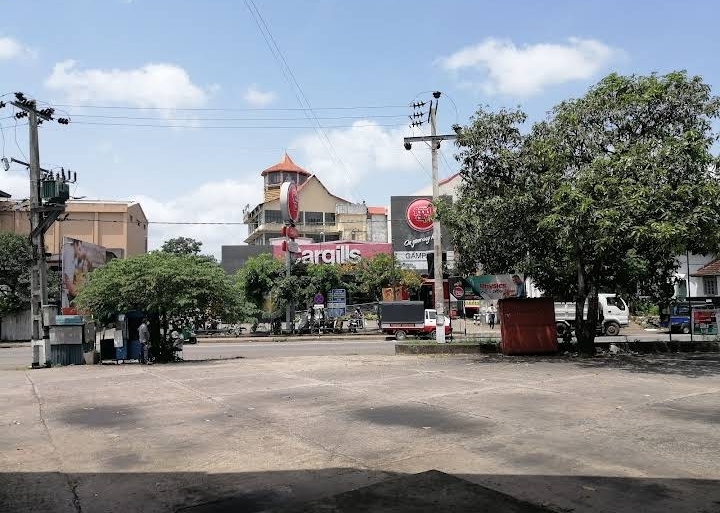 58
58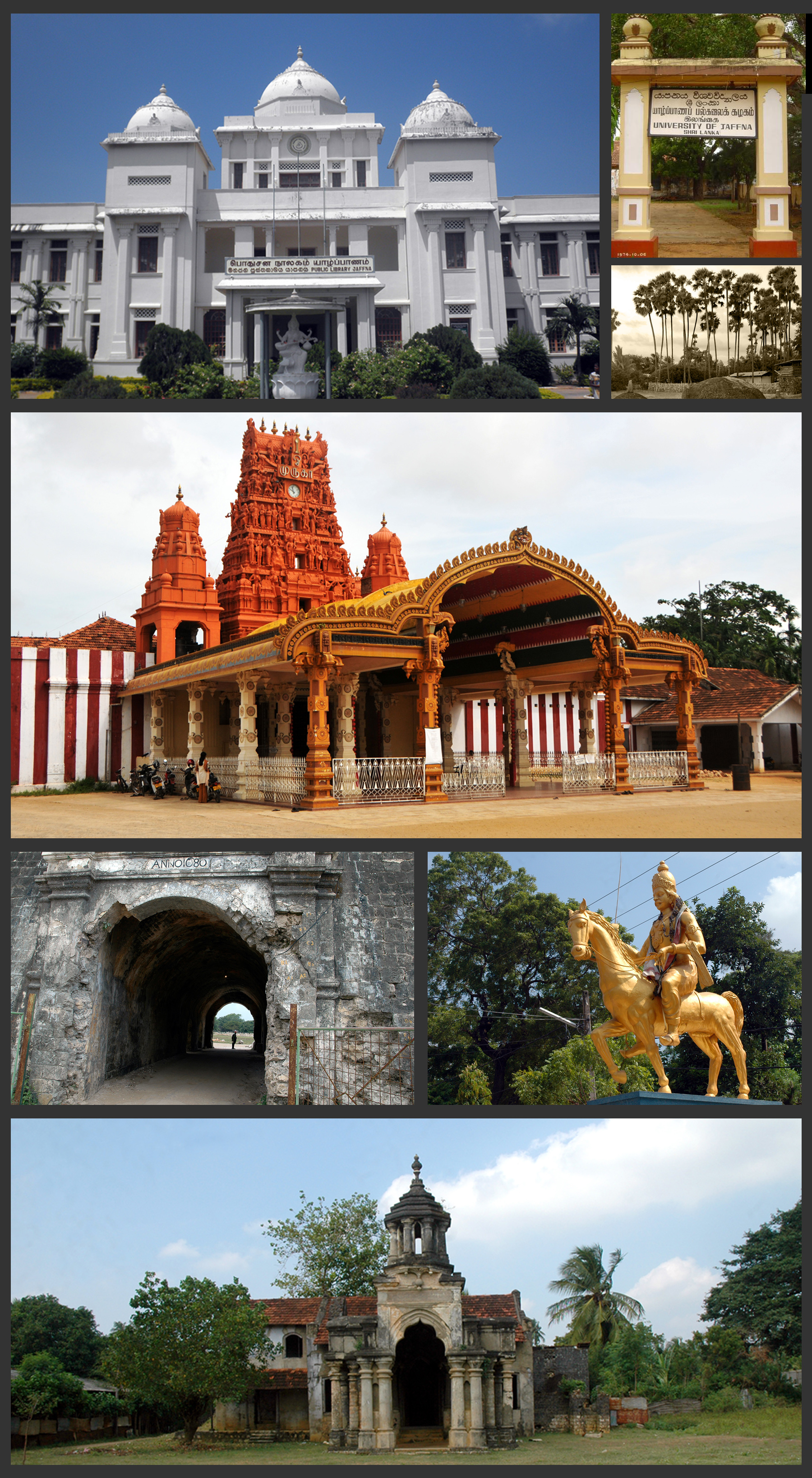 70
70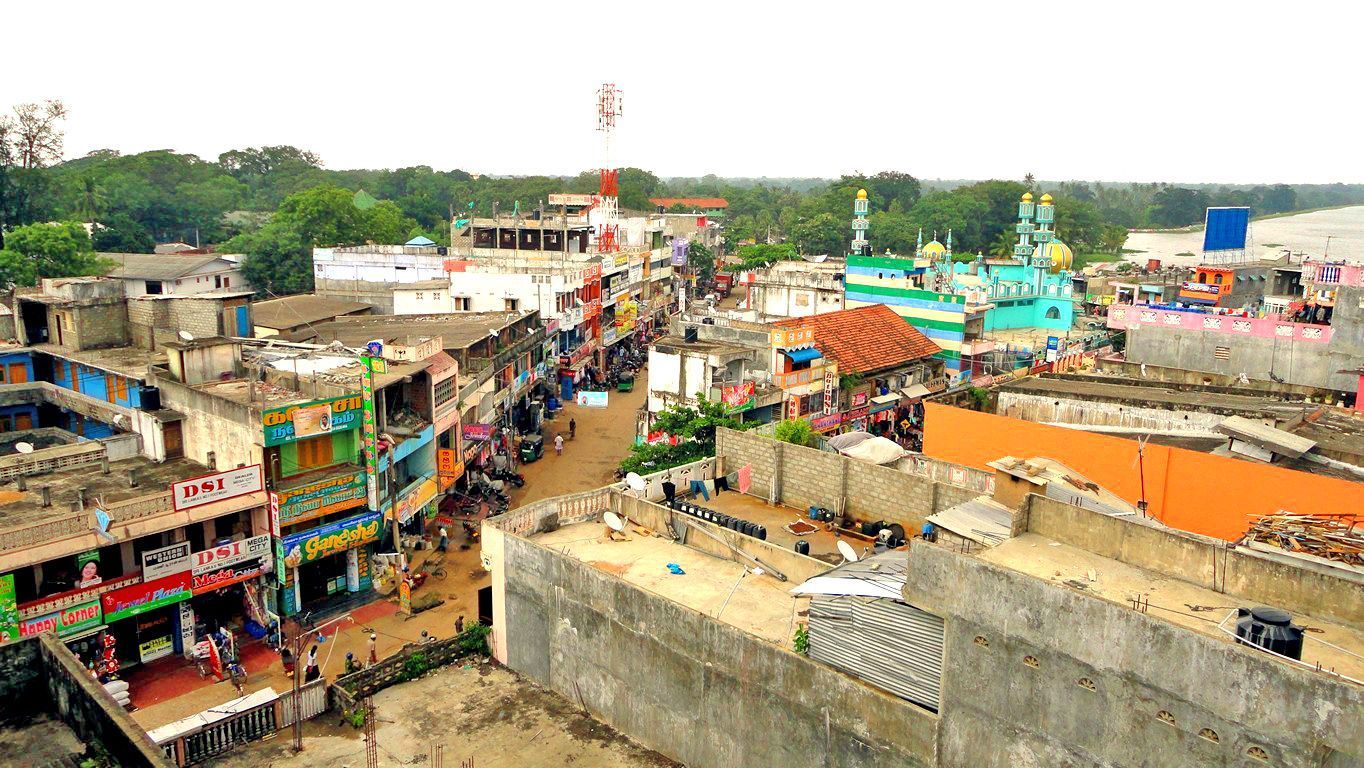 57
57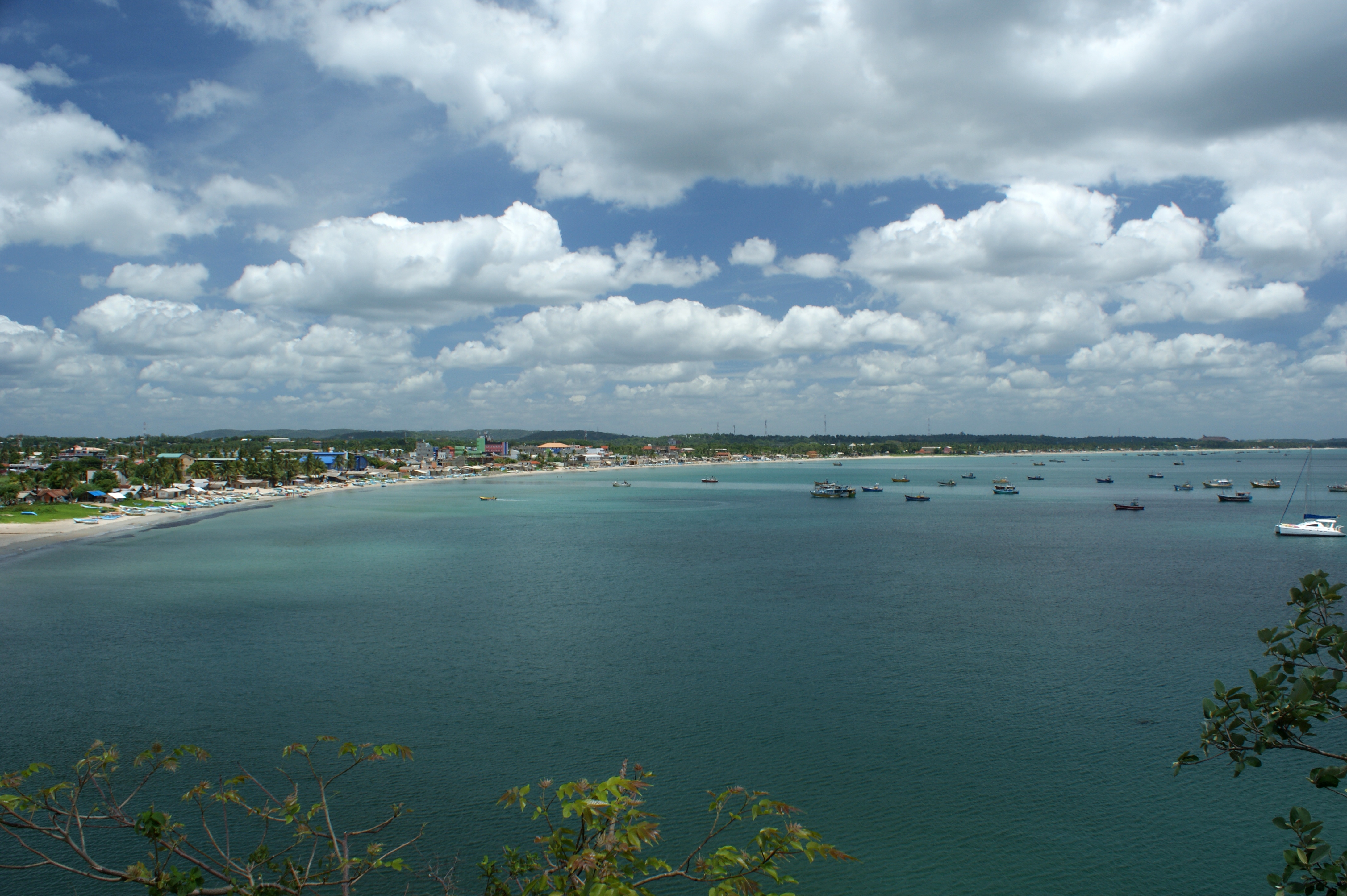 60
60The income documentation the officials will actually check
The Golden Paradise visa lists a minimum monthly income of $350. That number is not a typo. It’s low enough that if you’re earning even a modest remote salary or drawing passive income from investments, you’ll clear it without trouble. The catch is that the Department of Immigration doesn’t just take your word for it, and the income check often gets tangled in the bank account setup.
The required Golden Paradise Foreign Currency Account serves two purposes: it houses the $200,000 deposit, and it’s the lens through which officials verify that money is moving in. When you submit your application, you’ll need bank confirmation of the deposit and proof that the funds came from outside Sri Lanka. If your monthly income arrives in that same account, you’ve already demonstrated the ongoing flow. If it doesn’t, you’ll need separate statements from your primary overseas bank showing regular credits. The officials are looking for steadiness, not a specific source type. Dividends, pension payments, freelance invoices that hit the same amount each month all work.
Where people stumble is treating the income requirement as an afterthought while they focus on the $200,000 transfer. It’s far easier to route your income through the GPFCA from day one than to scramble for six months of foreign bank statements with translated descriptions when the officer asks. If you’re self-employed and income fluctuates, three to four months of consistent deposits above $350 tend to satisfy the unwritten expectation. No need to over-document, just show a pattern. If you have a spouse or dependents on the application, the same account flow covers multiple family members, no separate income proof is demanded.
In short, the income requirement isn’t going to fail your application, but disorganized income documentation can slow it down. Opening the GPFCA early and making it your primary receiving account for a few months before filing removes that friction entirely.
The 183-day rule that redefines “residence”
Many golden visas around the world are purchased for the freedom to come and go. Sri Lanka’s version inverts that logic. The permit is issued for 10 years and is renewable, but it comes with a 183-day minimum physical presence each year. That figure doesn’t surface prominently in the promotional material, yet it’s the axis the whole arrangement rotates around.
If you’ve never spent extended time in Sri Lanka, 183 days can sound like a generous vacation allowance until you map it against a working year. It means you cannot use this visa as a satellite office you fly to for a month each quarter. At bare minimum, you need to be in the country for half the year, and the days don’t need to be consecutive. Immigration tracks entries and exits, and at renewal time your passport stamps tell the story. A single year falling short can trigger a review or non-renewal.
Remote workers who manage US or European client time zones quickly discover that the half-day offset is more punishing than other tropical bases. A New York morning meeting becomes a mid-afternoon call, not impossible, but it compresses the workday in ways that add up over weeks. Retirees with fewer clock constraints often adjust more smoothly.
What this rule does, functionally, is select for people who actually want to live in Sri Lanka. Not part-time, not as a backup plan, but as a primary residence. The application itself makes no mention of a property purchase or lease, but in practical terms you will need a settled living arrangement because the 183-day threshold makes short-term lets and hotel hopping unsustainable over a decade. The rule isn’t just a bureaucratic hurdle; it shapes the kind of life you build here.
What this visa won’t do: citizenship and permanent status
The Golden Paradise Residence Visa delivers exactly what its name implies: long-term residence. A 10-year renewable permit with authorization to work locally. But the path from that permit to permanent residency or citizenship is not part of the package. The official framework does not outline a dedicated PR track for visa holders, and Sri Lanka’s citizenship laws are among the more restrictive in the region. After holding this visa for years, you remain a temporary resident in the eyes of the law, even if you’ve built a life there.
This surprises applicants who assume that any investment-based residence program must eventually unlock a passport. It doesn’t. The $200,000 deposit secures your right to stay and work, not your route to naturalization. Renewal every decade resets the clock, and each cycle you’ll need to demonstrate you’ve met the physical presence requirement and maintained the GPFCA balance. There’s no accumulated time that converts to a stronger legal status.
For someone who plans to live in Sri Lanka indefinitely with no intention of acquiring citizenship, this distinction may not matter. The visa is renewable, and the government has shown no inclination to cap renewals arbitrarily. But anyone who needs a second passport for travel or business reasons should understand upfront that this program isn’t a stepping stone. If your long-term goal includes a citizenship option, you’ll likely need to pair this visa with a separate program elsewhere, or accept that you’ll remain a perpetual resident.
The $200,000 question: Sri Lanka versus the rest of Southeast Asia
The closest comparisons to Sri Lanka’s offer live in Malaysia, Thailand, and Cambodia. Each asks for a different kind of commitment: higher deposits, lump-sum fees, or property purchases. The Sri Lankan program’s $200,000 bank deposit is lower than many competitors’ up-front capital demands, but the 183-day annual residence rule is far stricter. Thailand’s elite visa, for instance, allows long stays without a physical presence minimum, though it costs several times more and doesn’t permit work. Malaysia’s MM2H requires a larger fixed deposit and a minimum liquid asset declaration but has a more relaxed presence obligation. Cambodia’s retirement visa is cheap and easy but doesn’t offer a 10-year renewable term.
Sri Lanka’s edge is the clear work authorization combined with a relatively modest financial threshold, and no property purchase mandate. The monthly income floor of $350 is so low it barely registers. The real differentiator is the requirement to be physically present half the year. That filters out the kind of applicant who bounces between homes. If you truly intend to make Sri Lanka your main base, the 183-day rule actually protects the character of the expat community from transience. If you can’t commit that time, the other programs start looking more attractive.
The decision often comes down to whether you need to earn income locally. If not, a tourist visa strategy or a cheaper retirement visa in another country might feel less restrictive. But if you’re under retirement age and want to work legally in Sri Lanka, or you want the security of a 10-year renewable permit without re-entering the country every few months, this program fits a specific niche. There’s no single “better” option, only the one that matches how many nights you’ll actually sleep here.
Work Permissions
Application Steps
- 1
📄 Gather required documents
1-2 weeks
- 2
📋 Receive immigration letter for bank account
1 week
- 3
📋 Open GPFCA and deposit funds
1-2 weeks
- 4
📬 Submit full application
Same day
- 5
📬 Pay visa fee
1-2 days
- 6
⏳ Wait for visa issuance
2-4 weeks
- 7
🏛️ Enter Sri Lanka and comply
Frequently Asked Questions
Click any question to expand the answer.
Ready to Apply?
Work with trusted visa specialists who handle the paperwork so you can focus on your move.
Get help with this visa →* We may earn a commission if you apply through our link
At a Glance
Last verified: July 15, 2026