Application Fee
$94
Difficulty
Moderate
Duration
12 months
Overview
Getting the income documentation story straight before applying
This visa runs on a different logic than most residency routes people research from the US side. It is not a bank-balance visa. Consular officers reviewing a Startup Visa file are trying to answer one question: is this an actual innovative business, or is it a freelancer dressed up as a founder to get past income minimums that would otherwise apply. That distinction shapes almost everything about how the file should be built.
If your income is a mix of consulting retainers and one big client, you need to frame the venture itself, not just the money coming in. A business plan that reads like a resume padded with buzzwords gets flagged faster than one that's underdressed but specific about the product, the market, and why it needs to be run from Spain rather than anywhere else. Revenue projections matter less than coherence between what you say the business does and what your existing income actually shows you doing.
One thing that trips people up: pension income isn't recognized as qualifying income here, so retirees trying to use this as a backdoor residency route because they've heard "Spain" and "startup" and assumed flexibility are solving the wrong problem. This is a working visa for people building something, not a parking spot for passive income, and Spain has other tracks for that. If your income is simply 1099 freelance work with no business entity attached to it, decide early whether you're restructuring that work into something that reads as a company before you start assembling paperwork, because retrofitting a business narrative onto three years of freelance invoices after a consulate has already seen them is much harder than building the file correctly from month one.
The FBI background check adds a sequencing problem people underestimate. Between requesting the check, waiting for it to arrive, and getting it apostilled, that single document can eat more calendar time than every other piece of the application combined. Start it the day you decide to apply, not the week before you plan to submit, because apostille processing backs up unpredictably and there is no way to rush a federal background check by asking nicely.
Eligibility Requirements
Application Fee
$94
Duration
12 months
Requirements Checklist
Tax Information
What Spanish residency actually costs you
Spain taxes residents on worldwide income once you cross 183 days in a calendar year, and there is no partial-year softening once that line is crossed. Hit day 184 and your US salary, freelance invoices, foreign dividends, brokerage gains, and any rental income from a property back home all fall inside Spain's tax net, not just the income you earn while physically in the country. General income runs on a progressive scale, starting at 19% on the first EUR 12,450 (about USD 13,500) and climbing through 24%, 30%, 37%, and 45% before topping out at 47% above EUR 300,000 (about USD 324,000), as of 2026.
Dividends, capital gains, and interest sit on a separate savings scale rather than folding into that general bracket structure. That scale starts at 19% up to EUR 6,000, then 21% to EUR 50,000 (about USD 54,000), 23% to EUR 200,000, 27% to EUR 300,000, and 30% above that, a rate raised from 28% effective January 2025 and unchanged for 2026. So the brokerage account you kept running from the US, the dividends from a US index fund, the rent from a house you still own in Ohio, none of it gets a pass just because the income originates outside Spain. It lands on the savings scale the moment you're a resident, full stop.
The one lever that changes this picture is the Beckham Law, formally the special regime for inbound workers, expanded under the 2023 Startup Law to explicitly cover remote workers employed by non-Spanish companies. Qualify, and your employment income up to EUR 600,000 (about USD 648,000) is taxed at a flat 24% instead of climbing the general scale, with income above that threshold taxed at 47%. Eligibility requires that you were not a Spanish tax resident during the five years before arrival, which is the case for most people arriving on this visa straight from the US.
What it does not cover matters just as much as what it does. Foreign-source income other than employment, dividends and capital gains from non-Spanish assets in particular, generally sits outside Spanish tax during the regime, but income from Spanish sources and certain investment activity stays taxable, and capital gains treatment on foreign assets can vary depending on where the asset is booked. Wealth tax still applies to anything you hold in Spain regardless of Beckham status. Treat the foreign-income exemption as directional relief, not a blanket exclusion, and get a Spanish advisor to confirm how your specific holdings get classified before you assume anything is untouched.
The deadline is where people lose the benefit permanently. You must apply within six months of registering with Spanish social security, and there is no second window if you miss it. Miss that filing and you're on the standard progressive scale for the full tax year, with no retroactive fix, for a benefit that otherwise runs for the year of election plus five more, six years total.
Where the IRS still gets its share
None of this touches your US filing obligation. The Foreign Earned Income Exclusion shelters up to USD 132,900 of earned income for the 2026 tax year, salary and freelance revenue only, and it does nothing for dividends, capital gains, rental income, pensions, or Social Security. Qualifying under the Physical Presence Test means logging 330 days outside the US in some 12-month window, workable even in your first year while you're establishing Spanish residency; Bona Fide Residence tends to be the easier path once you're holding a Spanish residence permit and can show a settled life there. Because Spain's rates run higher than the equivalent US brackets across nearly every income level, most people in this position end up leaning on the Foreign Tax Credit rather than FEIE, since the FTC offsets US tax dollar for dollar against Spanish tax already paid and avoids the stacking effect where excluding income under FEIE pushes what's left into a higher US bracket.
The US-Spain treaty exists, but the savings clause means the US keeps taxing its citizens regardless of where they live, so the treaty repositions specific income types rather than erasing your filing duty. Article 20 keeps US Social Security taxable only in the US, meaning Spain shouldn't tax it, though you still have to declare it there. Article 17 pulls your 401(k) and IRA distributions into Spanish general income at rates up to 47%, with the treaty preventing double taxation through a credit rather than exempting the income outright. Roth IRAs get no recognition at all under Spanish law; distributions can be treated as ordinary pension income by the Spanish tax authority, which creates real double-taxation exposure on money that was already taxed once in the US. If you end up holding a Spanish account for daily life and your combined foreign account balances exceed USD 10,000 at any point in the year, FinCEN Form 114 becomes mandatory, and the non-willful penalty for missing it runs from a statutory $10,000 per violation, adjusted for 2026 to roughly $16,700, and it moves every year.
The decisions that actually cost people money in year one are specific, not general. The Beckham Law's six-month application window from social security registration is the single biggest one, because there's no appeal once it closes. Right behind it is the FEIE election, Bona Fide Residence versus Physical Presence, which depends on exactly when you crossed into Spain and how your first partial year lines up against the 330-day count. Spain also requires tax residents to file Modelo 720 disclosing foreign assets above EUR 50,000, a separate obligation from FBAR that carries its own penalty regime, reformed after the EU Court of Justice struck down the harsher version in 2022 but still real. A first-year advisory engagement covering the regime election, FEIE versus FTC modeling, and Modelo 720 exposure typically runs $1,500 to $3,000, and it is cheaper than any of the mistakes it prevents.
Living in Spain
COL Index vs NYC
43.5
Monthly Cost (excl. rent)
$823
1BR Rent (City Center)
$1,028
Safety Index
63.4
Healthcare Index
77.3
Quality of Life Index
184.4
Time Zone
UTC
Capital
Madrid
Population
47.4M
Official Languages
Spanish, Catalan, Basque, Galician
Avg Internet Speed
263 Mbps
Public Transit Quality
Excellent
With a budget covering rent and living costs, you'd need roughly $1,851/mo for a comfortable single-person lifestyle in Spain.See how far your money goes →
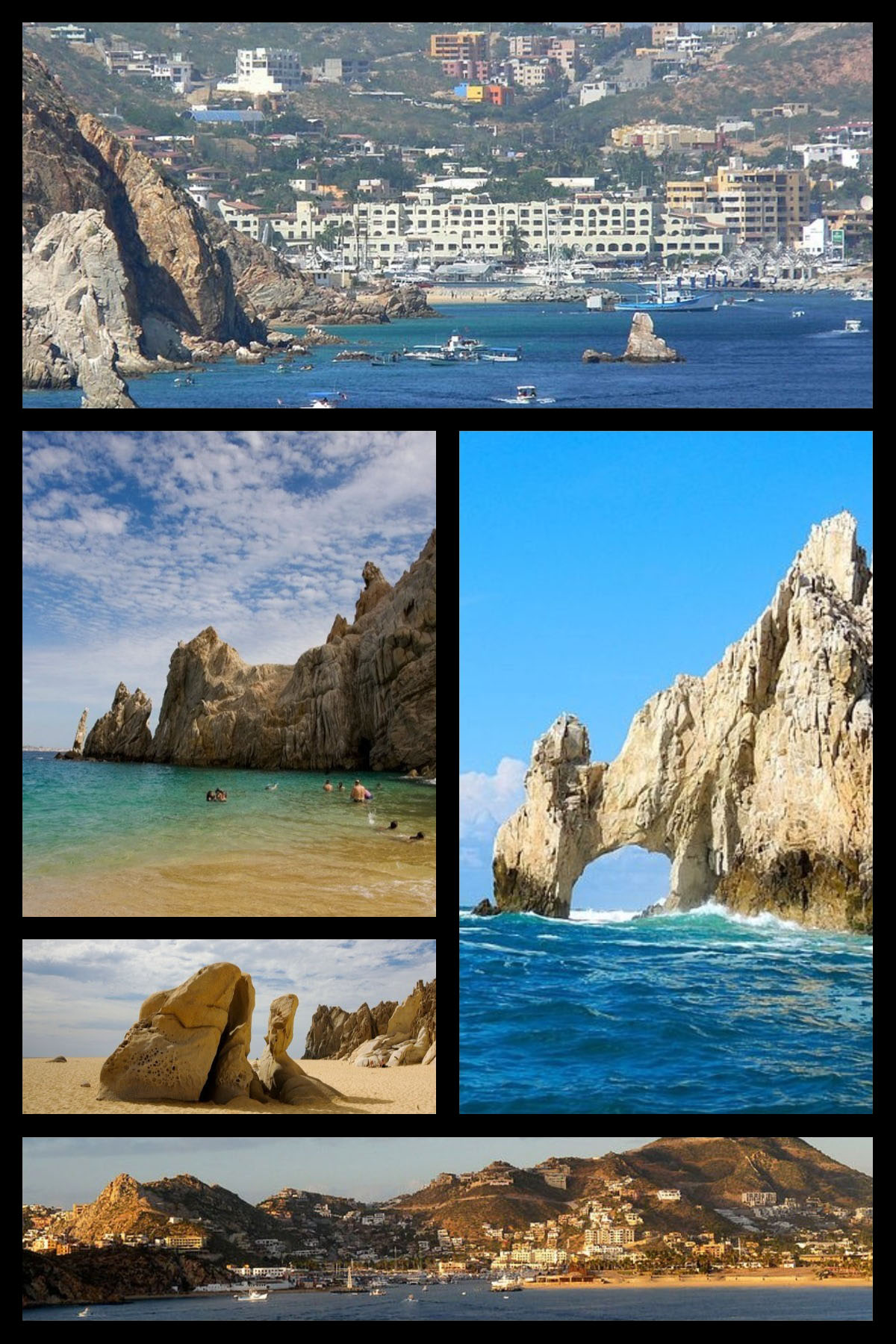
🏙️ Best Cities in Spain for Freelancers





The housing question nobody plans for correctly
There is no structured accommodation minimum for this category the way there is for some other Spanish residence permits, and that absence causes its own kind of trouble. People assume that because nothing specific is demanded upfront, housing is a problem for after arrival. It isn't, not really, because you still need an address to register locally once you're in the country, and the registration process is what unlocks everything downstream, including your physical residence card.
The mistake shows up in the gap between "I have a visa" and "I have a functioning life in Spain." Booking a short-term rental for the first month feels sensible until you realize that same rental doesn't produce a lease a municipal office will accept for registration, and now you're negotiating with a landlord for paperwork they have no obligation to give you. The people who move fastest through the first ninety days are the ones who lined up a longer lease, even an imperfect one, before boarding the flight, rather than treating the housing search as something to sort out once they land and have jet lag and a to-do list.
There's a secondary effect worth naming. Because a local bank account isn't required to get the visa itself, some applicants assume banking and housing are both post-arrival problems they can solve in whatever order feels convenient. In reality, a landlord willing to sign a lease with someone who has no Spanish bank account and no local tax number is a smaller pool than people expect, and the two problems tend to unlock each other in a specific order rather than in parallel. Sort out which one has to come first for your situation before you're standing in an unfamiliar city trying to solve both at once.
The distance between visa approval and an actual permit
Getting the visa stamped in your passport at the consulate is not the finish line, and treating it as one is the most common reason people arrive in Spain and then spend weeks confused about what they're actually allowed to do. The visa gets you into the country. What happens after that is a separate administrative process, done on Spanish soil, that converts that entry permission into the physical card that functions as your actual residence document.
That process involves an in-person appointment, biometric capture, and a waiting period that has nothing to do with how smoothly your original visa application went. A clean, fast consular approval tells you nothing about how fast the local card issuance will move, and the two timelines are handled by different offices that don't coordinate with each other on your behalf. Because no interview and no medical exam are required at the consular stage, some applicants assume the whole process is comparably light-touch once they land. The domestic registration step is more bureaucratic than the visa approval was, not less, and budgeting a real cushion of weeks between arrival and "I can function normally here" saves a lot of stress that otherwise gets misdirected at the wrong office.
Local work isn't permitted under this specific permit, which matters here because the gap period after landing is exactly when people are tempted to pick up small local gigs to fill time while waiting on paperwork. Don't. The permit's terms are tied to the business activity that got you approved, and drifting outside that scope during the exact window when your file is most administratively active is not the moment to test boundaries.
What the long-term path actually asks of you
The renewal cycle is the thing to plan around, not the distant promise of permanent settlement. The initial permit runs twelve months, and it is renewable, which means the real decision point isn't "should I move to Spain" but "am I prepared to keep this business demonstrably active and documented every time renewal comes around." Consulates and domestic offices alike are looking for continuity, not just a snapshot that looked good once.
A lot of people treat the first approval as proof the hard part is over. It isn't. Renewal requires showing that the business is still operating in the form that justified the original grant, which means the financial and structural story you built for the first application needs to hold up, evolve credibly, or get restructured with a paper trail that makes sense. A business that pivots hard between year one and year two isn't automatically a problem, but a pivot with no documentation explaining it looks like the original application wasn't accurate.
Where this gets tricky is in assuming the renewal track stacks cleanly toward something bigger down the line just because you keep renewing successfully. People walk into this visa with a five-year mental model borrowed from other Spanish residence categories, and that model doesn't necessarily transfer here in the way they expect. Before committing years of business planning to this specific track, get clear on what renewal actually guarantees versus what you're hoping it implies, and don't structure your long-term life decisions around an assumption that hasn't been tested against your specific category.
The Digital Nomad Visa is the real alternative, and the choice is about control
For most people weighing this visa, the actual fork in the road isn't Spain versus some other country. It's this visa versus Spain's own Digital Nomad track, and the two are built for different relationships to work. The Startup Visa wants you running something, with a plan, projections, and a narrative that holds up to scrutiny over multiple renewals. The Digital Nomad route is built around the simpler fact pattern of someone already employed or already billing clients elsewhere, without asking that person to construct a business case.
If your income is truly a single remote job or a stable freelance client base with no ambition to build a company around it, forcing that reality into a startup narrative creates ongoing work for no real benefit. You'd be maintaining a business-plan fiction for every renewal cycle when a more straightforward income-based path might ask less of you administratively. The Startup Visa earns its complexity when there's an actual company behind it, something with its own trajectory independent of your personal income, potential for hiring, or a product that exists apart from your labor. When that's real, the extra documentation burden is proportionate to what you're actually doing.
Where the Startup Visa pulls ahead is in how it treats the business over time. It is a permit built to grow with a company rather than just track a person's income, and for someone who truly intends to build something in Spain rather than just live there while working remotely, that structural fit matters more than the paperwork difference at the start. The judgment call comes down to being honest about which category you actually are, since the wrong choice doesn't just create friction on the first application. It creates friction on every renewal after that.
Work Permissions
What's typically permitted:
Application Steps
- 1
Research
Verify all requirements for this visa type and country
- 2
Gather documents
Obtain all required documents (passport, financial statements, health insurance, etc.)
- 3
Complete application
Fill out the official application form
- 4
Submit application
Submit all documents to the appropriate consulate or online portal
- 5
Pay fees
Complete payment of application and visa fees
- 6
Attend interview
If required, attend any scheduled interviews
- 7
Wait for decision
Processing times vary from weeks to months
- 8
Travel and activate
Once approved, travel to the country and complete any activation requirements
Frequently Asked Questions
Click any question to expand the answer.
Ready to Apply?
Work with trusted visa specialists who handle the paperwork so you can focus on your move.
Get help with this visa →* We may earn a commission if you apply through our link
At a Glance
Last verified: October 9, 2026