South Africa Financially Independent Person Visa
South Africa · Africa
Data updated Sep 17, 2026
Difficulty
Difficult
Duration
48 months
Overview
Qualification for this visa hinges on a single threshold: ZAR 12,000,000 in verifiable net worth, and the willingness to wait, potentially for years, while the Department of Home Affairs works through its backlog. What's being marketed as a clean, high-net-worth fast track to permanent residency is, in practice, a 4-to-5-year administrative process that results in a renewable four-year residency permit, not permanent residency, - not at the start. You're not buying a shortcut. You're filing for a four-year residency permit upfront, paying nothing meaningful until approval, and then writing a check for ZAR 120,000 the day you get the answer you've been waiting years for.
The person this works for is someone with significant liquid or documented assets - investment portfolios, property holdings, retirement accounts - who can get those values certified and translated cleanly, has no prior immigration complications, and is genuinely comfortable with a multi-year timeline. If your net worth is real but messy (mixed ownership structures, partially offshore assets, family trusts you don't control outright), the documentation burden becomes a project in itself. The person this doesn't work for at all is anyone expecting to move to South Africa in the next twelve months on this specific permit - that's simply not what this visa does.
The thing most applicants don't fully reckon with before submitting is South Africa's tax residency trigger. The FIP grants you a renewable four-year residency permit, not permanent residency,, but it doesn't automatically make you a South African tax resident - that depends on whether you meet the physical presence test or are considered "ordinarily resident" there. If you start spending real time in the country, South Africa taxes worldwide income at progressive rates up to 45%. For US citizens, that layers on top of existing IRS obligations, and while the US-South Africa tax treaty and foreign tax credits do a lot of work here, the interaction between the two systems is not something to figure out after you've already relocated.
What this visa actually unlocks is the ability to live in South Africa under a renewable residency permit, without working locally, as the permit doesn't authorize employment, and maintain that status with as little as one visit every three years. For someone who wants a base in southern Africa without committing to a specific income structure or investment vehicle, that flexibility is real and relatively rare among PR pathways globally.
Eligibility Requirements
Min Age
18 yrs
Duration
48 months
Max 0% from local sources
Requirements Checklist
Valid passport with at least 6 months validity
Proof of sufficient income (bank statements, employment contract)
Health insurance covering the entire stay
Clean criminal background check
Completed application form with all required documents
Proof of accommodation in the country
Tax Information
South Africa Taxes You on Everything, Everywhere
South Africa operates on a worldwide income basis. Once you become a tax resident here, the South African Revenue Service (SARS) expects a cut of your remote salary, your freelance income, dividends from US brokerage accounts, interest, rental income from a property you still own back in Ohio, and capital gains when you sell assets anywhere in the world.
Tax residency triggers one of two ways. The first is the "ordinarily resident" test - essentially, where is your real home? The second is the physical presence test, which kicks in once you've spent at least 91 days in South Africa in the current tax year, 91 days or more in each of the five preceding tax years, and 915 days or more across those five years combined. Most people on the Financially Independent Person visa who stay long enough will eventually meet the physical presence test whether or not they intend to. Tax treaties can apply tie-breaker rules if you're a dual resident, and the US-South Africa treaty does include those provisions.
The 2026 progressive rate schedule runs from 18% on taxable income up to roughly ZAR 237,100 (around USD 12,500) through six additional brackets, reaching 45% on income above ZAR 1,817,000 (around USD 96,000). Primary rebates reduce the actual tax owed, and exact thresholds shift annually with the Budget - the figures here reflect the 2026 tax year. For most US remote workers earning in USD, the practical question isn't whether South Africa's rates are high; it's whether the income you're bringing in will push you into the upper brackets once converted.
Capital gains are taxed by including 40% of the net gain in your taxable income, which then gets taxed at your normal progressive rate. At the top bracket, that works out to an effective maximum rate of around 18%. Dividends from South African and foreign sources are subject to a 20% dividends tax, with some exemptions and potential reductions under tax treaties.
No Expat Flat-Tax Regime - But One Meaningful Exemption
South Africa doesn't offer a non-dom regime, a flat-tax program for new residents, or anything structurally similar to what Portugal or Italy have used to attract foreign retirees and remote workers. There's no special reduced rate for FIP holders on any income category.
What does exist is the foreign employment income exemption, which allows South African tax residents to exclude up to ZAR 1.25 million of qualifying employment income earned while physically working outside South Africa - provided they've spent more than 183 days in aggregate outside the country in a 12-month period, including a continuous stretch of at least 60 days. For someone on the FIP visa who is truly mobile and spends significant time working from other countries, this can matter. But for a remote worker who is primarily based in South Africa and working for a US company from their Cape Town apartment, the conditions are harder to meet than they look. SARS scrutinizes this exemption, and the 183-day and 60-day thresholds are both required, not alternatives.
Foreign tax credits are also available for overseas taxes paid on income that South Africa taxes, which becomes relevant when the same income is being taxed by both jurisdictions.
The US Layer - FEIE, FTC, and FBAR
Moving to South Africa doesn't change your IRS filing obligations. US citizens and green card holders file US federal returns every year regardless of where they live, and the FIP visa creates no exception to that.
The Foreign Earned Income Exclusion lets you exclude a portion of earned income from US taxation - remote salary, freelance fees, self-employment income - up to $132,900 for 2026. To claim it, you need to qualify under either the Physical Presence Test (330 full days outside the US in a 12-month period) or the Bona Fide Residence Test. What it doesn't cover is everything else: dividends, interest, capital gains, rental income, pensions. If your income as an FIP holder is primarily investment-based - which describes a lot of people on this visa - the FEIE may be less central to your planning than you'd expect. It also doesn't eliminate self-employment tax.
The Foreign Tax Credit tends to be more useful once investment income is significant or once your earnings exceed the FEIE cap. South African tax rates on income above roughly USD 96,000 are high enough that taxes paid to SARS can offset US liability on the same income, sometimes substantially. The two mechanisms can be used together - FEIE on earned income up to the cap, FTC on everything above it or on income categories the FEIE doesn't reach. The US-South Africa income tax treaty includes provisions on dividends, interest, royalties, and capital gains, and provides tie-breaker rules for dual residents. It doesn't eliminate US filing requirements, but it does create a framework that a competent advisor can use.
On FBAR: the FIP visa requires you to open a South African bank account. Once your combined foreign account balances exceed $10,000 at any point during the calendar year - which will happen almost immediately - you're required to file FinCEN 114 with FinCEN by April 15, extended to October 15. Non-willful failure to file carries a penalty of $16,700 per violation as of 2026. This is not a technicality people should discover after the fact.
Getting Year One Right
The decisions that create the most expensive problems aren't complicated in isolation - they're just easy to defer until it's too late to fix them.
Missing the FEIE election method matters more than most people realize. Choosing between the Bona Fide Residence Test and the Physical Presence Test isn't always obvious in year one, especially if you're splitting time between South Africa and the US while getting settled. Choosing the wrong method, or failing to elect at all, can cost you the exclusion for that year entirely. The Bona Fide Residence election, once made and then revoked, can't be re-elected for five years.
South Africa's foreign employment income exemption has its own timing dimension - the 183-day and 60-day conditions have to be met within the relevant 12-month period, and they can't be retroactively satisfied. If you're planning to use that exemption in year one, the travel log needs to start from day one.
FBAR non-filing for the account the visa requires you to open is probably the most common first-year mistake. The account exists, the threshold is crossed, and the form doesn't get filed because no one mentioned it.
Combined advisory costs for a US expat CPA and a South African tax advisor typically run $1,500 to $3,000 for year one. That covers correct FEIE elections, FTC positioning, treaty analysis where it applies, and FBAR compliance. It also creates a documented baseline - the right residency determinations, the right elections on file - that everything subsequent builds on. South Africa is a long-term residency option for many FIP holders, and the residency path here can run years or decades. Year one sets the terms for all of it.
Living in South Africa
COL Index vs NYC
30.0
Monthly Cost (excl. rent)
$645
1BR Rent (City Center)
$482
Safety Index
25.3
Healthcare Index
63.8
Quality of Life Index
152.4
Time Zone
UTC+02:00
Capital
Pretoria
Population
59.3M
Official Languages
Afrikaans, English, Southern Ndebele, Northern Sotho, Southern Sotho, Swazi, Tswana, Tsonga, Venda, Xhosa, Zulu
Avg Internet Speed
48 Mbps
Public Transit Quality
Fair
With a budget covering rent and living costs, you'd need roughly $1,127/mo for a comfortable single-person lifestyle in South Africa.See how far your money goes →
🏙️ Best Cities in South Africa for Passive Income Residents
 74
74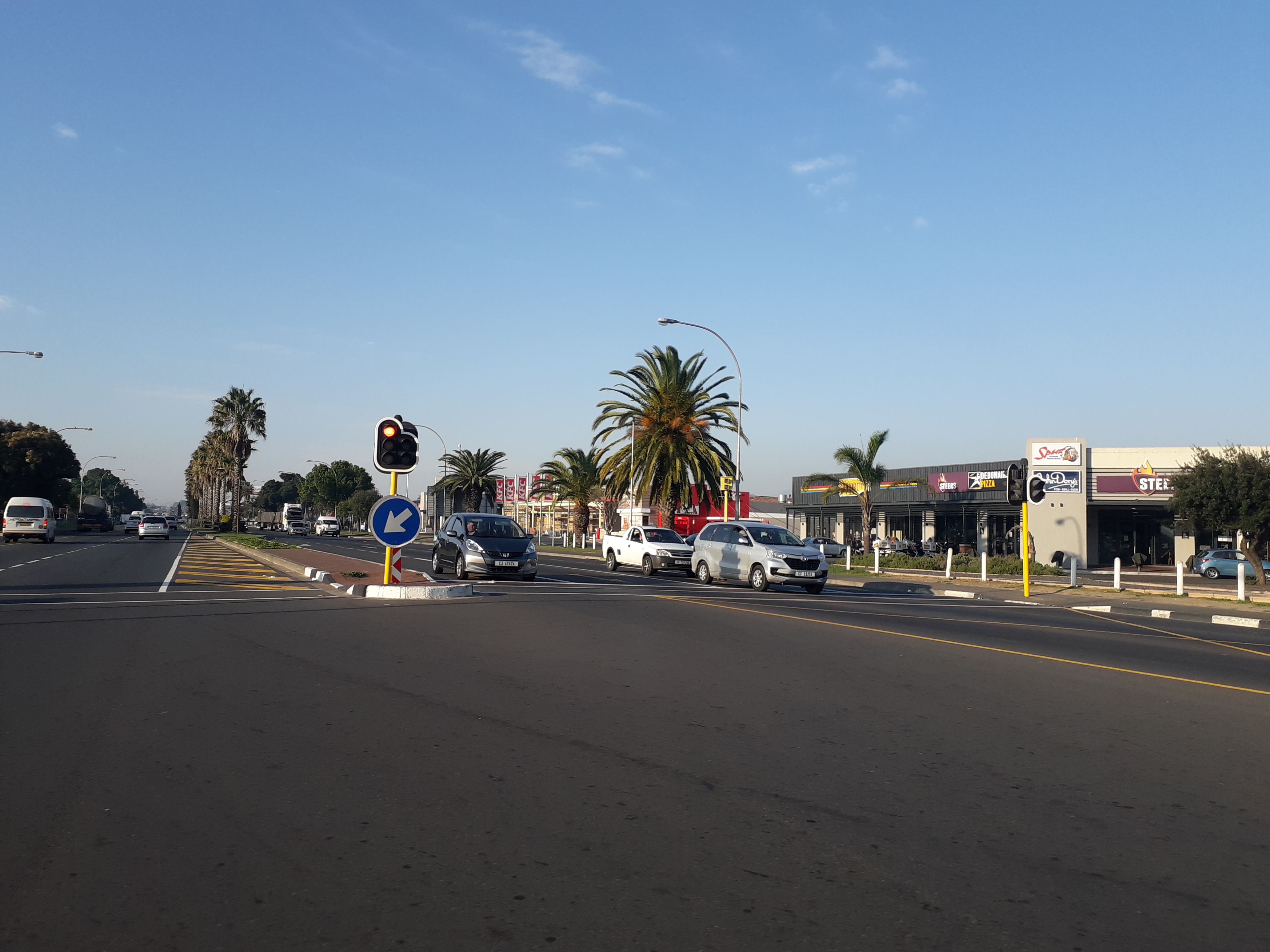 74
74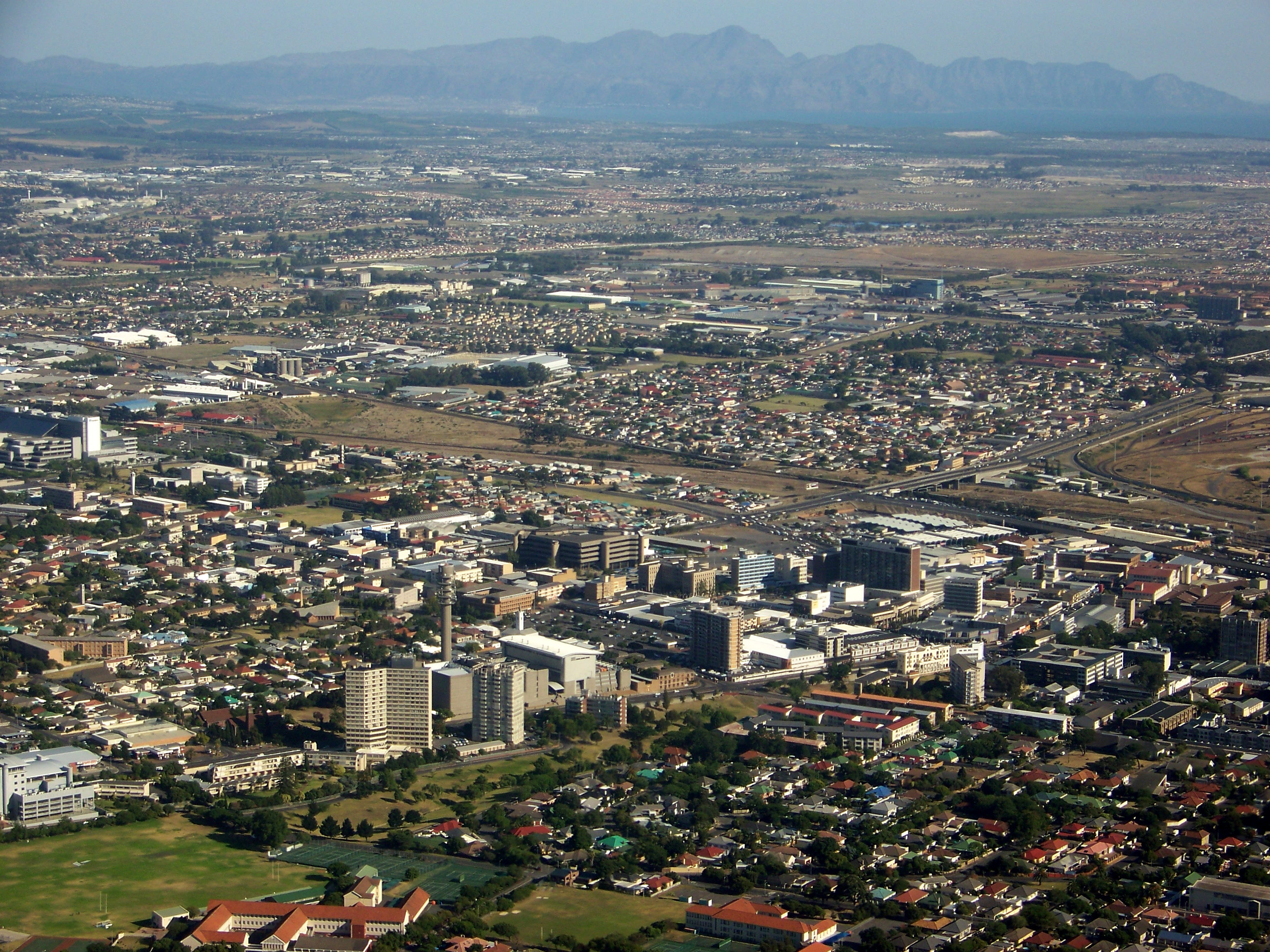 ✦ 79
✦ 79Getting Your Net Worth Documentation in Order
The ZAR 12,000,000 threshold sounds straightforward until you start pulling together the actual paperwork. South Africa's Department of Home Affairs wants verifiable proof - not a personal financial statement, not a net worth letter from your accountant, but documented assets: bank statements, investment portfolio valuations, property deeds, retirement fund statements. Each document needs to clearly show your name, the asset value, and ideally a date that falls within a reasonable window of your application.
Where people run into trouble is with assets that are real but hard to prove on paper quickly. A property you own outright but haven't had formally appraised recently, a brokerage account held in a trust, retirement funds that show a balance but require additional documentation to confirm your direct ownership - these don't disqualify you, but they slow things down and sometimes require additional certified documentation that takes weeks to obtain. If your net worth is spread across multiple asset classes in multiple countries, plan for the documentation exercise to take longer than you expect.
There's also the question of currency fluctuation. The ZAR 12,000,000 threshold translates to somewhere around USD 630,000-700,000 at current rates, but that conversion moves. If your assets are in USD or euros, a weaker rand benefits you; a stronger rand tightens the margin. If you're sitting close to the threshold, document conservatively and get valuations that reflect the high end of current market values rather than cost basis.
One practical note: police clearance certificates from every country where you've lived for 12 or more months in the last five years need to be obtained and, in many cases, apostilled or legalized. If you've lived in multiple countries - which is common for the profile of person applying for this visa - start that process early, because some countries take months to issue clearance certificates.
The Housing Situation Nobody Spells Out
There's no formal accommodation requirement baked into the FIP application the way some other countries' residency programs have it. You don't need to show a signed lease or property purchase before you apply. But that creates its own problem: people treat the housing question as something to figure out after approval, and then discover that "after approval" is four or five years away, and the South African rental and property market will look nothing like what they researched when they filed.
The practical reality is that most FIP applicants aren't living in South Africa while they wait. The application is typically lodged at a South African embassy or consulate in your home country, and you continue living wherever you currently live during the processing period. When approval eventually comes, you have roughly 12 months to enter South Africa and activate your residence - which means the housing decision gets compressed into a window after a very long wait.
For people planning to actually relocate, Cape Town and the Atlantic Seaboard are the default landing zones for internationally mobile high-net-worth residents, and property prices there have risen significantly over the past few years, partly driven by exactly this demographic. Johannesburg's northern suburbs attract a different profile - more business-oriented, less lifestyle-driven. Neither is cheap by local standards anymore, though both remain significantly less expensive than comparable neighborhoods in London, Sydney, or the American coasts.
If you're planning to spend time in South Africa but not make it your permanent base, the three-year re-entry rule gives you a lot of flexibility. Many FIP holders essentially use South Africa as one node in a multi-country life rather than a primary residence, and the visa accommodates that without penalty.
What Actually Happens After You Land
Approval arrives, you pay the ZAR 120,000 fee, you get your PR endorsement, and then you book a flight. What happens next is where the gap between "permanent resident" on paper and functional resident in practice becomes apparent.
South Africa doesn't have a formal post-arrival registration process the way some European countries do, but you'll need to set up practical infrastructure relatively quickly if you intend to stay for any meaningful period: a local bank account (which requires your PR documentation and can take longer than expected at major banks), a South African tax number if you trigger residency, a local SIM, a driver's license conversion if you plan to drive. None of these are complicated individually, but the South African bureaucratic system moves at its own pace, and some of it - particularly banking - has become more stringent around documentation requirements in recent years.
The Department of Home Affairs itself is worth understanding before you arrive. It is genuinely under-resourced, and interactions with it - whether for passport updates, dependent applications, or any administrative changes - tend to require patience and, for most people, a local immigration attorney or practitioner who knows the system. The processing time for the FIP itself is the most visible symptom of this, but it's not the only one.
For US citizens specifically, arriving in South Africa with PR status doesn't automatically change your IRS filing obligations - you're still filing US returns, still potentially subject to FBAR if your foreign accounts exceed the threshold, still managing the interaction between South African and US tax systems. Getting a South African tax practitioner and a US international tax advisor talking to each other before you arrive is not overcautious; it's the move that prevents expensive corrections later.
The Long Road to Citizenship
The FIP is a permanent residence permit, not a citizenship pathway - that distinction matters more than it sounds. PR in South Africa is genuinely permanent in the sense that it doesn't expire on a fixed schedule, but citizenship requires a separate naturalization process that typically takes at least five years of residence, including at least one year of continuous residence immediately before you apply.
"Residence" in that context means actual physical presence, not just holding a PR permit while living elsewhere. If you're using South Africa as a part-time base - which the three-year re-entry rule technically allows for maintaining PR - you may not be accumulating the qualifying residence time for citizenship at the same rate. The two things operate on different clocks.
The naturalization process itself is slow and documentation-heavy by most accounts. Language and civics requirements apply. And South Africa does not generally permit dual citizenship by default - if you naturalize as South African, you're typically required to renounce your previous citizenship unless your home country has a specific exemption or agreement. For US citizens, renouncing US citizenship carries its own significant legal and financial implications under the expatriation tax rules. Most FIP holders who are US citizens are not pursuing South African citizenship for this reason; they're using the PR status as a long-term residency tool without going further.
FIP vs. the Retired Person Visa - and Why Portugal Keeps Coming Up
South Africa's Retired Person Visa is the most obvious domestic alternative to the FIP, and the comparison is worth thinking through clearly. The Retired Person route is built around proving a regular income stream - a pension or annuity - rather than a lump-sum net worth. If your financial picture is primarily income-generating assets rather than a large balance sheet, the Retired Person path might be more straightforward to document. The tradeoff is that it typically comes in as a temporary permit first, requiring renewal, rather than delivering PR directly the way the FIP does.
Portugal comes up constantly in conversations about this visa, and for understandable reasons. Portugal's D7 and related income-based residency routes require significantly less capital, offer a path to EU long-term residency and eventually citizenship, and have a well-worn track record with internationally mobile Americans. The catch is that Portugal's minimum stay requirements are real - you need to be physically present for meaningful periods each year to maintain status and accrue citizenship eligibility - and Portugal taxes you as a resident on worldwide income without the same flexibility the FIP offers around physical presence. If you want to live in Europe and you're willing to actually be there, Portugal makes sense. If you want a permanent anchor that doesn't demand your physical presence, South Africa's three-year re-entry rule is genuinely more permissive than almost anything Portugal offers.
The honest version of this comparison is that they're solving different problems. Portugal is for people who want to relocate to Europe and build toward an EU passport. The South Africa FIP is for people who want a permanent residency that doesn't expire, in a country they find genuinely compelling, without being required to restructure their entire life around maintaining it.
Work Permissions
Application Steps
- 1
📋 Confirm net worth requirement
1-2 weeks
- 2
📄 Prepare financial and personal documents
4-6 weeks
- 3
📅 Submit at South African consulate or VFS
1 day
- 4
⏳ Await decision from Department of Home Affairs
4-12 weeks
This visa requires proof of health insurance. Compare international plans before you apply.
Compare health insuranceWe may earn a commission at no cost to you.
Frequently Asked Questions
Click any question to expand the answer.
Ready to Apply?
Work with trusted visa specialists who handle the paperwork so you can focus on your move.
Get help with this visa →* We may earn a commission if you apply through our link
At a Glance
Last verified: May 23, 2026